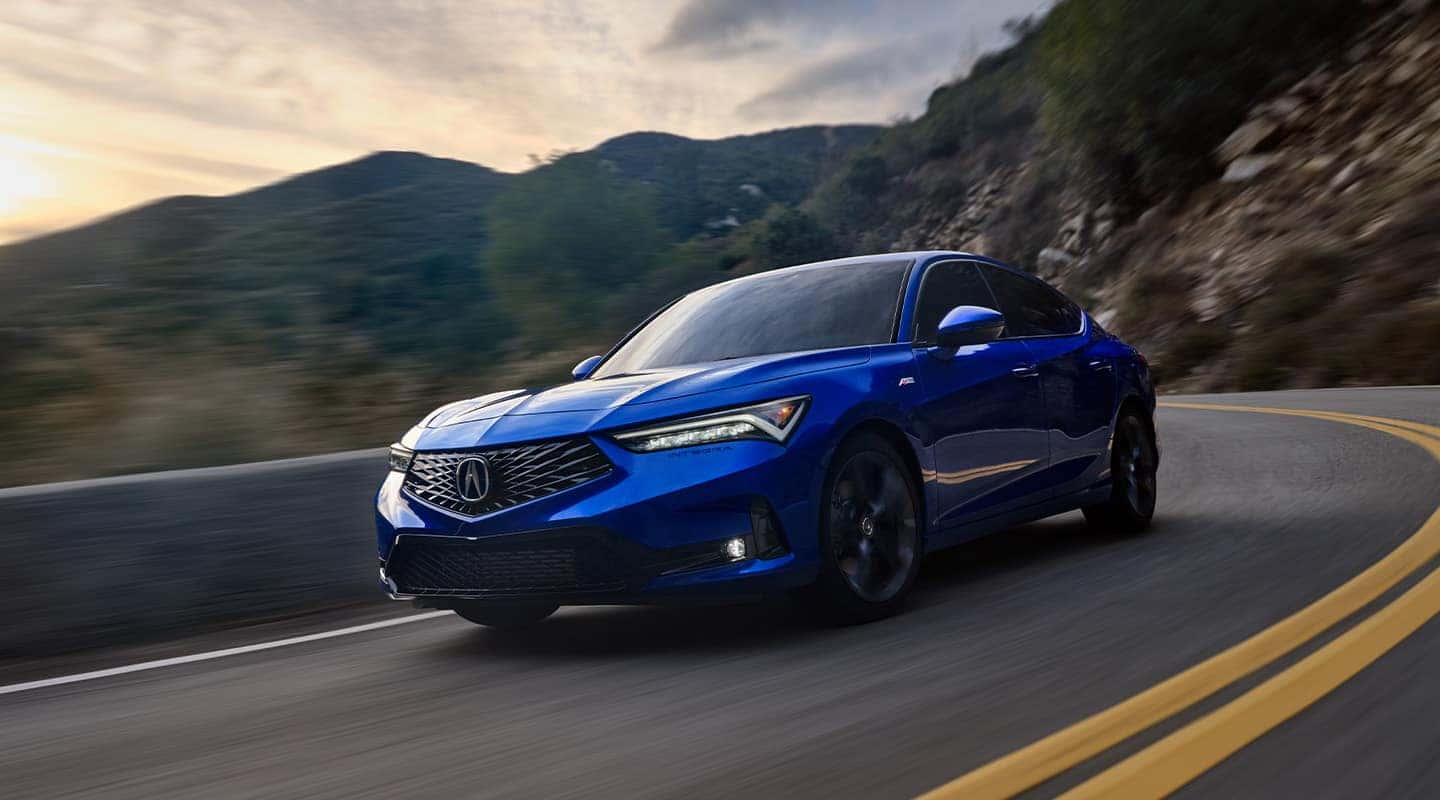
Acura is the luxury vehicle division of the Japanese automaker Honda Motor Company. Launched in 1986, Acura was created as a high-end brand to market premium and performance-oriented vehicles in North America. While they share parent ownership, engineering resources, and manufacturing facilities, Acura operates with distinct design languages, performance tuning, and premium interior standards.
The relationship between Acura and Honda is one of the most successful examples of a "dual-brand" strategy in the automotive industry. For many consumers, the question isn't just whether they are related, but how much "Honda" is actually in an "Acura." As we look at the landscape in 2026, this partnership has evolved from simple badge engineering to a sophisticated hierarchy where shared architecture supports vastly different driving experiences. Understanding this connection requires looking at the history, the engineering synergies, and the strategic reasons why Honda maintains two distinct identities.
The Genesis of Acura: Why Honda Expanded
In the early 1980s, Honda was primarily known for producing reliable, fuel-efficient, and economical cars like the Civic and the Accord. However, the American market was shifting. As the "Baby Boomer" generation began to accumulate wealth, they sought luxury vehicles that offered more prestige and performance than a standard commuter car. At the time, this market was dominated by European brands like BMW and Mercedes-Benz, and domestic giants like Cadillac and Lincoln.
Honda recognized a ceiling for the "Honda" badge. No matter how high-quality an Accord was, buyers were hesitant to pay premium prices for a brand associated with economy. Furthermore, the Japanese government had agreed to "Voluntary Export Restraints" (VER) with the United States, which limited the number of units Japanese manufacturers could ship to the U.S. To maximize profits under these volume restrictions, it made sense to sell more expensive, high-margin luxury vehicles rather than just high-volume economy cars.
Acura was launched in March 1986, making it the first Japanese luxury brand, predating Toyota’s Lexus and Nissan’s Infiniti by three years. The initial lineup consisted of the Legend—a luxury sedan—and the Integra, a sporty car that offered a more refined experience than the Civic. The success was immediate, proving that American consumers were willing to buy Japanese luxury if the branding and dealership experience were elevated.
Engineering Synergies: Sharing the "DNA"
The most significant link between the two brands is their shared engineering. In the automotive world, developing a new vehicle platform from scratch costs billions of dollars. To remain profitable, Honda utilizes "platform sharing," where the core structural components, suspension architecture, and powertrains are shared across multiple models.
Shared Platforms and Powertrains
Many Acura models are built on the same global platforms as Honda models. For example:
- The Acura RDX historically shares its foundational architecture with the Honda CR-V, though the RDX features a more sophisticated suspension setup and a more powerful turbocharged engine.
- The Acura MDX, a three-row luxury SUV, shares significant underpinnings with the Honda Pilot, yet the MDX uses a unique double-wishbone front suspension designed for better handling.
- The Acura Integra (reintroduced in the 2020s) is heavily based on the Honda Civic platform, sharing its 1.5-liter turbocharged engine or the high-performance 2.0-liter engine found in the Type S and Type R variants.
Despite these shared foundations, the "Acura tuning" is what separates the two. Acura vehicles typically receive higher-output engines, different transmission tuning, and more advanced all-wheel-drive systems.
Super Handling All-Wheel Drive (SH-AWD)
One of the clearest technical differentiators is Acura's proprietary SH-AWD system. While Honda’s Intelligent Variable Torque Management (i-VTM4) system is excellent for traction in snow and rain, SH-AWD is a "torque-vectoring" system. It can send up to 70% of engine torque to the rear wheels and then distribute 100% of that torque to either the left or right wheel. This helps the car "pivot" through corners, reducing understeer and providing a level of agility that standard Honda models generally do not offer.
Manufacturing and Global Presence
While Honda is a global company based in Japan, Acura is a brand primarily focused on the North American market. In fact, many Acura models are designed, developed, and manufactured in the United States.
The Marysville Auto Plant in Ohio and the East Liberty Auto Plant are central to Acura’s operations. For instance, the Acura TLX and the Acura MDX are both manufactured in Ohio. The high-performance NSX (when in production) was hand-assembled at the Performance Manufacturing Center (PMC) in Marysville. This American-centric approach allows Acura to tailor its vehicle dimensions and features specifically to U.S. tastes, such as larger cup holders, more expansive infotainment screens, and seating designed for longer American highway commutes.
In contrast, the Honda brand operates globally, with massive footprints in Asia, Europe, and South America. In Japan and other markets, some cars sold as Acuras in the U.S. have historically been sold under the Honda nameplate. For example, the original Acura Legend and NSX were sold as the Honda Legend and Honda NSX in Japan.
Distinguishing the Two: Luxury vs. Utility
To justify the higher price point of an Acura, the brand must offer more than just a different badge. The differences generally fall into three categories: Performance, Technology, and "NVH" (Noise, Vibration, and Harshness).
- Materials and Craftsmanship: Acura interiors feature real wood trim, Milano leather, and Alcantara inserts. While top-tier Honda trims like the "Touring" or "Elite" are very well-appointed, they often still utilize more durable plastics and synthetic materials designed for family-wear-and-tear rather than pure luxury.
- Acoustic Engineering: Acura puts a significant emphasis on quietness. They use more acoustic spray foam, thicker glass (often acoustic-laminated), and Active Noise Cancellation (ANC) systems that are more robust than those found in standard Honda models.
- Technology Suites: Acura often debuts new technology before it trickles down to Honda. Features like the True Touchpad Interface (and more recently, the integrated Google Built-in systems), high-end ELS Studio 3D premium audio systems, and Jewel Eye LED headlights are Acura-specific hallmarks.
| Feature / Aspect | Honda (General Profile) | Acura (General Profile) |
|---|---|---|
| Primary Focus | Reliability, Efficiency, Utility | Performance, Luxury, Prestige |
| All-Wheel Drive | Real Time AWD / i-VTM4 (Traction) | SH-AWD (Performance Vectoring) |
| Engine Options | Naturally Aspirated or Light Turbo | High-Output Turbo / Type S variants |
| Interior Materials | Durable Fabrics, Synthetic Leathers | Milano Leather, Open-pore Wood, Metal |
| Standard Warranty | 3-year/36,000-mile Limited | 4-year/50,000-mile Limited |
| Powertrain Warranty | 5-year/60,000-mile | 6-year/70,000-mile |
| Dealership Experience | High Volume, Family Focused | Premium Lounge, Personalized Service |
The Electric Transition (2026 Perspective)
As of 2026, the relationship between Acura and Honda is entering its most transformative phase due to electrification. Both brands are aggressively moving toward zero-emission lineups, but they are doing so with a shared technological backbone.
In the mid-2020s, both brands utilized a partnership with General Motors to launch their first major EVs: the Honda Prologue and the Acura ZDX. Both vehicles utilized GM's Ultium battery platform. However, the Acura ZDX was positioned as a high-performance "driver’s EV," featuring significantly more horsepower and a sport-tuned air suspension that the Honda counterpart lacked.
Moving deeper into 2026, Honda’s proprietary e:Architecture has become the new foundation. This platform allows Honda and Acura to develop EVs in-house. Even in this electric era, the "Acura is part of Honda" dynamic remains: Honda provides the massive R&D budget and the scalable platform, while Acura applies the "Precision Crafted Performance" philosophy to ensure their EVs feel faster, more luxurious, and more exclusive than the mass-market Honda versions.
Maintenance and Service: The Practical Connection
One of the greatest benefits for Acura owners is the shared parts bin with Honda. Because the core mechanical components—such as oil filters, brake pads, and various sensors—are often identical to those found in Honda models, maintaining an Acura is generally more affordable than maintaining a German luxury car.
- Serviceability: Many independent mechanics who specialize in Honda can easily service Acuras.
- Parts Availability: Because Honda has one of the most robust parts distribution networks in the world, Acura owners rarely face the long wait times for parts that sometimes plague exotic or European brands.
- Dealer Service: While you can often have an Acura serviced at a Honda dealership for basic maintenance (like oil changes), certain warranty repairs or brand-specific technology issues (like the SH-AWD system or AcuraLink infotainment) may require an authorized Acura technician.
Frequently Asked Questions
Is an Acura just a more expensive Honda?
While they share some components, calling an Acura "just a Honda" oversimplifies the engineering. Acura models typically feature different body panels, more powerful engines, more advanced suspension systems (like adaptive dampers), and significantly more sound-insulation material. The driving dynamics are tuned for performance rather than just comfort or economy.
Can I use Honda parts on my Acura?
In many cases, yes. For routine maintenance items like filters, spark plugs, and even some suspension components, the parts are interchangeable. However, for body panels, interior electronics, and performance-specific components (like the Turbo systems in Type S models), the parts are unique to Acura. Always verify with a VIN-specific parts catalog before purchasing.
Do Acuras hold their value as well as Hondas?
Both brands have excellent resale value compared to the industry average. However, because Acura is a luxury brand, it faces the steeper initial depreciation common to all premium vehicles. Over the long term, Acura’s reputation for reliability (inherited from Honda) makes them highly desirable on the used market, often outperforming the resale value of rivals like Audi or Infiniti.
Why doesn't Honda sell Acura in Japan?
Honda decided to keep the brands separate primarily for the North American market. In Japan, the market is smaller, and Honda has a different brand image that encompasses both economy cars and high-end luxury. While there were plans to launch Acura in Japan in the late 2000s, the 2008 financial crisis led Honda to cancel those plans to focus on their existing structure.
Does Acura use Honda engines?
Acura uses engines designed and built by Honda Motor Co., but many are exclusive to Acura models. For example, the 3.0-liter V6 Turbo found in the Acura TLX Type S and MDX Type S was developed specifically for Acura’s high-performance applications and is not found in the standard Honda lineup.
Final Recommendation: Which Should You Choose?
Deciding between a Honda and its Acura counterpart comes down to your priorities as a driver. If your goal is maximum utility, fuel efficiency, and value for money, a Honda is difficult to beat. The top-tier Honda trims provide nearly all the luxury features a typical driver needs for daily commuting and family hauling.
However, if you value a more engaging driving experience, superior audio quality, and a more prestigious brand image, an Acura is the logical step up. You gain the "Super Handling" technology and a more comprehensive warranty, all while benefiting from the legendary reliability and lower maintenance costs that come with being part of the Honda family. For 2026, keep a close eye on the newer EV models, where the performance gap between the two brands is becoming even more pronounced through software-defined tuning and high-output electric motors.