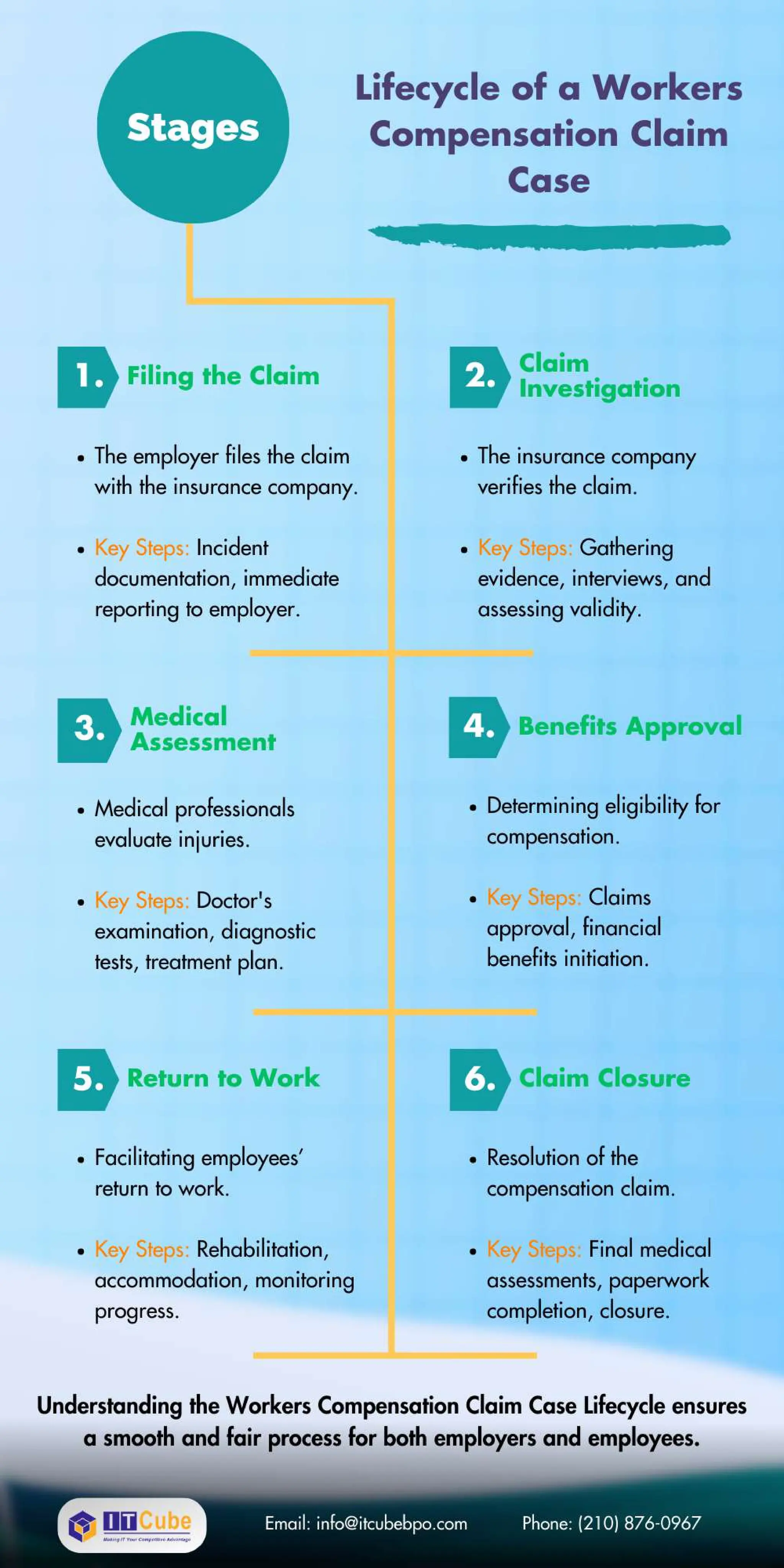
An accepted workers compensation claim means that your employer’s insurance carrier has formally acknowledged that your injury or illness is work-related and covered under their policy. Once accepted, the insurer assumes responsibility for authorized medical treatments and provides partial wage replacement benefits if you are unable to work during your recovery period.
Receiving a notice of acceptance is a significant milestone in any workers' compensation case. It shifts the status of your claim from "pending" or "under investigation" to "active," providing a degree of financial and medical security. However, acceptance of a claim does not mean the process is over or that every future request will be automatically granted. It marks the beginning of a managed recovery process where specific rules, deadlines, and medical evaluations dictate the long-term outcome.
The Notification of Acceptance: What to Expect
In 2026, most jurisdictions require insurance carriers to provide a written "Notice of Acceptance" or "Notice of Payment" within a specific timeframe—usually 14 to 90 days after the claim is filed. This document is a legal confirmation that the insurance company will pay for the "reasonable and necessary" medical care required to treat your specific injury.
The notice should clearly outline the body parts or conditions that have been accepted. For example, if you fell and hurt your back and your wrist, ensure the document lists both. If it only lists "lumbar strain" but omits the "wrist fracture," you may face denials for wrist-related treatments later. This document also serves as the trigger for your first disability payment if your doctor has taken you off work for a qualifying period.
Immediate Medical Benefits and the Provider Network
One of the primary advantages of an accepted workers compensation claim is the immediate coverage of medical expenses. Unlike standard health insurance, workers' compensation generally requires no deductibles or co-payments from the injured worker.
Authorized Treating Physicians
In many states, the employer or insurer has the right to direct your care through a Medical Provider Network (MPN) or a list of authorized physicians. Once your claim is accepted, you must typically treat with these authorized providers to ensure the bills are paid. If you seek treatment outside this network without prior authorization, the insurer may not be liable for those costs.
Scope of Medical Coverage
Acceptance covers a wide range of services, provided they are directly related to the workplace injury:
- Emergency room visits and initial diagnostic testing (X-rays, MRIs).
- Surgery and hospital stays if deemed medically necessary.
- Physical therapy and rehabilitative services.
- Prescription medications and medical devices (braces, crutches, or wheelchairs).
- Travel reimbursement for mileage to and from medical appointments.
Wage Replacement: Calculating Your Benefits
When an injury prevents you from performing your job duties, an accepted claim provides indemnity benefits, commonly known as wage replacement. As of 2026, these benefits are typically calculated as a percentage of your Average Weekly Wage (AWW).
Temporary Total Disability (TTD)
If your doctor states you cannot work at all while recovering, you receive TTD benefits. In most U.S. jurisdictions, this amount is roughly two-thirds (66.67%) of your gross weekly wages, subject to state-mandated minimum and maximum caps. These payments are generally tax-free, which helps offset the fact that they do not represent your full salary.
Temporary Partial Disability (TPD)
If you can return to work in a limited capacity (light duty) but are earning less than your pre-injury wages, TPD benefits make up a portion of the difference. This encourages "return-to-work" programs that keep employees engaged with the workplace while they heal.
The Waiting Period
Most states implement a "waiting period" (often 3 to 7 days) before wage benefits begin. If your disability lasts beyond a certain threshold (usually 14 to 21 days), the insurance company will retroactively pay you for that initial waiting period.
Navigating the "Maximum Medical Improvement" (MMI) Phase
Acceptance of a claim is not an indefinite commitment to pay benefits. The goal of the system is to return you to the state you were in before the injury, or as close to it as medically possible. This leads to a critical milestone known as Maximum Medical Improvement (MMI).
MMI occurs when your treating physician determines that your condition has stabilized and further medical treatment is unlikely to result in significant improvement. At this point, the doctor will evaluate whether you have any lasting impairment.
- Full Recovery: If you reach MMI and have no lasting limitations, your claim will likely move toward closure, and disability benefits will cease.
- Permanent Disability: If you have residual symptoms or loss of function, the doctor will assign a Permanent Disability Rating. This rating is a numerical value that determines the monetary value of your permanent impairment.
Permanent Disability and Vocational Rehabilitation
An accepted claim for a serious injury often evolves into a Permanent Partial Disability (PPD) or Permanent Total Disability (PTD) case. PPD benefits are paid based on the rating mentioned above and the specific "schedule" of benefits in your state. For instance, the loss of use of a finger is valued differently than the loss of use of a back or a lung.
Vocational Rehabilitation
In 2026, many state programs emphasize retraining. If your accepted injury results in permanent restrictions that prevent you from returning to your old job, and your employer cannot offer an alternative position, you may be eligible for a supplemental job displacement benefit or a vocational rehabilitation voucher. This can be used for schooling, certification exams, or tools to help you transition into a new career path.
Comparison of Benefit Categories
| Benefit Type | Eligibility Criteria | Payment Structure | Purpose |
|---|---|---|---|
| Medical Benefits | Accepted injury requiring treatment | 100% of authorized bills paid | To cure or relieve the effects of the injury |
| Temporary Disability (TTD) | Unable to work during recovery | ~66% of AWW (Tax-Free) | Short-term wage replacement |
| Permanent Disability (PPD) | Lasting impairment after MMI | Based on disability rating % | Compensation for loss of future earning capacity |
| Death Benefits | Work-related fatality | Paid to legal dependents | Financial support for surviving family members |
Managing Disputes in an "Accepted" Claim
It is a common misconception that once a claim is accepted, every medical request is automatically approved. In reality, insurance companies use a process called Utilization Review (UR) to scrutinize specific treatment requests.
Even in an accepted claim, an insurer might deny a specific surgery or a specific brand of medication if they believe it does not meet evidence-based medical necessity guidelines. If this happens, you or your attorney must navigate the state’s dispute resolution process, which often involves an Independent Medical Examination (IME) or a Qualified Medical Evaluator (QME).
Common Reasons for Mid-Claim Disputes:
- Reasonableness of Treatment: The insurer argues a requested physical therapy regimen is too long.
- New Conditions: You develop a secondary condition (like depression or a "compensable consequence" injury) that the insurer refuses to add to the original acceptance.
- Return to Work Disputes: The insurer’s doctor says you are fit for full duty, but your personal doctor disagree.
Settlement Options: Closing the Claim
Eventually, most accepted workers' compensation claims reach a point of settlement. There are generally two ways to "close" your claim:
1. Stipulations with Request for Award
In this scenario, you and the insurance company agree on your disability rating. You receive your payments over time, but the "medical" portion of your claim remains open. This allows you to seek further treatment in the future if your injury flares up.
2. Compromise and Release (C&R)
This is a "full and final" settlement. The insurance company pays you a single lump sum of money, and in exchange, you release them from all future liability. This means you are responsible for paying for your own medical care moving forward. A C&R is often preferred by workers who want to move on or use the funds for a major life transition, but it requires careful calculation of future medical costs.
Responsibilities of the Injured Worker
To keep your claim in "accepted" status and ensure benefits continue to flow, you have several ongoing responsibilities:
- Attend All Appointments: Missing medical evaluations or therapy sessions can be used as grounds to suspend your benefits.
- Report Outside Earnings: If you are receiving TTD but earn money from a side job or "gig" work, you must report this to the insurance carrier. Failure to do so can lead to fraud charges.
- Follow Work Restrictions: If your doctor gives you a 10-pound lifting limit, you must adhere to it both at work and at home. Insurance companies occasionally use surveillance to see if claimants are exceeding their reported physical limitations.
Practical Steps Following Claim Acceptance
If you have just received notice that your claim was accepted, take the following actions to protect your interests:
- Verify the Accepted Body Parts: Ensure the letter includes every injury you reported. If anything is missing, contact the adjuster immediately in writing.
- Organize Your Records: Keep a log of all mileage to doctors, copies of work status notes, and a diary of your symptoms.
- Monitor Your Payments: Check that your TTD checks are for the correct amount. If your AWW was calculated incorrectly (e.g., if they forgot to include overtime or bonuses), you could be losing thousands of dollars.
- Communicate with Your Employer: Stay in touch with your supervisor regarding your recovery progress and your intent to return to work once cleared.
For complex injuries or situations where the insurer is denying necessary surgery despite an accepted claim, consulting with a specialized workers' compensation attorney is advisable. They can ensure your disability rating is accurate and help negotiate a settlement that covers your long-term needs.
Frequently Asked Questions
Can an insurance company revoke their acceptance of my claim?
While rare, it is possible. If the insurer discovers evidence of fraud or finds that the injury actually occurred outside of work (such as during a weekend hobby), they may issue a "Notice of Denial" even after initial acceptance. This usually happens within the first 90 days of the investigation period.
Does an accepted claim mean I can't be fired?
In most states, an employer cannot fire you specifically for filing a workers' compensation claim, as this is considered retaliatory. However, workers' compensation does not provide absolute job security. An employer may still terminate an employee for unrelated reasons, such as layoffs or performance issues that existed prior to the injury.
What if my doctor says I can work, but I don't feel ready?
This is a common point of contention. If an authorized doctor clears you for light duty and your employer offers a position that meets those restrictions, you generally must attempt the work. Refusing valid light-duty work can result in the termination of your wage replacement benefits.
How long do benefits last in an accepted claim?
Medical benefits can potentially last a lifetime if the claim is settled via "Stipulations." Wage replacement (TTD) is usually capped—often at 104 weeks (two years) within a certain period from the date of injury. Permanent disability payments are determined by the severity of the injury and state law.
Will my accepted claim cover my full salary?
No. Workers' compensation is designed to provide a safety net, not full wage replacement. Most workers receive approximately two-thirds of their gross average weekly wage. This is why many employees choose to use supplemental disability insurance if they have it.
Do I need a lawyer if my claim is already accepted?
Not necessarily, but it can be helpful if the injury is severe. A lawyer ensures that the "rating" of your permanent disability is fair and that the insurance company isn't prematurely cutting off medical treatments through the Utilization Review process.
Practical Recommendation: If your claim is accepted, prioritize your medical recovery by attending every authorized appointment and following your doctor's restrictions strictly. Keep a detailed file of all correspondence and payment stubs. If the insurance carrier begins to deny specific treatments or if you reach MMI and disagree with your permanent disability rating, seek a legal consultation to evaluate your settlement options.