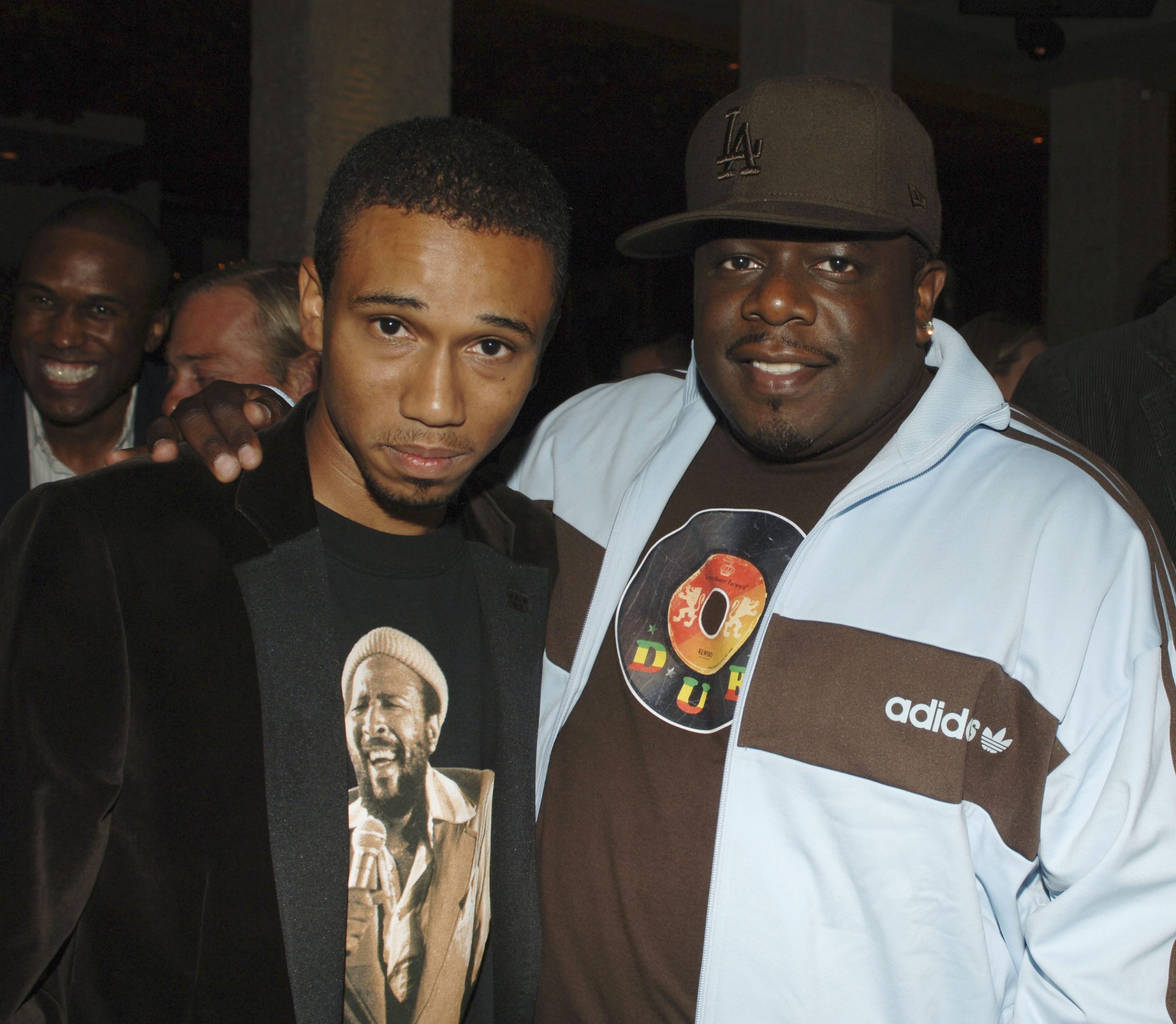
Aaron Vincent McGruder is an influential American writer, cartoonist, and producer, widely recognized for creating the satirical comic strip The Boondocks. His work is defined by its incisive social commentary, exploration of African American culture, and bold critique of contemporary political issues. By blending humor with biting observational narratives, McGruder has established a distinct voice that challenges mainstream discourse on race, class, and media.
Early Life and Artistic Genesis
Born in Chicago, Illinois, in 1974, Aaron Vincent McGruder moved to Columbia, Maryland, during his youth. This relocation served as a foundational experience for his later work, as it placed him in an environment that often served as the inspiration for the suburban setting of his most famous creations. McGruder attended the University of Maryland, College Park, where he studied African American studies, a discipline that provided the academic framework for the themes of identity and historical awareness that permeate his writing.
His career began in earnest while he was still a student. He started publishing The Boondocks in the university’s newspaper, The Diamondback, in 1996. The strip featured the characters Huey and Riley Freeman, two brothers from Chicago who relocate to the predominantly white suburb of Woodcrest. The contrast between the brothers' inner-city experiences and their new environment allowed McGruder to utilize the "fish out of water" trope to critique racial dynamics and cultural stereotypes in America. The strip’s rapid success on campus led to national syndication in 1999, quickly becoming one of the most provocative and debated pieces of media in the United States.
The Boondocks: A Cultural Phenomenon
The Boondocks was not merely a comic strip; it was a socio-political apparatus. Through the character of Huey Freeman—a self-styled revolutionary and political radical—McGruder voiced intense skepticism regarding the status quo. His brother, Riley, served as a foil, often embodying the commercialized, superficial aspects of hip-hop culture that McGruder sought to lampoon.
The success of the comic strip provided the leverage for McGruder to transition into animation. In 2005, The Boondocks premiered as an animated series on Adult Swim. This transition marked a critical evolution in his career, as the medium allowed for expanded narratives, complex musical scoring, and more nuanced visual storytelling. The show gained a massive following, particularly among young adults, for its uncompromising stance on sensitive subjects including the Iraq War, historical icons, and the corporate music industry.
Creative Philosophy and Stylistic Approach
McGruder’s writing is heavily influenced by a combination of hip-hop culture, anime aesthetics, and the radical political traditions of the late 20th century. His style is characterized by "edutainment"—a method of masking heavy didactic messages beneath layers of absurdist humor and pop-culture references.
Technically, McGruder’s work often relies on:
- Juxtaposition: Placing radical political theory in the mouths of children creates a jarring effect that forces the audience to confront the absurdity of the "adult" world.
- Media Satire: He frequently targets how the 24-hour news cycle and reality television shape public perception, often using his characters to dissect the lack of journalistic integrity.
- Thematic Depth: Despite the humor, his narratives often engage with serious academic questions regarding systemic racism, the legacy of the Civil Rights movement, and the global political economy.
Key Professional Works and Collaborations
While The Boondocks remains his signature contribution, McGruder’s professional footprint extends into various other media projects. He has collaborated on projects involving graphic novels, television development, and political commentary. His ability to navigate the tension between maintaining artistic control and operating within the constraints of major media conglomerates has been a recurring theme in his career trajectory.
| Project Title | Medium | Role | Release/Significance |
|---|---|---|---|
| The Boondocks | Comic Strip | Creator/Writer | 1996–2006 |
| The Boondocks | Television Series | Creator/Producer | 2005–2014 |
| Birth of a Nation: A Comic Novel | Graphic Novel | Writer | 2004 (with Kyle Baker) |
| Black Jesus | Television Series | Creator/Producer | 2014–2019 |
| Black Dynamite | Television Series | Writer/Consultant | 2012–2015 |
Challenges and Editorial Independence
Throughout his career, McGruder has faced significant scrutiny and controversy. His uncompromising approach to racial politics often led to friction with newspaper editors during the syndication era of The Boondocks. Many outlets occasionally pulled his strips, fearing that his commentary—which frequently named real-world political figures and celebrities—would alienate readers or incite public backlash.
These conflicts highlight a broader tension in American media: the difficulty of maintaining a subversive, critical voice within a commercialized framework. McGruder’s professional history serves as a case study for writers and creators attempting to use mass media as a vehicle for critique. His willingness to weather public outcry has cemented his reputation as an artist who prioritizes the integrity of his message over general marketability.
Impact on Television and Animation
The transition of The Boondocks from print to television influenced a generation of animators who sought to use the medium for adult-oriented social commentary. McGruder’s focus on long-form storytelling within the adult animation genre helped pave the way for other shows that blended political satire with stylized, anime-influenced visuals. His emphasis on original musical curation, particularly his integration of soul and hip-hop samples, redefined the atmospheric expectations for television comedies.
Comparison of Core Themes
To understand McGruder’s body of work, it is helpful to categorize the recurring motifs he employs across different projects:
- Generational Conflict: Often depicted through the tension between younger characters seeking change and older generations who are viewed as complacent or complicit.
- Commercialism vs. Authenticity: A recurring critique of how artistic movements (specifically hip-hop) are commodified by corporate entities.
- Institutional Distrust: An skepticism regarding the role of government, the education system, and corporate media in shaping societal values.
Frequently Asked Questions
What was the main inspiration for The Boondocks? The strip was largely inspired by McGruder’s own experiences as a youth in suburban Maryland and his interest in political discourse. He wanted to highlight the disconnect between urban cultural movements and the realities of life in segregated or suburban America.
Did Aaron McGruder write for his shows throughout their entire run? McGruder served as the primary creative force for the first three seasons of the Boondocks television series. He eventually departed from the production of the show during its later stages due to creative differences, which is a common occurrence in the television industry when creators and production studios disagree on narrative direction.
How does McGruder’s work relate to anime? McGruder has long cited anime as a major influence on his visual style. The Boondocks series, in particular, adopted classic anime camera angles, action sequences, and character designs, which helped differentiate it from standard American primetime animation.
What is the status of the "Black Jesus" project? Black Jesus was a live-action satirical series created by McGruder for Adult Swim. It centered on Jesus living in modern-day Compton, California. The series was noted for its unique blend of social satire and humanistic themes, running for three seasons.
Recommendation for Further Engagement
For those interested in studying the progression of McGruder’s political and creative evolution, the best starting point is to analyze the original Boondocks comic strip archives. Unlike the television adaptation, the daily newspaper strips offer a direct, chronological record of his thoughts on American politics spanning from the late 1990s through the mid-2000s. Readers should pay attention to the dates of specific strips to understand the historical context of his commentary, as the work is deeply tied to the political landscape of that era. By viewing his work as an ongoing conversation with the headlines of the time, one can better appreciate how he used humor to bridge the gap between abstract academic concepts and everyday cultural experiences.