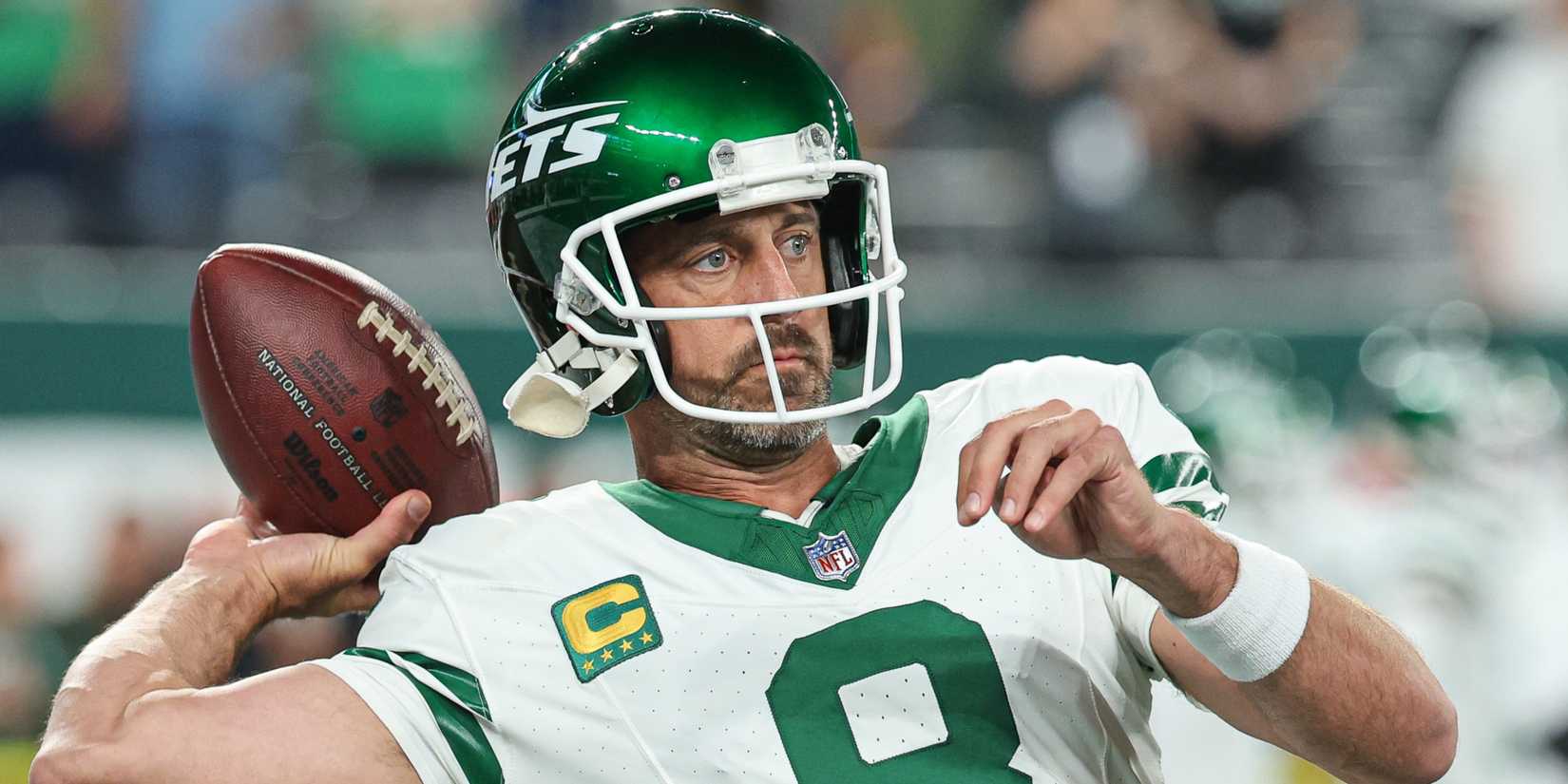
When Aaron Rodgers was officially traded to the New York Jets in April 2023, the move represented one of the most significant shifts in National Football League (NFL) history. Marking the end of an 18-year tenure with the Green Bay Packers, the transition of the future Hall of Fame quarterback to the Jets franchise created immediate changes in league expectations, team valuation, and the competitive landscape of the American Football Conference (AFC).
The Mechanics of the Trade: A Multi-Year Transformation
The journey of Aaron Rodgers from Green Bay to New York was not a sudden impulse but rather the culmination of months of speculation and complex negotiations. On April 24, 2023, the Green Bay Packers and the New York Jets finalized the trade agreement. The specific compensation package sent to Green Bay included a 2023 first-round pick (No. 13 overall), a 2023 second-round pick (No. 42 overall), and a 2023 sixth-round pick. Additionally, the deal included a conditional 2024 second-round pick that would escalate to a first-round pick if Rodgers played at least 65% of the Jets' offensive snaps in the 2023 season.
This move was predicated on the Jets' desire to secure an elite, veteran signal-caller to lead a roster that boasted significant talent on the defensive side of the ball but lacked stability at the quarterback position. For the Packers, the trade signaled a full commitment to their 2020 first-round draft pick, Jordan Love, effectively turning the page on the "Rodgers Era" that included four NFL MVP awards and a victory in Super Bowl XLV.
Operational Expectations and the 2023 Reality
Upon his arrival, expectations in Florham Park—the site of the Jets' training facility—were at a generational high. The franchise, which had struggled to find consistent quarterback play for over a decade, viewed Rodgers as the final piece of a championship-caliber puzzle. However, the reality of the 2023 season diverged sharply from these projections.
During the Jets' season opener against the Buffalo Bills on September 11, 2023, Rodgers suffered a complete tear of his left Achilles tendon on the fourth offensive snap of the game. This season-ending injury fundamentally altered the trajectory of the Jets' 2023 campaign. The team, forced to return to a backup rotation, struggled to maintain offensive momentum throughout the year. For the fans and the organization, the event served as a stark reminder of the inherent volatility in professional sports, where roster construction and financial investment can be undone by a single play.
Tactical Shifts and Roster Reconfiguration
The acquisition of Rodgers necessitated a shift in the Jets' personnel strategy. The team moved to sign several veteran players, including wide receiver Allen Lazard and wide receiver Randall Cobb, both of whom had extensive experience playing with Rodgers in Green Bay. This "familiarity" strategy was designed to shorten the learning curve for the new offensive scheme, an approach often used by NFL teams when integrating high-profile veteran quarterbacks into new systems.
Furthermore, the presence of Rodgers allowed the Jets' coaching staff, led by head coach Robert Saleh and offensive coordinator Nathaniel Hackett, to implement more complex play-calling and pre-snap adjustments. Rodgers is renowned for his mastery of the "check-with-me" system, where the quarterback uses presnap reads to change plays at the line of scrimmage. While the 2023 season provided minimal live-game data, the 2024 and 2025 seasons allowed for the full integration of this technical expertise into the Jets' offensive playbook.
Comparative Analysis of Quarterback Transitions
The following table provides context on how the Rodgers-to-Jets trade compares to other high-profile veteran quarterback moves in recent NFL history, highlighting the shift in how organizations prioritize "win-now" windows.
| Quarterback | Year of Move | Previous Team | New Team | Primary Motivation |
|---|---|---|---|---|
| Aaron Rodgers | 2023 | Green Bay Packers | New York Jets | Championship pursuit |
| Russell Wilson | 2022 | Seattle Seahawks | Denver Broncos | Strategic rebuild |
| Tom Brady | 2020 | New England Patriots | Tampa Bay Buccaneers | System fit/New start |
| Peyton Manning | 2012 | Indianapolis Colts | Denver Broncos | Post-injury revival |
The Financial and Long-Term Implications
The financial structure of the deal was equally critical to the Jets' front office. When Rodgers joined the team, he agreed to a restructured contract that provided the Jets with more flexibility to acquire surrounding talent. By taking a pay cut to facilitate the signing of additional free agents, Rodgers demonstrated a commitment to the team's immediate success.
In 2026, the long-term impact of this trade remains a subject of intense debate among analysts. The trade utilized high-value draft capital that, in a traditional rebuild, would have been used to secure young talent on inexpensive rookie contracts. Instead, the Jets opted for the "All-In" model—a trend among NFL teams where the window to win a title is condensed into a 2–3 year period, predicated on the elite performance of a veteran quarterback.
Common Misconceptions Regarding the Trade
A frequent point of confusion among casual observers is the nature of the "conditional" pick mentioned in the trade terms. Many fans assume that because Rodgers was injured early in 2023, the pick was automatically returned or cancelled. In reality, the conditions of the trade were specific to his participation rate. Because he did not reach the 65% threshold in 2023, the draft capital moved from a 2024 first-round selection to a 2024 second-round selection. This served as a protection mechanism for the Jets, providing some asset recovery for the lost season.
Another misconception involves the role of "offensive guru" coordinators. While Nathaniel Hackett was brought in as the offensive coordinator, the reality of NFL success is that the burden of the offense rests on the synchronization between the quarterback’s vision and the offensive line's execution. Even with an elite quarterback, success in the AFC East—a division featuring the Buffalo Bills, Miami Dolphins, and New England Patriots—requires high-level performance across all positions, not just under center.
Frequently Asked Questions
Did the trade of Aaron Rodgers set a new precedent for veteran quarterback moves? Yes, it reinforced the strategy of veteran "plug-and-play" quarterbacks. By trading for a future Hall of Famer, the Jets signaled that they valued immediate, proven capability over the long-term uncertainty of developing a rookie, a strategy that many mid-tier teams have since attempted to replicate.
How did the Jets' offensive scheme change after the arrival of Rodgers? The offense shifted toward a west-coast style system with heavy emphasis on pre-snap audibles. Rodgers’ ability to read defensive coverage and check into better plays at the line of scrimmage replaced the more rigid, predetermined play-calling sequences the Jets had utilized in previous seasons.
Was the 2023 injury to Aaron Rodgers considered a career-ending event? No. While it was a significant recovery process, the medical consensus and Rodgers' subsequent return to play in 2024 confirmed that modern surgical techniques and rehabilitation protocols allow for high-level athletes to return from even the most severe injuries.
What was the primary goal of the Jets in acquiring Rodgers? The primary goal was to secure an elite playmaker to end the franchise's postseason drought. The Jets prioritized the championship window provided by a veteran quarterback who could maximize the current prime years of their defensive core.
How does the 2026 status of the Jets differ from the pre-trade era? In 2026, the organization is defined by the high expectations established in 2023. The internal culture has shifted toward win-now mandates, and the salary cap management has been heavily influenced by the veteran-heavy roster construction initiated by the Rodgers trade.
Recommendations for Understanding the Current Era
For followers of the New York Jets and the NFL at large, the takeaway is to evaluate the success of the Aaron Rodgers trade not by a single season, but by the aggregate impact on the franchise's identity. When analyzing the current state of the team in 2026, observe the efficiency of the offensive line and the development of the younger receivers who were drafted during the "Rodgers Era." These players were specifically brought into a system designed to complement a veteran quarterback’s tendencies.
The move was a calculated risk that reflects the high stakes of modern professional sports. Whether it is viewed as a success or a cautionary tale depends largely on the team’s ability to leverage the veteran presence of their quarterback to navigate the competitive intensity of the AFC. As you track the progress of the team, focus on the quarterback’s completion percentage under pressure and the team’s third-down conversion rate, as these are the traditional metrics that define the success of a veteran-led offense.