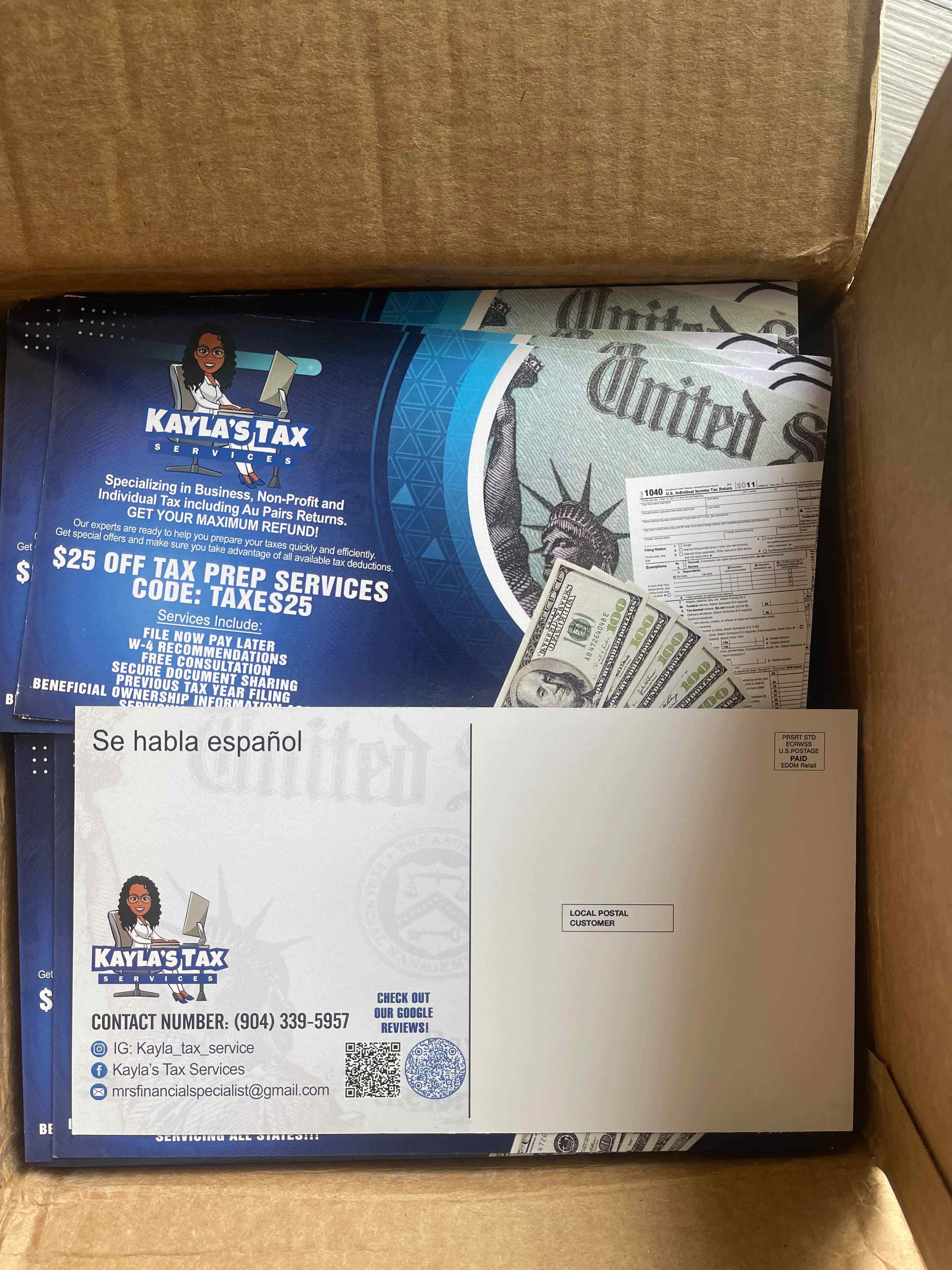
Calculating 6x9 postcard printing costs in 2026 requires balancing material quality, production volume, and technological specifications. The primary drivers of pricing include paper stock thickness, coating selections, total quantity, the chosen printing method (offset versus digital), variable data personalization, and production turnaround speed. Most professional 6x9 campaigns average $0.15 to $0.45 per unit for printing.
The 6x9 postcard remains one of the most popular sizes in direct mail because it offers significantly more real estate than a standard 4x6 card while still remaining cost-effective to mail. In the 2026 marketing landscape, where sensory engagement and personalization are paramount, understanding how these six specific factors interact will determine your project's total investment and eventual return on investment (ROI).
1. Paper Stock and Substrate Weight
The "hand-feel" of a postcard is the first point of contact with a potential customer. In the printing industry, paper thickness is measured in "points" (pt) or "grams per square meter" (gsm). For a 6x9 postcard, the choice of stock is not just an aesthetic decision; it is a structural necessity to survive the high-speed sorting machines of modern postal services.
Standard 14pt vs. Premium 16pt Stock
Most entry-level 6x9 postcards use 14pt gloss cover or matte stock. This is the baseline for "cardstock." It is sturdy enough to resist tearing but light enough to keep material costs low. However, in 2026, many brands have shifted to 16pt stock as the standard. The 16pt variety offers a noticeably more rigid feel that conveys a sense of premium quality and stability. While it typically adds 5% to 15% to the raw printing cost, the perceived value of the brand often increases disproportionately.
Specialty and Sustainable Substrates
Beyond standard cardstock, costs can escalate quickly when choosing specialty papers. These include:
- Recycled and Eco-friendly Stocks: As of 2026, 100% post-consumer waste (PCW) stocks carry a premium of roughly 10% to 20% due to the specialized processing required to maintain a smooth printing surface.
- Linen or Textured Stocks: These provide a tactile experience but often require more ink saturation, increasing the cost of production.
- 18pt and 24pt "Mega" Stocks: Used primarily for luxury branding or high-end real estate, these ultra-thick cards can double the printing cost compared to 14pt stock.
2. Coating and Finishing Options
The coating applied to a 6x9 postcard serves two purposes: protection and visual appeal. Uncoated cards are rarely used for postcards because they absorb ink like a sponge, leading to "flat" colors, and they are susceptible to scuffing during transit.
Aqueous (AQ) Coating
This is the most common and cost-effective finish. Aqueous coating is a water-based clear coat applied while the ink is still wet. It provides a basic level of protection against fingerprints and smudges. Because it is applied inline during the printing process, it rarely adds significant cost to the base price.
UV and Spot UV Coating
UV coating is a liquid cured with ultraviolet light, resulting in an extremely high-gloss, durable finish. It makes colors "pop" and provides the best protection against the elements. A Spot UV application—where only specific parts of the design (like a logo or a call to action) are glossy while the rest is matte—requires a separate pass or a specialized digital press. Spot UV can increase the printing cost by 20% to 40% because of the additional setup and precision required.
Soft Touch and Silk Lamination
In 2026, Soft Touch finishes have become highly sought after for B2B and luxury B2C campaigns. This finish gives the card a suede-like or velvety feel. This is achieved either through a specialized liquid coating or a thermal lamination process. Silk lamination not only feels unique but also makes the postcard virtually tear-proof and waterproof, though it is among the most expensive finishing options available.
3. Production Volume and Economies of Scale
The total number of 6x9 postcards you order is perhaps the single largest factor in the "price per piece." Printing involves significant "make-ready" costs—the time and materials used to set up the press, calibrate colors, and align the cutting blades.
The Sliding Scale of Unit Costs
If you order 250 postcards, the setup costs are spread over a very small number of units, leading to a high price per piece (perhaps $0.80 or more). If you order 25,000 postcards, those same setup costs are diluted, and the price per piece may drop to $0.08 or $0.10.
| Quantity | Estimated Price per Piece (14pt Gloss) | Total Printing Cost (USD) |
|---|---|---|
| 500 | $0.65 | $325 |
| 1,000 | $0.42 | $420 |
| 5,000 | $0.18 | $900 |
| 10,000 | $0.12 | $1,200 |
| 50,000 | $0.07 | $3,500 |
Note: These are 2026 estimates for printing only and do not include postage or mailing services.
4. Printing Method: Digital vs. Offset
The choice between digital and offset printing is usually dictated by the volume of the order and the need for speed or color precision.
Digital Printing
Digital printing functions much like a high-end office laser printer but on a massive scale (such as the HP Indigo or Xerox Iridesse series). It requires almost no setup time, making it the ideal choice for short runs (under 1,000 pieces). In 2026, digital print quality is nearly indistinguishable from offset for the average consumer. Digital printing is also the only way to facilitate Variable Data Printing (see Factor 5).
Offset Lithography
Offset printing remains the gold standard for large-scale production. It involves transferring ink from metal plates to rubber blankets and then onto the paper. While the initial setup is expensive and time-consuming, the speed of the press once it starts running is unmatched. For orders exceeding 2,500 to 5,000 pieces, offset is almost always the more cost-effective choice. It also allows for the use of Pantone Matching System (PMS) colors, which are essential for brands that require exact color fidelity that standard CMYK (Cyan, Magenta, Yellow, Black) printing cannot always achieve.
5. Variable Data Printing (VDP) and Personalization
In 2026, "batch and blast" marketing is largely being replaced by hyper-personalized mailers. Variable Data Printing (VDP) allows the printer to change the text, images, or offers on every single 6x9 postcard within a single print run.
The Cost of Customization
Implementing VDP requires sophisticated software and digital printing technology. The costs are typically structured as:
- Data Processing Fee: A flat fee to "clean" your mailing list and prepare the database for the press.
- VDP Surcharge: An additional $0.02 to $0.10 per card.
While VDP increases the printing cost, the conversion rates for personalized 6x9 postcards—such as those featuring a map to the nearest store location or the recipient's name in the headline—are significantly higher than generic mailers. This often results in a lower "cost per acquisition," even if the "cost per print" is higher.
6. Turnaround Time and Logistics
How quickly you need your 6x9 postcards can drastically alter the final invoice. Standard production times in 2026 generally range from 3 to 7 business days.
Rush Fees
If you require a 24-hour or 48-hour turnaround, expect to pay a "rush fee," which can range from 25% to 100% of the base printing cost. These fees cover the cost of disrupting the printer's existing schedule and potentially paying overtime to staff to meet your deadline.
Fulfillment and Bundling
If you are printing these postcards to be shipped to a single location (like an office or a retail store), shipping costs based on the weight of the paper will apply. A box of 5,000 16pt 6x9 postcards is surprisingly heavy, often exceeding 100 pounds. However, if the printer is also your mail house, they will "inkjet" the addresses and sort the cards into bundles according to USPS regulations. This fulfillment labor is an additional cost factor, though it often saves money overall by qualifying the cards for bulk mail postage rates.
Impact of 2026 Market Trends on Costs
As we move through 2026, two specific trends are influencing the cost of 6x9 postcards:
- AI-Driven Design Optimization: Many printers now offer AI tools that pre-flight your files to ensure they meet technical specs, reducing the "manual review" fees that used to be common.
- Smart Ink Technology: Newer inks are more resistant to fading and require less energy to dry, which has helped stabilize printing prices despite the rising costs of raw paper pulp.
A Note on 6x9 Postage vs. Printing
While this analysis focuses on printing, it is vital to remember that 6x9 postcards do not qualify for the "First-Class Mail Postcard" rate (which is limited to 4.25x6). A 6x9 card is billed at the Letter rate. This means that while your printing costs for 6x9 are efficient, your postage costs will be higher than a standard small postcard. You must ensure the "real estate" of the 6x9 size is used effectively to justify this higher total cost.
Frequently Asked Questions
Does the amount of ink used (heavy vs. light design) change the price?
In digital and offset printing, the "coverage" usually does not change the price unless you are using a specialized PMS spot color or metallic ink. Standard CMYK printing costs the same whether you have a white background or a full-color photograph, as the press is already set up to run all four colors.
Can I save money by printing 6x9 postcards on a "gang run"?
Yes. Many online printers use "gang run" printing, where your 6x9 postcards are placed on a massive sheet of paper alongside dozens of other customers' projects. This shares the setup costs and is the primary way small businesses get affordable rates. The trade-off is that you have less control over exact color matching across the entire run.
Is it cheaper to print 6x9 postcards single-sided?
Surprisingly, no. Most modern commercial presses print both sides of the sheet simultaneously or in a single pass. The cost difference between 4/0 (color on one side, blank on the other) and 4/4 (color on both sides) is often negligible—usually less than 5%. It is almost always better to use the back of the card for additional marketing space.
How do 2026 sustainability standards affect 6x9 printing costs?
Many jurisdictions now encourage or mandate the use of vegetable-based inks (like soy ink). While these were once a premium option, they are the industry standard in 2026. Choosing a "certified sustainable" printer might carry a small administrative fee, but the raw material costs have reached parity with traditional methods.
Practical Recommendation
For the best balance of cost and impact in 2026, aim for a 5,000-piece run on 16pt gloss cover with an Aqueous coating. This volume triggers significant economies of scale, moving your price per piece into a highly competitive range, while the 16pt stock ensures your message feels substantial and professional. If you have a high-value offer, always invest the extra $0.05 per card for Variable Data Personalization to maximize your response rate.