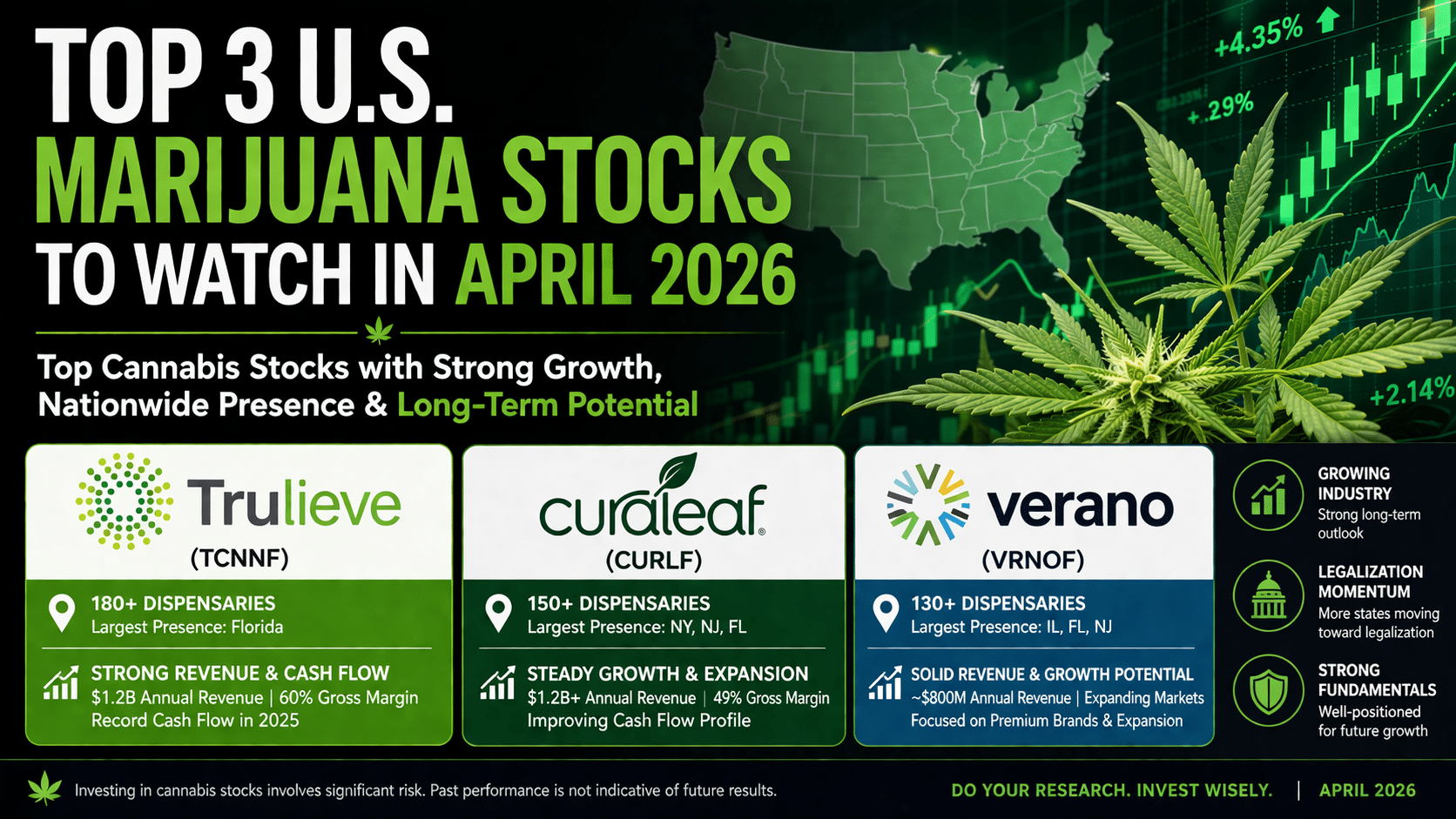
Evaluating the cannabis sector requires examining historical market data, regulatory developments, and fundamental financial health to identify top-performing companies. In 2019, the marijuana industry experienced a pivotal shift marked by the aftermath of Canada's nationwide legalization of adult-use cannabis, expanding medical marijuana frameworks across various U.S. states, and shifting global capital flows into plant-touching and ancillary businesses. For investors tracking this emerging market, separating high-potential multi-state operators, large-scale Canadian producers, and established ancillary suppliers from speculative ventures meant focusing on revenue growth, operational scale, and balance sheet strength.
Understanding the 2019 Cannabis Investment Landscape
The year 2019 was a definitive transitional period for the legal cannabis industry. Following the historic legalization of recreational cannabis in Canada in late 2018, public markets saw an influx of institutional and retail capital. Companies rushed to build cultivation capacity, secure distribution networks, and establish brand dominance. However, market enthusiasm soon collided with the operational realities of regulatory compliance, supply chain bottlenecks, and slower-than-expected retail store rollouts, particularly in Ontario.
Simultaneously, the United States market continued to expand on a state-by-state basis. Because federal prohibition under the U.S. Controlled Substances Act prevented cannabis from crossing state lines, U.S.-focused operators had to build vertically integrated supply chains within each state where they operated. This created two distinct investment archetypes: large Canadian Licensed Producers (LPs) listed on major exchanges like the Toronto Stock Exchange (TSX) and New York Stock Exchange (NYSE), and U.S. Multi-State Operators (MSOs) trading primarily on the Canadian Securities Exchange (CSE) or over-the-counter (OTC) markets in the United States.
Evaluating investments during this period required a shift from speculative hype to rigorous financial analysis. Key metrics included EBITDA (Earnings Before Interest, Taxes, Depreciation, and Amortization) generation, cost of production per gram, cash reserves, and distribution footprint.
Criteria for Evaluating Marijuana Stocks
Selecting top performers from a volatile sector requires clear parameters. In 2019, analysts and institutional investors relied on specific foundational criteria to distinguish viable businesses from cash-burning enterprises.
- Regulatory Compliance and Licensing: Companies with secure, established licenses in high-barrier markets possessed a distinct competitive advantage over those waiting for regulatory approvals.
- Balance Sheet Strength: Access to capital was critical. Firms with robust cash positions or backing from major corporate partners (such as beverage or tobacco giants) were better equipped to weather market downturns.
- Scalability and Distribution: Successful operators demonstrated the ability to scale cultivation facilities efficiently while securing retail shelf space through proprietary brands or wholesale agreements.
- Diversification: Companies that diversified their product lines beyond raw flower into value-added derivatives—such as extracts, vapes, edibles, and beverages—were positioned to capture higher-margin sales.
Canopy Growth Corporation (CGC / WEED)
As one of the earliest pioneers in the Canadian cannabis space, Canopy Growth Corporation captured significant market attention throughout 2019. Backed by a landmark $4 billion investment from global beverage giant Constellation Brands in late 2018, Canopy entered 2019 with an unprecedented war chest designed to fund global expansion, research and development, and infrastructure scaling.
The company focused heavily on preparing for Canada’s "Cannabis 2.0" rollout, which legalized derivatives like edibles, topicals, and concentrates. Canopy leveraged its capital to acquire multiple brands, expand its agricultural footprint, and invest in medical research partnerships. However, the company also faced scrutiny regarding high operating expenses, delayed retail store openings in key Canadian provinces, and a slower path to profitability. Despite these operational hurdles, Canopy Growth remained a benchmark stock for sector liquidity and institutional participation throughout the year.
Cronos Group Inc. (CRON / CRON)
Cronos Group stood out in 2019 due to its strategic focus on asset-light cultivation and its high-profile partnership with Altria Group, the tobacco conglomerate behind Philip Morris USA. Altria invested approximately $1.8 billion for a 45% ownership stake in Cronos, providing the company with substantial financial stability and deep expertise in regulatory affairs, product development, and consumer marketing.
Rather than committing massive capital to build sprawling greenhouses, Cronos focused on technological innovation, cannabinoid formulation, and intellectual property development, particularly through its partnership with Ginkgo Bioworks to produce cultured cannabinoids via fermentation. This scientific approach positioned Cronos as a differentiated play for investors looking beyond traditional agricultural models toward biotechnology applications in cannabis.
Curaleaf Holdings, Inc. (CURLF / CURA)
While Canadian LPs dominated early exchange listings, U.S. Multi-State Operators emerged as massive revenue generators in 2019. Curaleaf Holdings positioned itself as a dominant U.S. operator with a footprint spanning multiple states, covering cultivation, processing, and retail dispensaries.
Curaleaf’s investment thesis rested on its ability to capture market share in populous U.S. states with medical or adult-use frameworks, such as Florida, New York, Massachusetts, and New Jersey. The company pursued an aggressive mergers and acquisitions strategy, acquiring competitors to consolidate regional dominance. For investors willing to navigate the OTC markets and the regulatory risks of U.S. federal illegality, Curaleaf offered direct exposure to the world's largest consumer market for cannabis.
Tilray, Inc. (TLRY)
Tilray gained global prominence in 2018 as the first cannabis company to complete an initial public offering (IPO) on a major U.S. stock exchange (the Nasdaq). Throughout 2019, Tilray focused on establishing a global medical cannabis supply and distribution network, securing import and export agreements across Europe, Latin America, and Australia.
The company emphasized clinical research, strategic acquisitions (such as hemp food maker Manitoba Harvest), and partnerships with pharmaceutical distributors. While Tilray experienced significant share price volatility common to the sector, its emphasis on clinical validation and international medical supply chains made it a frequent subject of institutional portfolio analysis.
Aurora Cannabis Inc. (ACB / ACB)
Aurora Cannabis pursued an aggressive capacity-expansion strategy in 2019, constructing massive, highly automated production facilities such as Aurora Sky in Alberta. The company aimed to become the lowest-cost, highest-volume producer of cannabis globally, supplying the Canadian domestic market and expanding medical exports to international jurisdictions.
Aurora's strategy prioritized top-line revenue growth and wholesale supply agreements with provincial distributors. However, heavy capital expenditures and reliance on equity-financed acquisitions led to substantial share dilution. The stock became a primary retail favorite, reflecting both the high-growth potential and the operational risks associated with rapid scaling in an evolving regulatory environment.
| Company Name | Primary Exchange / Ticker | Geographic Focus | Key Strategic Advantage | 2019 Market Role |
|---|---|---|---|---|
| Canopy Growth Corp. | NYSE / TSX: CGC | Global / Canada | Major strategic partnership with Constellation Brands | Sector liquidity benchmark and derivative preparation |
| Cronos Group Inc. | NASDAQ / TSX: CRON | Global / Canada | Backing from Altria Group | Biotech focus and cultured cannabinoid research |
| Curaleaf Holdings | CSE: CURAL / OTC: CURLF | United States | Extensive multi-state operational footprint | U.S. market consolidation and retail scale |
| Tilray, Inc. | NASDAQ: TLRY | Global | International medical supply and hemp food acquisition | Global export and clinical research expansion |
| Aurora Cannabis Inc. | NYSE / TSX: ACB | Global / Canada | Massive large-scale cultivation capacity | High-volume production and wholesale distribution |
Comparative Financial and Operational Metrics
Evaluating these five companies requires contrasting their operating models. Canadian producers prioritized nationwide distribution and international medical export channels, relying on massive greenhouse infrastructure. U.S. operators like Curaleaf bypassed federal restrictions by operating strictly within state borders, balancing cultivation with vertically integrated retail dispensary networks.
Financial comparisons during 2019 revealed that profitability remained elusive for most major players. Operational expenditures related to marketing, facility expansion, and administrative overhead frequently outpaced gross revenues. Consequently, cash burn rate became the single most critical metric for assessing survival capability and the need for future dilutive share offerings.
Key Risks and Regulatory Challenges in Cannabis Investing
Investing in the marijuana sector during 2019 involved substantial risks that separated speculative trading from long-term investing. Understanding these barriers is essential for analyzing the historical context of the industry.
- Regulatory Uncertainty: Federal prohibition in the United States restricted access to traditional banking services, forcing companies to rely on expensive alternative financing and cash-handling systems. In Canada, provincial retail bottlenecks restricted product sell-through.
- Oversupply and Pricing Pressure: Rapid expansion by Canadian LPs created concerns regarding potential oversupply, which eventually exerted downward pressure on wholesale flower prices.
- Share Dilution: Many companies funded operations and acquisitions by issuing new shares, reducing individual shareholder value over time.
- Illicit Market Competition: Legal operators struggled to compete with established illicit markets that offered lower prices unburdened by excise taxes, compliance costs, and regulatory fees.
Frequently Asked Questions
Why did marijuana stocks experience high volatility in 2019?
Volatility in 2019 stemmed from a transition between speculative market enthusiasm and actual financial reporting. As companies posted quarterly earnings that missed lofty expectations, and as regulatory rollouts in Canada and U.S. states faced delays, market sentiment shifted rapidly, leading to significant price swings.
How did U.S. cannabis companies trade if federal prohibition was active?
U.S. plant-touching operators could not list on major senior U.S. exchanges like the NYSE or Nasdaq. Instead, they typically listed on the Canadian Securities Exchange (CSE) and traded over-the-counter (OTC) in the United States, utilizing corporate structures designed to comply with federal statutes.
What was Cannabis 2.0 and why was it important in 2019?
Cannabis 2.0 referred to the second phase of Canadian legalization enacted in late 2019, which permitted the sale of cannabis derivatives including edibles, beverages, concentrates, and topicals. Companies invested heavily throughout 2019 to build manufacturing lines for these higher-margin products.
Did any major marijuana companies achieve profitability in 2019?
Most large-cap cannabis producers and multi-state operators reported net losses throughout 2019. Capital was prioritized for aggressive market expansion, facility construction, and brand acquisition rather than immediate bottom-line net income.
How did partnerships with mainstream corporations affect cannabis stocks?
Investments from major consumer packaged goods companies—such as Constellation Brands investing in Canopy Growth or Altria investing in Cronos—validated the sector's long-term potential, provided substantial capital reserves, and introduced corporate governance standards to emerging cannabis enterprises.
Conclusion and Strategic Takeaways
Investing in marijuana stocks in 2019 required a disciplined approach to risk management, regulatory analysis, and financial auditing. While companies like Canopy Growth, Cronos Group, Curaleaf, Tilray, and Aurora Cannabis captured headlines and capital, the period demonstrated that rapid top-line growth must be balanced with operational efficiency and disciplined capital allocation. Investors examining this historical period gain valuable insights into how regulatory frameworks, supply chain execution, and corporate partnerships shape nascent global industries.