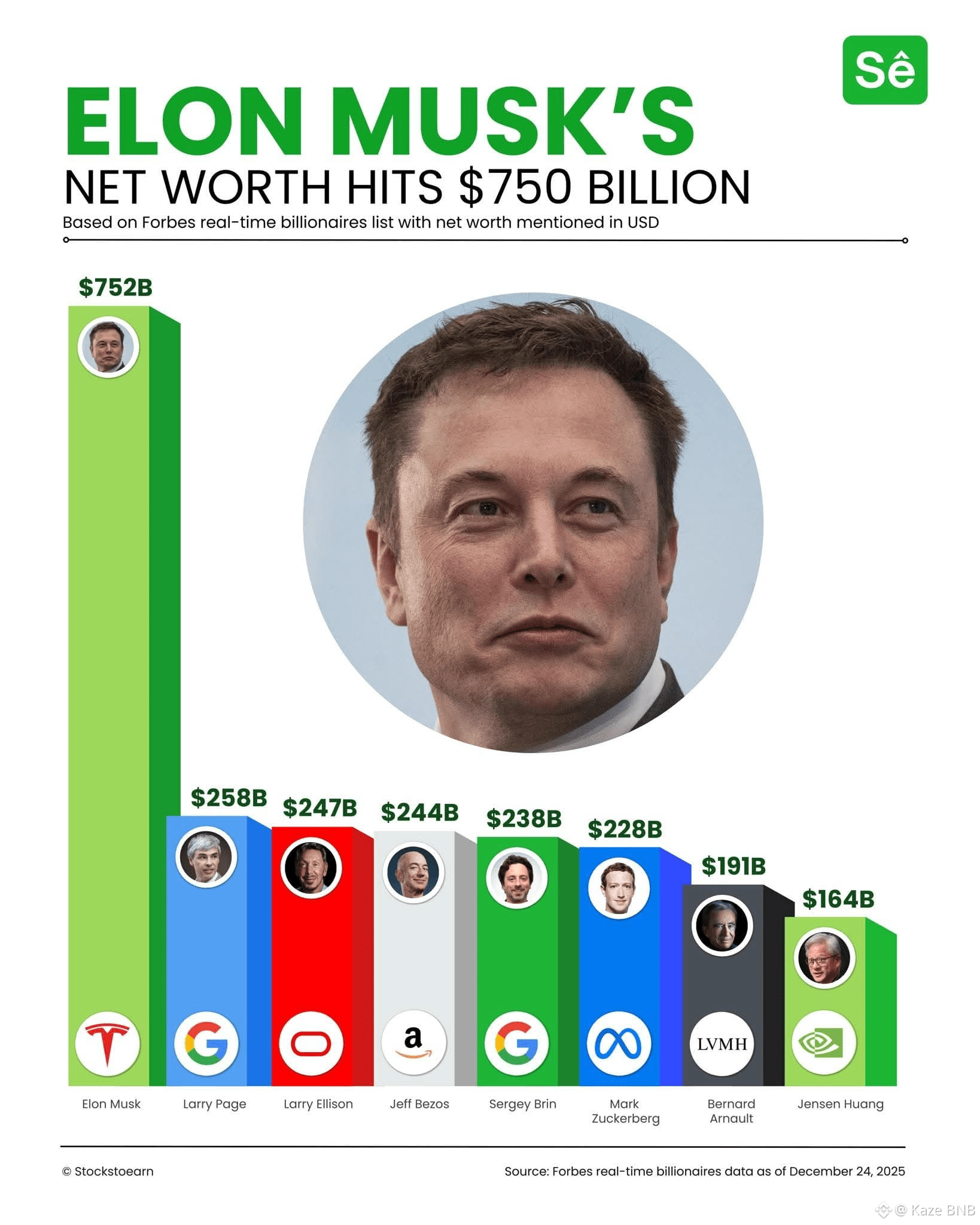
Elon Musk's financial trajectory reached historic milestones around June 2025, driven by massive surges in equity valuations across Tesla, SpaceX, xAI, and other ventures. Financial trackers evaluated his peak net worth during this window, highlighting the volatile interplay between private market funding rounds, public stock market fluctuations, and complex compensation structures that dictate modern centibillionaire wealth tracking.
Tracking the net worth of the world's wealthiest individuals requires navigating volatile asset prices, illiquid private equity stakes, and macroeconomic shifts. In mid-2025, financial analysts and wealth trackers closely examined the mechanisms behind Musk's peak valuation figures. Understanding how these fortunes are calculated involves examining public share prices, private enterprise valuations, debt obligations, and stock option vesting schedules that differentiate paper wealth from liquid capital.
The Mechanics of Centibillionaire Wealth Tracking
Real-time wealth tracking for ultra-high-net-worth individuals relies heavily on publicly traded equity values, regulatory filings, and reported private funding transactions. Major financial publications maintain dedicated indices to estimate these fortunes on a daily basis.
Public Equities Versus Private Holdings
The foundation of Elon Musk's net worth rests primarily on equity ownership rather than cash reserves. Tesla (TSLA) represents the largest publicly traded component, where share price swings directly impact his net worth by billions of dollars in a single trading session. Conversely, private enterprises such as SpaceX, xAI, and Neuralink require periodic third-party funding rounds, secondary share sales, and institutional valuations to update their estimated contributions to his overall wealth profile.
The Role of Stock Options and Compensation Packages
A significant driver of historical net worth peaks involves executive compensation plans. Tesla's landmark 2018 CEO performance award granted massive tranches of stock options contingent upon achieving aggressive operational and market capitalization milestones. The vesting, exercise, and subsequent holding of these options create substantial jumps in net worth calculations whenever market valuations cross predetermined thresholds.
Major Enterprises Driving Valuation Peaks
Assessing the peak valuation achieved in mid-2025 necessitates breaking down the individual contributions of the core companies under Musk's leadership umbrella. Each sector operates under distinct market dynamics, regulatory environments, and growth trajectories.
| Enterprise | Primary Asset Class | Valuation Driver |
|---|---|---|
| Tesla | Public Equities (TSLA) | EV adoption, autonomous driving, energy storage expansion |
| SpaceX | Private Equity | Starlink satellite broadband, Starship launch milestones |
| xAI | Private Equity | Artificial intelligence model development, compute clusters |
| Other Ventures | Private Equity | Neuralink, The Boring Company |
Tesla and the Automotive-Tech Valuation Split
Tesla functions simultaneously as an automotive manufacturer and an artificial intelligence/energy ecosystem. Market analysts frequently reprice the stock based on quarterly delivery reports, regulatory credit sales, progress in Full Self-Driving (FSD) software, and global factory expansions. When Tesla's market capitalization expanded rapidly, it provided the primary fuel for net worth milestones.
SpaceX and Starlink Commercial Momentum
SpaceX leverages dominance in commercial orbital launch services alongside the rapid scaling of the Starlink satellite constellation. Private funding rounds in 2024 and 2025 elevated SpaceX's private valuation significantly, establishing it as one of the most valuable privately held companies globally and adding substantial weight to Musk's net balance sheet.
Artificial Intelligence Ventures: xAI
The rapid emergence of xAI added a new dimension to valuation models. Capital raises valuing the artificial intelligence startup in the tens of billions of dollars demonstrated strong institutional appetite for generative AI competitors, directly translating into higher estimated equity values for major stakeholders.
Comparative Analysis of Wealth Fluctuations
To understand the context of mid-2025 valuations, financial historians look at historical peaks and troughs. Wealth at this scale is rarely static; it experiences sharp expansions followed by consolidation phases driven by broader market corrections or company-specific headwinds.
- Market Volatility: High-beta stocks like Tesla exhibit greater volatility than the broader S&P 500 index, causing rapid swings in net worth calculations.
- Regulatory Scrutiny: Antitrust investigations, vehicle safety recalls, and environmental approvals can temporarily depress valuations across public and private assets.
- Capital Allocation: Strategic shifts, such as funding acquisitions or divesting shares for specific corporate initiatives, alter the composition of total assets.
Frequently Asked Questions
How do tracking organizations calculate net worth for individuals like Elon Musk?
Trackers monitor publicly traded stock holdings via SEC filings, calculate the value of vested options, and incorporate estimated valuations from recent private funding rounds or secondary share transactions for companies like SpaceX and xAI. Debt or loans secured against shares are also factored into net estimates.
Why do net worth estimates fluctuate so drastically day-to-day?
The majority of centibillionaire wealth is tied directly to equity markets. If a primary stock holding like Tesla experiences a 5% shift in valuation during a single trading day, an individual's net worth can change by billions of dollars instantaneously.
Are these peak net worth figures composed of liquid cash?
No. The vast majority of the calculated wealth exists as illiquid equity shares or unexercised stock options. Converting these assets into cash would require massive open-market sales or private transactions, which can influence market prices and incur significant capital gains taxes.
What role did private companies play in the mid-2025 valuation peak?
Private entities such as SpaceX and xAI experienced substantial valuation increases due to high investor demand for aerospace broadband services and enterprise artificial intelligence infrastructure, contributing significantly to overall net worth calculations during this period.
Practical Takeaways and Financial Insights
Analyzing centibillionaire valuations offers broader lessons regarding modern asset structures and market dynamics. For observers and analysts, tracking these figures underscores the dominance of equity-based compensation and the unique role of privately held technology firms in modern wealth generation. Recognizing that these peaks represent theoretical market values rather than accessible bank balances remains essential for accurate economic analysis.