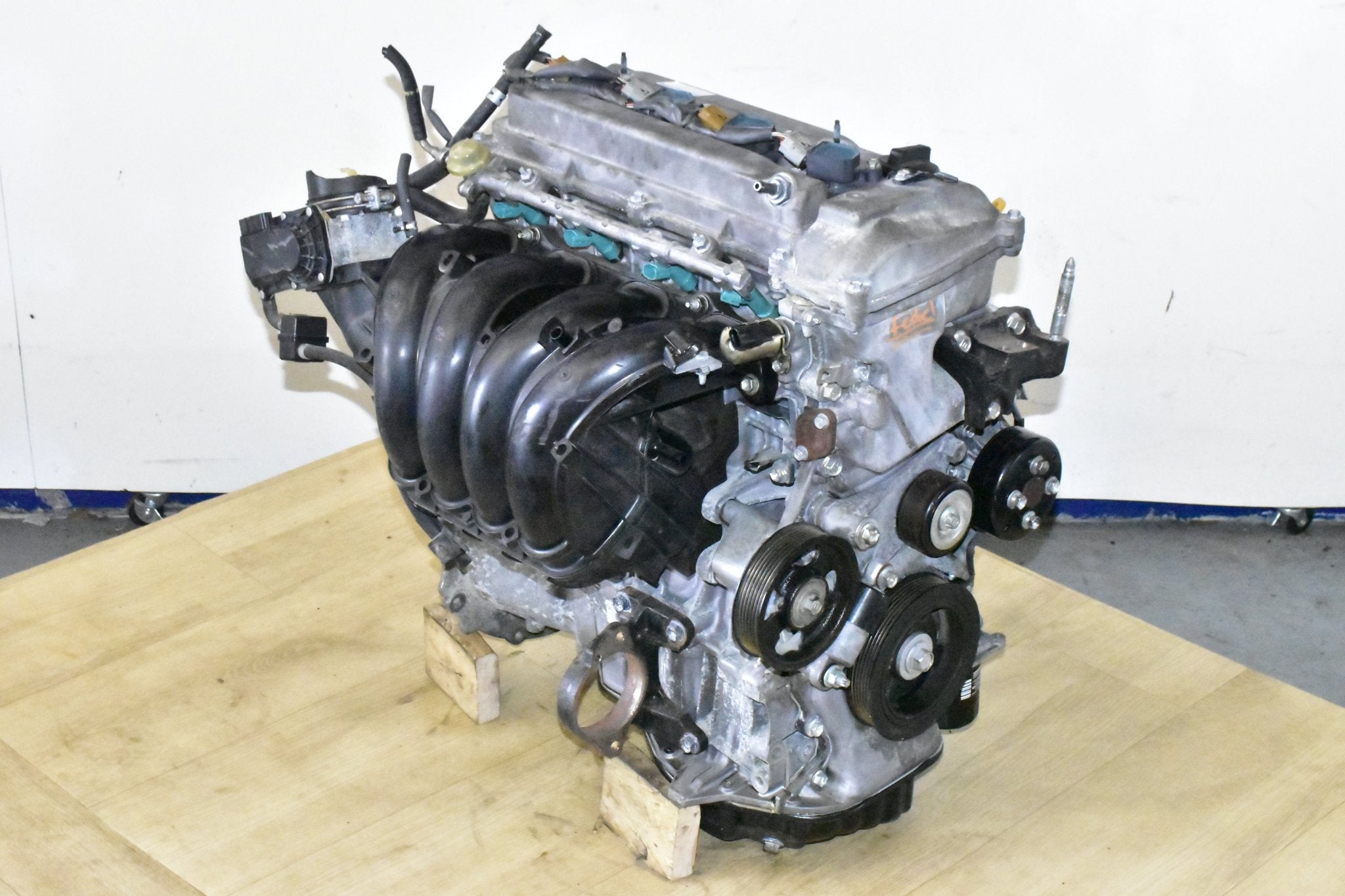
The Toyota 2AZ-FE is a 2.4-liter inline-four engine that served as the backbone of Toyota’s mid-sized fleet for over a decade. Featuring an aluminum block, dual overhead cams, and VVT-i technology, it is celebrated for its smooth power delivery and longevity, though it is equally well-known for specific oil consumption issues in mid-cycle production units.
Introduced at the turn of the millennium, the 2AZ-FE was designed to replace the aging 5S-FE 2.2-liter engine. As the automotive landscape shifted toward larger, heavier vehicles requiring more torque without sacrificing fuel economy, the 2AZ-FE became the primary motivator for best-sellers like the Camry, RAV4, and Highlander. Even in 2026, many of these engines remain on the road, often surpassing the 250,000-mile mark with proper maintenance. This guide provides a deep technical dive into its architecture, common failures, and why it remains a significant piece of Toyota’s engineering history.
Technical Specifications and Architecture
The 2AZ-FE is a member of the Toyota AZ engine family. It was engineered with a focus on weight reduction and internal friction minimization. Unlike the iron-block 5S-FE it replaced, the 2AZ-FE utilized a high-pressure die-cast aluminum alloy cylinder block with "spiny-type" cast-iron liners. These liners are cast directly into the block to ensure maximum thermal conductivity and a permanent bond.
Core Internal Dimensions
The engine features an "undersquare" design, meaning the stroke is longer than the bore. This configuration is specifically chosen to maximize low-to-mid-range torque, which is essential for heavy vehicles like the Highlander or a loaded Camry.
- Displacement: 2,362 cc (2.4 Liters)
- Bore: 88.5 mm (3.48 in)
- Stroke: 96.0 mm (3.78 in)
- Compression Ratio: 9.6:1 (later updated to 9.8:1 in some versions)
- Valvetrain: DOHC, 4 valves per cylinder, VVT-i on the intake side.
The Offset Crankshaft and Balance Shafts
One of the more sophisticated features of the 2AZ-FE is the offset crankshaft. The centerline of the crankshaft is offset by 10mm from the cylinder bore centerline. This design reduces the side-thrust load of the piston against the cylinder wall during the power stroke, significantly reducing internal friction and improving mechanical efficiency.
To counteract the secondary vibrations inherent in a large-displacement four-cylinder engine, Toyota equipped the 2AZ-FE with twin counter-rotating balance shafts. Located in the lower crankcase and driven by a gear on the crankshaft, these shafts spin at twice the engine speed to cancel out vertical vibrations, giving the engine a level of refinement that approached contemporary V6 engines of that era.
The Evolution of VVT-i and Air Management
The "FE" in the engine code denotes a narrow-angle DOHC head designed for fuel efficiency. The 2AZ-FE employs Toyota’s VVT-i (Variable Valve Timing with intelligence) system on the intake camshaft. This system uses oil pressure to rotate the intake cam relative to the drive gear, allowing the ECU to advance or retard valve timing based on RPM, load, and temperature.
This variability allows the engine to achieve a "best of both worlds" scenario: a smooth, stable idle with minimal emissions, and a robust torque curve at highway speeds. Furthermore, the intake manifold is constructed from a high-strength glass-fiber reinforced plastic. This not only reduces weight by approximately 50% compared to aluminum but also reduces heat soak, keeping the intake air cooler and denser for better combustion.
Performance and Applications
Throughout its production run from 2000 to approximately 2015 (in various global markets), the 2AZ-FE was tuned for different outputs depending on the chassis. In most North American applications, it produced between 157 and 161 horsepower and roughly 162 lb-ft of torque.
Notable Vehicle Applications:
- Toyota Camry: 2002–2009
- Toyota RAV4: 2004–2008
- Toyota Highlander: 2001–2007
- Toyota Solara: 2002–2008
- Toyota Corolla XRS / Matrix M-Spec: 2009–2010
- Scion tC: 2005–2010
- Scion xB: 2008–2015
- Pontiac Vibe: 2009–2010 (GT and AWD models)
The engine was also adapted for the first-generation Camry Hybrid (2007–2011), designated as the 2AZ-FXE. This variant used the Atkinson cycle, which delays the closing of the intake valve to reduce pumping losses, sacrificing peak power for significantly higher thermal efficiency in a hybrid powertrain.
Critical Issues: Oil Consumption and Head Bolts
Despite Toyota’s reputation for "bulletproof" reliability, the 2AZ-FE is the subject of two significant mechanical controversies that every owner or prospective buyer should understand.
1. Excessive Oil Consumption (2006–2011 Models)
This is the most notorious issue associated with the 2AZ-FE. Many engines produced between 2006 and 2011 began consuming oil at an alarming rate, sometimes exceeding one quart every 1,000 miles.
The root cause was a defective piston ring design. Toyota utilized "low-tension" piston rings to reduce friction and improve fuel economy. However, the oil return holes in the piston grooves were too small and prone to clogging with carbon deposits. Once the holes clogged, oil could no longer drain back into the crankcase and was instead pulled into the combustion chamber and burned.
Toyota addressed this with a massive Technical Service Bulletin (TSB) and a Warranty Enhancement Program (ZE7), which involved replacing the pistons and rings in affected vehicles. By 2026, most of these repairs have either been performed or the vehicles have reached the end of their service life, but anyone buying a used 2AZ-FE should check for service records indicating this fix.
2. Stripped Cylinder Head Bolts (2002–2006 Models)
In earlier versions of the engine, specifically those manufactured between 2002 and 2006, there were reports of the cylinder head bolts pulling the threads out of the aluminum engine block. This usually occurred on the rear side of the engine (near the firewall).
When the threads failed, the head gasket would lose its seal, leading to coolant leaks, overheating, and potentially catastrophic engine failure. The industry-standard fix is not to simply replace the bolts, but to use a thread repair kit like Time-Sert or the NS300L kit, which installs new, stronger steel inserts into the block.
| Feature | 2AZ-FE (Standard) | 2AZ-FXE (Hybrid) |
|---|---|---|
| Cycle | Otto Cycle | Atkinson Cycle |
| Compression Ratio | 9.6:1 or 9.8:1 | 12.5:1 |
| Max Horsepower | ~160 hp | ~147 hp (Engine only) |
| Primary Goal | Balanced performance | Maximum efficiency |
| Intake Manifold | Standard Plastic | Specialized for Atkinson |
Maintenance Requirements for Longevity
If you own a 2AZ-FE in 2026, the key to keeping it running past 300,000 miles is proactive maintenance that goes beyond the "standard" factory intervals.
The Timing Chain
The 2AZ-FE uses a timing chain rather than a belt. This is a significant advantage as it does not require periodic replacement. However, the chain relies entirely on clean engine oil for lubrication and for the operation of the hydraulic tensioner. Neglecting oil changes can cause the chain to stretch or the tensioner to fail, leading to timing synchronization issues.
Oil Selection and Intervals
While Toyota originally specified 5,000-mile intervals, many experts recommend changing the oil every 3,000 to 4,000 miles for the 2AZ-FE, especially if it is a model prone to carbon buildup. Using a high-quality full synthetic 5W-20 or 5W-30 oil (depending on the year and climate) helps keep the piston rings clean and prevents the oil return holes from clogging.
The Cooling System
The water pump on the 2AZ-FE is a known "wear item" that typically begins to weep pink crusty coolant from the weep hole around 60,000 to 100,000 miles. Because of the aluminum head's sensitivity to overheating, it is critical to replace the water pump at the first sign of leakage. Always use Toyota Super Long Life Coolant (Pink) to prevent corrosion of the aluminum internal passages.
Modification and Tuning Potential
The 2AZ-FE has a surprisingly robust following in the tuning community, largely due to its presence in the Scion tC. Because it is a large-displacement four-cylinder, it responds well to forced induction.
The stock internals can generally handle 7–10 psi of boost from a turbocharger, pushing output toward the 250-horsepower mark. However, the weak point remains the head bolts and the open-deck block design. Enthusiasts looking for high horsepower often "sleeve" the block and use ARP head studs to ensure the engine stays together under pressure. For the average driver, however, the engine is best left in its naturally aspirated state, where it provides the most reliable service.
2AZ-FE vs. Its Successor: The 2AR-FE
By 2009, Toyota began phasing out the 2AZ-FE in favor of the 2AR-FE (2.5L). The 2AR-FE corrected almost all the flaws of its predecessor. It moved to a more robust piston ring design, utilized Dual VVT-i (on both intake and exhaust cams), and featured a "roller rocker" valvetrain that further reduced friction. While the 2AZ-FE was a revolutionary step for Toyota in 2000, the 2AR-FE is widely considered the more refined and reliable engine for those seeking a used Toyota from the late 2010s.
Frequently Asked Questions
Is the 2AZ-FE an interference engine?
Yes, the 2AZ-FE is an interference engine. This means that if the timing chain were to break or skip significantly, the pistons would strike the open valves, causing severe internal damage. However, since it uses a chain rather than a belt, such failures are extremely rare unless the engine is severely neglected or run without oil.
How many miles can a 2AZ-FE last?
With proper maintenance—specifically frequent oil changes and cooling system care—the 2AZ-FE can easily last 250,000 to 300,000 miles. The core rotating assembly is very strong; the most common reasons these engines are retired are oil consumption or overheating due to a failed water pump or stripped head bolts.
Why does my 2AZ-FE smell like burning oil?
If you have a 2007–2009 Camry or RAV4, the burning smell is likely due to the piston ring issue mentioned earlier. The engine is consuming oil internally. If the smell is external, check the valve cover gasket. The 2AZ-FE is known to develop leaks at the rear of the valve cover, which allows oil to drip onto the hot exhaust manifold.
Can the oil consumption issue be fixed without rebuilding the engine?
In some cases, performing a "piston soak" with specialized carbon-cleaning chemicals can help unstick the rings, but this is often a temporary fix. The only permanent solution is the one Toyota outlined in their TSB: replacing the pistons with the redesigned versions (which have improved oil return holes) and installing new rings.
Final Recommendation
The Toyota 2AZ-FE is a landmark engine that powered an era of incredible growth for Toyota. While it is marred by the piston ring and head bolt issues of specific production years, it remains a fundamentally sound piece of engineering.
If you are looking at a vehicle equipped with this engine in 2026, prioritize service history. Look for evidence that the oil consumption TSB was performed or that the vehicle has had consistent, high-frequency oil changes. For existing owners, the best course of action is to monitor oil levels weekly and ensure the cooling system is in top condition. When cared for, the 2AZ-FE is a smooth, torque-rich companion that exemplifies Toyota's "just-in-time" engineering philosophy—efficient, effective, and built to last.