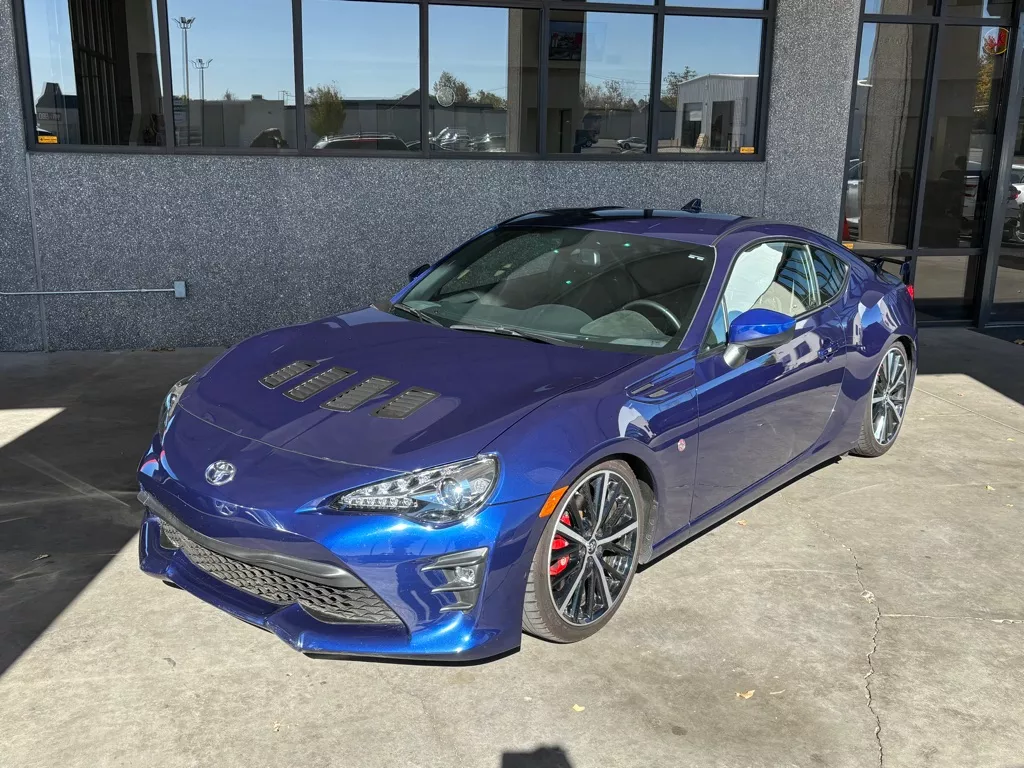
The 2020 Toyota 86 features a naturally aspirated 2.0-liter flat-four boxer engine that produces 205 horsepower with the manual transmission and 200 horsepower with the automatic transmission, prioritizing responsive handling, high-revving dynamics, and mechanical engagement over raw straight-line acceleration.
Understanding the performance dynamics of a modern sports car requires looking beyond simple specification sheets. When evaluating the 2020 Toyota 86 horsepower overview, enthusiasts and prospective buyers often weigh the merits of its unique boxer engine architecture against forced-induction alternatives. Developed in a joint venture with Subaru (sharing its DNA with the Subaru BRZ), the Toyota 86 focuses heavily on a low center of gravity, lightweight chassis dynamics, and precise steering feedback. This comprehensive guide explores every mechanical facet of the 2020 Toyota 86 powertrain, examining transmission variations, real-world power delivery, tuning considerations, and how its output translates into everyday driving and track performance.
Mechanical Architecture of the Boxer Engine
At the heart of the 2020 Toyota 86 lies the FA20 engine, a 2.0-liter horizontally opposed (boxer) four-cylinder powerplant manufactured by Subaru. This configuration plays a defining role in how the vehicle handles and how power is generated throughout the rev range.
Unlike traditional inline-four engines, which feature vertical cylinders, the boxer layout places cylinders horizontally opposite each other. This design allows the entire engine block to sit significantly lower in the engine bay and further back toward the firewall. The primary benefit of this architecture is a remarkably low center of gravity, which enhances cornering stability, reduces body roll, and sharpens turn-in response.
The engine utilizes Toyota's D-4S direct and port injection system. This sophisticated dual-injection technology combines high-pressure direct injection into the combustion chambers with traditional port injectors. By switching between or combining both systems depending on engine load and RPM, the engine optimizes fuel atomization, improves combustion efficiency, reduces emissions, and maintains a linear throttle response. Breathing through a dual-overhead-camshaft (DOHC) layout with dual Active Valve Control System (AVCS) variable valve timing, the engine breathes efficiently up to its high 7,400 RPM redline.
Transmission Variations and Horsepower Output
One of the most notable technical nuances of the 2020 Toyota 86 lineup is the divergence in horsepower output depending on whether the driver selects the six-speed manual transmission or the six-speed automatic transmission. This variance is rooted in internal engine tuning parameters and mechanical requirements tailored to each gearbox.
The Six-Speed Manual Configuration
When paired with the traditional six-speed manual gearbox, the 2020 Toyota 86 produces 205 horsepower at 7,000 RPM and 156 lb-ft of torque at 6,400 RPM.
- Mechanical Tuning: The manual variant features a slightly higher compression ratio, aggressive valve timing maps, and a lighter flywheel designed to complement driver engagement.
- Power Delivery: The manual transmission allows drivers to hold gears precisely where the engine makes its best power, keeping the tachometer needle sweeping cleanly toward the upper limits of the rev range.
- Gear Ratios: The close-ratio gearset helps mitigate the famous mid-range torque dip inherent to the FA20 engine, ensuring the car stays in its optimal power band during spirited driving.
The Six-Speed Automatic Configuration
When equipped with the paddle-shifted six-speed automatic transmission, the 2020 Toyota 86 produces 200 horsepower at 7,000 RPM and 151 lb-ft of torque at 4,000 to 6,200 RPM.
- Mechanical Tuning: The automatic variant utilizes slightly softer calibration maps, a different torque converter assembly, and alternative ECU tuning to manage shift shocks and emissions compliance.
- Torque Curve: Interestingly, while peak horsepower drops by 5 horsepower, the automatic's torque curve hits its peak slightly earlier in the RPM range, making low-speed urban commuting feel marginally more responsive off the line.
- Driver Control: Sport mode alters throttle mapping and holds gears longer, while steering-wheel-mounted paddle shifters offer manual gear selection for track days or winding canyon roads.
Power Delivery, Torque Characteristics, and the Mid-Range Dip
No discussion of the 2020 Toyota 86 horsepower overview is complete without addressing its power delivery characteristics. While 205 horsepower is respectable for a lightweight, naturally aspirated sports car, the engine's torque curve has historically been a focal point of enthusiast reviews.
| 2020 Toyota 86 Powertrain Specifications | ||
|---|---|---|
| Specification | Manual Transmission | Automatic Transmission |
| Engine Type | 2.0L Boxer 4-Cylinder | 2.0L Boxer 4-Cylinder |
| Horsepower | 205 hp @ 7,000 RPM | 200 hp @ 6,000–7,000 RPM |
| Torque | 156 lb-ft @ 6,400 RPM | 151 lb-ft @ 4,000 RPM |
| Injection System | Toyota D-4S Dual | Toyota D-4S Dual |
| Compression Ratio | 12.5:1 | 12.5:1 |
| Redline | 7,400 RPM | 7,400 RPM |
Between 3,000 and 4,500 RPM, the FA20 engine experiences a noticeable dip in torque output before climbing sharply toward its high-RPM peak. This dip occurs as the engine transitions from port injection to direct injection and reaches the crossover point of its variable valve timing system.
- Low-End Response: Off-the-line acceleration is adequate, but drivers must work the gearbox to keep the engine spinning above 4,000 RPM to access true acceleration.
- High-RPM Reward: The car rewards drivers who are willing to wring out the engine. Peak horsepower is achieved right at 7,000 RPM, just 400 revs shy of the fuel cutoff.
- Momentum Driving: Because absolute horsepower figures are modest, the 86 is designed as a momentum car. Its strength lies in carrying high speeds through corners rather than overpowering straightaways.
Real-World Performance and Track Dynamics
On paper, a 0–60 mph time of approximately 6.2 to 6.5 seconds (depending on transmission and surface conditions) places the 2020 Toyota 86 in competitive territory for entry-level sports cars, but raw acceleration figures fail to capture its true character.
On a closed circuit or technical autocross course, the 86 shines. Its low weight (roughly 2,800 pounds) means that 205 horsepower is more than sufficient to break traction dynamically, allowing for highly adjustable rear-wheel-drive handling.
- Handling Balance: The car features a neutral chassis setup that telegraphs grip limits clearly through the steering wheel.
- Braking and Suspension: MacPherson strut front suspension and double-wishbone rear suspension, coupled with ventilated disc brakes, provide repeatable stopping power and composure under heavy trail-braking.
- Tire Dynamics: Standard factory tires are often chosen for low rolling resistance and playful breakaway characteristics rather than maximum grip, encouraging drivers to explore car control at safe, accessible speeds.
Upgrades, Tuning Potential, and Aftermarket Modifications
Because the FA20 engine has been on the market since the debut of the platform in 2013, an extensive aftermarket support ecosystem exists for owners looking to extract more power from their vehicles.
| Common Modifications for Power Enhancement | ||
|---|---|---|
| Modification Type | Estimated Gain | Considerations |
| Cat-Back Exhaust | 2–5 hp | Sound enhancement |
| Header + Tune (EcuTek) | 15–25 hp | Smooths mid-range torque |
| Supercharger Kit | 60–90+ hp | Significant power boost |
| Turbocharger Kit | 80–150+ hp | High thermal management |
- Header and ECU Tuning: The factory exhaust manifold and catalytic converter are notoriously restrictive in smoothing out the mid-range torque dip. Installing aftermarket unequal-length or equal-length headers paired with a custom engine tune (such as an EcuTek remap) is the most popular modification. This combination typically eliminates the torque dip and yields noticeable gains across the rev range.
- Force Induction (Superchargers and Turbochargers): For enthusiasts seeking substantial power increases, centrifugal supercharger kits and turbocharger systems are widely available. These kits can push output past 300 horsepower on stock internals, though careful attention must be paid to oil cooling, clutch upgrades, and transmission tolerances.
- Flex-Fuel Kits: Many owners install ethanol (E85) flex-fuel sensors alongside engine calibration. Because ethanol has a higher octane rating, the engine can safely run more ignition timing, unlocking extra horsepower and torque without forced induction.
Comparing the 2020 Toyota 86 to Competitors
When evaluating the 2020 Toyota 86 horsepower overview within the broader sports car landscape, context is vital. Competitors in the affordable rear-wheel-drive segment offer varying mechanical philosophies:
- Mazda MX-5 Miata: Weighing significantly less than the 86, the Miata utilizes a 2.0-liter inline-four producing 181 horsepower. While the Miata has a lower peak horsepower figure, its lighter curb weight results in comparable power-to-weight ratios and brisk straight-line performance, alongside a convertible top.
- Ford Mustang EcoBoost: Featuring a 2.3-liter turbocharged inline-four pushing 310 horsepower, the Mustang offers vastly superior straight-line acceleration. However, the Mustang is heavier, larger, and lacks the telepathic, surgical handling balance of the lighter Toyota 86 chassis.
- Honda Civic Si: Powered by a 1.5-liter turbocharged engine making 205 horsepower, the Civic Si matches the 86 in peak power but relies on front-wheel drive, offering a different driving dynamic focused on daily utility and front-wheel pull.
Frequently Asked Questions
Does the 2020 Toyota 86 require premium fuel?
Yes, the high compression ratio of 12.5:1 necessitates the use of premium unleaded gasoline (91 octane or higher) to prevent engine knock, ensure optimal combustion efficiency, and deliver rated horsepower safely.
Is the 2020 Toyota 86 fast in a straight line?
No, straight-line acceleration is not the primary design focus of the Toyota 86. With a 0–60 mph time in the low six-second range, it is designed for cornering agility, balanced chassis dynamics, and momentum driving rather than drag strip performance.
Can the automatic transmission handle engine modifications?
While the automatic transmission can handle light bolt-on modifications like exhaust systems and headers, high-output forced induction (turbochargers or superchargers) places heavy thermal and torque stress on the automatic torque converter, requiring upgraded cooling and transmission tuning.
Why is the manual transmission rated higher than the automatic?
The manual transmission version features aggressive camshaft profiles, distinct ECU calibration maps, and a higher mechanical compression threshold that allows it to generate 5 more horsepower and 5 more lb-ft of torque than its automatic counterpart.
How does the 2020 model differ from later generations?
The 2020 model represents the final year of the first-generation platform before the transition to the second-generation GR86 in 2022, which introduced a larger 2.4-liter engine producing 228 horsepower.
Conclusion and Next Actions
The 2020 Toyota 86 remains a purist's sports car that values mechanical connection, steering feedback, and chassis balance over sheer horsepower figures. Whether you choose the 205-horsepower manual variant or the 200-horsepower automatic, the car demands an engaged driver who is willing to explore high-revving dynamics. Prospective buyers should test drive both transmission options to determine which power delivery style fits their driving environment, and consider professional alignment and tire upgrades to maximize the car's inherent handling potential.