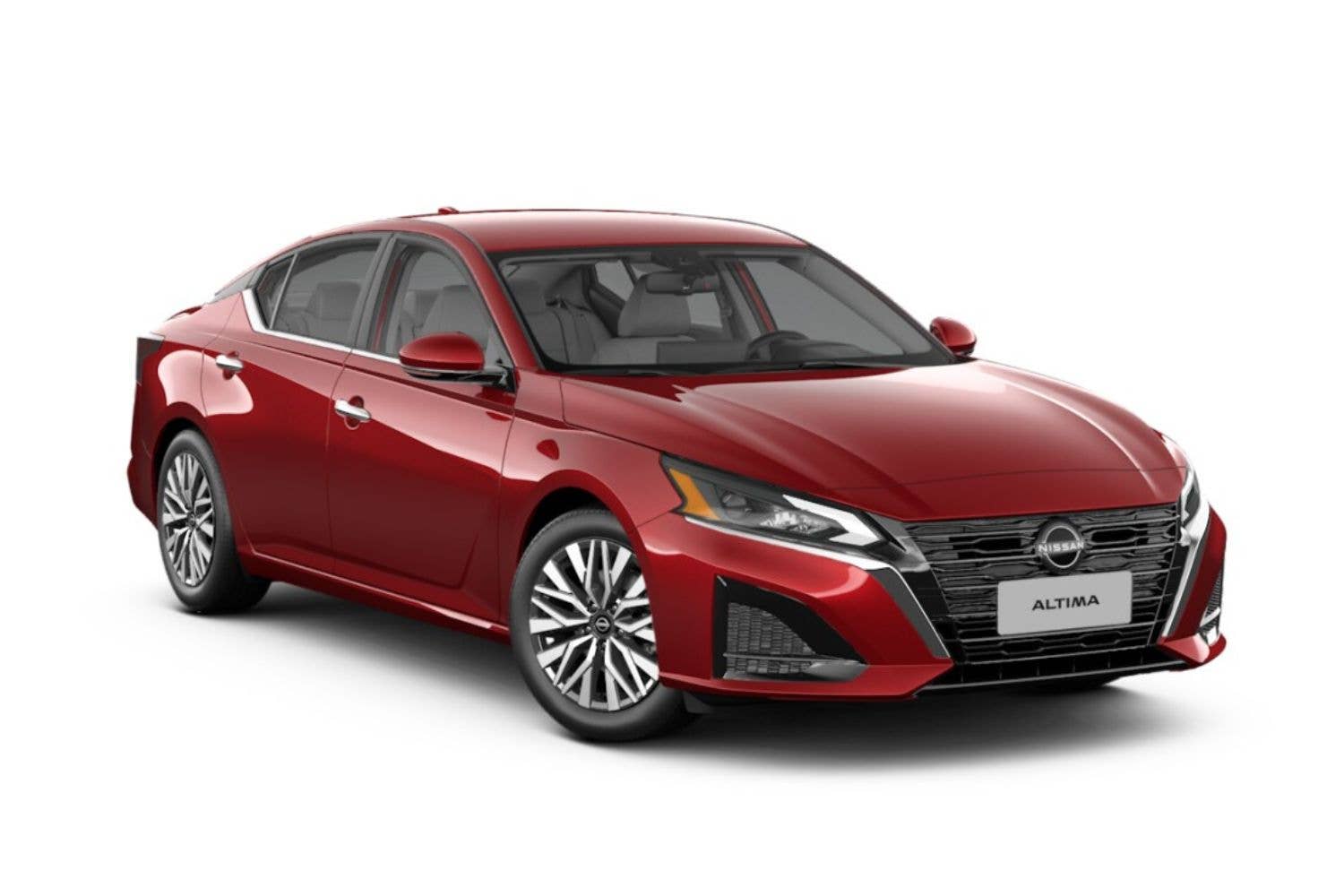
The 2019 Nissan Altima offers an EPA-estimated fuel economy ranging from 25 to 28 mpg in the city and 35 to 39 mpg on the highway, depending on the engine configuration and drivetrain. These figures reflect the sedan's transition to the sixth generation, which introduced the variable compression turbocharged engine and available Intelligent All-Wheel Drive (AWD) systems.
Understanding the 2019 Nissan Altima Powertrain Variations
To accurately assess the fuel efficiency of the 2019 Nissan Altima, it is necessary to distinguish between the two primary engine options available for this model year. The 2019 redesign marked a significant shift in Nissan's engineering approach, moving away from the V6 engine found in previous years toward more efficient, yet powerful, alternatives.
The 2.5-Liter Direct-Injection 4-Cylinder Engine
The standard engine for the 2019 Altima is a 2.5-liter four-cylinder engine. This powerplant was heavily revised for the 2019 model year, featuring over 80% new or redesigned parts compared to its predecessor. The primary goal of this redesign was to improve thermal efficiency, reduce friction, and enhance overall fuel economy.
This engine is paired with Nissan’s Xtronic Continuously Variable Transmission (CVT). Unlike traditional automatic transmissions that use fixed gear ratios, the CVT provides an infinite range of ratios, allowing the engine to stay in its most efficient operating band regardless of vehicle speed. This mechanical configuration is the primary driver behind the Altima’s competitive fuel economy figures.
The 2.0-Liter VC-Turbo Engine
The standout technological feature of the 2019 Altima is the 2.0-liter Variable Compression Turbo (VC-Turbo) engine. This motor represents a significant advancement in automotive engineering, capable of physically changing the compression ratio of the pistons on the fly.
When the driver requires maximum power—such as during high-speed merging or aggressive acceleration—the engine shifts to a low compression ratio. Conversely, during steady-state cruising, the system shifts to a high compression ratio to maximize fuel efficiency. This dual-purpose design allows the VC-Turbo to bridge the gap between high performance and reasonable fuel consumption, effectively replacing the previous generation's 3.5-liter V6 while maintaining lower emissions and better economy.
EPA Fuel Economy Estimates by Configuration
The 2019 Nissan Altima’s fuel efficiency is highly dependent on both the engine choice and whether the vehicle is equipped with the Intelligent All-Wheel Drive (AWD) system. All-wheel drive, while providing superior traction in adverse weather, adds mechanical complexity and weight, which inevitably impacts total fuel consumption.
The following table summarizes the EPA-estimated fuel economy for the 2019 Nissan Altima trims:
| Engine | Drivetrain | City (MPG) | Highway (MPG) | Combined (MPG) |
|---|---|---|---|---|
| 2.5L 4-Cylinder | FWD | 28 | 39 | 32 |
| 2.5L 4-Cylinder | AWD | 26 | 36 | 30 |
| 2.0L VC-Turbo | FWD | 25 | 34 | 29 |
Note: Data derived from official EPA testing results for the 2019 model year. Real-world results may vary based on driving habits, road conditions, and vehicle maintenance.
Factors Influencing Real-World Fuel Economy
While the EPA figures provide a standardized baseline, many 2019 Nissan Altima owners find that their real-world mileage fluctuates based on external factors. Understanding these variables can help drivers optimize their fuel usage.
The Impact of All-Wheel Drive
The 2019 Altima was the first generation of this sedan to offer AWD. This system is reactive, meaning it typically defaults to front-wheel drive (FWD) to save fuel, only engaging the rear wheels when the system detects slippage or poor traction. Despite this "on-demand" nature, the added weight of the driveshaft, rear differential, and transfer case creates a parasitic loss. Drivers who live in regions with harsh winters may find the safety benefits of AWD justify the approximately 2–3 mpg reduction in combined fuel economy.
Driving Habits and CVT Behavior
The Xtronic CVT is programmed to prioritize efficiency. Drivers who use an aggressive "stop-and-go" driving style will often find that they struggle to meet the EPA estimates. Because the transmission adjusts ratios continuously, sudden, heavy throttle inputs force the engine to rev higher than necessary. To achieve the 39 mpg highway rating, drivers should maintain a steady speed and utilize cruise control on long stretches of flat road.
Maintenance and Vehicle Health
Fuel efficiency is not a static property of the car; it is a measure of the vehicle's total health. Several components on the 2019 Altima must be maintained to keep efficiency at the factory level:
- Tire Pressure: Under-inflated tires increase rolling resistance, which forces the engine to work harder to maintain speed.
- Air Filters: A clogged engine air filter restricts airflow, disrupting the air-fuel mixture and causing the engine to run "rich," which burns more fuel.
- CVT Fluid: As this vehicle matures, regular inspection of the CVT fluid becomes critical. Dirty or degraded fluid can lead to slippage within the transmission, which is a major contributor to poor fuel efficiency.
Comparison with Similar Mid-Size Sedans (2019)
When evaluating the 2019 Nissan Altima, it is helpful to look at how it compares to its direct competitors from the same model year. During this period, the mid-size sedan market was highly competitive, with most manufacturers focusing on "downsized" engines with turbochargers.
The 2.5-liter FWD Altima, with its 32 combined mpg, was generally regarded as one of the most efficient non-hybrid options in its class. Competitors like the 2019 Honda Accord and 2019 Toyota Camry also utilized similar displacement engines. The Altima’s performance is largely competitive, particularly due to the efficiency of the Nissan-engineered CVT. While some competitors offered traditional geared transmissions, the Altima’s reliance on the CVT allowed it to remain in an optimal power range for longer periods during highway driving, which is likely why it achieves such a strong highway figure of 39 mpg.
Common Questions Regarding Altima Fuel Efficiency
Why is my 2019 Altima getting lower mileage than the EPA estimate?
Fuel economy is influenced by factors like tire pressure, driving style, excessive idling, and the use of air conditioning. Furthermore, if you are driving in a city with significant traffic, you will naturally fall closer to the 25–28 mpg city rating rather than the combined average. Ensure your tires are inflated to the door-jamb specification and remove unnecessary heavy items from the trunk.
Does the VC-Turbo engine require premium fuel?
While the 2.0-liter VC-Turbo engine can run on regular unleaded gasoline, Nissan recommends using premium fuel to achieve the engine's full horsepower and torque ratings. Using lower-octane fuel may result in the engine computer retarding timing to prevent knocking, which can lead to a slight decrease in both power and fuel efficiency.
Does the AWD system affect the gas tank range?
Yes. Because the AWD system is slightly less fuel-efficient than the FWD variant, the total range per tank of gas is reduced. The 2019 Altima features a 16.2-gallon fuel tank. With the FWD 2.5L engine, you can theoretically achieve a highway range of over 600 miles; with the AWD system, that range decreases proportionally to the lower mpg figures.
Is the CVT transmission reliable for long-term fuel efficiency?
The longevity of the CVT is heavily dependent on maintenance. It is highly recommended to follow the manufacturer's suggested service intervals for fluid changes. Neglected fluid can lead to "CVT shudder," which often results in reduced fuel efficiency and potential long-term damage to the transmission's steel belt and pulley system.
Can I improve my mileage with aftermarket modifications?
Modifications such as "cold air intakes" or "exhaust performance systems" often have a negligible impact on fuel economy and, in many cases, can actually decrease it by confusing the factory ECU (Engine Control Unit) settings. The most effective way to improve mileage is to maintain factory-spec parts, specifically high-quality engine air filters and low-rolling-resistance tires.
Maximizing Your Fuel Efficiency: A Practical Guide
If your goal is to push the 2019 Nissan Altima toward its peak fuel efficiency, you should adopt a proactive approach to vehicle operation and maintenance. Start by monitoring your tire pressure monthly, as fluctuations in ambient temperature—especially as we move through changing seasons—can impact the pressure inside your tires. Even a 5 PSI drop can have a measurable impact on your rolling resistance.
Secondly, audit your driving habits. The 2019 Altima is designed for smooth, consistent acceleration. Utilizing the "Eco" mode—if equipped—can adjust the throttle sensitivity and the CVT shift patterns to favor higher fuel economy. When driving on the highway, using the cruise control helps eliminate the minor, unnecessary speed fluctuations that occur when using the gas pedal manually.
Finally, keep a record of your fuel consumption over several tanks to establish a baseline. If you notice a sudden, unexplained drop in your miles per gallon, it is a primary indicator that the vehicle may be due for maintenance, such as a spark plug replacement or an oxygen sensor check. By adhering to the scheduled maintenance outlined in your owner’s manual, you ensure that the complex engineering of the 2.5L engine or the 2.0L VC-Turbo continues to function at its designed efficiency levels throughout the vehicle's lifespan.