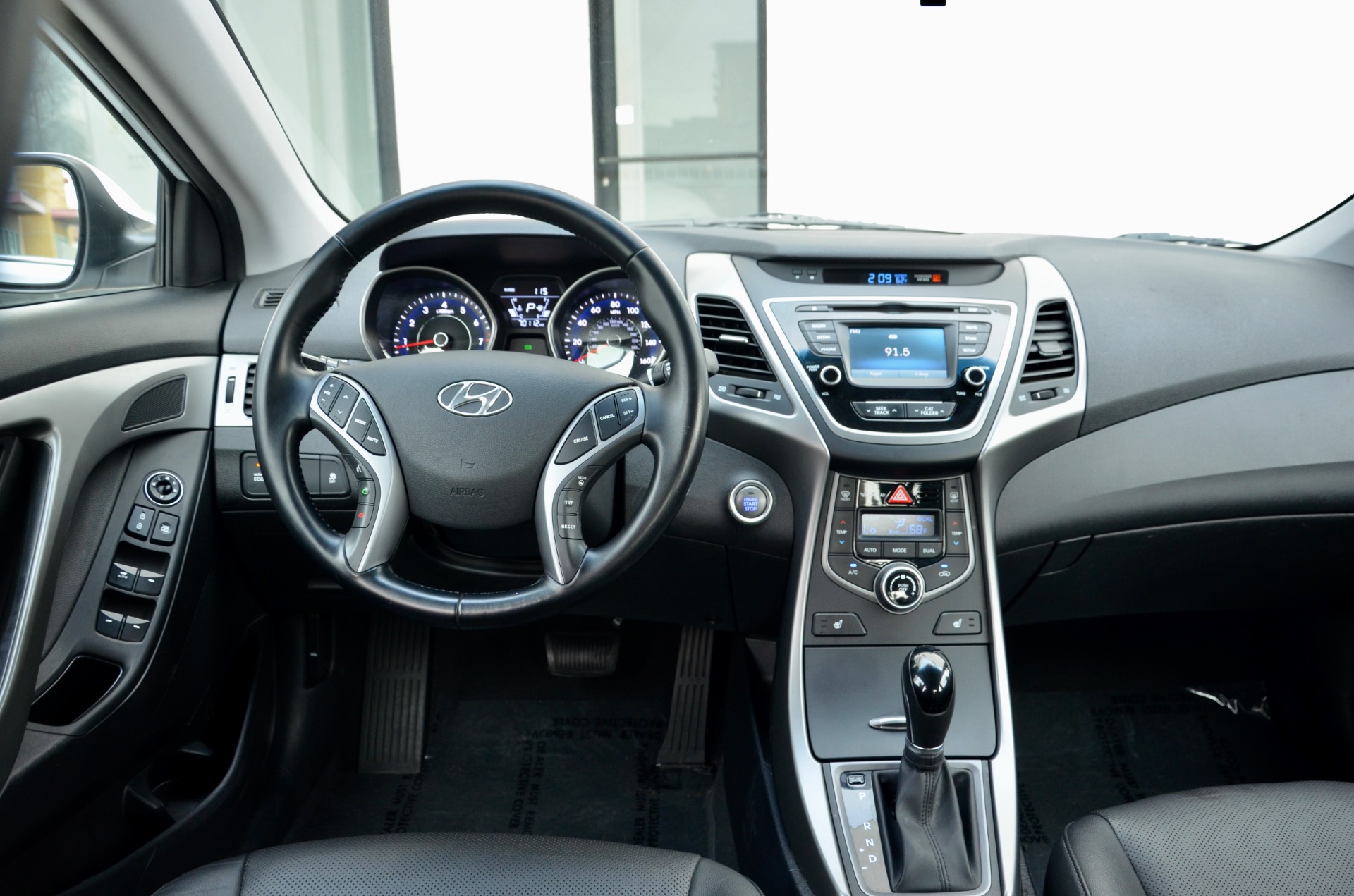
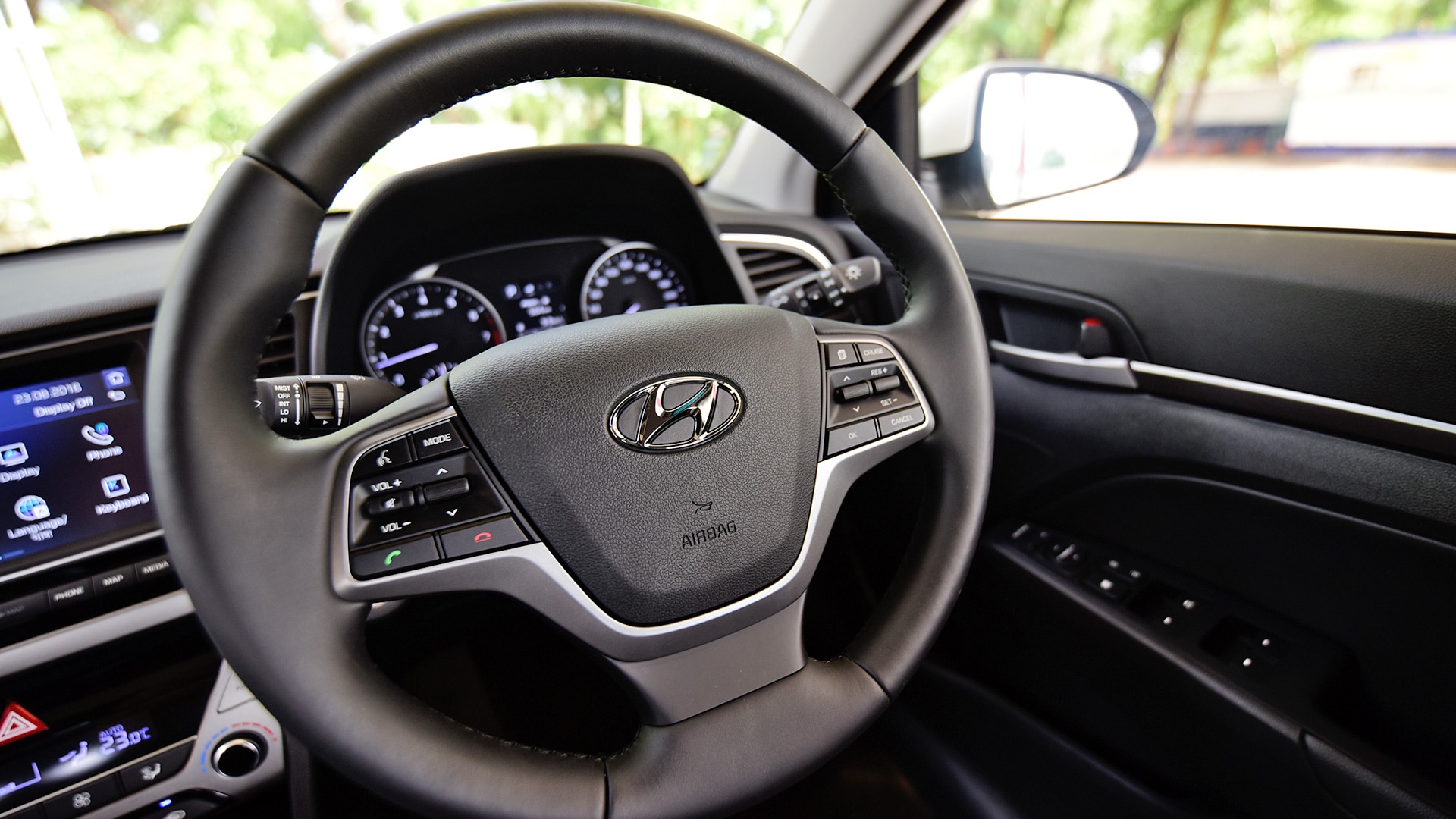
The 2016 Hyundai Elantra interior is defined by its "Fluidic Sculpture" design philosophy, offering a driver-centric cockpit, surprisingly spacious cabin volume for its class, and a robust list of standard features. Even a decade after its release, the cabin remains functional and ergonomically sound, characterized by high-quality materials in upper trims and intuitive controls across the lineup.
The Evolution of Fluidic Sculpture: 2016 Elantra Interior Aesthetics
By the time the 2016 model year arrived, the fifth-generation Elantra (internal code MD) had perfected its "Fluidic Sculpture" aesthetic. This design language was intended to mimic the flow of wind and water, resulting in an interior that felt organic rather than boxy. The dashboard features a distinct "hourglass" pinch in the center console, which narrows near the climate controls to create more knee room for the driver and front passenger.
The sweeping lines of the door panels flow seamlessly into the dashboard, creating a wrap-around effect that was quite progressive for the mid-2010s. In 2026, this design still holds up as visually interesting, though it lacks the minimalist, screen-heavy "tablet" look of modern electric vehicles. The use of metallic-painted plastics and varied textures helps break up the dark surfaces, preventing the cabin from feeling overly subterranean.
For the 2016 model year—the final year before a complete redesign—Hyundai refined the placement of central air vents. Earlier versions of this generation had vents placed lower, near the gear shifter, which many drivers found cooled their hands more than their faces. The 2016 model retains the higher vent placement, ensuring better airflow and a more traditional ergonomic layout.
Trim Level Specifics: From SE to Limited
The 2016 Hyundai Elantra was offered in four primary trim levels: SE, Value Edition, Sport, and Limited. Each trim level significantly impacts the interior atmosphere and the quality of the "touchpoints" (the surfaces you interact with most frequently).
SE (Standard Edition)
The SE served as the entry-point model. While it focused on affordability, it did not feel stripped down compared to its contemporaries. It featured premium cloth upholstery and a six-way adjustable driver’s seat. However, it lacked the soft-touch materials found on the upper dash of the Limited trim. For the budget-conscious buyer in 2026, the SE provides a durable, albeit basic, environment.
Value Edition
New for the 2016 model year, the Value Edition became a fan favorite. It bridged the gap between the base SE and the luxury-oriented Limited. Inside, it added several "big ticket" features without the premium price tag. Most notably, it included a power sunroof, heated front seats, and a proximity key with push-button start—features that were often optional on luxury cars just a few years prior.
Sport
The Sport trim focused on a more aggressive interior aesthetic. It featured leather-trimmed seats, aluminum pedals, and a leather-wrapped steering wheel and shift knob. The Sport trim also utilized a unique black-out interior theme, which helped distinguish it from the more beige or gray-heavy SE and Limited models.
Limited
The Limited trim was the pinnacle of the 2016 Elantra interior experience. It came standard with leather upholstery, a power-adjustable driver’s seat with lumbar support, and dual-zone automatic climate control. It also featured heated rear seats—a rarity for the compact car segment in 2016—which continues to make it a standout choice for those prioritizing passenger comfort.
Technology and Infotainment Capabilities
In 2026, the technology in a 2016 Elantra is considered "legacy," but it remains highly functional for core tasks like navigation and music. The 2016 model year did not natively support Apple CarPlay or Android Auto in most units, as these technologies were just beginning to roll out in late 2016 and 2017 models.
Audio Systems and Display Screens
The base SE usually came with a standard AM/FM/CD/SiriusXM audio system with a small monochrome display. However, the higher trims offered a 4.3-inch color touchscreen with a rearview camera. The top-tier navigation package upgraded the center stack to a 7-inch multi-touch screen.
This 7-inch system featured a high-resolution display for its time and an external amplifier for the 360-watt premium audio system. While the graphics may look dated by 2026 standards, the physical buttons surrounding the screen make it much easier to use while driving than many modern, touch-only interfaces.
Blue Link Telematics
The 2016 Elantra Limited often came equipped with Hyundai’s Blue Link system. At the time of its release, Blue Link offered features like remote start, destination search (powered by Google), and SOS emergency assistance. For current owners, the availability of these services depends on the cellular hardware in the car; many 2016 models relied on 3G networks which have since been decommissioned, meaning some telematics features may no longer function without a hardware update.
Interior Dimensions and Passenger Comfort
One of the 2016 Elantra's greatest strengths is its classification. While it competes in the compact car segment, the EPA officially classified it as a Midsize car due to its total interior volume. This is a crucial distinction for buyers who need a small exterior footprint but a spacious cabin.
| Specification | Dimension (Front/Rear) |
|---|---|
| Headroom | 39.1 inches / 37.1 inches |
| Legroom | 43.6 inches / 33.1 inches |
| Shoulder Room | 55.9 inches / 54.8 inches |
| Hip Room | 53.5 inches / 52.7 inches |
| Cargo Volume (Trunk) | 14.8 cubic feet |
| Total Interior Volume | 110.4 cubic feet |
Front Seat Ergonomics
The front seats are designed for long-distance comfort. In the Limited and Sport trims, the leather is perforated to allow for better breathability. The 43.6 inches of front legroom is particularly generous, outclassing several midsize sedans of the same era. The steering wheel offers tilt and telescopic adjustment (standard on most trims), allowing drivers of various heights to find a comfortable position.
Rear Seat Experience
The rear seat is surprisingly accommodating for two adults, though three may feel cramped during long trips. The inclusion of heated rear seats (in the Limited trim) was a "class-above" feature. The floor is relatively flat, which provides more foot room for the center passenger than is typical in this segment. However, the sloping roofline—part of the Fluidic Sculpture design—can make headroom a bit tight for passengers over six feet tall.
Cargo Space and Versatility
The trunk of the 2016 Hyundai Elantra offers 14.8 cubic feet of space. To put this in perspective, it is larger than the trunks of several larger luxury sedans from 2016. The opening is wide, though the goose-neck hinges do dip into the cargo area when the lid is closed, which is something to keep in mind when packing fragile items.
For longer items, the Elantra features 60/40 split-folding rear seats. The release levers are located inside the trunk, which is a convenient safety feature; it prevents someone from reaching into the cabin to access the trunk. While the seats do not fold perfectly flat—there is a slight hump where the seatback meets the trunk floor—it is more than sufficient for hauling flat-pack furniture or sporting equipment.
Material Quality and Aging in 2026
Evaluating the 2016 Elantra from a 2026 perspective requires looking at how these materials have aged over a decade of use.
- Dashboard and Door Plastics: Hyundai used a mix of hard and soft-touch plastics. The upper dashboard in the Limited trim tends to resist UV damage well, but the silver-painted plastics around the window switches and gear shifter are prone to scratching over time.
- Upholstery: The "Premium Cloth" found in the SE and Value Edition is remarkably resilient. It resists staining better than many contemporary fabrics. The leather in the Limited trim is durable but requires regular conditioning to prevent cracking, especially on the driver's side bolster.
- Switchgear: The buttons and knobs in the 2016 Elantra have a "clicky," tactile feel. Unlike the capacitive touch buttons that became popular in the early 2020s, these physical controls rarely fail and are easy to operate with gloves on.
- Sound Insulation: One of the few criticisms of this generation's interior was road noise. While Hyundai added more insulation for the 2016 model year compared to the 2011–2013 versions, the cabin can still be a bit noisy at highway speeds compared to a 2026-era vehicle.
Safety and Interior Protection
The interior of the 2016 Elantra was designed with a heavy emphasis on passive safety. Standard interior safety features include:
- Six Airbags: Dual front, front seat-mounted side-impact, and side-curtain airbags.
- LATCH System: The Lower Anchors and Tethers for CHildren are easily accessible in the rear outboard seats, with clearly marked plastic covers.
- Active Front Head Restraints: Designed to move forward and upward during a rear-end collision to reduce the risk of whiplash.
According to the National Highway Traffic Safety Administration (NHTSA), the 2016 Elantra received high marks for side-impact protection, which is a testament to the structural integrity of the cabin design. The Insurance Institute for Highway Safety (IIHS) also noted the effectiveness of the Elantra's head restraints and seats in preventing injury.
Frequently Asked Questions (FAQ)
Does the 2016 Hyundai Elantra have a backup camera?
Yes, a rearview camera was available on most trims of the 2016 Elantra. It was standard on the Value Edition, Sport, and Limited trims. In the SE trim, it was often included as part of the "Popular Equipment Package." The camera feed is displayed on either the 4.3-inch or 7-inch touchscreen.
Can I upgrade the 2016 Elantra interior to have Apple CarPlay?
The factory head units for the 2016 Elantra do not natively support Apple CarPlay or Android Auto. However, because the Elantra uses a standard "Double-DIN" radio slot, it is very easy to install an aftermarket head unit that supports modern smartphone integration. This is a popular upgrade for owners in 2026 looking to modernize their vehicle.
How many car seats can fit in the back of a 2016 Elantra?
The 2016 Elantra can comfortably accommodate two car seats using the LATCH system in the outboard seats. While a third seat can technically be squeezed into the center using the seatbelt, it is a very tight fit and depends heavily on the width of the car seat models being used.
Is the interior of the 2016 Elantra quiet on the highway?
The 2016 model is quieter than earlier years of the same generation due to increased sound-dampening materials in the pillars and floorboards. However, it still experiences more "tire hum" and wind noise than modern 2026 sedans. Upgrading to high-quality "touring" tires can significantly improve interior quietness.
Does the 2016 Elantra have genuine leather?
The Sport and Limited trims feature leather-appointed seating surfaces. This means the parts of the seat that touch your body are genuine leather, while the sides and back of the seats are typically a color-matched vinyl (leatherette) for increased durability and cost-effectiveness.
Practical Recommendation for Buyers in 2026
If you are shopping for a used 2016 Hyundai Elantra in 2026, the Value Edition is the most logical choice. It offers the best balance of interior comfort features—specifically the heated seats and sunroof—without the higher maintenance costs associated with the Limited trim's leather or the Sport trim's larger wheels and firmer suspension.
Before purchasing, inspect the "pinch" area of the center console for any loose plastic panels and ensure the touchscreen (if equipped) responds accurately to touch inputs, as older resistive screens can sometimes lose calibration. Overall, the 2016 Elantra interior remains a high-water mark for Hyundai, representing a time when the brand prioritized ergonomics and value-packed features in a stylish, midsize-feeling package.