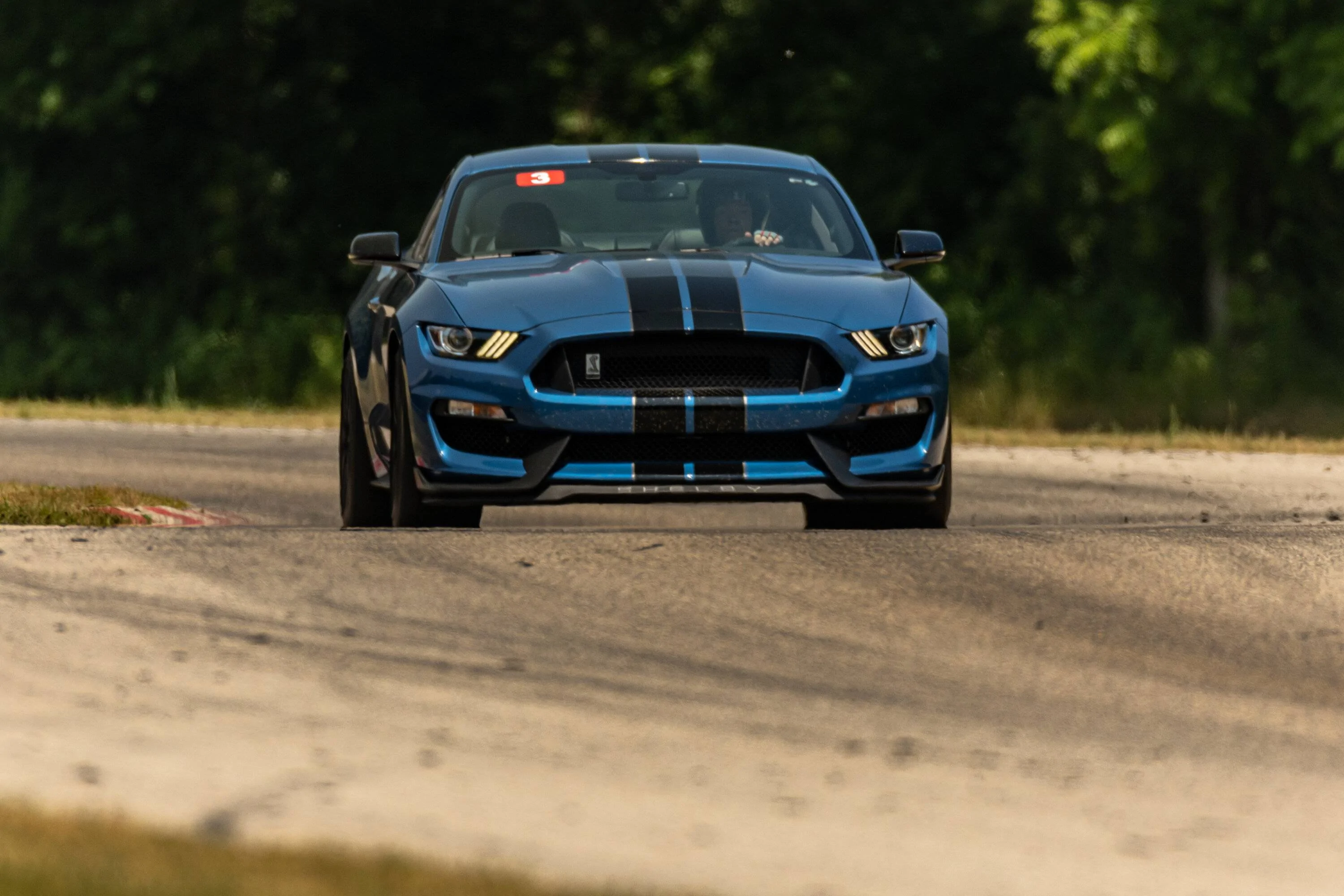
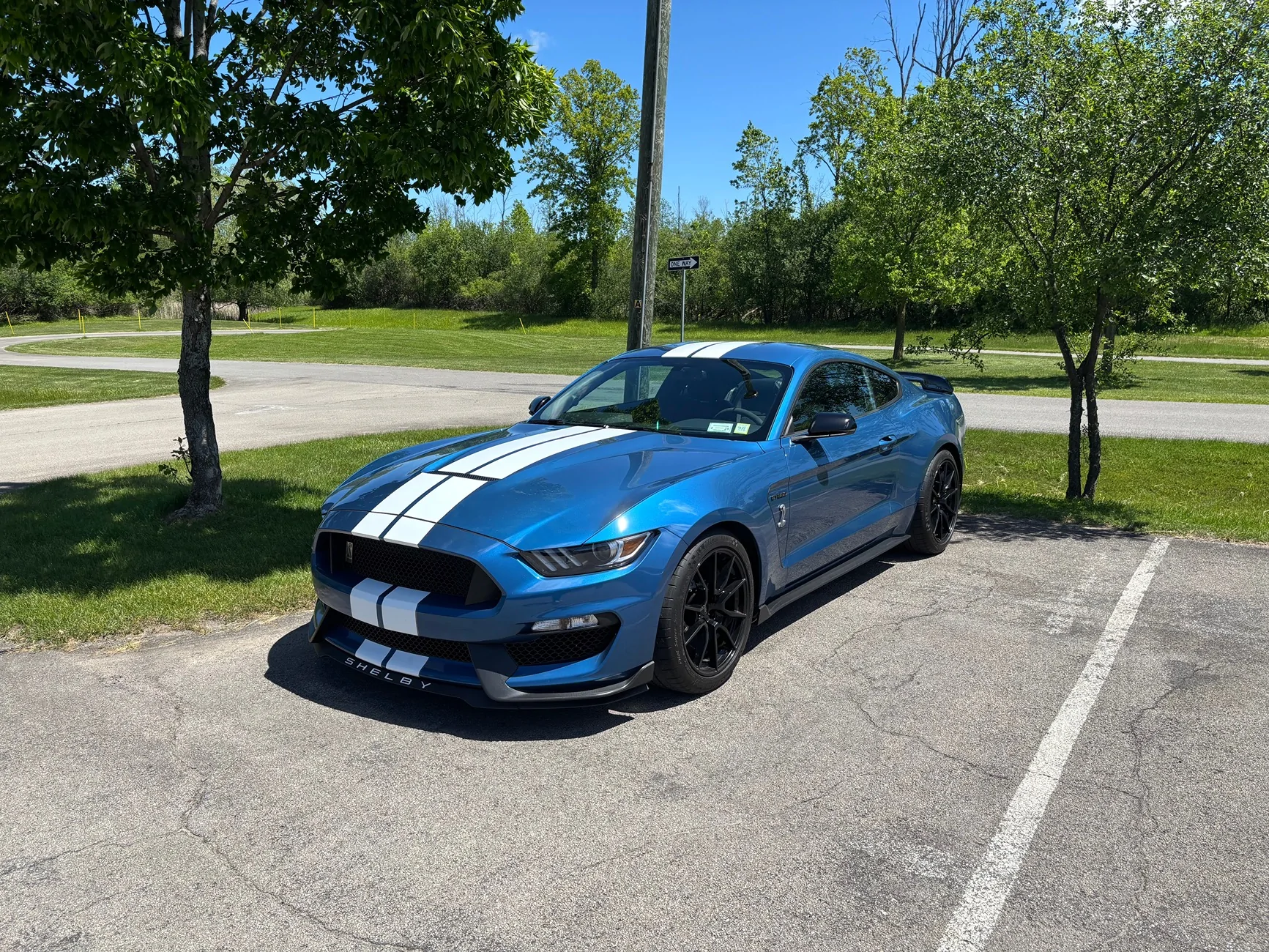
The 2015 Ford Mustang Shelby GT350 represents a landmark era for American performance, introducing a high-revving, flat-plane crank V8 engine, advanced track-focused aerodynamics, and sophisticated MagneRide damping to redefine the capabilities of a pony car.
Introduction and Historical Context
When Ford and SVT (Special Vehicle Team) set out to develop the next-generation Shelby GT350 for the 2015 model year, their objective was clear: build a pure, driver-focused sports car capable of competing with the world's best track-ready coupes. Eschewing the supercharged, straight-line-focused philosophy of the previous S197-generation Shelby GT500, the 2015 GT350 was engineered from a clean sheet to prioritize handling, balance, and high-rpm naturally aspirated power.
Introduced at the 2014 Los Angeles Auto Show, the S550-generation Shelby GT350 marked the 50th anniversary of the original 1965 Shelby GT350 created by Carroll Shelby. Rather than serving as a mere cosmetic package, every single body panel forward of the A-pillars—except the windshield—was completely redesigned specifically for this model. The result was an aggressive, functional aesthetic paired with cutting-edge vehicle dynamics that forever altered the perception of what a factory Ford Mustang could achieve on a road course.
The Voodoo Engine: Architecture and Specifications
At the heart of the 2015 Mustang Shelby GT350 is the hand-built 5.2-liter "Voodoo" V8 engine, an engineering masterpiece distinct from the traditional Coyote 5.0-liter V8 found in the standard Mustang GT. The defining characteristic of the Voodoo engine is its flat-plane crankshaft (FPC), a design more commonly associated with exotic European sports cars from manufacturers like Ferrari than traditional American muscle.
In a conventional cross-plane V8, the crank pins are spaced at 90-degree intervals, resulting in alternating firing orders within each cylinder bank. A flat-plane crankshaft offsets the crank pins at 180-degree intervals, allowing the pistons to rise and fall in alternating pairs. This eliminates cross-flow exhaust interference, drastically improves breathing efficiency, and allows the engine to rev much higher. The redline of the Voodoo engine sits at a lofty 8,250 rpm, accompanied by a signature high-pitched exhaust note.
Key technical specifications of the 5.2L Voodoo V8 include:
- Displacement: 5,163 cc (5.2 liters)
- Horsepower: 526 horsepower at 7,500 rpm
- Torque: 429 lb-ft at 4,750 rpm
- Compression Ratio: 12.0:1
- Valvetrain: Dual overhead camshafts (DOHC) with variable valve timing (VVT), four valves per cylinder
- Block Material: Aluminum block with plasma-transferred wire-arc spray cylinder liners (eliminating traditional heavy iron sleeves)
This power is routed exclusively to the rear wheels through a lightweight, high-strength Tremec TR-3160 six-speed manual transmission, paired with a standard Torsen limited-slip differential featuring a 3.73 final drive ratio. An automatic transmission option was not offered, reinforcing the car's purist, track-oriented mission.
Chassis Dynamics and MagneRide Suspension
To harness the high-revving power of the Voodoo engine, Ford Performance equipped the GT350 with a heavily revised chassis and the company's first application of MagneRide magnetic-fluid damping technology.
The S550 platform's independent rear suspension (IRS) was upgraded with stiffer bushings, unique spring rates, and recalibrated anti-roll bars. However, the crown jewel of the handling package is the MagneRide damping system. Sensors monitor wheel position, vehicle speed, steering angle, and acceleration thousands of times per second. The dampers are filled with a synthetic hydrocarbon fluid infused with microscopic iron particles. When an electrical current is applied to the damper electromagnets, the fluid instantly changes its viscosity, allowing the suspension to stiffen or soften in milliseconds.
The GT350 features multiple selectable drive modes—Normal, Sport, Track, Weather, and Custom—that dynamically alter:
- Damper firmness
- Electronic stability control (ESC) thresholds
- Throttle response
- Steering effort through the Electric Power-Assisted Steering (EPAS) system
- Exhaust valve baffling volume
Aerodynamics, Brakes, and Track Engineering
Every aerodynamic surface on the 2015 Shelby GT350 serves a thermodynamic or downforce-generating purpose. The front fascia features a deeply inset lower splitter that channels air to the engine bay and massive front brake cooling ducts. The aluminum hood incorporates a central functional extractor vent that pulls hot air out of the engine compartment while simultaneously reducing front-end lift at high speeds. Front fender vents relieve high-pressure air trapped in the wheel arches.
Stopping power matches the vehicle's immense cornering capabilities. The front brakes utilize massive 15.5-inch (394 mm) two-piece cross-drilled iron-on-aluminum rotors clamped by Brembo six-piston monoblock calipers. The rear brakes feature 14.9-inch (379 mm) rotors with Brembo four-piston calipers.
| Performance Metric / Component | Specification Details |
|---|---|
| Engine Type | 5.2L Naturally Aspirated V8 (Flat-Plane Crank) |
| Horsepower | 526 hp @ 7,500 rpm |
| Torque | 429 lb-ft @ 4,750 rpm |
| Redline | 8,250 rpm |
| Transmission | Tremec TR-3160 6-Speed Manual |
| Front Brakes | 394 mm Rotors, Brembo 6-Piston Calipers |
| Rear Brakes | 379 mm Rotors, Brembo 4-Piston Calipers |
| Standard Wheels | 19x10.5-inch Front / 19x11.0-inch Rear Aluminum |
| Tire Compound | Michelin Pilot Super Sport (GT350-specific compound) |
Production Figures and Optional Packages
Production of the 2015 Ford Mustang Shelby GT350 commenced in the summer of 2015 at the historic Flat Rock Assembly Plant in Michigan. Because 2015 served as a truncated introductory model year, total production numbers were relatively low compared to subsequent years, making early-build models particularly sought after by collectors. Ford commemorated the 50th anniversary of the original nameplate by capping the 2015 production run at exactly 137 units of the standard GT350, alongside 37 units of the hardcore GT350R—representing 174 total units for the model year (VIN codes ending in specific serialization numbers).
Buyers could further tailor their vehicles by selecting between two primary equipment upgrades:
- The Track Package: Added the MagneRide damping system, a heavy-duty engine oil cooler, transmission oil cooler, differential oil cooler, an aluminum strut tower brace, and a rear decklid spoiler.
- The Electronics Package: Added SYNC 3 infotainment (though early 2015 models featured MyFord Touch depending on exact build date), dual-zone automatic climate control, voice-activated navigation, and a seven-speaker audio system (with an optional 12-speaker Shaker audio system).
For drivers seeking maximum circuit performance, the GT350R package removed the rear seats, air conditioning, and audio system to save weight. It added carbon fiber wheels (a production-car industry first for standard equipment), a massive carbon fiber rear wing, revised front aerodynamics, and stickier Michelin Pilot Sport Cup 2 tires.
Common Maintenance and Ownership Considerations
Operating a high-performance sports car like the 2015 Shelby GT350 requires adherence to specific maintenance protocols, particularly due to the unique characteristics of the high-revving Voodoo engine.
Owners must monitor engine oil levels regularly. Because the 5.2L engine operates efficiently at high rpms, it is normal for these engines to consume small amounts of oil during aggressive driving or track use. Ford specifies 5W-50 full synthetic motor oil, and maintaining correct fluid levels is critical to prevent oil starvation during high-lateral-G cornering.
Additionally, the cooling systems require diligence. The inclusion of dedicated coolers for the engine oil, transmission, and differential ensures that the car can withstand extended track sessions without heat-soaking, but cooling fluid flushes should be performed strictly according to severe-service maintenance schedules if the car sees frequent track use. The aggressive brake pads utilized by the Brembo system are designed for high friction and stopping power, which naturally produces significant brake dust and potential squealing during normal street driving.
Frequently Asked Questions
What makes the 2015 Shelby GT350 engine different from a standard Mustang GT?
The GT350 features a hand-built 5.2-liter "Voodoo" V8 utilizing a flat-plane crankshaft design. Unlike the cross-plane Coyote V8 in the Mustang GT, the Voodoo engine revs to an 8,250 rpm redline, produces 526 horsepower, and delivers a completely different exhaust note and power delivery profile.
How many 2015 Shelby GT350 models were produced?
Ford limited the introductory 2015 model year production run to 174 total units for the North American market, consisting of 137 standard GT350 models and 37 track-focused GT350R models, marking a very limited introductory production window.
Does the 2015 Shelby GT350 come with an automatic transmission?
No. The 2015 Shelby GT350 was offered exclusively with a Tremec TR-3160 six-speed manual transmission. Ford Performance engineered the car strictly as a driver's car, omitting automatic transmission options entirely.
What is the MagneRide suspension system?
MagneRide is an electronically controlled adaptive damping system that uses iron-particle-infused fluid inside the dampers. The system adjusts dampening stiffness thousands of times per second based on road conditions and driving inputs to optimize ride comfort and cornering stability.
What is the difference between the standard GT350 and the GT350R?
The GT350R is a track-focused variant that sheds weight by deleting the rear seats, air conditioning, and audio system. It also features standard carbon fiber wheels, a more aggressive carbon fiber rear wing, unique chassis tuning, and stickier Michelin Pilot Sport Cup 2 tires.
Conclusion and Final Recommendation
The 2015 Ford Mustang Shelby GT350 stands as a high-water mark for naturally aspirated American performance engineering. Combining an exotic flat-plane crank V8 with world-class chassis dynamics, precise braking, and aggressive aerodynamics, it delivers an engaging driving experience that bridges the gap between traditional muscle cars and elite European sports coupes. Prospective buyers or automotive enthusiasts evaluating this model should prioritize verified maintenance records, ensure oil consumption patterns have been monitored, and verify whether the vehicle includes the desirable Track or Electronics packages to secure a properly equipped example of this modern classic.