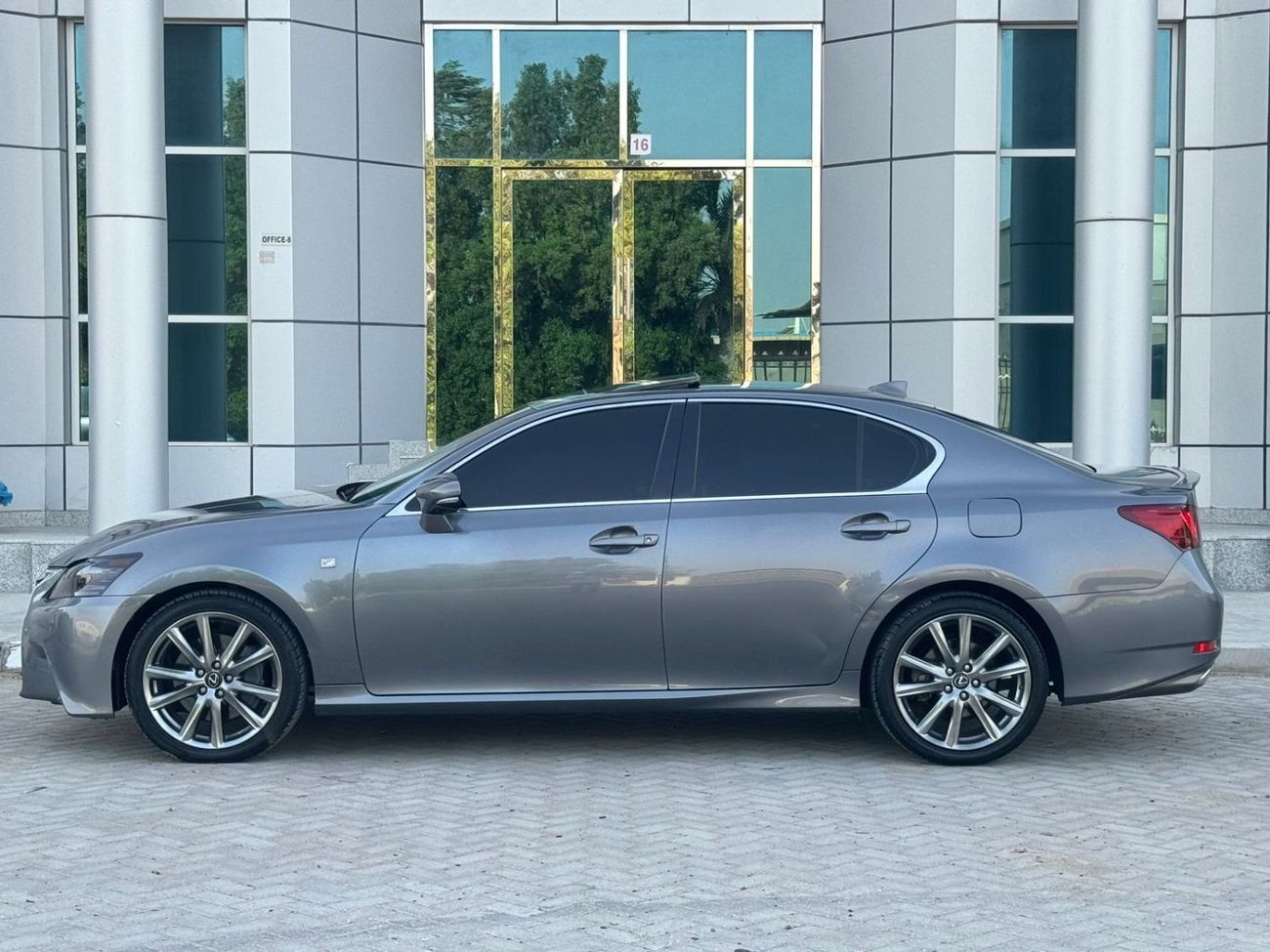
The 2015 Lexus GS 350 accelerates from 0 to 60 mph in approximately 5.7 to 5.9 seconds for rear-wheel-drive (RWD) models, while all-wheel-drive (AWD) variants achieve the same benchmark in roughly 6.0 to 6.2 seconds. These figures position the midsize luxury sport sedan as a competitively swift cruiser within its class, balancing everyday drivability with responsive throttle mapping.
When enthusiasts and potential buyers analyze the 2015 Lexus GS 350, performance metrics extend far beyond a single acceleration figure. The fourth-generation GS series represented a significant pivot for Lexus, shifting the brand's narrative away from purely plush, floaty cruisers toward more engaging, driver-focused sport sedans. Understanding the true capability of the 2015 GS 350 requires examining its powertrain architecture, transmission tuning, drivetrain configurations, and how various driving modes alter its responsiveness on the asphalt.
Powertrain Architecture and Technical Specifications
At the heart of the 2015 Lexus GS 350 is a naturally aspirated 3.5-liter V6 engine, designated internally by Toyota as the 2GR-FSE. This powerplant utilizes a sophisticated direct-injection system combined with port injection, known as D-4S. By deploying both high-pressure direct injectors inside the combustion chambers and traditional port injectors in the intake tracts, the engine optimizes air-fuel mixing across the entire rev range. This dual-injection strategy eliminates the carbon buildup issues that plagued early direct-injection-only engines while maximizing volumetric efficiency.
The technical specifications of the 2015 GS 350 powertrain include:
- Displacement: 3.456 liters (3,505 cc)
- Horsepower: 306 horsepower at 6,400 RPM
- Torque: 277 lb-ft at 4,800 RPM
- Valvetrain: Dual VVT-i (Variable Valve Timing with intelligence) on intake and exhaust cams
- Compression Ratio: 11.8:1
This output allows the sedan to deliver linear power delivery without the initial lag commonly associated with turbocharged alternatives of the era. The engine revs freely up to its redline, producing an aggressive exhaust note under hard acceleration that was deliberately tuned by Lexus engineers to appeal to driving enthusiasts.
Drivetrain Variations: RWD vs. AWD 0-60 MPH Performance
The method by which power is transferred to the pavement plays a critical role in determining the exact 0-60 mph times for the 2015 Lexus GS 350. The vehicle was sold in both rear-wheel-drive and all-wheel-drive configurations, each featuring distinct transmission pairings and curb weight penalties.
| Drivetrain Configuration | Transmission Type | Estimated 0-60 MPH Time | Curb Weight (Approximate) |
|---|---|---|---|
| Rear-Wheel Drive (RWD) | 8-Speed Sport Direct-Shift Automatic | 5.7 – 5.9 seconds | 3,797 lbs |
| All-Wheel Drive (AWD) | 6-Speed Electronically Controlled Automatic | 6.0 – 6.2 seconds | 3,968 lbs |
Rear-Wheel Drive Performance Dynamics
Rear-wheel-drive models benefit from an advanced 8-speed automatic transmission featuring paddle shifters and manual sequential shift modes. The closer gear ratios of the 8-speed unit keep the 3.5-liter V6 squarely in its optimal power band during full-throttle acceleration. Furthermore, the RWD variant carries a lower overall curb weight compared to its AWD counterpart, reducing inertia off the line. While traction can be momentarily broken on slippery surfaces, optimal dry-pavement launches yield times dipping into the high 5-second range.
All-Wheel Drive Performance Dynamics
All-wheel-drive models utilize a wet-clutch center differential system that typically distributes power with a 30:70 front-to-rear bias under normal conditions, shifting up to 50:50 depending on slip, yaw, and steering angle. While this system provides superior launch traction in rain, snow, or loose gravel, it introduces parasitic drivetrain loss and adds roughly 170 pounds to the vehicle's weight. Consequently, AWD models generally trail the RWD variants by roughly two to three tenths of a second in zero-to-sixty acceleration testing. Additionally, the AWD system necessitates the use of a traditional 6-speed automatic transmission rather than the quicker-shifting 8-speed unit found in the RWD trims.
The Impact of Trim Levels and Package Options
The 2015 Lexus GS 350 lineup includes the standard luxury trim, the luxury-focused Luxury Package, and the aggressive F Sport package. While the F Sport trim does not add horsepower or alter the core engine tune, it introduces chassis and aerodynamic enhancements that influence overall driving performance and dynamic responsiveness.
F Sport Enhancements
Opting for the F Sport package brings specific hardware modifications designed to sharpen the driving experience:
- Adaptive Variable Suspension (AVS): Continuously adjusts damper stiffness based on road conditions and driver inputs.
- Variable Gear Ratio Steering (VGRS): Adjusts the steering ratio dynamically to improve high-speed stability and low-speed maneuverability.
- 19-inch Staggered Wheels: Wrapped in wider rear performance tires, improving mechanical grip off the line.
- F Sport-Tuned Braking: Larger front brake rotors (14.0 inches) paired with high-friction pads to mitigate brake fade during spirited driving.
While these upgrades do not drastically alter raw straight-line 0-60 mph times, they significantly improve weight transfer management, reduce body roll, and enhance driver confidence during cornering and aggressive acceleration runs.
Driving Modes and Their Effect on Acceleration
Lexus equipped the 2015 GS 350 with a Drive Mode Select dial located on the center console. This system alters throttle mapping, transmission shift points, steering effort, and suspension damping. Selecting different modes changes how the car delivers its performance:
- Eco Mode: Dampens throttle sensitivity to maximize fuel efficiency, resulting in a more sluggish initial acceleration response unless the driver depresses the pedal past the detent.
- Normal Mode: Provides a balanced compromise between smooth power delivery and responsive throttle mapping for daily commuting.
- Sport S Mode: Sharpens throttle response, holds gears longer up the rev range, and tightens steering feel, allowing the vehicle to access peak power more immediately.
- Sport S+ Mode (F Sport only): Maximizes powertrain aggression, firms up the adaptive dampers, and loosens the stability control thresholds to permit minimal dynamic slip during hard cornering and acceleration.
Utilizing Sport S or Sport S+ mode is essential for achieving factory-claimed 0-60 mph times, as Normal and Eco modes intentionally introduce electronic lag to prioritize smooth, jerk-free passenger transport.
Real-World Driving Impressions and Competitive Context
On paper, a 5.7-second 0-60 mph time places the 2015 Lexus GS 350 in solid company against period competitors such as the BMW 535i, Mercedes-Benz E 350, and Audi A6 3.0T. While supercharged and turbocharged German rivals often produced higher low-end torque figures down low in the RPM band, the naturally aspirated Lexus V6 rewarded drivers who were willing to let the engine rev out toward its redline.
In real-world commuting and highway passing maneuvers, the GS 350 feels markedly faster than its baseline acceleration numbers suggest, largely due to the rapid downshift execution of the 8-speed transmission. When pressing the accelerator to pass at highway speeds (e.g., 50 to 70 mph), the transmission drops multiple gears seamlessly, placing the engine directly into its peak power range without excessive turbo spool delay.
Common Factors Affecting Verified 0-60 Times
Owners attempting to replicate professional instrument-tested acceleration figures in their own 2015 Lexus GS 350 must account for several real-world variables:
- Fuel Octane: The 2GR-FSE engine requires premium unleaded gasoline (91 octane or higher) to achieve rated horsepower and timing curves. Running lower-octane fuel triggers the knock sensor, retarding ignition timing and reducing performance.
- Tire Condition and Compound: Factory all-season tires prioritize longevity and quietness, whereas high-performance summer tires offer superior launch grip that can shave fractions of a second off 0-60 times.
- Elevation and Ambient Temperature: Density altitude heavily affects naturally aspirated engines. High-altitude environments (e.g., Denver, Colorado) reduce oxygen density, resulting in noticeable power loss compared to sea-level testing.
- Vehicle Maintenance: Worn spark plugs, dirty mass air flow (MAF) sensors, or clogged air filters can easily rob the engine of its peak output, resulting in sluggish acceleration.
Frequently Asked Questions
Is the 2015 Lexus GS 350 faster than the GS 450h hybrid model?
No. The 2015 Lexus GS 450h hybrid pairs the 3.5-liter V6 engine with an electric motor system, generating a combined net output of 338 horsepower. Consequently, the heavier hybrid variant accelerates from 0 to 60 mph in approximately 5.6 seconds, making it slightly quicker than the standard non-hybrid RWD GS 350 despite its heavier curb weight.
Can the 2015 Lexus GS 350 F Sport be modified to achieve faster 0-60 times?
While aftermarket modifications such as cold-air intakes, cat-back exhaust systems, and ECU tunes are available for the 2GR-FSE engine, their gains on a naturally aspirated powerplant are modest. Achieving major improvements in 0-60 mph times requires forced induction, which is exceptionally costly and complex for this platform. Most owners focus on suspension and tire upgrades rather than engine tuning.
Does turning off traction control improve the 0-60 mph time?
Completely disabling traction control and vehicle stability control (VSC) can occasionally yield marginally better track times if the tires are warm and optimal road surfaces are present, as it prevents the computer from cutting power during minor wheel slip. However, on public streets, leaving systems engaged is safer and prevents excessive wheelspin, which ultimately hurts acceleration times.
How does the 2015 GS 350 compare to the older GS 350 models?
The 2015 model falls into the fourth generation of the GS series (introduced for the 2013 model year). While the third-generation GS 350 (2007–2011) utilized an older 3.5-liter engine and a 6-speed automatic transmission, it achieved very similar 0-60 mph times (around 5.7 to 5.9 seconds). The primary improvements in the 2015 model year centered on chassis rigidity, interior technology updates, and the introduction of the 8-speed automatic transmission on RWD models.
Is premium fuel strictly required to get the best performance?
Yes. The high 11.8:1 compression ratio of the 2GR-FSE engine means that running regular 87-octane fuel will cause the engine control unit (ECU) to actively retard ignition timing to prevent destructive engine knock. This compromises throttle response, reduces horsepower output, and lengthens 0-60 mph acceleration times.
Conclusion and Next Actions
The 2015 Lexus GS 350 delivers reliable, engaging performance with 0-60 mph times ranging from 5.7 to 6.2 seconds depending on the drivetrain configuration. For drivers prioritizing maximum straight-line acceleration and sharper transmission behavior, the rear-wheel-drive model—particularly equipped with the F Sport package and operated in Sport S+ mode—represents the peak of the lineup. When evaluating a used model, verify that previous owners maintained routine servicing, utilized premium fuel, and installed quality tires to ensure the vehicle performs up to its factory benchmarks.