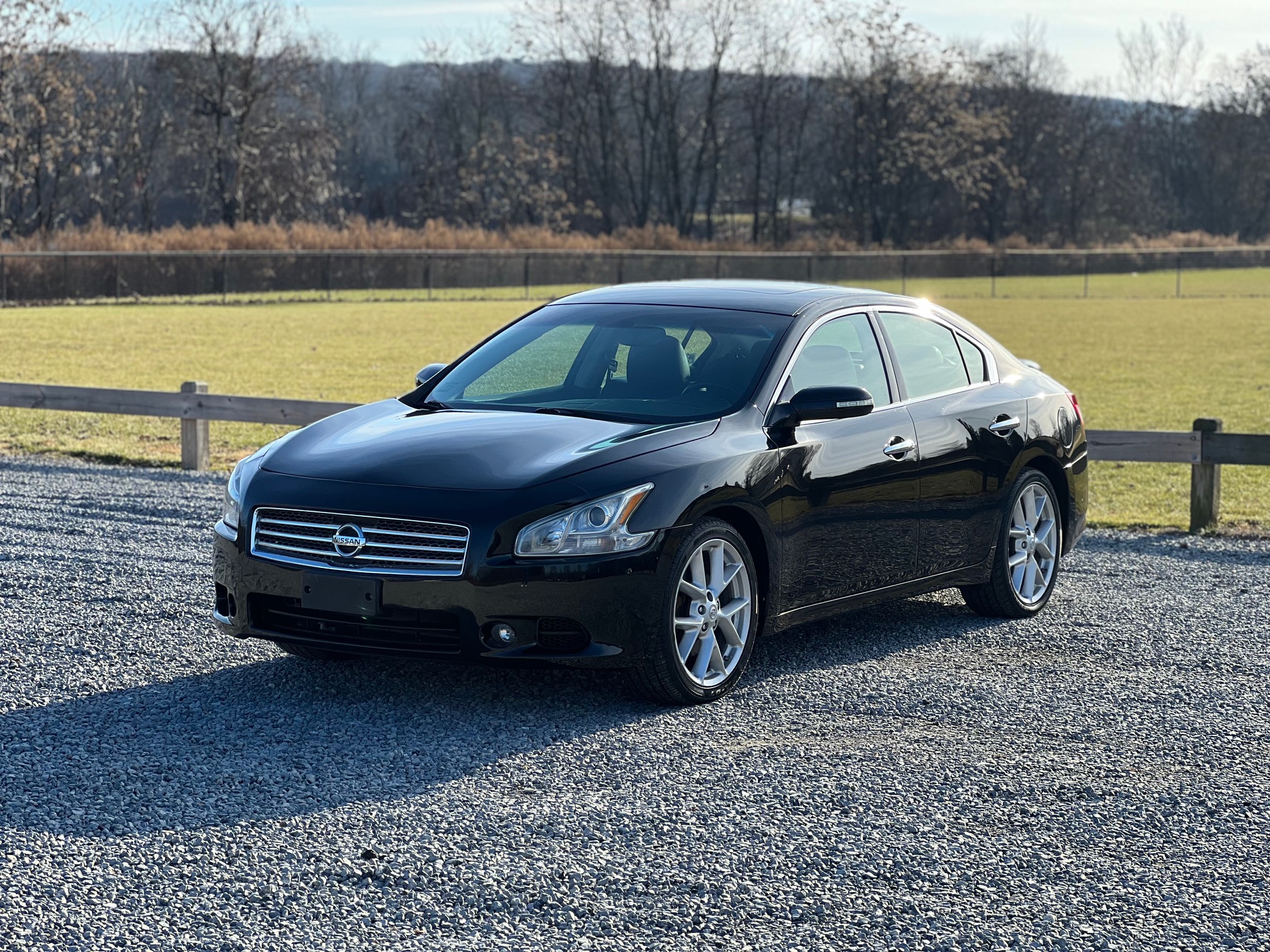
The 2009 Nissan Maxima SV is a front-wheel-drive, midsize sport sedan that bridges the gap between mainstream family sedans and near-luxury performance cars. Powered by a 3.5-liter V6 engine mated to a continuously variable transmission, the SV trim level offers an upscale cabin, aggressive styling, and a driver-focused cockpit, making it a compelling choice in the used sedan market.
Introduction to the 2009 Nissan Maxima SV
When Nissan redesigned the Maxima for the 2009 model year (marking the debut of the seventh generation), the manufacturer made a conscious decision to steer the car away from the generic family-hauler segment and lean heavily into its traditional identity as a "4-Door Sports Car." The SV trim sat at the top of the Maxima lineup alongside the sportier Sport and technology-focused Premium packages, offering a sophisticated blend of leather upholstery, upgraded audio systems, and advanced convenience features.
Understanding the 2009 Nissan Maxima SV requires examining how its powertrain, chassis dynamics, interior appointments, and technology features hold up over time. Whether you are evaluating a potential used car purchase or researching historical automotive specifications, this overview breaks down every critical aspect of the 2009 Maxima SV to provide a clear, objective picture of its capabilities and limitations.
Powertrain and Performance Specifications
At the heart of the 2009 Nissan Maxima SV is an evolution of Nissan's acclaimed VQ35DE 3.5-liter V6 engine. For the seventh-generation redesign, engineers reconfigured the powerplant, increasing output to 290 horsepower at 6,400 rpm and 261 lb-ft of torque at 4,400 rpm. This engine utilizes an aluminum block and heads, dual overhead camshafts (DOHC), and electronic valve timing to deliver a broad power band.
Unlike traditional automatic transmissions, the Maxima SV utilizes a Xtronic Continuously Variable Transmission (CVT) featuring a manual shift mode with six step-programmed "gears" and available magnesium paddle shifters mounted on the steering column. While purists often express skepticism regarding CVTs in performance-oriented sedans, Nissan's unit was tuned specifically for the Maxima to simulate traditional gear shifts under hard acceleration, reducing the dreaded "rubber-band" sensation typical of earlier CVTs.
Performance Metrics and Fuel Economy
- 0-60 mph Acceleration: Approximately 5.8 to 6.2 seconds
- Quarter-Mile Run: Approximately 14.5 seconds at 98 mph
- EPA Fuel Economy Estimates: 19 mpg city / 26 mpg highway / 22 mpg combined
- Fuel Tank Capacity: 20.0 gallons
- Drivetrain: Front-wheel drive (FWD)
Exterior Styling and Aerodynamics
The 2009 redesign brought a dramatic, aggressive exterior aesthetic to the Maxima line. Departing from the conservative lines of the sixth-generation model, the seventh-generation Maxima introduced a muscular stance characterized by deeply sculpted body panels, a pronounced front grille, and flared wheel arches that housed standard 18-inch alloy wheels (with 19-inch wheels available on the Sport and Premium packages).
The vehicle's dimensions contribute to its road presence:
- Wheelbase: 109.3 inches
- Overall Length: 48.3 inches
- Width: 73.2 inches
- Height: 57.8 inches
- Curb Weight: Approximately 3,565 lbs
The SV trim added distinct exterior touches, including fog lights, chrome door handle accents, and side-view mirror turn signals, enhancing its upscale appearance. The roofline slopes steeply toward the rear, mimicking a four-door coupe silhouette, which gives the car a dynamic look while slightly compromising rear headroom compared to boxier midsize competitors.
Interior Comfort, Materials, and Ergonomics
Inside the cabin, the 2009 Nissan Maxima SV is driver-centric, featuring a cockpit layout heavily inspired by the Nissan 370Z sports car. The center stack is angled toward the driver, housing intuitively placed climate and audio controls. The SV trim elevates the interior environment by swapping standard cloth for leather-appointed seating, a power tilt-and-telescopic steering column, auto-dimming rearview mirror, and a power driver's seat with manual lumbar support.
Front passengers enjoy generous legroom (43.8 inches) and supportive bucket seats that hold occupants firmly in place during spirited cornering. The rear seat offers 34.6 inches of legroom, which is adequate for adults, though the sloping roofline reduces headroom for taller passengers. The trunk provides 14.2 cubic feet of cargo space, featuring a wide opening and a low lift-over height, though the rear seatbacks do not fold completely flat in all configurations, limiting long-item transport.
Technology, Infotainment, and Convenience
In 2009, automotive technology was on the cusp of a digital revolution, and the Maxima SV offered a robust suite of electronics for its era. Standard features included a dual-zone automatic climate control system, a trip computer, an eight-speaker audio system with an auxiliary input jack, and steering-wheel-mounted audio controls.
Buyers could further upgrade the SV through optional packages, adding:
- Bose Audio System: A premium 9-speaker setup with Bose Centerpoint surround sound and a 2GB Music Box hard drive.
- Navigation Package: A 7-inch VGA color touch-screen display, XM NavTraffic capability, and a rearview monitor.
- Cold Weather Package: Heated front seats, heated steering wheel, and outside mirrors with integrated defrosters.
Ride Quality and Handling Dynamics
The chassis of the 2009 Maxima SV utilizes an independent MacPherson strut front suspension and a multilink independent rear suspension, supplemented by stabilizer bars at both ends. The SV strikes a firmer ride balance than comfort-oriented rivals like the Toyota Avalon or Chevrolet Impala, leaning closer to European sport sedans in its suspension tuning.
Steering is managed by a vehicle-speed-sensitive power rack-and-pinion system. It provides heavy, communicative feedback that inspires confidence at highway speeds and during cornering. However, because the Maxima is a front-wheel-drive car with nearly 300 horsepower directed exclusively to the front wheels, drivers will experience noticeable torque steer when accelerating aggressively out of tight corners.
Comparison with Key Competitors
To contextualize the 2009 Nissan Maxima SV, it helps to examine how it stacked up against its primary contemporaries in the large and midsize sport-sedan segment.
| Vehicle Model | Engine & Transmission | Horsepower | Drivetrain | Notable Advantages |
|---|---|---|---|---|
| 2009 Nissan Maxima SV | 3.5L V6 / CVT | 290 hp | FWD | Aggressive styling, sports-car-inspired cockpit, strong V6 performance. |
| 2009 Toyota Avalon Limited | 3.5L V6 / 6-Speed Auto | 268 hp | FWD | Exceptionally plush ride, expansive rear legroom, high reliability ratings. |
| 2009 Acura TL (Base) | 3.5L V6 / 5-Speed Auto | 280 hp | FWD | Refined interior materials, available Super Handling All-Wheel Drive (SH-AWD in other trims). |
| 2009 Chrysler 300S / Touring | 3.5L V6 / 4-Speed Auto | 250 hp | RWD/AWD | Imposing road presence, traditional rear-wheel-drive dynamics, spacious cabin. |
Common Issues, Reliability, and Maintenance
When evaluating a used 2009 Nissan Maxima SV, prospective buyers and current owners should be aware of several recurring mechanical and electrical tendencies documented within automotive communities and service bulletins.
- CVT Longevity: The Xtronic CVT requires regular fluid changes (every 30,000 to 45,000 miles is recommended by mechanics). Neglecting this maintenance can lead to premature belt wear, slipping, whining noises, or catastrophic transmission failure.
- Steering Lock Box Failure: A common electronic glitch in this generation of Nissans involves the steering lock module. If it fails, the car may refuse to recognize the intelligent key, preventing ignition.
- Suspension Component Wear: Due to the relatively firm ride and vehicle weight, front control arm bushings, struts, and sway bar links often require replacement after 100,000 miles.
- Oil Consumption: While less common than in earlier VQ engines, high-mileage VQ35DE units should be monitored regularly for oil consumption.
Frequently Asked Questions
Does the 2009 Nissan Maxima SV require premium fuel?
Yes, Nissan recommends using premium unleaded gasoline (91 octane or higher) for the 3.5-liter V6 engine to achieve its rated 290 horsepower and optimal fuel efficiency. Running regular 87 octane fuel is technically permissible due to knock sensors retarding timing, but it will result in reduced power output and lower fuel economy.
Is the CVT reliable in the 2009 Maxima SV?
The early iterations of Nissan's Xtronic CVT have a mixed reliability reputation. While many units easily surpass 150,000 miles with proper fluid maintenance, neglected units are prone to overheating and internal component failure. Always check service history for documented transmission fluid changes before purchasing a used model.
What is the difference between the Maxima S and SV trims?
The base 'S' trim features cloth seating, manual climate control adjustments, and basic audio equipment. The 'SV' trim adds leather-appointed seating, fog lights, a power tilt-and-telescopic steering wheel, an auto-dimming rearview mirror, and eligibility for upscale packages like Bose audio, heated seats, and navigation.
Does the 2009 Maxima SV have a timing belt or timing chain?
The 3.5-liter V6 engine in the 2009 Maxima utilizes a metal timing chain rather than a rubber timing belt. Timing chains are designed to last the lifetime of the engine, provided the vehicle maintains clean engine oil and proper oil pressure levels throughout its operating life.
How does the Maxima SV handle in snow and winter weather?
As a front-wheel-drive sedan, the Maxima SV performs adequately in light winter conditions when equipped with quality all-season or dedicated winter tires. However, its high torque output and wide tires can make it susceptible to front-wheel spin on icy surfaces without careful throttle modulation.
Final Recommendation
The 2009 Nissan Maxima SV remains a striking, engaging option for drivers seeking a used sedan that prioritizes styling and performance over sterile appliance-like transportation. Its potent V6 engine and supportive handling make daily driving enjoyable, provided the vehicle has been thoroughly inspected for transmission health and suspension wear. For buyers prioritizing comfort and mechanical simplicity, a pre-purchase inspection focusing on the CVT and electronics is essential before finalizing an acquisition.