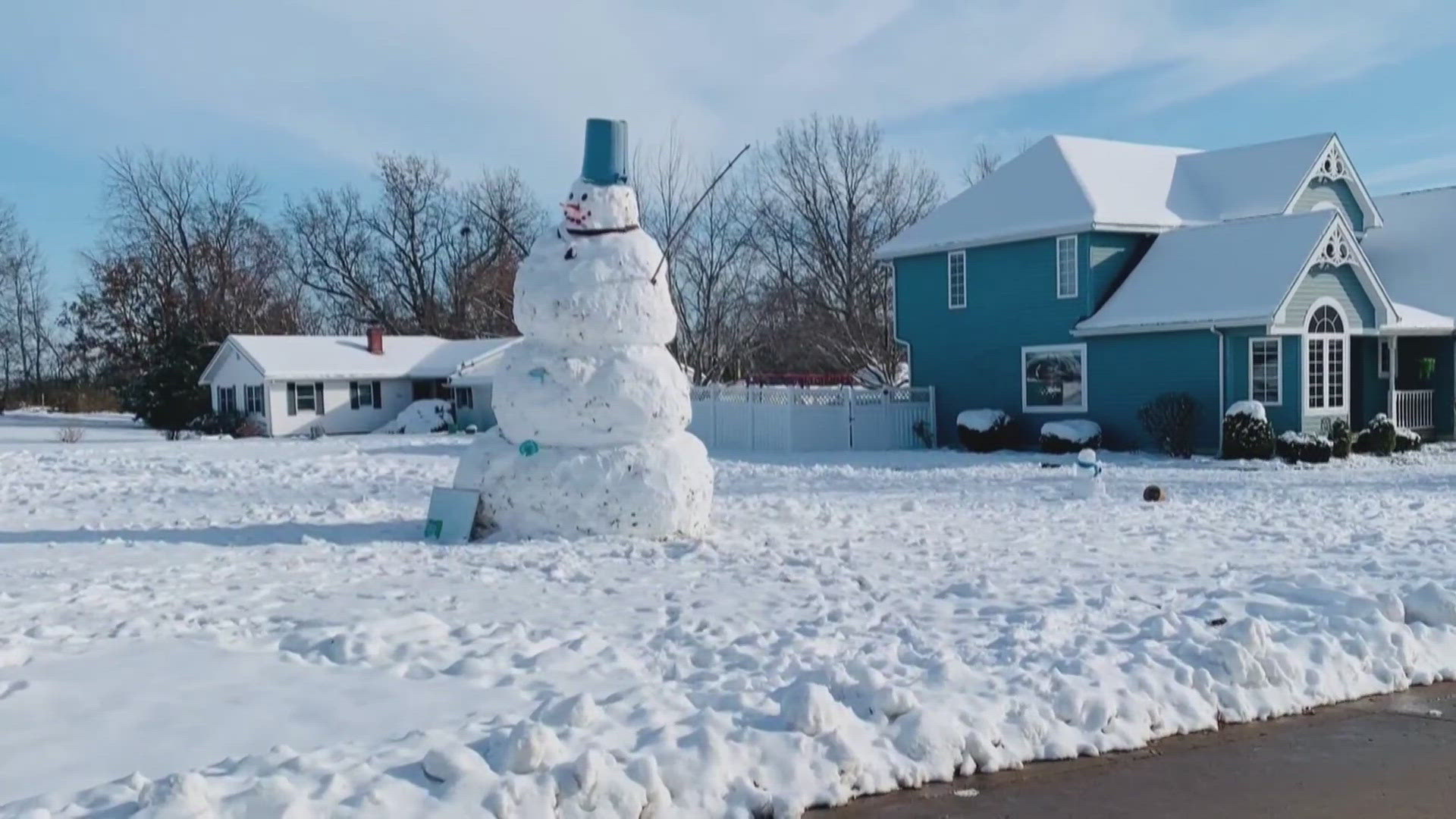
A towering 20-foot snowman built in Shirley, Massachusetts, captures national and local attention during heavy New England winters, serving as a massive seasonal landmark created by local residents using specialized equipment, persistent heavy snowfall, and community coordination.
Understanding the Phenomenon of Massive Seasonal Snow Sculptures in New England
New England winters are synonymous with heavy nor'easters, plunging temperatures, and accumulating blanketing white that transforms sleepy suburban landscapes into winter wonderlands. While building a standard-sized snowman using three stacked snowballs is a childhood staple across the region, constructing a monumental structure reaching heights of 20 feet or more requires an entirely different order of magnitude. In towns like Shirley, Massachusetts, residents and local winter enthusiasts occasionally leverage exceptional meteorological conditions to construct monumental snow art that transcends ordinary yard decorations.
These massive structures are rarely accidental. They require an abundance of dense, packing snow, structural stabilization, and days—sometimes weeks—of labor. The presence of a 20-foot snowman in Shirley, Massachusetts, acts as a localized community beacon, drawing onlookers from neighboring towns in Worcester and Middlesex counties to marvel at the sheer scale of the engineering feat. Understanding how these ephemeral monuments come to life involves looking closely at weather patterns, structural physics, municipal regulations, and community culture in small-town Massachusetts.
Meteorological Prerequisites for Building a 20-Foot Snowman
Constructing a towering 20-foot snow sculpture is entirely dependent on Mother Nature providing specific, highly favorable weather conditions. It is not merely a matter of how much snow falls, but the exact physical composition of that precipitation.
Snow Consistency and Water Content
The ideal snow for large-scale building must have a high liquid water equivalent, commonly referred to as "packing snow." Fluffy, dry powder—often prized by skiers in the Rocky Mountains—is entirely useless for structural snow art because it lacks the cohesive bonding necessary to support weight. Conversely, freezing rain or heavy sleet creates ice blocks that are too heavy and dangerous to shape manually.
Accumulation and Compaction Cycles
To reach a height of 20 feet, a snow builder needs consistent, heavy accumulations over a short period, followed by periods of moderate cold that allow the compacted snow to freeze and cure into a solid mass. When snow is packed tightly, air pockets are expelled, increasing the density. As temperatures drop below freezing at night, this compacted mass sinters—meaning the snow grains bond together more tightly—transforming the soft pile into a structure capable of supporting its own massive weight without collapsing inward.
| Snow Type | Water Content | Structural Suitability for 20-Foot Builds |
|---|---|---|
| Dry Powder | Less than 5% | Poor; cannot hold shape or support vertical weight |
| Wet Packing Snow | 10% to 15% | Ideal; packs tightly and bonds well under pressure |
| Slush / Sleet | Greater than 20% | Dangerous; too heavy, prone to sliding and structural failure |
| Crusted Snow | Variable | Difficult; outer shell resists carving and shaping |
Engineering, Equipment, and Construction Techniques
Achieving a stable height of 20 feet requires moving tons of snow, which far exceeds the physical capacity of traditional hand-rolling with snowballs. Builders of massive New England snowmen utilize civil engineering principles and specialized equipment to manage the sheer weight and height of the project.
Mechanical Assistance and Scaffolding
While initial layers can be shoveled into place, reaching the upper tiers requires mechanical intervention. Snowblowers are frequently used to collect snow from vast expanses of a yard and direct it into centralized piles or wooden forms. For heights exceeding 15 feet, builders often utilize ladders, step stools, or even temporary wooden scaffolding systems to reach upper sections safely.
Shuttering and Formwork Methods
Much like pouring concrete for a foundation, building a massive snowman often requires formwork. Builders construct temporary wooden or plywood boxes that are packed tight with snow and then removed once the snow begins to set and freeze. This allows the core of the snowman to remain structurally sound and perfectly vertical, preventing the common issue of a lower-tier blowout caused by eccentric loading.
Internal Reinforcement and Safety Considerations
Safety is a paramount concern when dealing with a structure weighing several tons. Unreinforced snow can slump, crack, and collapse without warning, posing a severe hazard to children and onlookers. While builders rely primarily on natural freezing and compaction, ensuring a wide, stable base—often with a diameter of 10 feet or more—is critical to lower the center of gravity. Furthermore, builders must avoid using unauthorized non-snow internal materials like exposed steel rebars or hazardous lumber that could injure someone if the sculpture degrades unexpectedly during a sudden thaw.
Community Impact and Local Tourism in Shirley, Massachusetts
Shirley, Massachusetts, a historic town situated in Middlesex County, is typically known for its rural charm, historic mill sites, and quiet New England neighborhoods. However, when a monumental winter structure like a 20-foot snowman emerges on private residential property, the local dynamics shift significantly.
Traffic and Visitor Management
A roadside attraction of this scale naturally draws substantial local attention. Neighbors, families, and curious onlookers frequently drive by or stop to take photographs. This influx of visitors transforms a quiet residential street into a temporary community gathering point. Local builders often incorporate creative features—such as oversized scarves made from tarp material, giant buttons fashioned from painted plywood, and broomsticks repurposed from fallen tree branches—to enhance the visual appeal and charm for visiting children.
Digital Virality and Media Coverage
In the era of social media, localized oddities and impressive feats of winter craftsmanship spread rapidly across regional Facebook groups, community forums, and local news broadcasts. A 20-foot snowman in Shirley, Massachusetts, frequently finds its way into Boston-area television weather segments and digital news outlets, showcasing the resilient and playful spirit of New Englanders during grueling winter months.
Practical Guidance for Visiting or Building Large Snow Sculptures
For those inspired by the tradition of massive New England snow sculptures, approaching such a project requires careful planning, respect for property, and awareness of environmental variables.
- Check Local Ordinances: Before constructing massive structures near property lines or public right-of-ways, ensure that visibility for motorists is not obstructed and that local municipal bylaws regarding public safety are respected.
- Prioritize Structural Integrity: Never tunnel into or climb unstable snow structures. A collapsing 20-foot snow pile can weigh thousands of pounds and pose suffocation or crush hazards.
- Monitor Weather Forecasts: Keep a close eye on upcoming temperature fluctuations. A sudden January or February thaw with rain can rapidly destabilize a towering snowman, turning a majestic sculpture into a dangerous, melting hazard.
- Respect Private Property: If visiting a local landmark in Shirley, Massachusetts, always park legally, respect private land boundaries, and avoid leaving trash behind in residential neighborhoods.
Frequently Asked Questions
How much does a 20-foot snowman weigh?
A packed snow structure standing 20 feet tall with a wide base can easily weigh between 10 and 20 tons, depending on the moisture content and compaction density of the snow used.
How do builders reach the top of a 20-foot snowman?
Builders typically use ladders, scaffold platforms, and long-handled shovels. Snowblowers are also directed upward to spray snow onto the upper tiers during the building phase.
How long does a massive snowman last?
The lifespan of a large snow sculpture depends entirely on ambient temperatures. If prolonged sub-freezing weather persists, it can stand for several weeks, whereas a single day of rain and temperatures above 50 degrees Fahrenheit can cause rapid structural collapse.
Can anyone build a 20-foot snowman in their yard?
Technically yes, provided there is sufficient snowfall, a large enough yard to harvest snow from without creating hazards, and the physical endurance required to move tons of snow.
Is a permit required to build large snow art in Massachusetts?
Generally, no permits are required for temporary snow sculptures on private residential property, provided the structure does not violate zoning laws, block public sidewalks, or create traffic hazards on municipal roadways.
Next Actions and Conclusion
For residents of Shirley, Massachusetts, and winter enthusiasts across New England, the appearance of monumental snow sculptures highlights the creative potential hidden within regional winter storms. Whether planning to construct your own weather-dependent monolith or simply hoping to catch a glimpse of local winter artistry during a seasonal drive, respecting the natural limits of snow physics and prioritizing safety ensures that these temporary landmarks remain a joyful part of local folklore. Keep an eye on local community pages during major nor'easters to verify current local sightings and enjoy the fleeting magic of New England winter traditions.