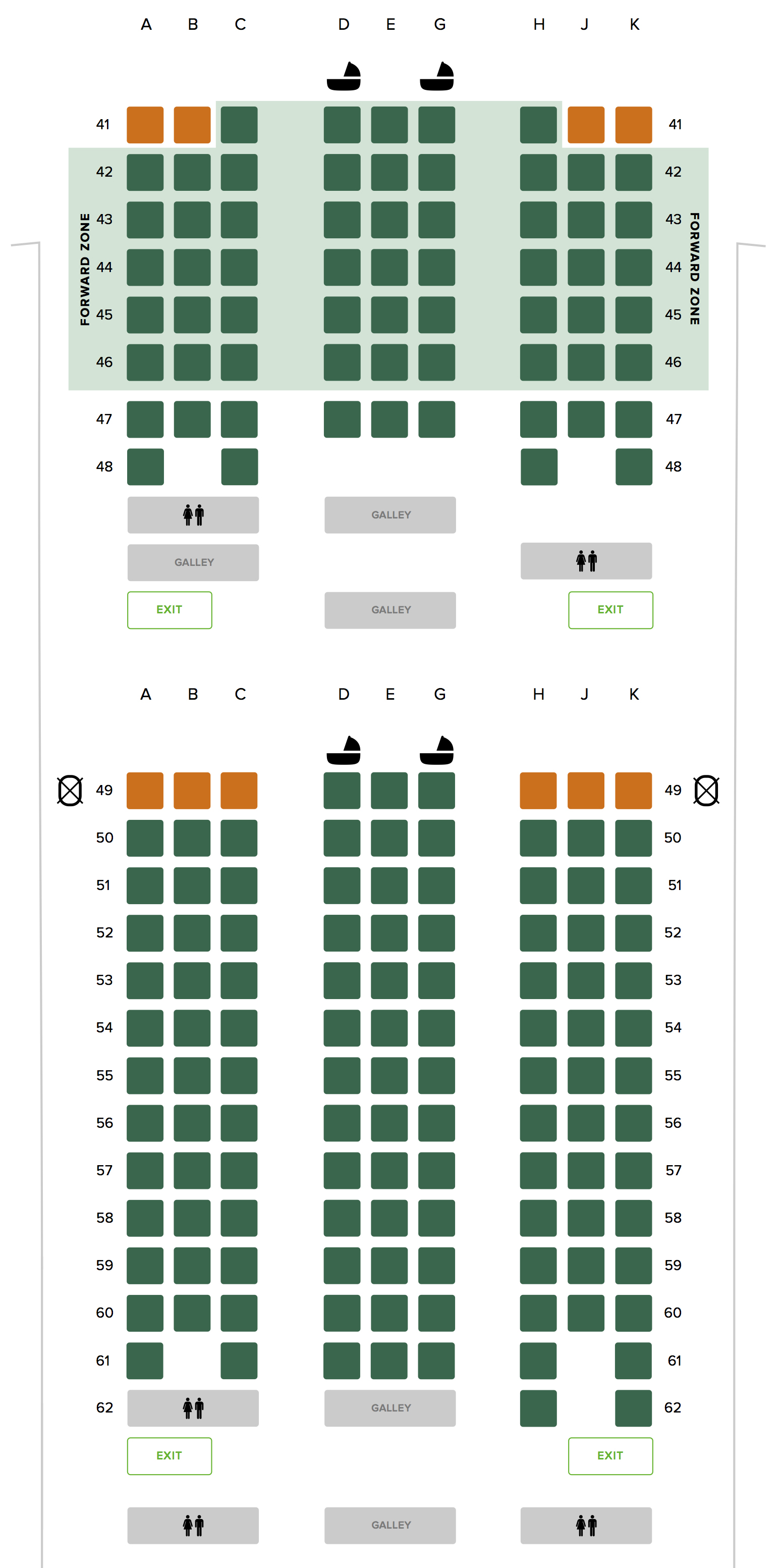
The Boeing 777X seating configurations leverage a cabin that is four inches wider than previous models, enabling airlines to offer 18-inch wide seats in a 10-abreast economy layout. This design combines advanced insulation and structural thinning to maximize internal volume, providing a significant boost to passenger comfort and airline efficiency as the aircraft enters global service in 2026.
1. The Engineering of the Four-Inch Advantage
One of the most critical insights into the 777X (specifically the 777-9 and 777-8 variants) is how Boeing achieved a wider interior without increasing the exterior fuselage diameter. By optimizing the internal frames and using thinner, more efficient insulation materials, Boeing "carved out" an additional two inches on each side of the cabin.
This brings the total interior width to 19 feet 7 inches (5.97 meters). While four inches might seem negligible on paper, in the world of narrow-body and wide-body aviation, it is the difference between a cramped 17-inch seat and a "comfortable" 18-inch seat. For airlines, this extra width is the linchpin that allows for a 3-4-3 (10-abreast) economy configuration that still meets the comfort standards previously reserved for 9-abreast layouts. This structural evolution allows the 777X to compete directly with the Airbus A350-1000, which has a slightly narrower cabin.
2. The New 10-Abreast Economy Standard
For years, the 10-abreast layout on the 777-300ER was criticized by passengers for being too tight, often resulting in seat widths of 17 inches or less. In 2026, the 777X rectifies this by making 10-abreast the native design standard. Because of the wider cabin, seat manufacturers can now install 18-inch wide seats while maintaining a standard aisle width.
This configuration is vital for airline profitability. By fitting 10 seats across, airlines increase the seat count by approximately 10% compared to a 9-abreast layout, without significantly increasing the fuel burn per mile. For the passenger, the "middle seat" remains a reality, but the additional shoulder room provided by the carved-out sidewalls makes the window seat significantly less claustrophobic than in previous generations of the Triple Seven.
3. Advanced Sidewall Geometry and Shoulder Room
The seating configuration on the 777X isn't just about the floor width; it is about the "living space" at shoulder height. Boeing redesigned the sidewall panels to be more vertical, moving the point where the wall curves inward higher up. This is a subtle but profound change for passengers in window seats.
In older wide-body designs, the curvature of the fuselage often forced window-seat passengers to lean toward the center of the row, encroaching on their neighbor’s space. In the 777X, the near-vertical sidewall provides more "lateral clearance." This architectural shift allows passengers to sit upright without their shoulders touching the plastic molding, a common grievance in long-haul travel. This insight is particularly relevant for the 777-9, which is designed to carry over 400 passengers in typical multi-class configurations.
4. The Business Class "Throne" and Suite Evolution
As we look at the 2026 deployment of the 777X, the seating configurations for Business Class have moved almost exclusively to a 1-2-1 staggered or herringbone layout. However, the 777X cabin width allows for wider individual suites.
Lufthansa, one of the launch customers, introduced a "throne" seat in the center of the cabin, offering unparalleled privacy and storage for solo travelers. Other airlines, such as Qatar Airways with its Qsuite 2.0 and Emirates with its refreshed 777X Business Class, utilize the extra width to include sliding privacy doors without making the seat feel narrow. The 777X facilitates a "Business-Plus" experience where the seat is not just a bed, but a mobile office with enough width to include side consoles for laptops and personal devices.
5. Premium Economy: The 2-4-2 Sweet Spot
The 777X has become the flagship for the "Goldilocks" class—Premium Economy. Most airlines are configuring their 777X Premium Economy cabins in a 2-4-2 layout. This provides a seat width of 19 to 20 inches, significantly wider than the 10-abreast economy section.
The insight here lies in the "pitch" (the distance between seats). Because the 777X is more fuel-efficient per seat-mile thanks to its GE9X engines and composite wings, airlines can afford to dedicate more floor space to Premium Economy. In 2026, we are seeing "cradle" seats and even some fixed-back shells appearing in this section, providing a clear value proposition for travelers who want to avoid the density of the 10-abreast rear cabin but cannot justify the cost of a lay-flat Business Class suite.
6. Comparison of Seating Metrics: 777-300ER vs. 777-9
| Feature | Boeing 777-300ER | Boeing 777-9 (777X) | Impact on Passenger |
|---|---|---|---|
| Interior Cabin Width | 19 ft 3 in (5.87 m) | 19 ft 7 in (5.97 m) | 4 inches of extra lateral space. |
| Standard Economy Layout | 9 or 10 abreast | 10 abreast (Optimized) | 18-inch seat width in 10-abreast. |
| Window Size | 140 sq inches | 162 sq inches | Better views and more natural light. |
| Sidewall Profile | Curved | Vertical/Carved | Increased shoulder room for window seats. |
| Overhead Bin Capacity | Standard Pivot | Enlarged "Space Bins" | 40% more bag space, reducing floor clutter. |
7. The Rebirth of the First Class Suite
While many airlines have retired First Class in favor of high-end Business Class, the 777X has spurred a mini-renaissance for the "Super Suite." Emirates and Singapore Airlines have utilized the 777X’s massive footprint to create floor-to-ceiling private rooms.
The configuration usually consists of just 6 to 8 suites in a 1-1-1 or 1-2-1 layout. Because the 777X cabin is so wide, these suites can feature separate "seat and bed" combinations or massive wide-screen displays that span the entire front wall of the suite. In 2026, these configurations are the gold standard for privacy, often featuring individual climate control and lighting zones that are integrated directly into the aircraft’s digital backbone.
8. Window Placement and Psychological Space
The 777X seating configuration is complemented by window placement that is higher than on previous models. This is an insight often overlooked: when windows are placed higher, they align more naturally with the eye level of a seated passenger.
Furthermore, the windows are 16% larger than those on the 777-300ER. From a seating perspective, larger windows make the cabin feel more spacious, reducing the "tube" sensation of a long-haul flight. The use of electronic dimmable windows (similar to the 787 Dreamliner technology but improved for faster transition speeds) allows cabin crew to manage light levels without requiring passengers to manually operate shades, ensuring that the seating environment remains optimal for sleep cycles.
9. Cabin Altitude and Humidity: The Comfort Multiplier
While not a "seat" itself, the environment around the seat is a crucial part of the configuration's success. The 777X is built with a combination of traditional aluminum and advanced composites, allowing for a lower cabin altitude (closer to 6,000 feet rather than 8,000 feet) and higher humidity levels.
When passengers are sitting in a high-density 10-abreast configuration, the physiological toll of dry air and high altitude is magnified. By improving the air quality and pressure, Boeing has made the 777X seating feel more comfortable over a 15-hour flight. Passengers report feeling less fatigued, which indirectly validates the airline's choice to use a high-density seating layout.
10. Modular Galley and Lavatory Placement
The 777X utilizes a modular approach to galleys and lavatories, known as the "Galley/Lavatory Flex" zones. This allows airlines to customize where they place the "breaks" in seating sections.
For example, an airline can choose to place a lavatory in the center of a seating zone or at the far ends to maximize seat count. The insight for passengers is that these modular units are now designed with better soundproofing. In older 777s, being seated near a galley or lavatory was a major disadvantage due to noise and light. In the 2026 777X configurations, recessed lighting and acoustic curtains help isolate the seating areas from the operational hubs of the aircraft.
11. In-Flight Entertainment (IFE) and Power Integration
In the 777X, the seating configuration is fully "digitized." Unlike older aircraft where IFE boxes were bulky and occupied precious legroom under the seat in front, the 777X’s seat architecture integrates the electronics into the seat frame itself.
Every seat in the 777X, including those in economy, typically features a 4K resolution screen and high-wattage USB-C charging ports. The configuration often includes Bluetooth audio connectivity, allowing passengers to use their own wireless headphones. This integration is seamless, ensuring that the 18-inch seat width is not compromised by external hardware, a major step forward in technical seating design.
12. Impact of Folding Wingtips on Gate Access
A unique technical feature of the 777X that affects seating indirectly is the folding wingtips. By folding the tips upward after landing, the 777X can fit into the same airport gates as the smaller 777-300ER (Code E gates).
This is an "insight" because it allows airlines to deploy the high-capacity 777X seating configurations to more airports globally without requiring massive infrastructure changes. For the passenger, this means more opportunities to experience the new seating standards on a wider variety of routes, rather than being restricted to a handful of "mega-hubs" capable of handling the massive wingspan of a traditional Category F aircraft (like the A380).
Frequently Asked Questions
Is the 10-abreast seating on the 777X really as comfortable as 9-abreast on older planes?Yes, in terms of seat width. Because the 777X cabin is 4 inches wider internally, it allows for 18-inch wide seats in a 10-abreast (3-4-3) configuration. In contrast, older 777s in a 10-abreast layout often had seats that were only 17 or 17.3 inches wide. The extra room comes from thinner sidewalls and better internal framing.
Which airlines are currently operating the 777X with these new configurations?As of 2026, major operators include Emirates, Qatar Airways, Lufthansa, Singapore Airlines, and Cathay Pacific. Each has tailored the 777X to their specific brand, with Lufthansa focusing on its new "Allegris" cabin and Emirates highlighting its redesigned First and Business class suites.
Does the 777X use the same dimmable windows as the 787 Dreamliner?The 777X uses a newer generation of electronic dimmable window technology. These windows transition between light and dark significantly faster than the original windows on the 787 and can reach a much darker state, which is a common request from passengers on long-haul "red-eye" flights.
How does the 777X seating compare to the Airbus A350?The 777X cabin is wider than the A350. While the A350-1000 is often configured with 9-abreast seating (which is very comfortable), the 777X's width allows it to offer 10-abreast seating with almost identical seat width to the A350's 9-abreast. This makes the 777X more efficient for airlines while maintaining a competitive comfort level.
Will the folding wingtips affect my view from the window seat?The folding mechanism is located at the very end of the wing. From a window seat over the wing, you will see the wingtip fold upward after landing and downward before takeoff. It does not obstruct the view of the ground during flight, as the wing remains locked in a flat position while in the air.
Practical Recommendation
When booking a flight on a Boeing 777X in 2026, aim for the 777-9 variant if you are traveling in Economy. The "carved-out" sidewalls provide the most benefit in the window seats (typically labeled A or K). For those seeking the best balance of cost and comfort, the Premium Economy section in a 2-4-2 configuration offers a significant jump in personal space for a fraction of the cost of Business Class. Always verify seat maps on official airline websites, as modular galley placements can vary by carrier, affecting legroom in bulkhead rows.