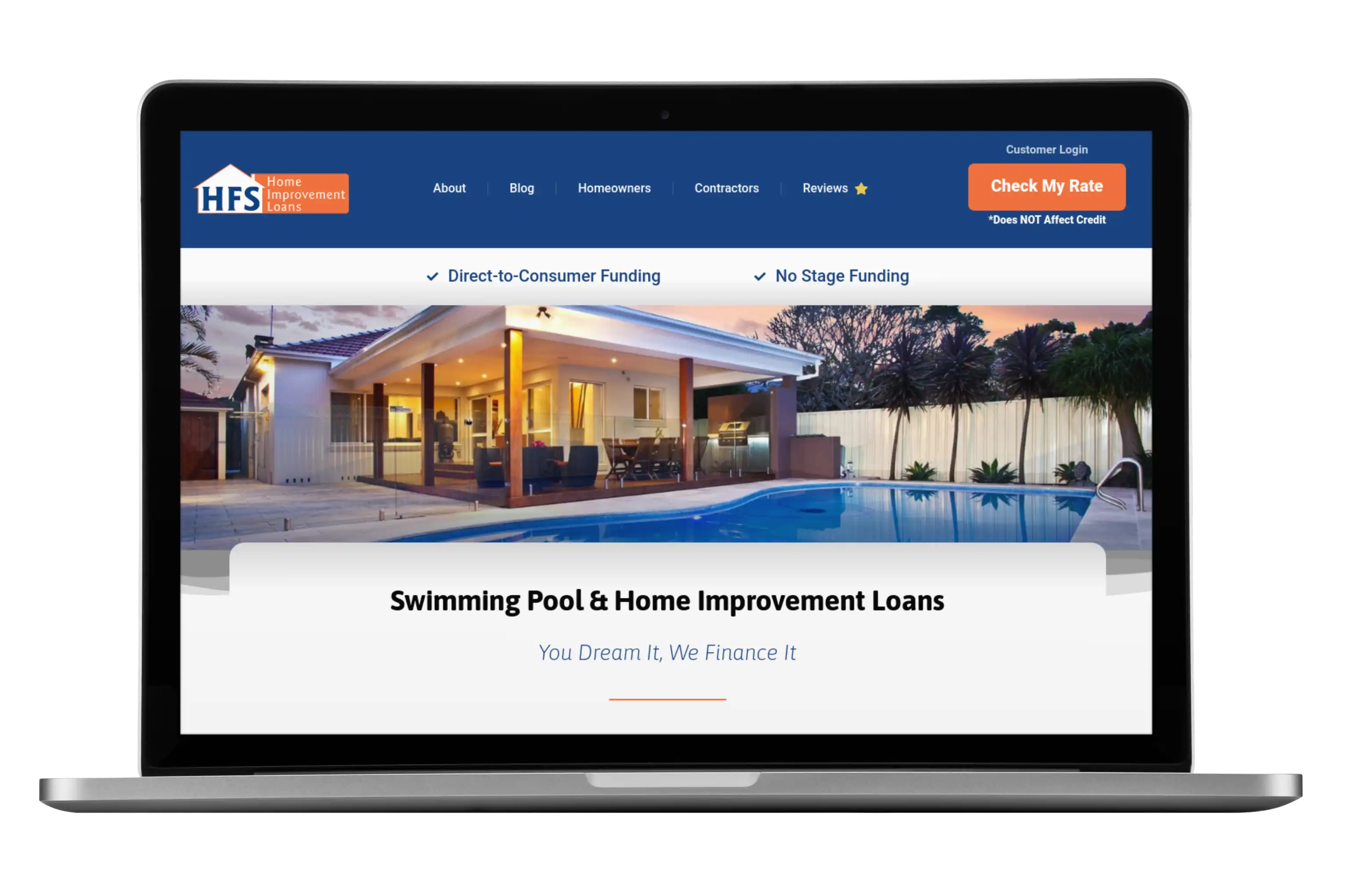
A 10-year swimming pool loan is an intermediate-term financing option designed specifically to cover the installation, construction, and landscaping costs of an in-ground or above-ground backyard pool. Typically structured as unsecured personal loans, home equity loans, or specialized home improvement loans, these financing packages allow homeowners to spread capital-intensive project expenses over a decade, balancing manageable monthly payments with a reasonable overall interest accrual.
Installing a backyard swimming pool is a major capital investment that transforms a property, enhances recreational lifestyle opportunities, and potentially increases home equity. Because average pool construction costs often range from $40,000 to well over $100,000 depending on materials, size, and geographic location, most homeowners cannot pay entirely out of pocket. Consequently, specialized financing products like 10-year swimming pool loans have become a cornerstone of modern backyard renovation planning.
Understanding how these loans work, the mechanics of qualification, interest structures, and associated financial risks is critical before signing any promissory note. This comprehensive guide breaks down everything borrowers need to know about securing, managing, and evaluating a 10-year financing term for a backyard pool.
The Mechanics of 10-Year Swimming Pool Loans
A 10-year swimming pool loan operates on a fixed amortization schedule, meaning the borrower makes equal monthly payments over 120 months until the principal balance and accrued interest are fully paid off. Unlike a revolving credit card or a short-term home improvement loan, a 10-year term provides a predictable financial horizon.
Loan Structures: Secured vs. Unsecured
Financing a pool over a 10-year period typically involves one of two primary lending structures:
- Unsecured Personal Loans: Many specialized home improvement lenders and fintech platforms offer unsecured installment loans for swimming pools. These loans do not require the borrower to pledge their home as collateral. Approval is based strictly on creditworthiness, debt-to-income (DTI) ratio, and verifiable income. While faster to fund—often within days—unsecured loans generally carry higher interest rates due to the elevated risk assumed by the lender.
- Secured Home Equity Loans (HELOANs) or HELOCs: Borrowers who have built substantial equity in their primary residence can opt for a home equity loan configured with a 10-year repayment term. Because the loan is secured by the property, lenders typically offer significantly lower interest rates. However, the application process requires a professional home appraisal, incurs closing costs, and places a lien on the home, carrying the risk of foreclosure if payments default.
How Amortization Shapes Your Payments
Over the course of 120 months, the composition of your monthly payment changes. In the early years of a 10-year pool loan, a larger percentage of each payment goes toward interest rather than principal. As the principal balance gradually decreases, more of your monthly payment chips away at the core loan amount.
Choosing a 10-year term specifically strikes a balance for many households. Shorter terms, such as 3 or 5 years, result in excessively high monthly payments that can strain household cash flow. Conversely, extending financing to 15 or 20 years drastically reduces the monthly payment but exponentially increases the total lifetime interest paid to the lender.
Financial Comparison: 10-Year Term vs. Alternative Financing Options
To understand why a 10-year timeline is popular, it helps to examine how it compares against shorter and longer financing structures. The following table highlights the differences between common pool financing vehicles.
| Loan Type | Typical Term Length | Interest Rate Structure | Primary Risk Factor | Best Suited For |
|---|---|---|---|---|
| Unsecured Pool Loan | 5 to 12 Years | Fixed (Typically Higher) | Higher monthly payments or steep APR if credit is marginal | Borrowers who want to avoid using their home as collateral. |
| Home Equity Loan (HELOAN) | 5 to 15 Years | Fixed | Pledges primary residence as collateral; closing fees apply | Homeowners with strong equity seeking lower fixed rates. |
| Cash-Out Refinance | 15 to 30 Years | Fixed or Adjustable | Resets primary mortgage terms; extends debt horizon | Homeowners looking to bundle multiple major renovations. |
| Credit Card / Promotional Financing | 12 to 24 Months | 0% Intro, then Variable | Astronomical deferred interest rates if not paid in full | Small above-ground pool purchases or partial equipment upgrades. |
Eligibility Requirements and Qualification Criteria
Securing a competitive 10-year pool loan requires meeting strict underwriting benchmarks established by financial institutions, credit unions, and online lending platforms. Lenders evaluate several core pillars of a borrower’s financial profile to assess default risk over a decade-long commitment.
Credit Score Thresholds
Your credit score is the primary determinant of the interest rate (APR) you will receive.
- Excellent Credit (740 and above): Qualifies borrowers for the lowest available rates, minimizing total interest paid over the 10-year term.
- Good Credit (670 to 739): Secures standard market rates with favorable approval odds.
- Fair Credit (580 to 669): May still secure approval, particularly for secured home equity products, but will face higher interest rates that significantly increase the overall cost of the pool.
- Poor Credit (Below 580): Generally faces steep hurdles, often requiring a co-signer, a secured loan product, or significant personal savings to bridge the gap.
Debt-to-Income (DTI) Ratio
Lenders analyze your DTI ratio—the percentage of your gross monthly income that goes toward paying recurring debts (mortgage, car payments, student loans, minimum credit card payments)—to ensure you can comfortably absorb a new 10-year loan payment. Most prime lenders prefer a DTI ratio below 43%, though some flexible home improvement lenders allow ratios up to 50% for highly qualified applicants with substantial liquid assets.
Proof of Income and Employment Stability
Because a 10-year loan is a medium-term liability, underwriters require robust documentation of income stability. W-2 employees must typically provide recent pay stubs and W-2 forms from the past two tax years. Self-employed borrowers must submit comprehensive federal tax returns, profit-and-loss statements, and business bank statements to verify consistent cash flow.
The True Cost of a 10-Year Pool Loan
When evaluating a swimming pool loan, looking solely at the monthly payment is a common and costly mistake. The true financial commitment involves calculating the aggregate cost of borrowing over the entire 120-month lifecycle.
Principal vs. Cumulative Interest
Consider an example of a $60,000 unsecured pool loan amortized over 10 years at a fixed interest rate of 7.99% APR:
- Monthly Payment: Approximately $727.
- Total Payments Over 10 Years: Approximately $87,240.
- Total Lifetime Interest: Approximately $27,240.
If that same $60,000 is financed over a 5-year term at a slightly lower rate of 6.99% APR:
- Monthly Payment: Approximately $1,186.
- Total Payments Over 5 Years: Approximately $71,160.
- Total Lifetime Interest: Approximately $11,160.
While the 10-year loan reduces monthly pressure by $459, it costs an additional $16,080 in interest. Homeowners must weigh whether the lower monthly cash-outlay justifies the substantially higher cumulative cost of borrowing.
Hidden Fees and Upfront Costs
Beyond interest and principal, borrowers must account for potential transaction costs:
- Origination Fees: Many unsecured personal lenders charge an upfront origination fee ranging from 1% to 8% of the total loan amount, which is often deducted directly from the disbursed funds.
- Appraisal and Closing Fees: If utilizing a home equity loan to finance the pool, expect to pay for home appraisals, title searches, and administrative filing fees, which can add several hundred to a few thousand dollars to the project cost.
- Prepayment Penalties: Reputable modern lenders rarely penalize borrowers for paying off a loan early, but verifying whether a prepayment penalty exists is vital for anyone planning to refinance or sell their home within the decade.
Step-by-Step Guide to Securing Pool Financing
Navigating the application process systematically ensures you secure the most advantageous terms and avoid predatory lending traps.
- Establish a Realistic Project Budget: Before speaking with lenders, obtain detailed, itemized bids from licensed pool contractors. Factor in not just the shell and excavation, but also decking, fencing, permits, landscaping, and ongoing operational equipment.
- Check Your Credit Report and Score: Pull your credit reports to check for errors and ensure your score sits in a competitive bracket. Resolving minor discrepancies can elevate your score and unlock lower interest tiers.
- Shop and Prequalify with Multiple Lenders: Utilize online prequalification tools that perform soft credit inquiries—which do not impact your credit score—to compare rates from banks, credit unions, and specialized home improvement lenders.
- Gather Documentation: Assemble your financial dossier, including tax returns, pay stubs, bank statements, and contractor project estimates.
- Submit Formal Applications: Once you identify the lender offering the best combination of low APR, manageable monthly payments, and minimal fees, submit a formal application. This will trigger a hard credit inquiry.
- Review Loan Disclosures and Sign: Carefully examine the Truth in Lending (TIL) disclosures, paying close attention to the APR, total finance charges, and payment schedule before executing the loan agreement.
Pros and Cons of Financing a Pool for 10 Years
Balancing the advantages and disadvantages helps determine if this financial instrument aligns with your household budget and long-term goals.
Advantages
- Manageable Cash Flow: Spreading payments over 120 months keeps monthly installments lower than short-term financing alternatives, preserving liquidity for other household expenses.
- Fixed Payment Predictability: Fixed-rate 10-year loans protect borrowers from interest rate volatility, ensuring the monthly payment remains stable regardless of broader economic shifts.
- Immediate Lifestyle Enhancement: Homeowners can enjoy the benefits of backyard recreation immediately rather than waiting years to save the full cash amount.
- Potential Property Value Addition: In many real estate markets, a well-designed in-ground pool can enhance property appeal and increase resale value, provided the neighborhood supports the amenity.
Disadvantages
- High Cumulative Interest: Extended borrowing timelines result in significantly more interest paid compared to cash purchases or short-term loans.
- Depreciation vs. Debt: Unlike a primary mortgage on a home that historically appreciates, a swimming pool is a lifestyle asset that depreciates over time, meaning you may owe more on the loan than the marginal value added to the home in the early years.
- Binding Long-Term Obligation: Committing to a 10-year liability reduces financial flexibility, tying up a portion of monthly income that could otherwise be directed toward retirement savings or investments.
Frequently Asked Questions
Can I pay off a 10-year swimming pool loan early without penalty?
Most reputable lenders and personal loan providers do not charge prepayment penalties, allowing borrowers to make extra principal payments or pay off the entire balance early to save on interest. However, you must carefully review your specific loan contract or ask your loan officer directly, as some home equity lenders or specialty financing agreements do enforce prepayment restrictions during the first few years of the term.
Is an unsecured pool loan better than a home equity loan for a 10-year term?
Neither is universally better; the right choice depends on your financial profile and risk tolerance. Unsecured loans do not put your home at risk if you default, and they fund much faster with minimal paperwork. Home equity loans generally offer lower interest rates and potentially tax-deductible interest (consult a tax professional regarding current IRS guidelines), but they require using your home as collateral and incur closing costs.
What credit score is needed to qualify for a 10-year pool loan?
While some subprime lenders accept scores starting around 580, securing favorable interest rates and a true 10-year repayment term typically requires a credit score of 670 or higher. Borrowers with scores exceeding 740 enjoy access to the most competitive promotional rates and lowest fee structures across the lending market.
Do swimming pool loans cover landscaping and fencing?
Yes, most comprehensive home improvement and pool loans allow borrowers to bundle all related backyard construction costs into a single loan amount. This includes excavation, pool shells, patio decking, retaining walls, required safety fencing, and permanent equipment installations, provided these items are itemized in the contractor's contract submitted to the lender.
What happens if construction costs exceed my approved loan amount?
If contractor bids or unexpected excavation complications—such as hitting bedrock or encountering severe drainage issues—cause project costs to exceed your approved loan amount, you will generally need to cover the overrun out of pocket. To mitigate this risk, financial experts recommend securing a loan amount that includes a 10% to 15% contingency buffer above the initial contractor estimate.
Conclusion and Next Actions
A 10-year swimming pool loan offers a viable bridge between the high upfront cost of backyard construction and the monthly budgetary limits of most households. By carefully evaluating your credit profile, comparing unsecured installment options against home equity products, and calculating the total lifetime cost of interest, you can make an informed financing decision.
Begin your journey by obtaining transparent, itemized quotes from multiple licensed pool contractors. Once you have a precise project figure, shop around with at least three different financial institutions to compare APRs, origination fees, and repayment terms. Taking these methodical steps ensures that your backyard oasis enhances your lifestyle without introducing undue financial stress.