H2O ions represent the charged species derived from the water molecule, primarily manifesting as the hydronium ion (H3O+) and the hydroxide ion (OH-). These ions are fundamental to the chemical reactivity, pH balance, and electrical conductivity of aqueous solutions. By understanding their formation through self-ionization, we gain insight into the essential nature of acid-base chemistry in both biological and industrial environments.
The Nature of Water and Self-Ionization
Water, chemically denoted as H2O, is rarely a purely neutral collection of covalently bonded molecules. Due to its polar nature, where the oxygen atom exerts a stronger pull on shared electrons than the hydrogen atoms, water molecules can undergo a process known as auto-ionization or self-ionization. This process is the foundational mechanism for the existence of H2O ions.
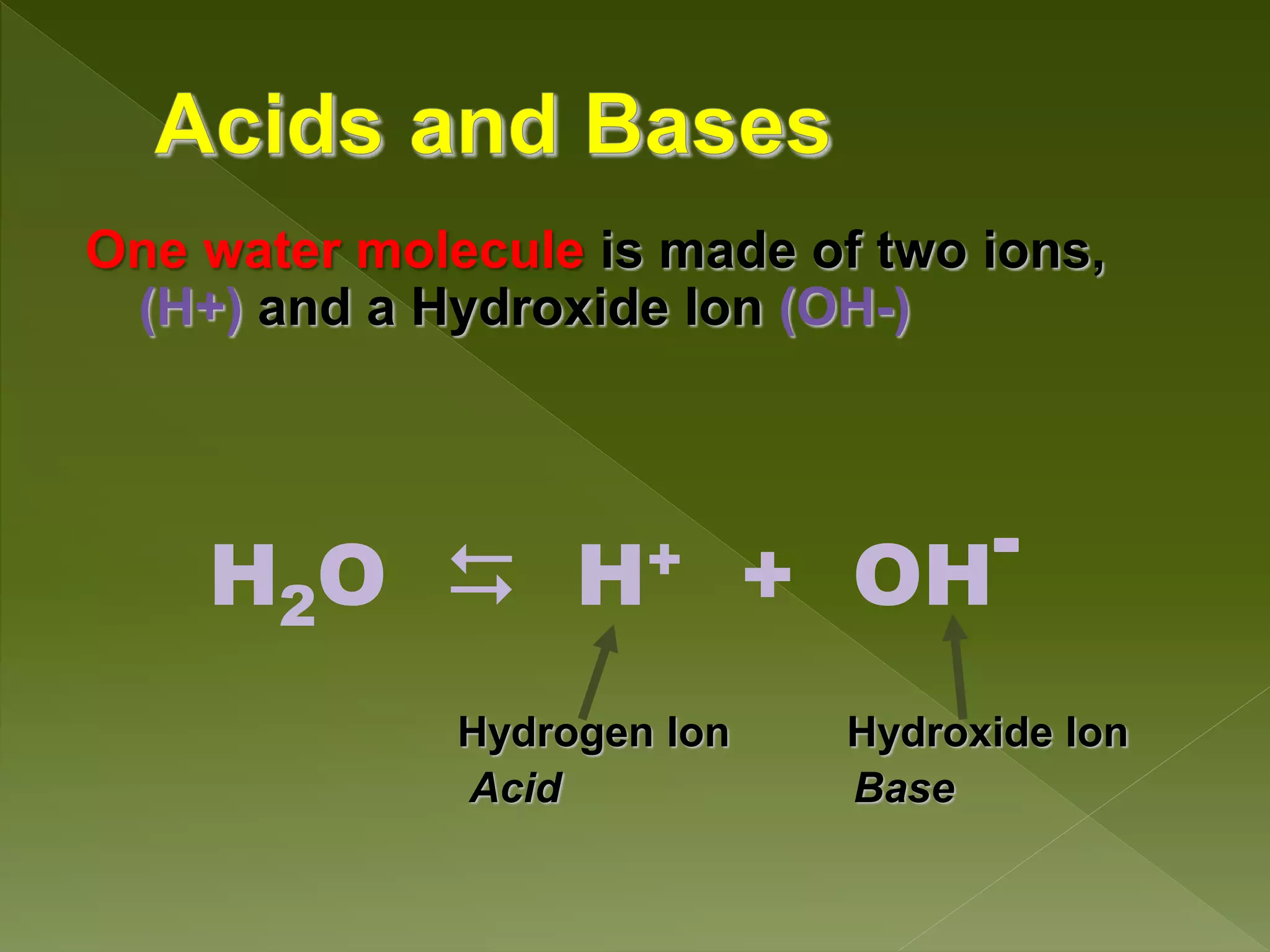
In a sample of pure water at equilibrium, a small fraction of water molecules spontaneously react with one another. One molecule acts as a Bronsted-Lowry acid, donating a proton (H+), while another acts as a Bronsted-Lowry base, accepting that proton. The chemical equation for this equilibrium is represented as:
2H2O(l) ⇌ H3O+(aq) + OH-(aq)
This constant state of flux ensures that in any aqueous environment, there is a balance between these two ions. The hydronium ion (H3O+) is essentially a water molecule that has accepted a proton, while the hydroxide ion (OH-) is what remains after a water molecule has lost a proton.
Defining the Primary H2O Ions
The Hydronium Ion (H3O+)
The hydronium ion is the conjugate acid of water. When an acid is dissolved in water, it increases the concentration of hydronium ions. Contrary to older textbooks that often represent the acidic species simply as H+, modern chemistry recognizes that a free proton does not exist in isolation in an aqueous medium. It immediately attaches to a lone pair of electrons on an oxygen atom of a neighboring water molecule, forming the more stable H3O+ structure. This ion is trigonal pyramidal in geometry and serves as the primary indicator of acidity.
The Hydroxide Ion (OH-)
The hydroxide ion is the conjugate base of water. It is a diatomic anion consisting of one oxygen atom covalently bonded to one hydrogen atom, with an overall negative charge. Hydroxide ions are produced when a base is dissolved in water. The presence of OH- is the defining characteristic of basic or alkaline solutions. In the molecular structure of water, the hydroxide ion represents the fragment left behind when a proton is dissociated from an H2O molecule.
Physical and Chemical Properties
The behavior of these ions is governed by their electronic structure and their interactions with the polar solvent environment.
1. Mobility and the Grotthuss Mechanism
One of the most remarkable properties of H3O+ and OH- in water is their exceptionally high ionic mobility compared to other ions like Na+ or Cl-. This is not because these ions move faster through the liquid physically, but rather due to the "Grotthuss mechanism," also known as proton hopping. Through a rapid relay of hydrogen bonds, a proton appears to migrate through the water network as bonds are broken and reformed across adjacent water molecules. This makes water a highly efficient conductor of electricity when ions are present.
2. The Ion Product of Water (Kw)
The relationship between hydronium and hydroxide ions is fixed at a given temperature by the ion product constant, Kw. At 25°C, this value is approximately 1.0 × 10^-14. This constant indicates that the product of the concentrations of H3O+ and OH- must always equal this value in aqueous solutions. If the concentration of one increases, the other must decrease proportionally. This inverse relationship is the basis for the pH scale, which measures the acidity or alkalinity of a substance.
3. Hydration Spheres
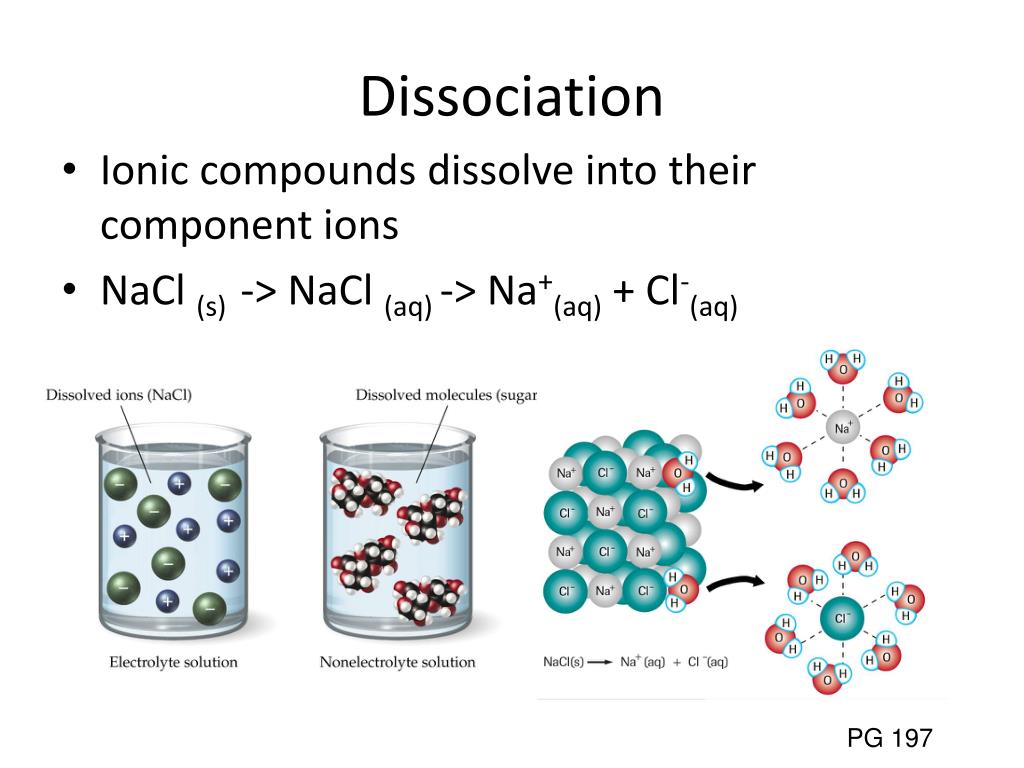
In an aqueous solution, these ions do not exist in a vacuum; they are heavily solvated. The oxygen atom of a hydronium ion or the hydrogen atom of a hydroxide ion is surrounded by a "shell" of water molecules held together by hydrogen bonds. This hydration shell influences the diffusion rate of the ions and their reactivity in chemical synthesis and biological processes.
Comparative Overview of Aqueous Species
To better understand how these ions interact with the surrounding water environment, the following table summarizes their fundamental characteristics.
| Property | Hydronium Ion (H3O+) | Hydroxide Ion (OH-) |
|---|---|---|
| Origin | Protonation of H2O | Deprotonation of H2O |
| Charge | +1 (Cation) | -1 (Anion) |
| Geometric Shape | Trigonal Pyramidal | Linear |
| pH Contribution | Decreases pH (Acidic) | Increases pH (Basic) |
| Primary Interaction | Hydrogen bond acceptor | Hydrogen bond donor |
| Relative Mobility | Extremely high (Proton hopping) | High (Proton hopping) |
The Role of Ions in Biological Systems
Biological life is inherently dependent on the precise regulation of H3O+ and OH- concentrations. Enzymes, the catalysts of life, are highly sensitive to the concentration of these ions. A shift in the internal pH of a cell can alter the ionization state of amino acid side chains within an enzyme, changing its shape and rendering it inactive.
For instance, the human blood pH is tightly regulated around 7.4. If the balance between hydronium and hydroxide ions shifts significantly, the metabolic processes required for energy production and cellular maintenance would fail. Biological buffers, such as the bicarbonate system, work continuously to absorb excess H3O+ or OH- ions, ensuring that the concentration remains within a narrow, life-sustaining range.
Industrial and Environmental Significance
Beyond the laboratory and the body, these ions are central to numerous industrial applications. In water treatment facilities, monitoring the concentration of H3O+ and OH- is essential to ensure that water is safe for consumption and environmental release.
In electrochemistry, the concentration of these ions determines the efficiency of fuel cells and batteries. Modern fuel cell technology often utilizes proton-exchange membranes (PEMs) that specifically facilitate the transport of H3O+ to generate electrical current. Conversely, alkaline fuel cells focus on the transport of OH-. The efficiency of these devices is a direct result of how well the system manages the movement and availability of these specific ions.
Common Misconceptions
"Acids are just free protons."
It is a common error to treat acids as free protons (H+) in water. As established, protons are far too reactive to exist independently. They always associate with water to form hydronium (H3O+) or even larger clusters like H5O2+ or H9O4+.
"Pure water is an insulator."
While pure water is a poor conductor, it is never a perfect insulator. Because of the self-ionization constant (Kw), there are always a small number of H3O+ and OH- ions present, providing a baseline level of conductivity. It is the addition of impurities that drastically increases this conductivity, but the fundamental ionization of water is an intrinsic property of the substance itself.
Frequently Asked Questions
What happens to H2O ions when temperature changes?
The self-ionization of water is an endothermic process. As temperature increases, the value of Kw also increases, meaning more water molecules dissociate into H3O+ and OH-. Consequently, "neutral" water at a higher temperature will have a different pH value than neutral water at 25°C, even though the concentrations of H3O+ and OH- remain equal.
How do we measure the concentration of these ions?
The concentration is primarily measured using a pH meter, which utilizes a glass electrode sensitive to H3O+ ions. The potential difference across the glass membrane is converted into a pH reading, which represents the negative log of the hydronium ion concentration.
Are H3O+ and OH- the only ions in water?
No. In tap water or natural water sources, there are many other ions present, such as calcium (Ca2+), magnesium (Mg2+), and bicarbonate (HCO3-). H3O+ and OH- are simply the ions that arise from water molecules themselves through auto-ionization.
Does the Grotthuss mechanism apply to all ions?
No. The Grotthuss mechanism is unique to the hydronium and hydroxide ions because they are fundamentally related to the hydrogen-bonding structure of the water solvent itself. Other ions must move through the water via traditional diffusion, which is significantly slower.
Can water exist as an ion in a solid state?
In certain crystalline structures, such as ice hydrates or specific mineral formations, water can exist in ionized forms within the crystal lattice, stabilized by the surrounding rigid structure. However, these conditions are highly specific and differ from the behavior of liquid water.
Next Actions for Further Study
To deepen your understanding of H2O ions and their chemical dynamics, consider examining the kinetics of proton transfer in non-aqueous solvents, which provides a useful contrast to how these ions behave in water. Researchers and students should also consult standard chemical kinetics textbooks or professional journals such as the Journal of Physical Chemistry for advanced modeling of hydration shells and the influence of temperature on equilibrium constants. For those involved in laboratory work, reviewing the calibration procedures for pH electrodes is a practical way to engage with the quantitative measurement of these fundamental ionic species.