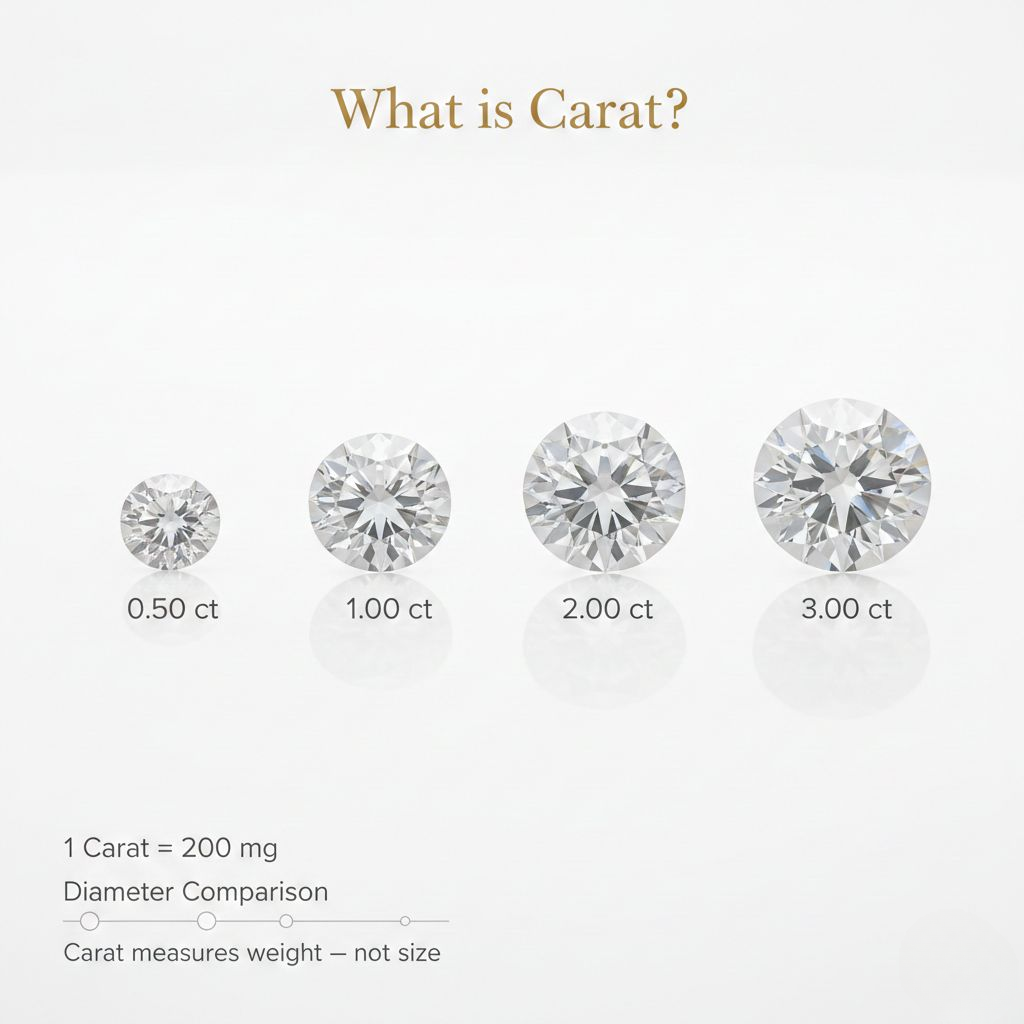
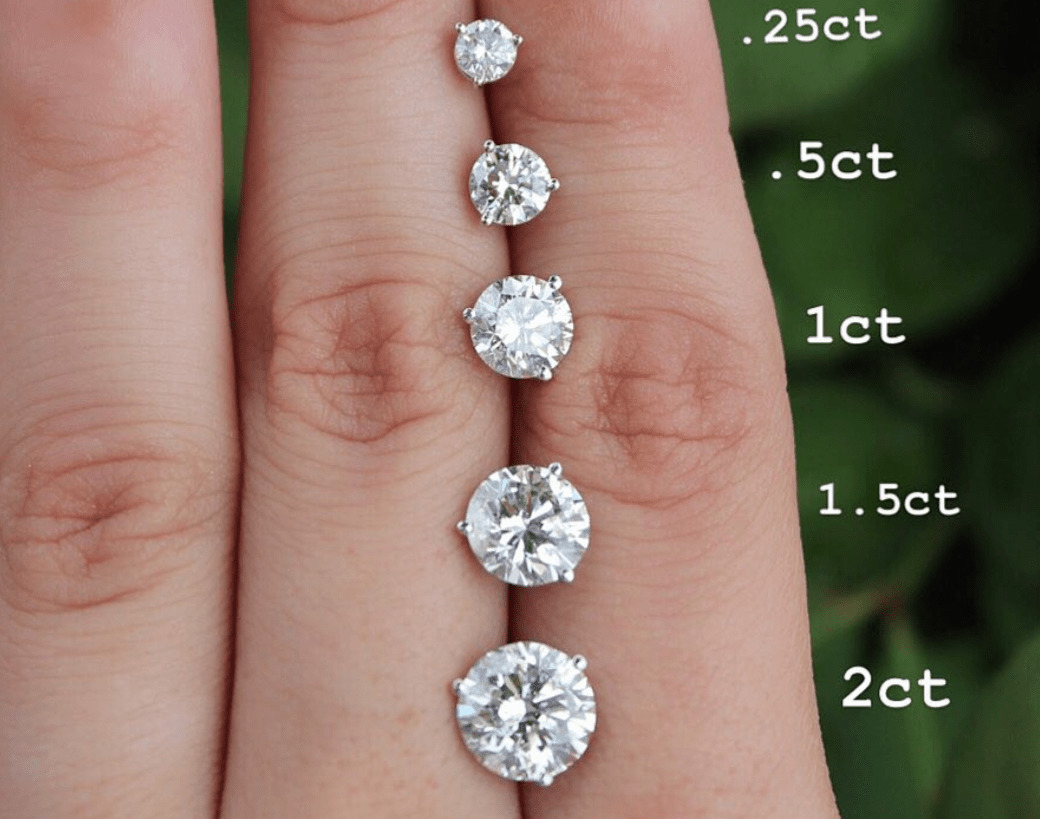
A 1 carat diamond represents a specific unit of weight equal to exactly 200 milligrams, or 0.2 grams. This metric standardization, adopted globally in the early 20th century, provides a precise, universal language for the jewelry industry, ensuring that a carat in New York weighs the same as a carat in Hong Kong.
The Metric Carat: Origins and Standardization
The term "carat" finds its roots in the ancient marketplaces of the Mediterranean and Middle East. Before the advent of precision electronic scales, traders needed a consistent way to measure the weight of small, precious items like gemstones and gold. They turned to the seeds of the carob tree (Ceratonia siliqua). Because carob seeds were remarkably uniform in size and weight, they became the standard counterbalance on handheld scales.
However, "remarkably uniform" was not precise enough for a modernizing global economy. Depending on where a trader was located, a "carat" could fluctuate between 187 milligrams and 215 milligrams. This variance created significant discrepancies in value, especially as the diamond trade became more institutionalized.
In 1907, the Fourth General Conference on Weights and Measures formally adopted the "metric carat," defining it as exactly 200 milligrams (0.2 grams). By 1913, the United States officially recognized this standard, and by 1926, it was the nearly universal benchmark. In 2026, this 200mg definition remains the bedrock of gemstone valuation, serving as the "C" in the Four Cs (Carat, Cut, Color, Clarity) that most significantly impacts a diamond's base price.
Carats vs. Points: Breaking Down the Math
While "carat" is the primary unit for larger stones, the industry requires a smaller subdivision for precision and for weighing "melee" diamonds (small diamonds used in pavé settings). Gemologists divide one carat into 100 "points."
This decimal system allows for highly accurate descriptions:
- 1 carat = 100 points = 200 milligrams.
- 0.75 carat = 75 points = 150 milligrams.
- 0.50 carat = 50 points = 100 milligrams.
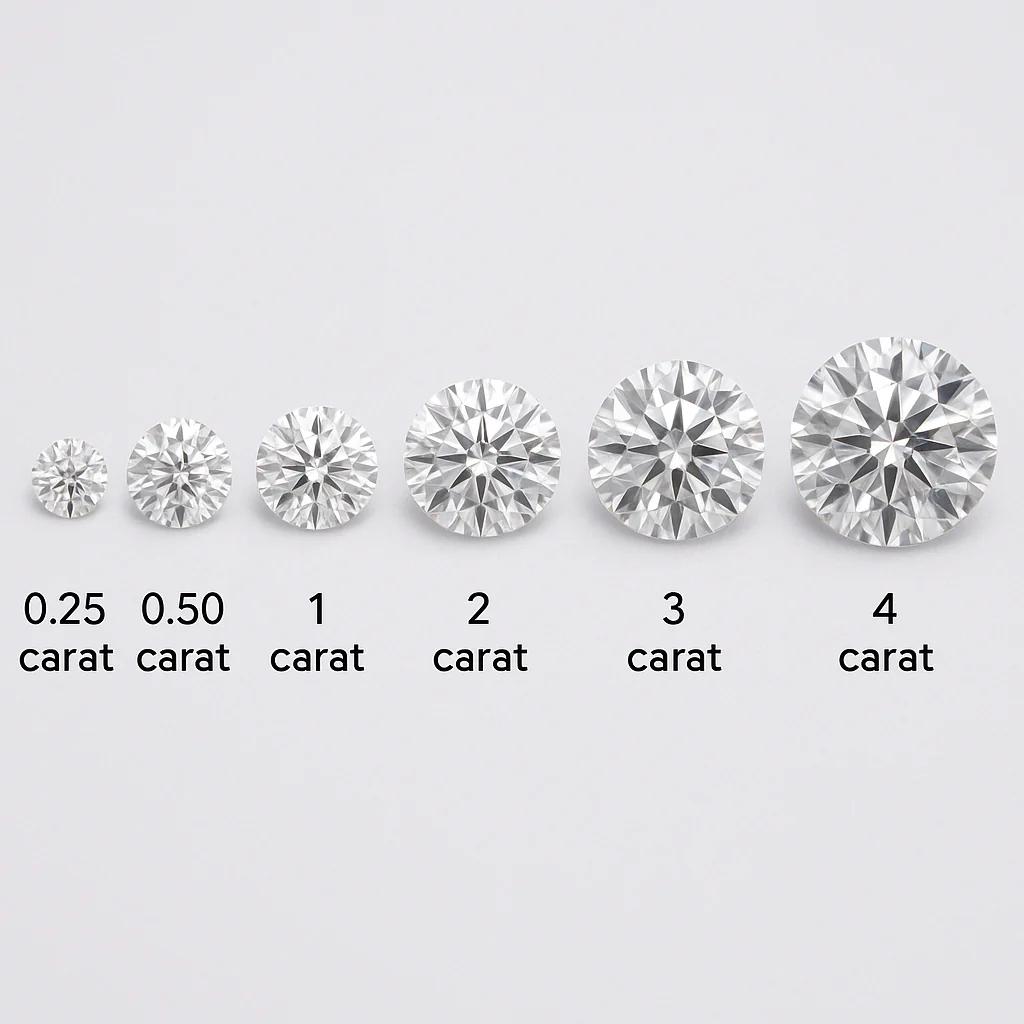
- 0.25 carat = 25 points = 50 milligrams.
In 2026, trade regulations require that diamond weights be stated with extreme accuracy, often to the thousandth of a carat (0.001 ct). When a diamond is weighed, it is typically rounded to the nearest hundredth. For example, a stone weighing 0.995 carats may be rounded up to 1.00 carat, whereas a stone weighing 0.994 carats would be rounded down to 0.99 carats. Given the price jump at the 1.00-carat mark, these tiny fractions of a milligram carry immense financial weight.
Why Weight Does Not Always Equal Size
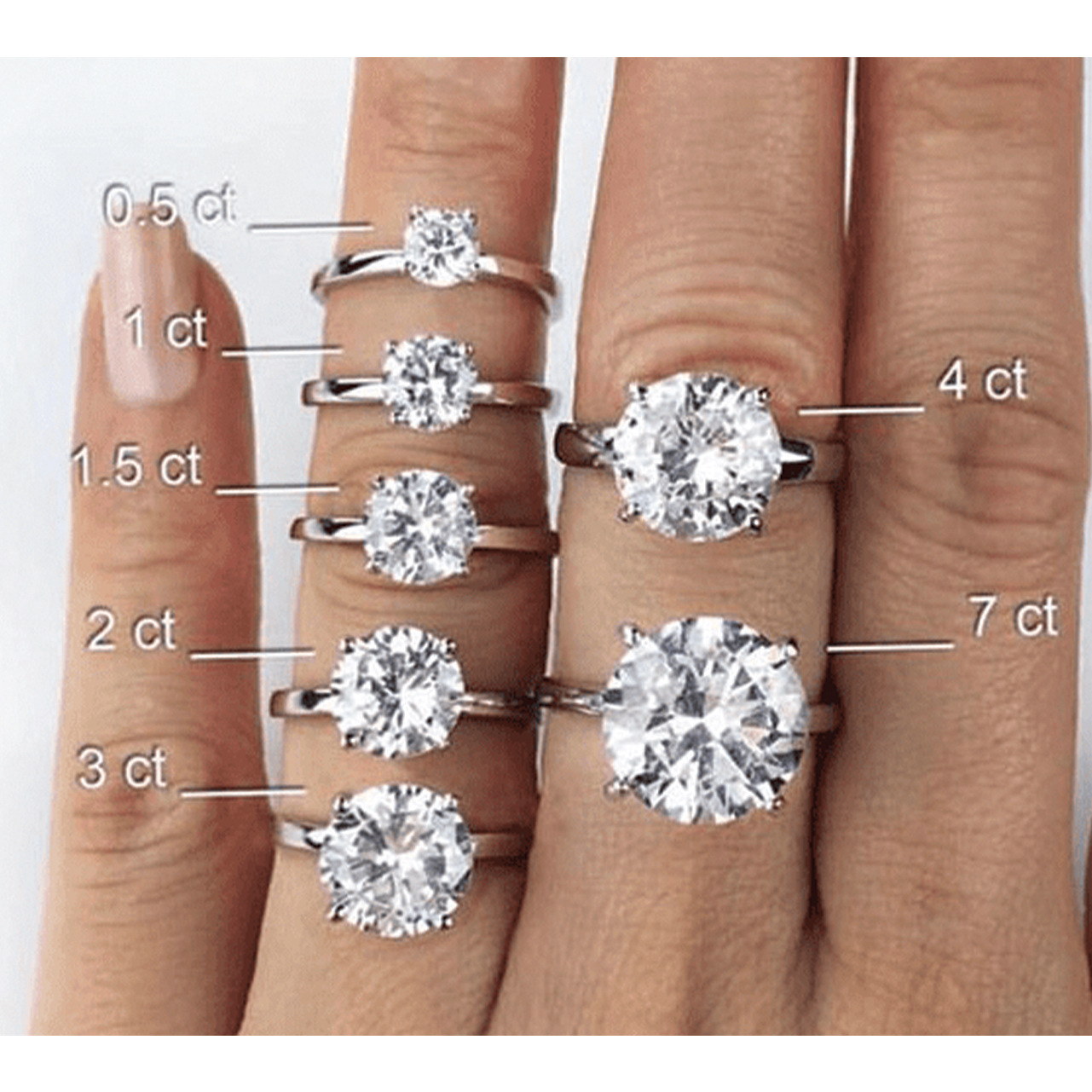
A common misconception among consumers is that "carat" refers to the size or dimensions of a diamond. This is incorrect. Carat is a measure of mass, not volume or surface area. Two diamonds that both weigh exactly 200 milligrams can look drastically different in size depending on their cut.
The Influence of Cut Proportions
The "cut" of a diamond determines where the 200 milligrams of mass are distributed.
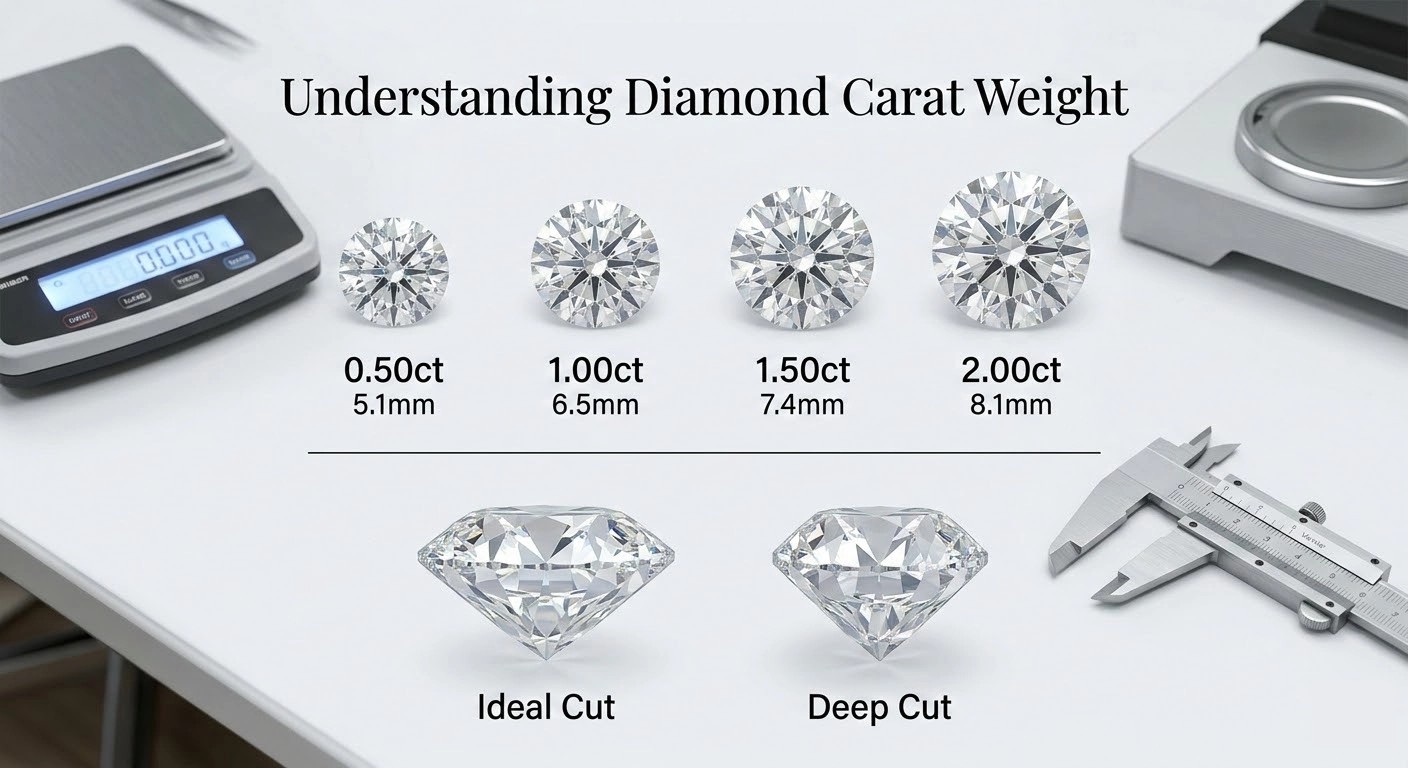
- Deep Cuts: If a diamond is cut too deep, much of its weight is "hidden" in the pavilion (the bottom portion of the stone). A 1.00-carat diamond with a deep cut may have a diameter of only 6.2mm, making it look smaller than a well-cut 0.90-carat stone.
- Shallow Cuts: Conversely, a "spready" diamond is cut shallow to maximize its surface area. While a 1.00-carat shallow-cut diamond might have a 6.7mm diameter, looking much larger than average, it will lack the "fire" and brilliance because light leaks out the bottom rather than reflecting back to the eye.
- Ideal Cuts: An ideally proportioned round brilliant diamond weighing 1.00 carat typically has a diameter of approximately 6.4mm to 6.5mm. This balance ensures the stone looks its weight while maintaining maximum light performance.
Shape and Visual Perception
Different diamond shapes distribute weight differently. A 1-carat marquise or pear shape often appears larger than a 1-carat round brilliant because they are elongated, covering more of the finger's surface area. In contrast, an Asscher cut, which is deep and square, often looks smaller than a round stone of the same weight.
The Financial Impact of the 200mg Milestone
In the diamond market of 2026, pricing is not linear. A 2.00-carat diamond does not cost twice as much as a 1.00-carat diamond; it often costs three to four times as much. This is due to the rarity of larger rough diamond crystals.
The "Magic Numbers"
There are specific weight thresholds known in the industry as "magic numbers"—0.50ct, 0.75ct, 1.00ct, 1.50ct, and 2.00ct. When a diamond reaches these weights, the price per carat jumps significantly.
Because 1.00 carat (200mg) is the most popular target for engagement rings, there is a massive demand for stones that hit that exact mark. A diamond weighing 0.98 carats is visually indistinguishable from one weighing 1.01 carats, yet the 1.01-carat stone may be priced 20% to 30% higher simply because it crossed the 200mg threshold. Savvy buyers often look for "under-size" diamonds (e.g., 0.90ct to 0.95ct) to save money without sacrificing visual impact.
How Gemologists Measure 200mg
Modern diamond weighing is a high-precision process involving electronic micro-balances. These scales are far more sensitive than standard kitchen or even laboratory scales.
- Calibration: Scales must be calibrated frequently using certified weights to ensure accuracy to the third decimal place.
- Environmental Shielding: Because 200mg is such a small mass, even a slight breeze or the heat from a lightbulb can fluctuate the reading. Professional scales are enclosed in glass chambers to prevent air currents from affecting the measurement.
- Loose vs. Mounted: A diamond can only be weighed with 100% accuracy when it is "loose" (not set in jewelry). Once a diamond is set in a ring, its weight must be estimated using mathematical formulas based on its dimensions (diameter and depth). These estimates are usually accurate within 5-10%, but they are not definitive.
Comparing Diamond Weight Across Different Gemstones
It is vital to understand that 1 carat (200mg) of diamond will occupy a different amount of space than 1 carat of another gemstone. This is due to specific gravity—the density of the material.
Diamond has a specific gravity of approximately 3.52. Other gemstones vary:
- Ruby and Sapphire: These have a specific gravity of about 4.00. Since they are denser than diamonds, a 1-carat ruby will be physically smaller in size than a 1-carat diamond.
- Emerald: With a specific gravity of roughly 2.73, emeralds are less dense. A 1-carat emerald will look significantly larger than a 1-carat diamond.
- Cubic Zirconia (CZ): CZ is much denser (SG ~5.6). A 1-carat CZ will look much smaller than a 1-carat diamond, which is why CZ is often sold by "diamond equivalent size" rather than actual weight.
| Unit of Measure | Weight in Milligrams | Weight in Grams | Equivalent in "Points" |
|---|---|---|---|
| 0.01 Carat | 2 mg | 0.002 g | 1 Point |
| 0.05 Carat | 10 mg | 0.01 g | 5 Points |
| 0.10 Carat | 20 mg | 0.02 g | 10 Points |
| 0.25 Carat | 50 mg | 0.05 g | 25 Points |
| 0.50 Carat | 100 mg | 0.10 g | 50 Points |
| 0.75 Carat | 150 mg | 0.15 g | 75 Points |
| 1.00 Carat | 200 mg | 0.20 g | 100 Points |
| 2.00 Carats | 400 mg | 0.40 g | 200 Points |
| 5.00 Carats | 1,000 mg (1g) | 1.00 g | 500 Points |
Carat vs. Karat: Avoiding Common Confusion
In written English and spoken trade, "carat" and "karat" are often confused, but they measure entirely different things.
- Carat (ct): As established, this is a unit of weight for diamonds and gemstones. 1ct = 200mg.
- Karat (K or kt): This is a unit of purity for gold. 24-karat gold is 100% pure. 18-karat gold is 75% gold and 25% alloy. 14-karat gold is 58.3% pure.
When buying an engagement ring, you might see a description like "1.00ct diamond set in 18K gold." This tells you the diamond weighs 200mg and the metal is 75% pure gold. Using these terms correctly is essential for clear communication with jewelers and for accurate insurance appraisals.
Practical Considerations for Buyers in 2026
When evaluating a diamond based on its 200mg weight, keep the following professional tips in mind:
The "Total Carat Weight" (TCW) Trap
Jewelry items with multiple stones, such as halo rings or tennis bracelets, are often marketed by "Total Carat Weight" (TCW). This is the combined weight of all diamonds in the piece. A ring with a 1.00-carat TCW might have one 0.50ct center stone and fifty 0.01ct side stones. Because one large 1-carat diamond is much rarer than fifty tiny ones, the single 1-carat stone will be significantly more expensive than a ring with 1.00ct TCW.
Laboratory-Grown Diamonds
As of 2026, lab-grown diamonds are chemically, physically, and optically identical to mined diamonds. They are also measured in carats, where 1 carat equals 200mg. Because the manufacturing process can now produce larger crystals more reliably, the price per carat for lab-grown diamonds has decoupled from the rarity-based pricing of natural stones. However, the physical measurement remains the same.
Certification and Verification
Always ensure a diamond's weight is verified by a reputable laboratory like the GIA (Gemological Institute of America) or IGI (International Gemological Institute). Their certificates provide the exact weight to the hundredth of a carat, ensuring you are actually receiving the 200mg of diamond you are paying for.
Summary of Key Weight Facts
- 1 Carat = 0.2 Grams.
- 1 Carat = 200 Milligrams.
- 1 Carat = 100 Points.
- The "Carob Seed" is the historical origin, but the "Metric Carat" is the legal standard.
- Weight is a measure of mass, while "size" is a measure of dimensions influenced by cut.
Frequently Asked Questions
Does a 1-carat diamond always look the same size?
No. While every 1-carat diamond weighs 200mg, the visual size depends on the cut and shape. A "deep cut" hides weight in the bottom of the stone, making it look smaller from the top. A "shallow cut" spreads the weight out, making it look larger but often reducing sparkle. Additionally, elongated shapes like Marquise or Oval often appear larger than Round diamonds of the same 200mg weight.
Is a 1-carat diamond a good size for an engagement ring?
In 2026, the 1-carat diamond remains the most popular choice for engagement rings globally. It is considered a significant milestone weight that balances visual presence with wearability. However, "good" is subjective; many people now opt for "under-size" stones (like 0.90ct) to maximize quality in color and clarity while staying within a budget.
Why does a 1-carat diamond cost more than two 0.50-carat diamonds?
This is due to the principle of rarity. Large, high-quality diamond crystals are much harder to find in nature than small ones. Therefore, the price per carat increases exponentially as the stone gets heavier. One 200mg diamond is significantly more valuable than two 100mg diamonds of the same quality.
How can I verify the weight of a diamond in a ring?
If the diamond is already set in metal, a jeweler can only provide an estimated weight by measuring the stone's diameter and depth with a caliper and using a mathematical formula. To get a 100% accurate weight of 200mg per carat, the diamond must be removed from the setting and weighed on a calibrated micro-balance.
What is the difference between "carat" and "ctw"?
"Carat" (ct) refers to the weight of a single stone. "CTW" stands for "Carat Total Weight" and refers to the combined weight of all diamonds in a piece of jewelry. A 1ctw earring set usually consists of two 0.50ct diamonds.
Recommendation for Next Actions
If you are currently in the market for a diamond, do not shop by carat weight alone. Since 1 carat (200mg) can be distributed in ways that make a stone look dull or small, prioritize the Cut Grade. A 0.90-carat diamond with an "Excellent" cut will often look better and brighter than a 1.00-carat diamond with a "Fair" cut. Always request a GIA or IGI grading report to verify the exact metric weight and ensure the stone's dimensions are proportionate to its mass.