A B2C company is a business entity that sells products or services directly to individual consumers for their personal use. Unlike the B2B (business-to-business) model, B2C transactions focus on the end-user, emphasizing emotional engagement, convenience, and brand loyalty to drive high-volume, frequent sales cycles across physical and digital retail channels.
Understanding the B2C Model in 2026
The term B2C (Business-to-Consumer) refers to the process of businesses selling products and services directly to consumers who are the end-users of those products or services. While the concept of B2C has existed as long as retail itself, the landscape in 2026 has been fundamentally reshaped by hyper-personalization, artificial intelligence, and the seamless integration of physical and digital storefronts.
In a B2C environment, the relationship is typically transactional but increasingly focused on the "customer experience" (CX). Whether a consumer is buying a loaf of bread, subscribing to a streaming service, or purchasing a vehicle, the B2C company must navigate a crowded marketplace where individual preferences and emotional triggers dictate success.
As we move through 2026, the definition of a B2C company has expanded beyond traditional brick-and-mortar stores to include complex digital ecosystems. These companies leverage massive amounts of data to predict consumer behavior, often reaching the customer before the customer even realizes they have a specific need. The core mission, however, remains unchanged: providing value to the individual in a way that encourages immediate purchase and long-term retention.
Core Characteristics of B2C Companies
To distinguish a B2C company from other business models, one must look at several defining traits that influence how these organizations operate, market themselves, and manage their finances.
1. Short Sales Cycles and Rapid Decision-Making
One of the most prominent features of a B2C company is the speed at which transactions occur. In a B2B context, a sale might take months of negotiations, procurement approvals, and legal reviews. In B2C, the sales cycle is often measured in minutes or seconds.
A consumer sees an item, evaluates its price against their immediate need or desire, and completes the purchase. This "impulse" factor requires B2C companies to optimize their sales funnels for friction-less experiences. In 2026, this has evolved into "one-tap" biometric purchasing and AI-driven checkout systems that remove every possible barrier to the transaction.
2. Emotional and Brand-Driven Purchasing
While B2B buyers are often motivated by return on investment (ROI) and logical efficiency, B2C consumers are frequently driven by emotion, status, and lifestyle alignment. A B2C company succeeds by building a brand that resonates with the consumer’s identity.
Characteristics of this emotional connection include:
- Status Association: Buying a specific brand of luxury watch or clothing to signal social standing.
- Problem-Solving: Purchasing a meal delivery kit to reduce the stress of weeknight cooking.
- Aspiration: Engaging with a fitness brand that represents the "ideal" version of the consumer.
3. Large Target Markets and Mass Marketing
B2C companies typically target a broad demographic. Even niche B2C brands—such as those selling specialized vegan organic pet food—target thousands or millions of individual households rather than a few dozen corporate accounts.
Because the audience is so vast, B2C companies rely on mass marketing and social media influence. In 2026, this involves sophisticated algorithmic targeting on platforms like TikTok, Instagram, and various Meta-layers of the internet, ensuring that the right product is seen by the right person at the precise moment they are most likely to buy.
4. High Transaction Volume with Lower Average Order Value (AOV)
Compared to B2B companies, which may have fewer clients but multi-million dollar contracts, B2C companies thrive on volume. A B2C retailer might process 50,000 transactions a day, each worth $30. This necessitates robust logistics, automated customer service, and highly scalable payment processing systems.
The focus for a B2C manager is often on Customer Acquisition Cost (CAC) and Lifetime Value (LTV). If it costs $10 to acquire a customer who spends $50 but returns every month for three years, the B2C model is highly profitable despite the low initial order value.
Types of B2C Business Models
Not all B2C companies operate in the same way. The method of delivery and the nature of the relationship with the consumer define the specific model a company uses.
Direct Sellers
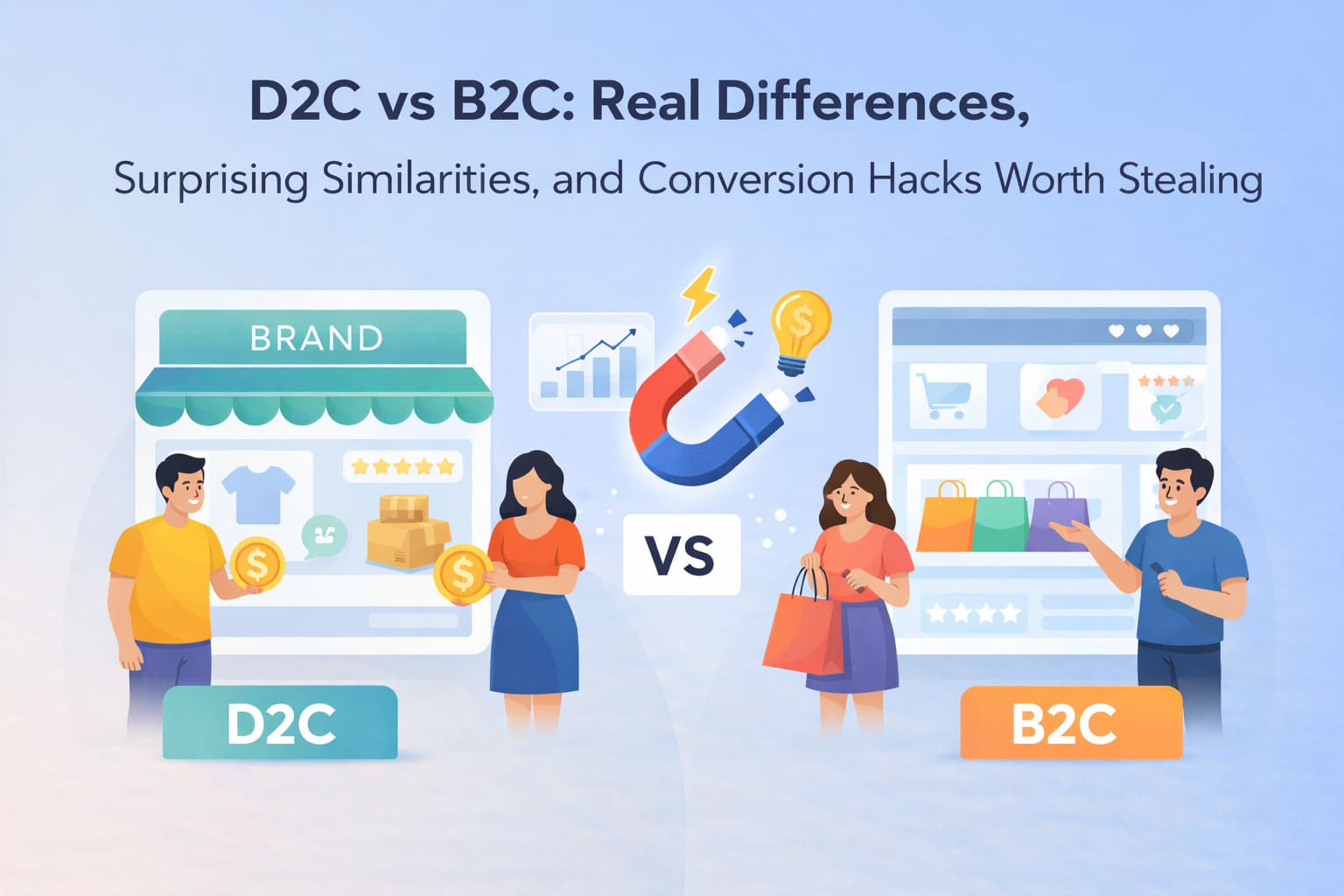
These are the most common B2C entities. They include traditional retailers like Walmart or Target, as well as online-only brands. Direct sellers purchase inventory from manufacturers or wholesalers and sell it to the public at a markup. In 2026, many manufacturers have transitioned into D2C (Direct-to-Consumer) sellers, bypassing the middleman entirely to capture higher margins and better consumer data.
Online Intermediaries
These companies do not necessarily own the products they sell. Instead, they provide a platform that connects buyers with sellers. Examples include Amazon, Etsy, and Expedia. Their value proposition lies in the convenience of aggregated choice and the security of their transaction platforms.
Advertising-Based Models
In this model, the "consumer" uses a service for free, but their attention and data are the actual products being sold to advertisers. Social media platforms and free news sites are the primary examples. The B2C interaction here is the delivery of content that keeps the user engaged long enough to view advertisements.
Fee-Based or Subscription Models
The subscription economy has exploded in the 2020s. B2C companies like Netflix, Spotify, or SaaS (Software as a Service) providers for individuals (like Microsoft 365 Personal) charge a recurring fee for access to content or tools. This model is highly prized by investors because it provides predictable, recurring revenue.
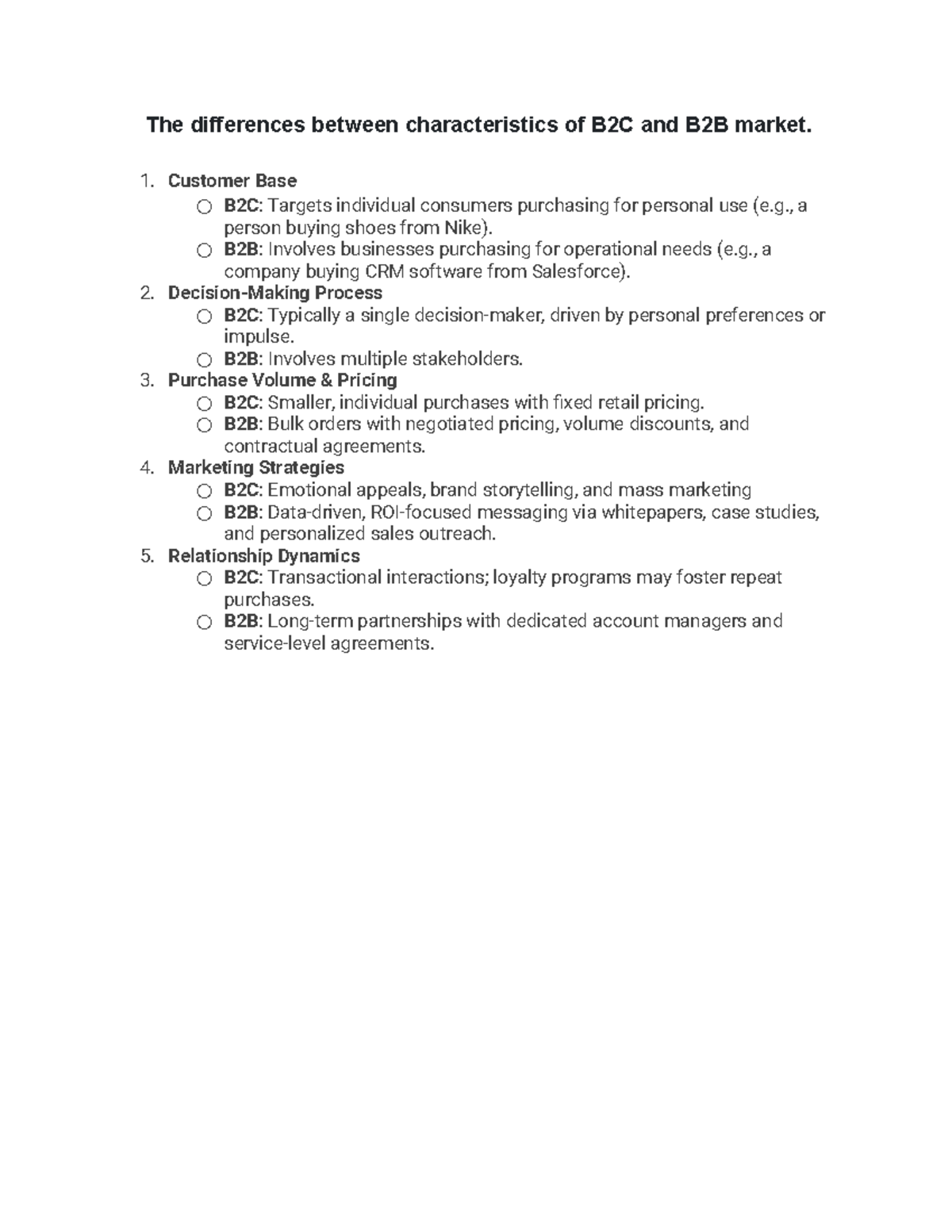
B2C vs. B2B: Key Differences at a Glance
Understanding the B2C model requires a clear comparison with its counterpart, the B2B model.
| Feature | B2C (Business to Consumer) | B2B (Business to Business) |
|---|---|---|
| Primary Audience | Individuals and households | Corporations and organizations |
| Decision Maker | Single individual or family unit | Multi-stakeholder committees |
| Buying Motivation | Emotion, desire, convenience, price | Efficiency, ROI, logic, long-term value |
| Sales Cycle Length | Very short (seconds to days) | Very long (weeks to several months) |
| Relationship Depth | Transactional; brand-loyal but fickle | Contractual; deep and long-term |
| Market Size | Millions of potential customers | Hundreds or thousands of accounts |
| Pricing | Standardized for all consumers | Often negotiated or volume-based |
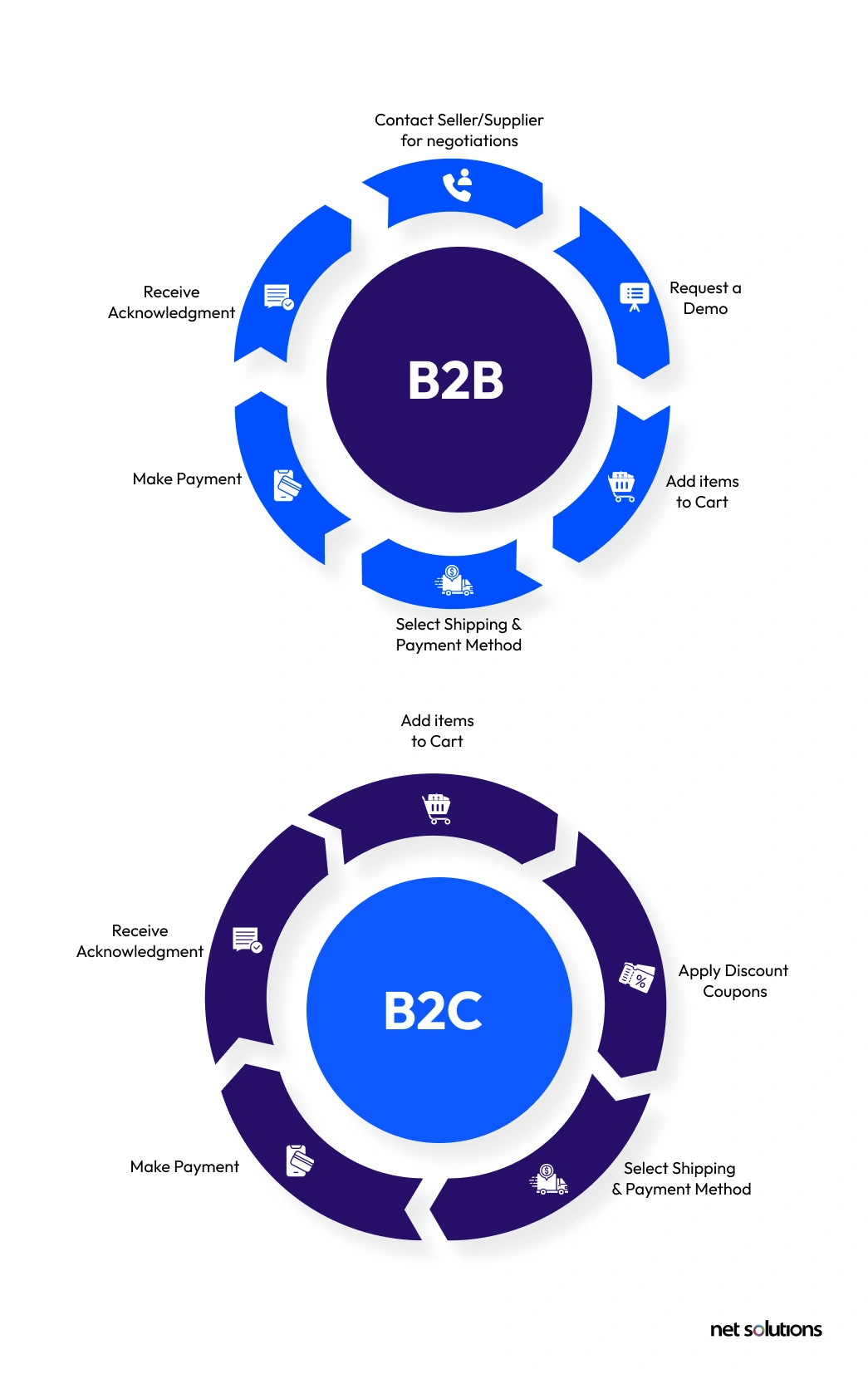
The B2C Customer Journey in 2026
The path a consumer takes from discovering a product to making a purchase has become increasingly non-linear. B2C companies now focus on an Omnichannel Strategy, ensuring that the experience is identical whether the customer is on a smartphone, in a physical store, or using a voice assistant.
- Awareness: Driven by social media algorithms, influencer endorsements, or localized "near me" search results.
- Consideration: In 2026, this stage is dominated by social proof. Consumers look at video reviews, AI-generated sentiment summaries of user feedback, and "live" demonstrations.
- Conversion: The checkout process must be "frictionless." Any delay or requirement for manual data entry often results in cart abandonment.
- Retention: Post-purchase engagement through personalized emails, loyalty points, and AI-driven recommendations for "complementary" products.
Strategic Marketing for B2C Success
To remain competitive in 2026, B2C companies must master several specific marketing disciplines that cater to the unique psychological profile of the individual consumer.
Personalization and AI
Generic mass emails are obsolete. A modern B2C company uses machine learning to analyze past purchases, browsing history, and even local weather patterns to offer hyper-relevant suggestions. For instance, a clothing retailer might send a push notification for raincoats to a user just as a storm is predicted in their specific zip code.
Social Commerce
The boundary between "socializing" and "shopping" has vanished. B2C companies now integrate storefronts directly into social media feeds. The "Buy Now" button is embedded within the video content, allowing for a seamless transition from entertainment to consumption.
The Role of Sustainability and Ethics
In 2026, a significant portion of the B2C market—particularly Gen Z and Alpha consumers—prioritizes ethical sourcing and environmental impact. Characteristics of successful B2C companies now include transparency in the supply chain and "circular economy" initiatives, such as trade-in programs or biodegradable packaging.
Challenges Facing B2C Companies
Despite the high potential for profit, the B2C sector is fraught with challenges that require constant vigilance.
- Customer Acquisition Costs (CAC): As digital advertising space becomes more crowded, the cost to reach a new customer has soared. B2C companies must find creative, organic ways to build communities rather than relying solely on paid ads.
- Data Privacy Regulations: With the tightening of global privacy laws in 2025 and 2026, B2C companies have less access to third-party data. They must now rely on "zero-party data"—information that customers voluntarily share in exchange for a better experience.
- Logistics and Last-Mile Delivery: Consumers expect near-instant delivery. Managing the costs and complexities of getting a product to a customer's door within hours remains a significant operational hurdle.
Frequently Asked Questions
What is the simplest definition of a B2C company?
A B2C company is any business that sells a product or service directly to an individual person for their own use, rather than to another business for commercial purposes. Examples include your local grocery store, an online clothing shop, or a car dealership.
Can a company be both B2B and B2C?
Yes, many companies operate under a hybrid model. For example, Apple is a B2C company when it sells an iPhone to an individual at the Apple Store, but it is a B2B company when it sells a fleet of MacBooks to a corporation for its employees. This is often referred to as a "B2B2C" or multi-channel approach.
Why is branding so much more important in B2C than B2B?
In B2B, decisions are usually based on hard data and technical specifications. In B2C, consumers often choose between products with similar specifications. Branding creates the emotional tie that makes a consumer choose one product over another based on how it makes them feel or what it says about their lifestyle.
How has AI changed B2C companies in 2026?
AI has shifted B2C from reactive to proactive. Instead of waiting for a customer to search for a product, AI analyzes patterns to predict what a customer will need next. It also powers virtual shopping assistants that provide 24/7 personalized service, significantly reducing the need for human customer support.
What are the main risks of the B2C model?
The primary risks include high competition, low customer loyalty (since switching costs for consumers are usually zero), and sensitivity to economic downturns. If the economy weakens, consumers often cut back on "discretionary" B2C spending long before businesses cut back on essential B2B services.
Practical Recommendations for B2C Business Success
If you are evaluating or operating a B2C company in 2026, focus on reducing friction and increasing personalization. The modern consumer is overwhelmed with choices; therefore, the business that provides the most effortless path to a solution usually wins.
Begin by auditing your mobile experience. Since over 80% of B2C transactions now originate on mobile devices, any lag in load times or complexity in the checkout process will lead to lost revenue. Furthermore, prioritize the collection of "first-party data" by building direct relationships with your customers through loyalty programs or community forums. This will insulate your business from the rising costs and privacy restrictions of third-party advertising platforms.