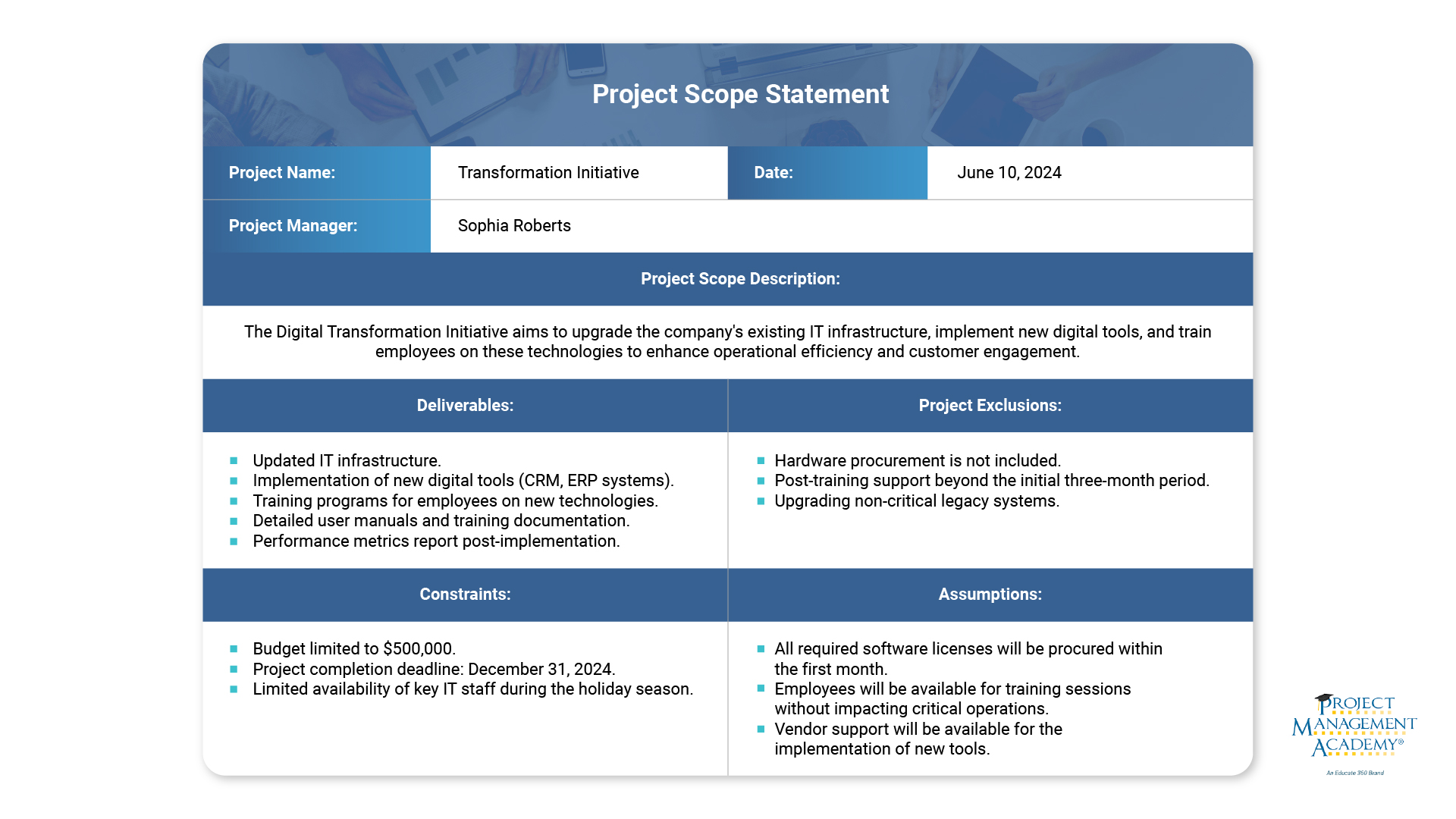
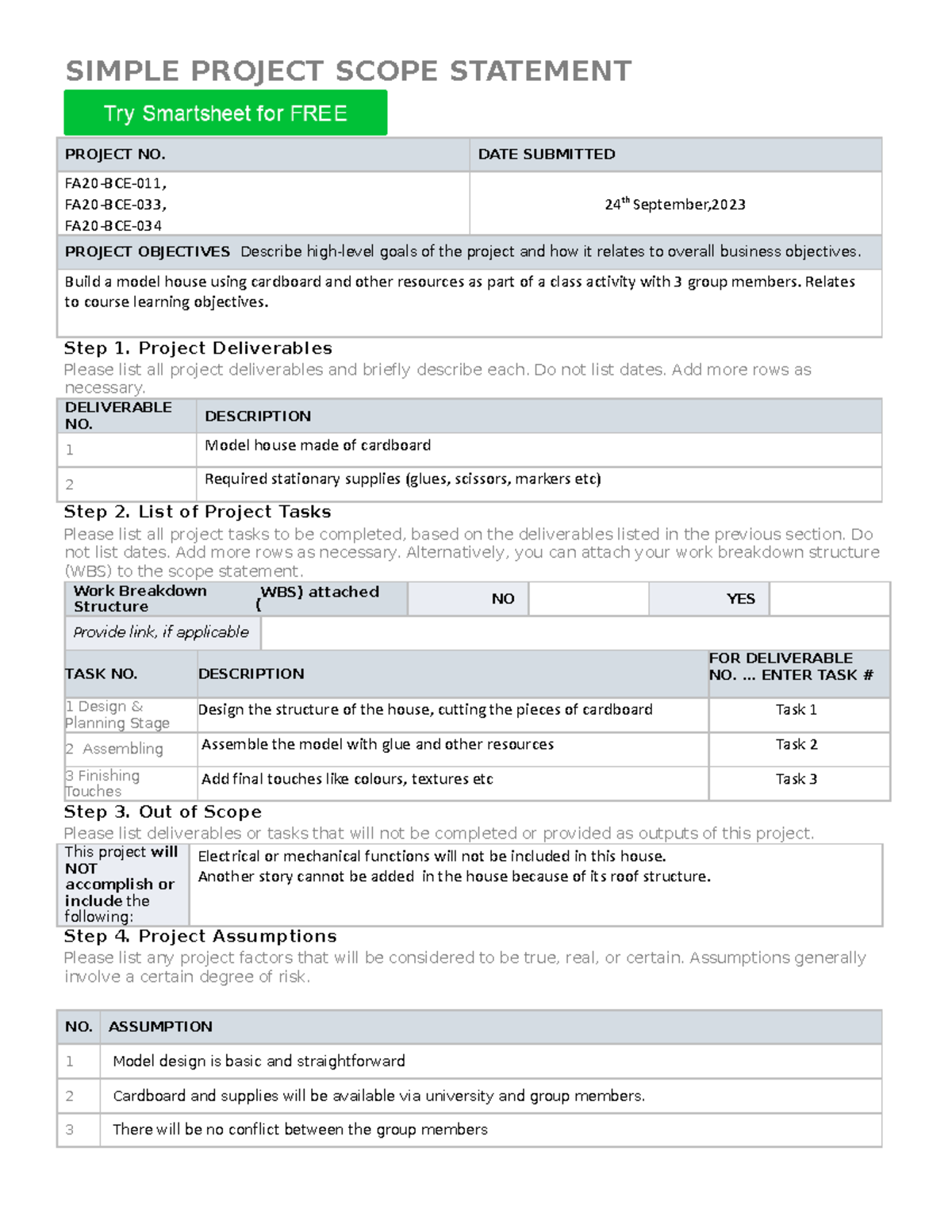
A project scope statement is a foundational document that serves as the blueprint for a project’s execution by clearly defining its boundaries, objectives, deliverables, and constraints. It aligns stakeholders on what is included in the project and, crucially, what is excluded, thereby preventing scope creep and ensuring that project resources remain focused on established goals.
The Essential Function of a Scope Statement
In the context of project management, the scope statement acts as the primary agreement between the project manager, the project sponsor, and the team. Without a well-defined scope, projects are highly susceptible to "scope creep"—the uncontrolled expansion of a project’s requirements without corresponding adjustments to time, cost, and resources. By establishing a formal boundary, the scope statement protects the project team from unapproved additions and provides a reference point for evaluating future change requests.
When a project lacks a documented scope, expectations often diverge. A stakeholder might assume a feature is part of the final product, while the project team believes it falls outside the initial budget. The scope statement eliminates this ambiguity, ensuring that every participant understands the defined finish line.
Core Components of an Effective Scope Statement
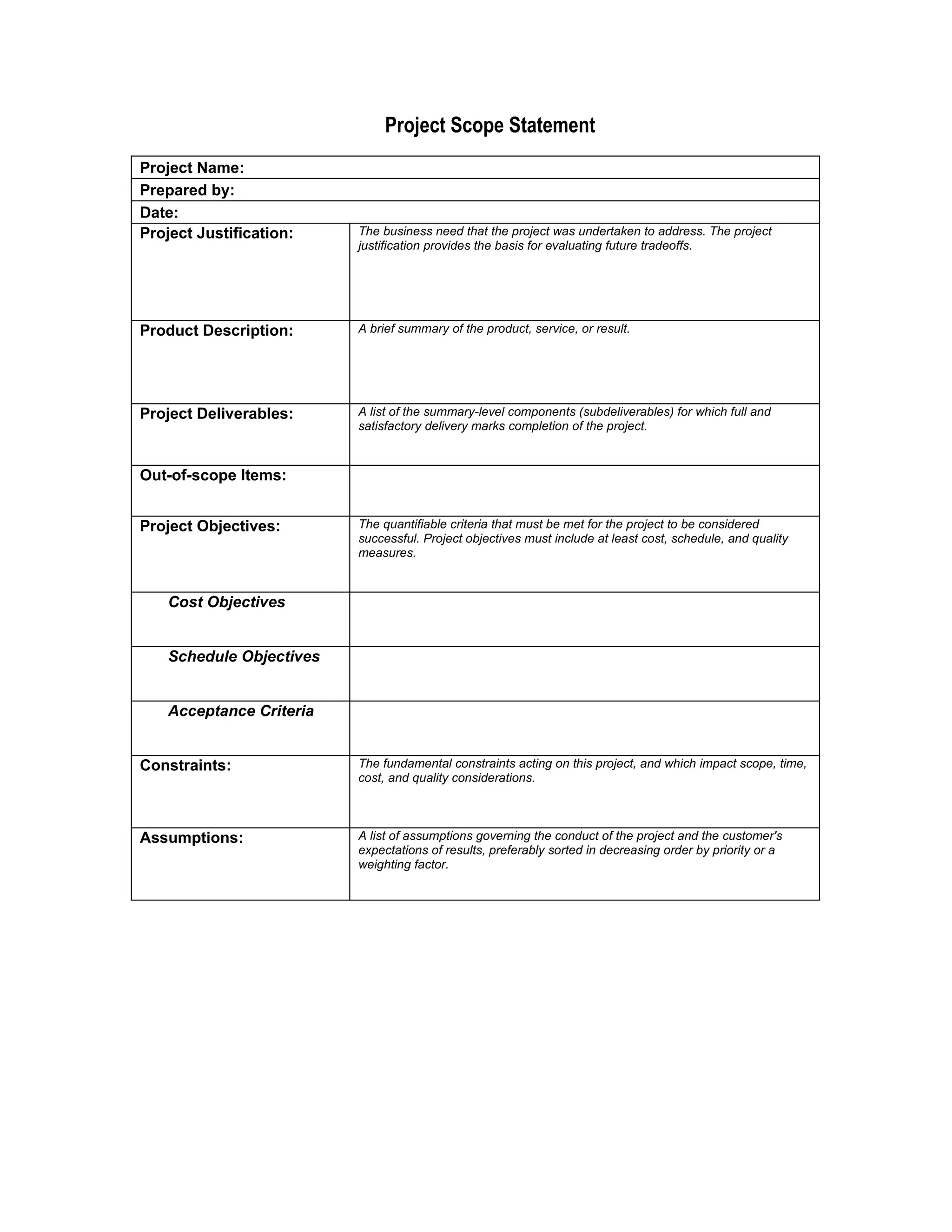
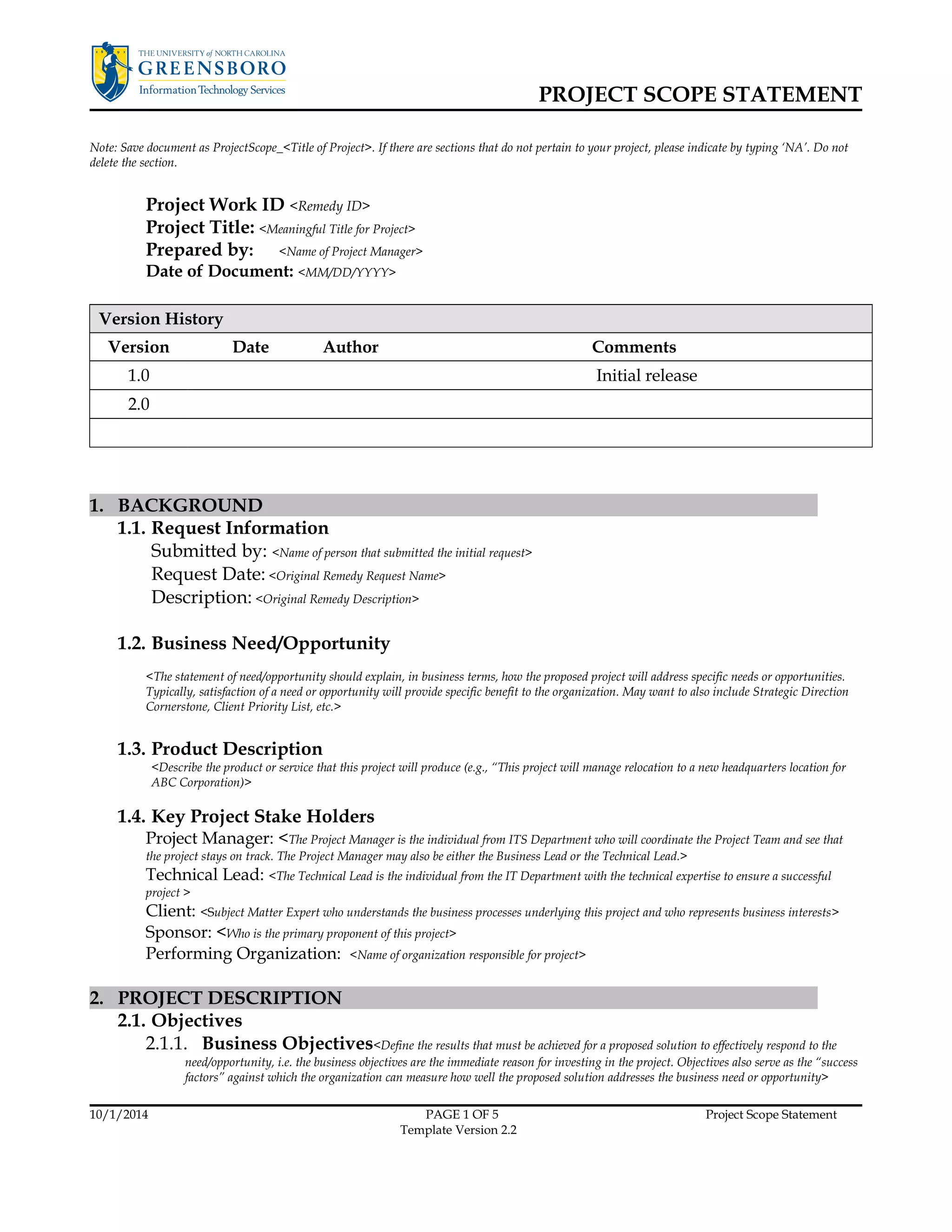
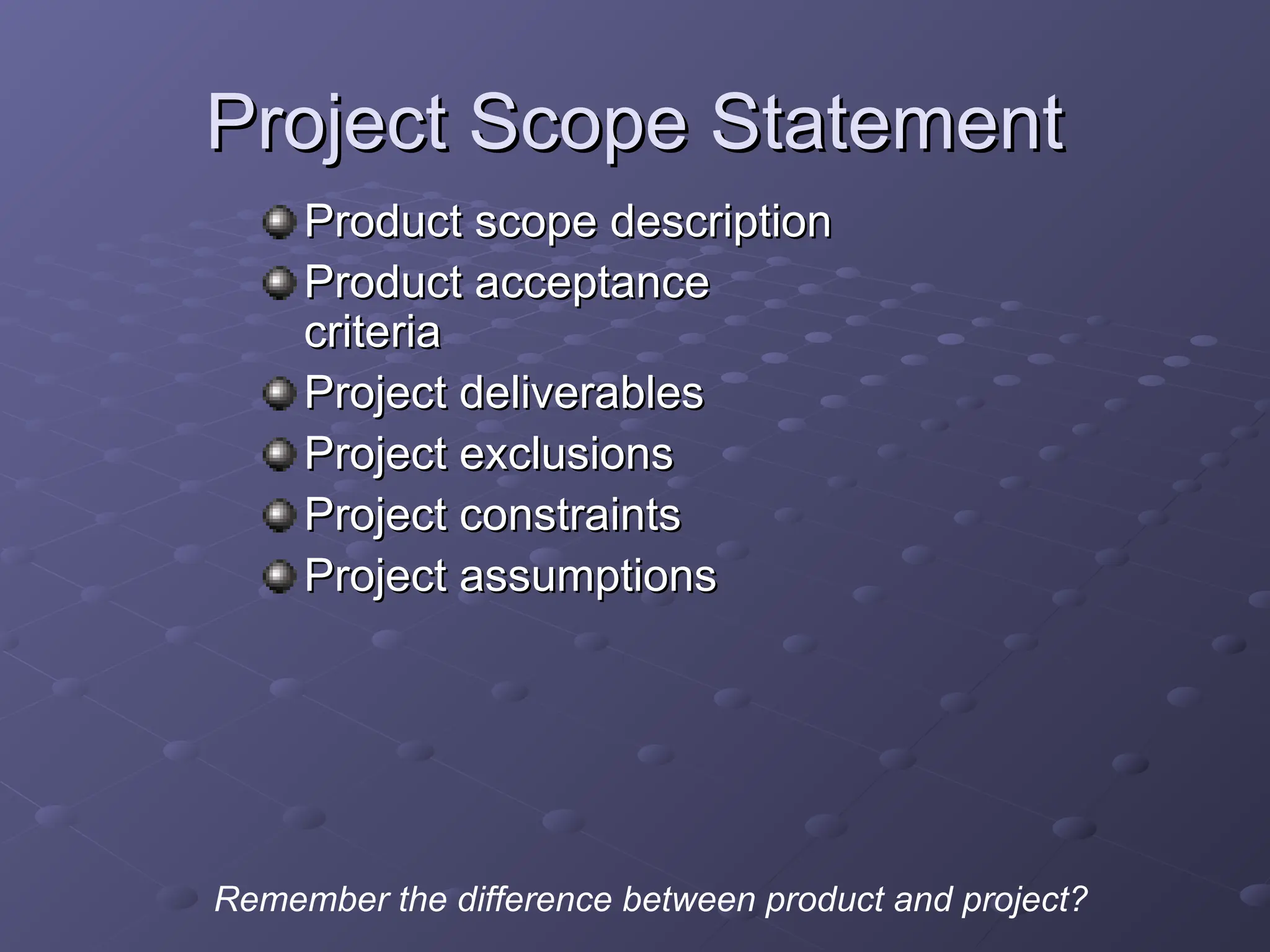
To be effective, a scope statement must be specific, measurable, and unambiguous. While organizations may adapt templates to fit their unique internal culture or project management methodology (such as Agile or Waterfall), most industry-standard scope statements contain the following essential elements:
- Project Objectives: High-level goals that the project aims to achieve. These should be framed in terms of business value, such as increasing operational efficiency by 15% or launching a new product line in a specific market.
- Project Deliverables: A list of the tangible products, services, or results that the project team is obligated to produce. For example, in a software development project, this might include the mobile application, the user manual, and the final source code repository.
- Acceptance Criteria: The set of conditions that must be met before a deliverable is formally accepted by the customer or sponsor. This might involve specific quality benchmarks, performance speeds, or regulatory compliance standards.
- Exclusions: Arguably the most critical section, this list clearly defines what the project will not do. By explicitly stating what is out of scope, teams can push back against informal requests that threaten project timelines.
- Constraints: Limitations imposed on the project, such as fixed deadlines, budgetary caps, or specific technology stacks that must be used.
- Assumptions: Factors that are considered true for the planning phase but carry a degree of uncertainty. For instance, assuming that a third-party vendor will deliver API access by a certain date is an assumption that must be documented.
Comparison of Project Scope Management Approaches
Different project methodologies treat the scope statement with varying degrees of flexibility. Understanding where your project falls on this spectrum is vital for effective management.
| Feature | Predictive (Waterfall) | Adaptive (Agile/Scrum) |
|---|---|---|
| Document Detail | Highly granular and exhaustive. | High-level; focused on epics. |
| Change Process | Formal change control boards. | Backlog grooming and iterative refinement. |
| Focus | Reducing scope volatility. | Welcoming change for competitive value. |
| Agreement Timing | Upfront before execution begins. | Ongoing via product owner collaboration. |
In a traditional waterfall environment, the scope statement is often part of the contract or project charter, intended to remain static throughout the life cycle. In contrast, agile projects utilize a product backlog that functions as a living scope, where items are reprioritized based on ongoing stakeholder feedback.
The Process of Defining Scope
Creating a project scope statement is not a task to be performed in isolation. It requires a collaborative effort to ensure that the document reflects both the business needs and the practical realities of implementation.
1. Requirements Gathering
Before writing, you must conduct discovery sessions, interviews, and workshops with key stakeholders. The goal is to gather a comprehensive list of what the project needs to achieve. Documenting these requirements allows you to synthesize them into the final scope statement.
2. Drafting the Statement
Draft the document using clear, professional, and accessible language. Avoid jargon that could be misinterpreted by non-technical stakeholders. If a term is highly technical, define it within an appendix or glossary at the end of the document.
3. Formal Review and Approval
Once the draft is complete, schedule a review meeting with all project sponsors and stakeholders. Seek sign-off on the document. This is not merely a formality; it is an exercise in expectation management. If a stakeholder disagrees with an exclusion, it must be resolved at this stage, not halfway through the project development phase.
Common Pitfalls and How to Avoid Them
Even with a formal document, projects can falter if the scope statement is poorly constructed or ignored.
- Vagueness: Terms like "provide a fast user experience" are subjective and impossible to measure. Replace them with specific performance metrics, such as "the landing page must load in under 1.5 seconds on a 4G connection."
- Ignoring Exclusions: Many teams fail to document what is out of scope because they do not want to frustrate stakeholders. However, failing to document exclusions invites later disagreement. If you do not explicitly state what is "out," everything is perceived as "in."
- Static Document Syndrome: A scope statement should be a functional reference. If it is filed away in a digital repository and never revisited, it loses its power as a decision-making tool. Periodically refer back to the statement during team meetings to ensure alignment remains intact.
- Lack of Change Control: When project needs evolve, the scope statement must be updated via a formal change management process. Without this, the gap between the original intent and the current reality will lead to confusion and project failure.
Integrating the Scope Statement into Project Governance
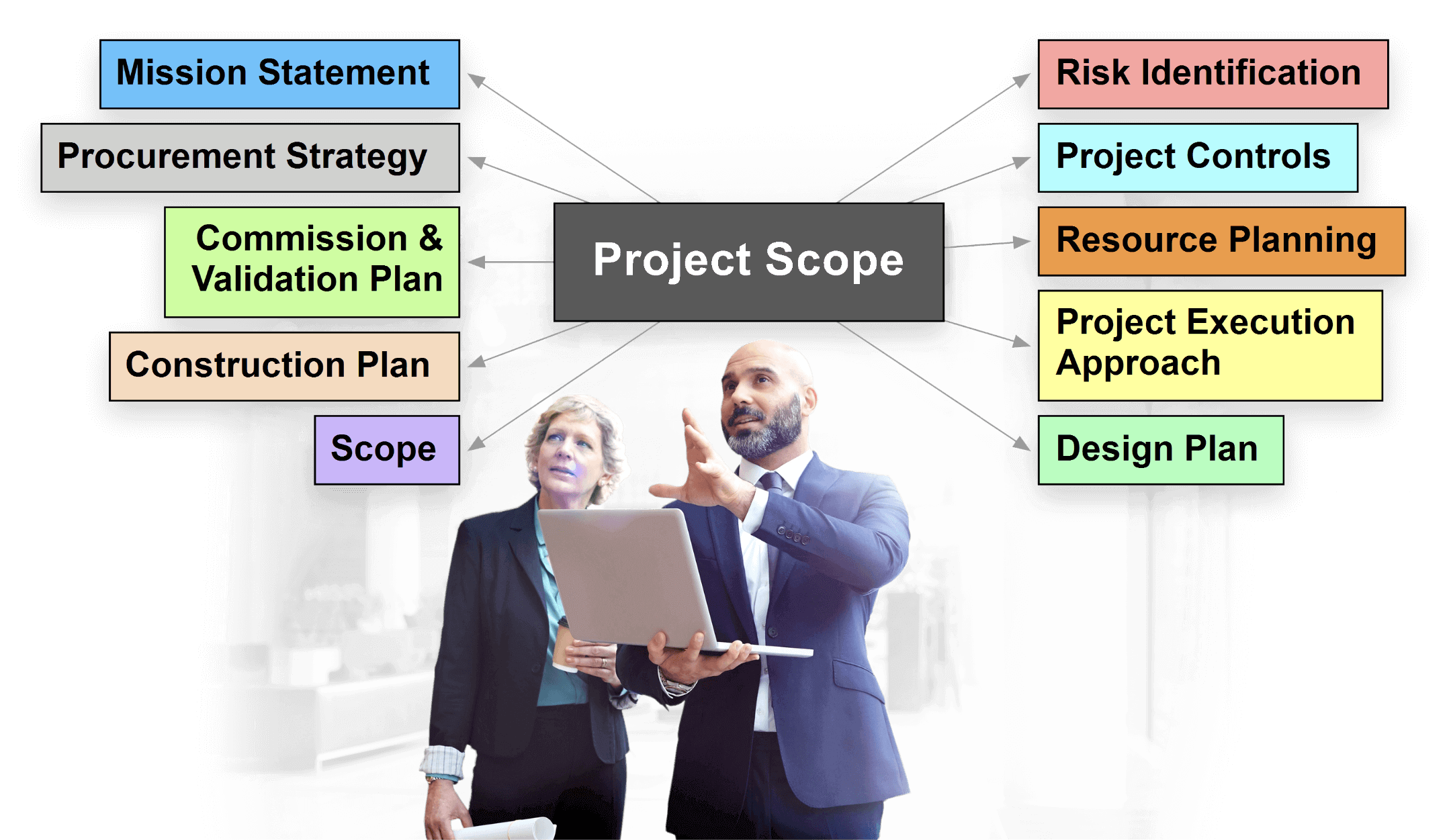
The project scope statement serves as the anchor for the Project Management Plan. Once approved, it dictates the work breakdown structure (WBS), which decomposes the project into manageable tasks. If a task does not contribute to the deliverables outlined in the scope statement, it is likely a redundant activity that wastes resources.
Moreover, the scope statement acts as the primary tool for settling disputes. If a stakeholder requests a new feature, the project manager can point to the agreed-upon scope document and explain that the request falls outside the current project boundaries. The discussion can then shift to whether the project budget and timeline should be expanded to accommodate the new requirement, turning an emotional conflict into a business-driven negotiation.
Addressing Frequently Asked Questions
What is the difference between a project charter and a project scope statement? The project charter is a high-level document that authorizes the project to exist and grants the project manager authority. The scope statement is a more detailed document that describes the work to be done and the boundaries of that work; it is often created after the charter.
Can a scope statement change during the project? Yes. Projects rarely unfold exactly as planned. If the business environment changes, you should update the scope statement. However, these changes must be vetted through a formal "change control process" to ensure that impacts on time, cost, and quality are understood and approved by stakeholders.
How do I handle stakeholders who keep adding requirements? This is a classic symptom of scope creep. Refer them to the scope statement and the project's original objectives. If the new requirement is essential, perform a "Change Impact Analysis" to show them exactly how the request will delay the final delivery or increase costs.
What happens if the scope is too broad? A project with an overly broad scope is often referred to as "gold-plating" or "scope bloat." This increases the likelihood of missing deadlines and exceeding budgets. If your project seems too large, consider breaking it into multiple phases or smaller, individual projects to make them more manageable and easier to track.
Final Recommendations for Success
To ensure your project remains on track, treat your scope statement as a living agreement. Start by prioritizing clarity over verbosity. Ensure that every stakeholder signs the document, confirming their understanding of both the inclusions and the exclusions. As you progress, use the document to steer every major decision, particularly when evaluating change requests.
If you are currently in the middle of a project that feels directionless, pause to review your scope documentation. If you find it is missing or outdated, take the time to draft a retrospective scope statement with your team and stakeholders. Re-establishing these boundaries is often the single most effective way to salvage a project that is struggling with ballooning requirements.