Establishing a functional veterinary clinic requires a strategic balance between clinical necessity, operational efficiency, and budgetary compliance. A practical veterinary equipment list must prioritize core diagnostic, surgical, and supportive care tools that facilitate the standard of care expected in modern veterinary medicine, ensuring that clinicians can effectively manage primary health, emergencies, and routine procedures while maintaining compliance with professional standards and facility regulations.
Core Diagnostic Equipment
The foundation of any veterinary practice is its ability to perform accurate, real-time diagnostic assessments. Before initiating treatment, practitioners require tools that provide objective data regarding a patient's physiological state.
Laboratory Instrumentation
In-house laboratory capabilities are essential for rapid decision-making. Essential instruments include:
- Hematology Analyzer: A machine capable of providing a Complete Blood Count (CBC), which is vital for assessing anemia, infection, and clotting potential.
- Chemistry Analyzer: Used for assessing organ function, such as liver enzymes, kidney values (BUN, Creatinine), and electrolyte balance.
- Microscope: A high-quality binocular microscope is non-negotiable for cytology, fecal examinations, and urinalysis.
- Centrifuge: A standard clinical centrifuge for separating blood components and preparing urine sediment.
Imaging Systems
Imaging provides the visual confirmation required for internal medicine and trauma management.
- Digital Radiography (DR): By 2026, digital radiography systems have become the standard due to their rapid image acquisition and ease of storage.
- Ultrasound Machine: An essential tool for abdominal evaluation, pregnancy diagnosis, and cardiac screening. A portable unit with both linear and convex probes offers the most flexibility for a general practice.
Surgical Suite Requirements
A surgical area must be designed for sterility and efficiency. The equipment here focuses on patient safety, pain management, and the successful execution of routine procedures like spays, neuters, and soft-tissue surgeries.
- Veterinary Operating Table: Look for tables that offer hydraulic or electric height adjustment and tilt features to facilitate proper positioning.
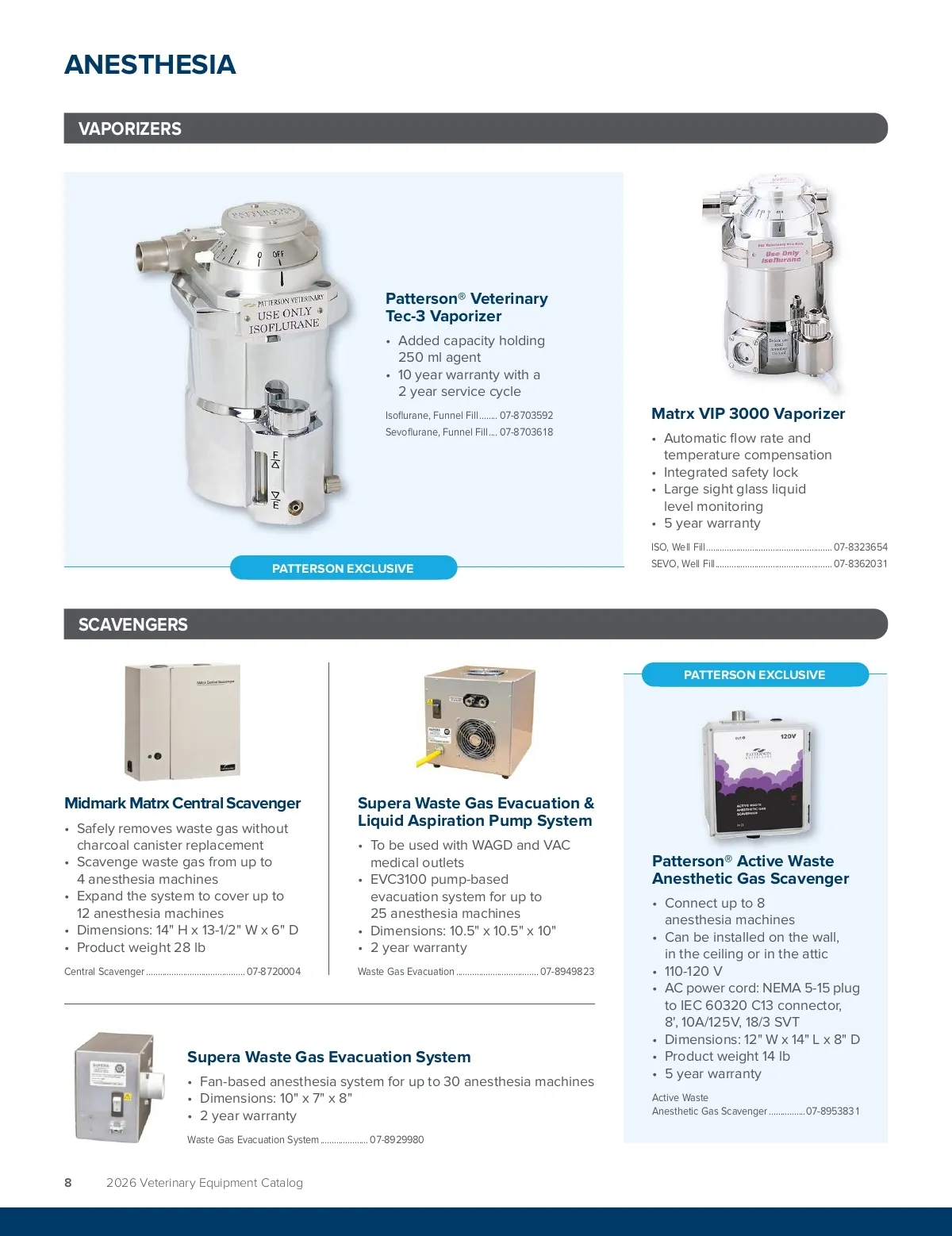
- Anesthesia Machine: A reliable vaporizing system (typically isoflurane or sevoflurane) with integrated oxygen supply and CO2 absorbent canisters is mandatory.
- Patient Monitoring System: To ensure safety during anesthesia, a monitoring unit must track heart rate, respiratory rate, blood oxygen saturation (SpO2), end-tidal CO2 (capnography), and blood pressure.
- Surgical Lighting: High-intensity, shadow-free LED surgical lights are preferred to provide clear visibility during invasive procedures.
- Sterilization Equipment: A high-pressure steam autoclave is required to maintain the sterility of surgical instruments and drapes.
Exam Room and Basic Care Essentials
The exam room is the hub of client-veterinarian interaction. The equipment here should be professional, durable, and easy to sanitize.
- Exam Tables: Adjustable tables (fold-down or lift-style) reduce physical strain on staff and minimize patient anxiety.
- Stethoscopes and Otoscopes/Ophthalmoscopes: High-quality, dedicated veterinary models with multiple bell sizes to accommodate varying patient species and sizes.
- Digital Scales: Precision floor scales for large animals and countertop scales for smaller patients are critical for accurate weight-based dosing.
- Cages and Kennels: Modular, easy-to-clean cages that provide adequate space and comfort for hospitalized or recovering animals.
Critical Support and Emergency Tools
Emergency preparedness defines a well-equipped practice. Beyond the diagnostic and surgical gear, specific items must be readily accessible for resuscitation and stabilization.
- Crash Cart: A centralized, mobile cart containing emergency medications (epinephrine, atropine, lidocaine), syringes, catheters, and airway management tools (laryngoscope and endotracheal tubes).
- Infusion Pumps: Accurate fluid therapy is vital for treating shock and dehydration. IV pumps allow for precise delivery of fluids and constant-rate infusions (CRIs).
- Oxygen Delivery System: Oxygen concentrators or compressed oxygen tanks with masks, nasal cannulas, and oxygen cages for respiratory support.
Comparative Overview of Primary Equipment
| Equipment Category | Key Components | Purpose | Frequency of Use |
|---|---|---|---|
| Diagnostics | CBC/Chem Analyzer | Internal health assessment | Daily |
| Imaging | DR System/Ultrasound | Structural visualization | Daily |
| Anesthesia | Vaporizer/Monitor | Surgical safety/sedation | Routine/Surgical |
| Hospitalization | IV Pumps/Cages | Stabilization/Recovery | Constant |
| Sterilization | Autoclave | Infection control | Daily |
Practical Considerations for Procurement
When building or updating your list, cost-effectiveness must be balanced against technical longevity. Purchasing "clinical grade" equipment is necessary; consumer-grade alternatives often lack the durability required for the rigorous, high-volume environment of a veterinary clinic.
Maintenance and Calibration
Equipment is only as reliable as its maintenance schedule. Plan for annual calibration of lab equipment and preventative maintenance on anesthesia machines. In 2026, many manufacturers offer cloud-based diagnostics for their machines, which can alert the clinic to pending failures before they cause operational downtime.
Software Integration
A practical list in the current era includes the digital infrastructure to support the hardware. Practice Management Software (PMS) that integrates directly with digital radiography and laboratory analyzers significantly reduces manual entry errors and speeds up the diagnostic process.
Frequently Asked Questions
1. Is it necessary to buy all new equipment for a start-up clinic? Not necessarily. While new equipment comes with full warranties and the latest software, many refurbished units from reputable veterinary medical dealers offer significant cost savings. Always prioritize buying new for sensitive diagnostic equipment to ensure current software compatibility and manufacturer support.
2. What is the most critical piece of monitoring equipment for anesthesia? While all monitoring parameters are important, capnography (CO2 monitoring) is often considered the most critical "early warning" system for detecting hypoventilation or equipment failure before a drop in pulse oximetry or blood pressure occurs.
3. How much space should be allocated for equipment storage? Ideally, allocate 15–20% of your total square footage to utility and storage areas. This ensures that bulky equipment, backup supplies, and oxygen tanks have a dedicated, safe environment, preventing clutter in high-traffic clinical areas.
4. What are the legal requirements for veterinary equipment? Requirements vary by jurisdiction. In many regions, you must comply with radiation safety standards for radiography equipment, and state or provincial boards often mandate specific minimums for surgical sterilization and anesthesia monitoring to maintain a facility license.
5. How often should small instruments be replaced? Instruments such as hemostats, scissors, and needle holders should be evaluated during every sterilization cycle. Look for signs of "hemostat creep" or dulling blades. Proper sharpening and re-tipping services can extend the life of these tools significantly.
Final Recommendation
Before finalizing any purchase, conduct a "workflow audit." Map out the journey of a patient from the waiting room to the exam room, and finally to the surgical suite or kennel. Ensure that the equipment you have selected is positioned to minimize staff travel time and optimize patient care. Begin by investing in high-quality, non-negotiable diagnostic and surgical tools, as these represent the core revenue-generating and life-saving capabilities of your practice. Supplement these with durable, easy-to-clean exam furniture, and always reserve a portion of your budget for the first two years of scheduled preventative maintenance.