On November 30, 1954, in the small town of Sylacauga, Alabama, a 34-year-old woman named Ann Elizabeth Hodges became the only human being in recorded history to be directly struck by a meteorite and survive with documented evidence. While millions of space rocks enter Earth’s atmosphere daily, the mathematical improbability of one striking a person makes this event a cornerstone of both astronomical and legal history.
The incident involving Ann Hodges is not merely a "believe it or not" curiosity; it represents a unique intersection of celestial mechanics, Cold War-era paranoia, and a landmark legal dispute over the ownership of extraterrestrial objects. In the decades since, as our monitoring of Near-Earth Objects (NEOs) has advanced through 2026, the Hodges case remains the gold standard for understanding the physical and social impact of a direct meteorite strike.
The Atmospheric Entry and the Impact Event
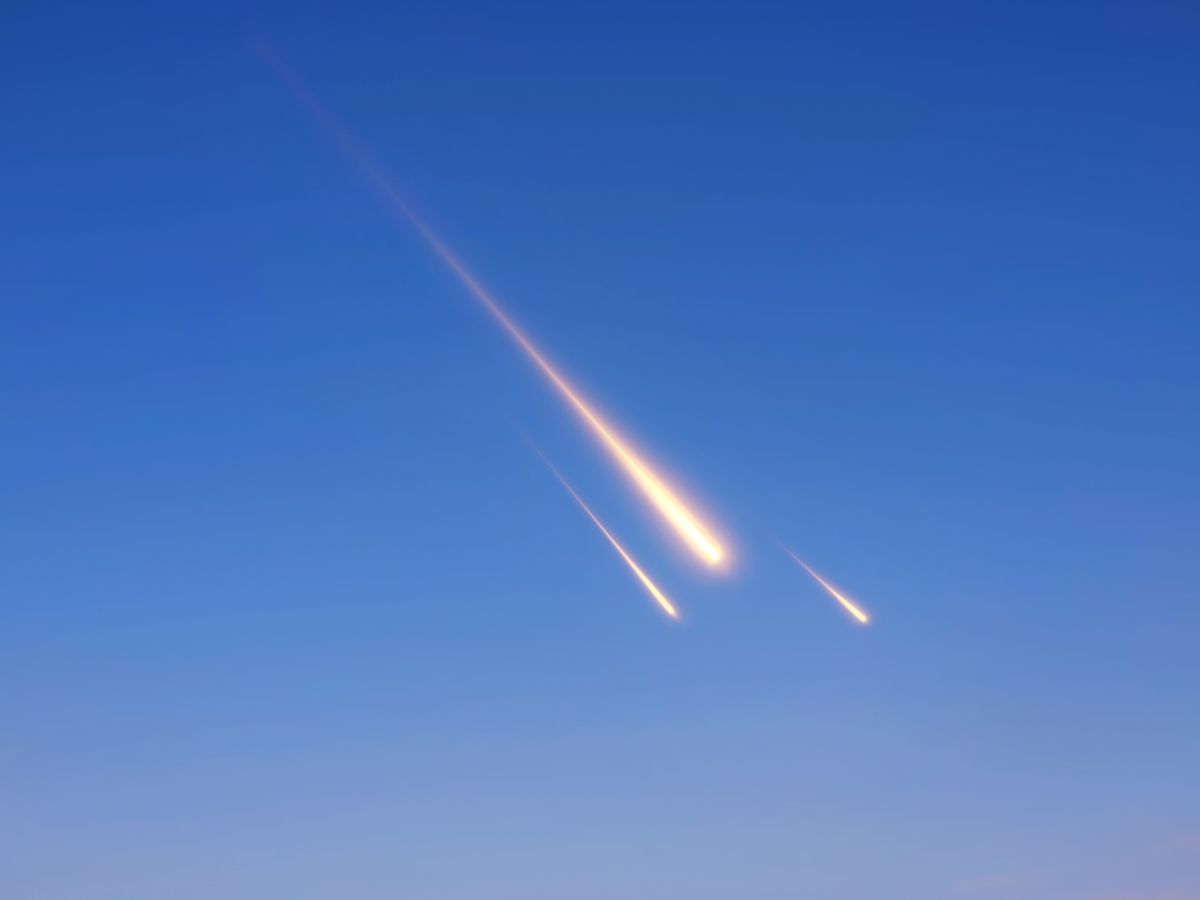
The event began shortly after noon on a clear Tuesday. A fireball was witnessed across three states—Alabama, Georgia, and Mississippi—as a large stony meteorite fractured upon entering the Earth's atmosphere. The friction of the air against the high-velocity rock created a sonic boom that residents described as a massive explosion or a crashing plane.
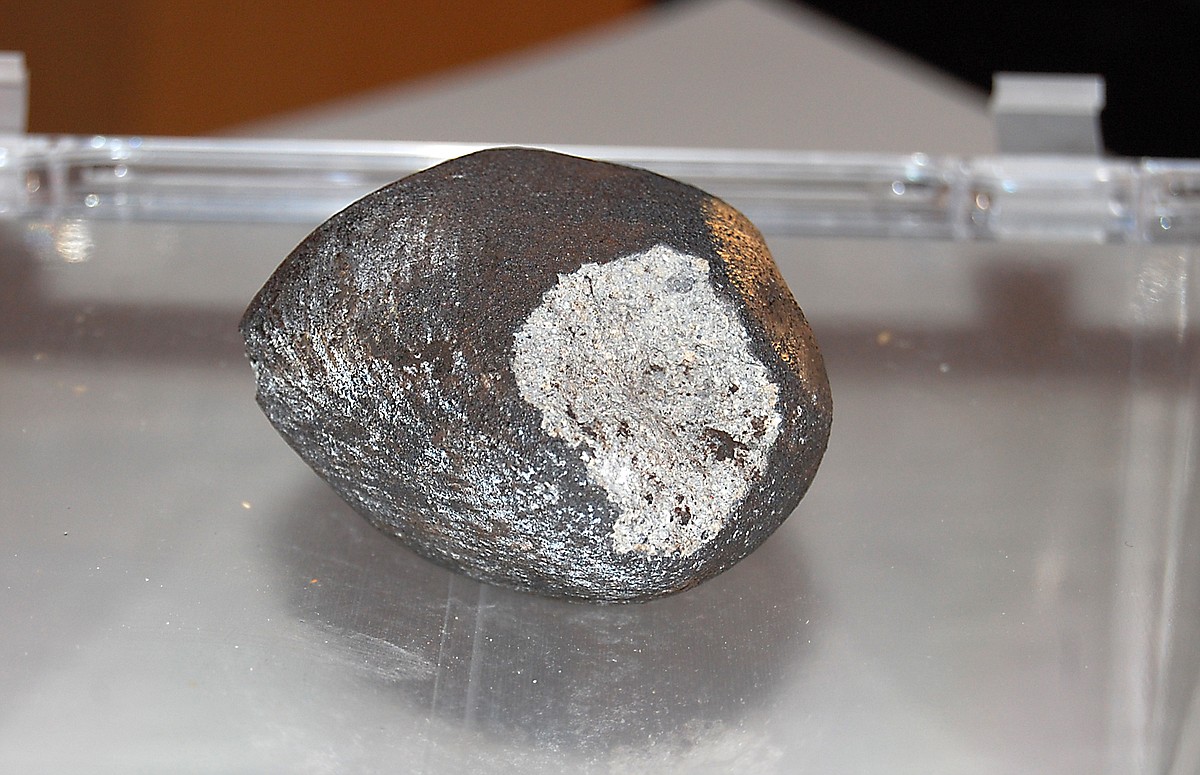
As the meteorite broke apart, one specific fragment, a grapefruit-sized piece of stony chondrite weighing approximately 8.5 pounds (3.86 kilograms), hurtled toward the Oak Grove community in Sylacauga. At approximately 12:46 PM, this fragment crashed through the roof of the Hodges' rented farmhouse.
The Mechanics of the Strike
The meteorite's path was a chaotic sequence of kinetic energy transfers:
- The Roof: The fragment punched a hole through the wood-shingle roof and the ceiling of the living room.
- The Radio: It struck a large, floor-model Philco radio cabinet, which acted as a secondary buffer, absorbing some of the momentum.
- The Person: Ann Hodges was napping on her couch, covered by a heavy quilt. The meteorite bounced off the radio and struck her squarely on the left hip and hand.
Despite the rock still being relatively hot from its atmospheric transit, the thick quilt and the energy lost during the impact with the house and radio likely saved her life. She was left with a massive, dark purple bruise that stretched across her side—a physical mark that would be photographed and published in Life magazine, cementing her place in history.
The Physical and Chemical Composition of the "Sylacauga" Meteorite
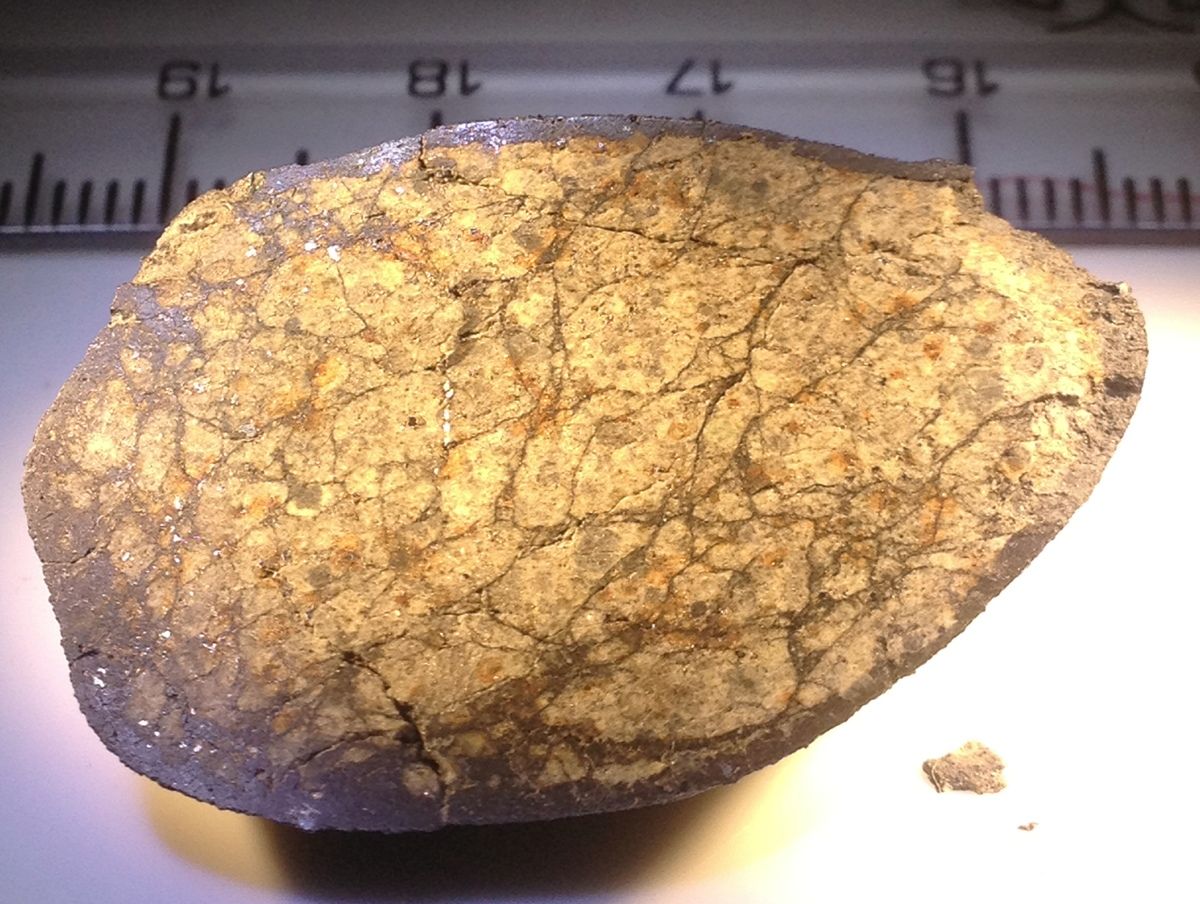
To understand the rarity of this event, one must look at the object itself. The Sylacauga meteorite is classified as an H4 chondrite. In the classification of meteorites, "H" stands for high iron content, and "4" refers to the degree of thermal metamorphism the rock underwent on its parent body, likely an asteroid in the main belt between Mars and Jupiter.
| Characteristic | Specification |
|---|---|
| Type | Ordinary Chondrite (H4) |
| Weight of Impact Fragment | 8.5 lbs (3.86 kg) |
| Total Known Weight | ~12.5 lbs (including the "McKinney" fragment) |
| Primary Minerals | Olivine, Pyroxene, Nickel-Iron |
| Estimated Entry Velocity | ~30,000 to 45,000 mph (prior to atmospheric braking) |
| Date of Impact | November 30, 1954 |
| Location | Sylacauga, Alabama, USA |
Scientific analysis revealed that the rock was roughly 4.5 billion years old, nearly as old as the solar system itself. The fact that a piece of the primordial solar system traveled millions of miles only to terminate its journey in a living room in Alabama remains one of the most staggering coincidences in science.
The Legal Battle: Who Owns a Fallen Star?
While the physical impact was over in a second, the legal and social fallout lasted for years. In 1954, the law regarding "space property" was nonexistent. This led to a three-way tug-of-war between Ann Hodges, her landlady, and the United States government.
The Government's Seizure
Initially, the public was terrified. In the height of the Cold War, many witnesses believed the fireball was a Soviet missile or a crashing "flying saucer." The local police confiscated the rock and turned it over to the United States Air Force for analysis. Once it was confirmed to be a natural meteorite, the fight for its return began.
Hodges vs. Guy
Ann Hodges and her husband, Eugene, believed the rock was theirs because it had struck Ann. However, their landlady, Birdie Guy, claimed ownership because the rock had landed on her property. Under the common law of the time, "treasure trove" or "finds" often defaulted to the landowner.
Birdie Guy sued for the rights to the meteorite, stating, "The law is on my side. It’s like a tree falling on my land; it belongs to me." The battle became a media sensation. Eventually, public opinion swung heavily in favor of Ann Hodges, the woman who had suffered the actual injury. After a year of litigation, the parties settled out of court. The Hodges paid Birdie Guy $500 (a significant sum in 1954) to relinquish her claim and keep the meteorite.
The Disappointing Conclusion
The Hodges hoped to sell the rock for a small fortune. However, by the time the legal dust settled in 1955, public fascination had waned. They were unable to find a private buyer willing to pay their asking price. Eventually, against Eugene’s wishes, Ann donated the meteorite to the Alabama Museum of Natural History in 1956, where it remains on display today.
Psychological and Health Consequences
The strike did more than just bruise Ann’s hip; it derailed her life. The sudden, unwanted fame and the grueling legal battle took a severe toll on her mental and physical health. She suffered a nervous breakdown and eventually separated from Eugene in 1964. Ann Hodges passed away in 1972 at the age of 52 from kidney failure, with many of her friends and family believing that the stress associated with the meteorite strike had contributed to her early decline.
Her story serves as a reminder that being the "only person" to experience a global rarity often comes with a heavy social and psychological burden.
Other Recorded Meteorite Hits and Near Misses
While Ann Hodges remains the only confirmed direct hit where the victim and the object were both recovered immediately, other reports exist throughout history. However, these often lack the contemporary medical documentation or physical evidence found in the Sylacauga case.
The 1888 Ottoman Empire Record
In 2020, researchers discovered documents in the Turkish state archives detailing an event in Sulaymaniyah (modern-day Iraq) on August 22, 1888. According to the reports sent to Sultan Abdul Hamid II, a "shower of stones" fell on a village, killing one man and paralyzing another. While the official Ottoman records are highly credible, the lack of a surviving physical specimen (the meteorite itself) makes it a "historical certainty" but a "scientific challenge" to verify to the same degree as the Hodges event.
The 1992 Mbale Meteorite
In August 1992, a meteorite fragmented over Mbale, Uganda. A small piece, weighing about 3 grams, struck a young boy named Jumaane on the head. Because the fragment had been slowed by the leaves of a banana tree before impact, the boy was not injured. This is often cited as the second most credible "direct hit" in history.
The 2013 Chelyabinsk Event
The most significant meteorite event of the 21st century occurred over Russia in 2013. While no one was directly struck by a piece of the rock, over 1,500 people were injured. These injuries were caused by the intense shockwave that shattered windows and collapsed roofs. This event highlighted that "hitting a person" can occur indirectly through atmospheric displacement, even if the rock itself never touches skin.
Calculating the Odds: Why It Almost Never Happens
Statistically, the chances of being hit by a meteorite are astronomical—literally.
- Surface Area: Most of the Earth is covered by water (71%). Of the remaining land, a huge percentage is unpopulated (deserts, tundras, mountains).
- Target Size: A human being is a very small target compared to the vastness of the planet.
- Atmospheric Shielding: Most meteors burn up entirely before reaching the lower atmosphere.
Astronomer Stephen A. Nelson of Tulane University once calculated the lifetime risk of dying from a large meteorite or asteroid impact at 1 in 1,600,000. However, the odds of being hit by a specific small meteorite like the one that struck Ann Hodges are much lower—estimated by some statisticians as 1 in 840 million. To put this in perspective, you are far more likely to be struck by lightning (1 in 15,000 in a lifetime) or win a major national lottery.
Current Protocols and Legal Status in 2026
As of 2026, the legal framework for meteorite ownership has become more standardized, though it still varies by jurisdiction. In the United States, the precedent established around the time of the Hodges case generally holds: meteorites belong to the owner of the land upon which they fall.
If a meteorite hits a person today, the following steps are generally recommended by both legal and scientific experts:
- Medical Evaluation: Regardless of the size of the impact, seeking immediate medical attention is vital. Meteorites can be sharp and, in rare cases, may contain trace elements that require professional handling.
- Documentation: Taking high-resolution photos of the entry point (roof, car, etc.) and the resting place of the rock is essential for scientific "provenance."
- Reporting: Contacting a university geology department or the Meteoritical Society ensures the object is recorded for science.
- Insurance: Most modern homeowners' insurance policies cover "falling objects," which includes meteorites. This covers the damage to the structure, though it does not necessarily determine ownership of the object itself.
Frequently Asked Questions
Has anyone ever died from a meteorite strike?
While there are historical accounts, such as the 1888 Ottoman Empire records mentioned earlier, there are no modern, scientifically verified instances of a human being killed directly by a meteorite impact. Most "meteorite deaths" reported in tabloid media are usually revealed to be falling debris from aircraft or terrestrial explosions.
Is a meteorite hot when it hits the ground?
Contrary to popular belief, meteorites are often cold or only slightly warm when they land. While the outer layer (fusion crust) melts during the high-speed entry through the atmosphere, the transit lasts only a few seconds. Since space rocks are extremely cold and rock is a poor conductor of heat, the "cold" of the interior often counteracts the atmospheric heating. In Ann Hodges' case, the rock was described as warm, but not searing.
What should I do if I find a meteorite?
Do not use a magnet to test it immediately, as this can erase important magnetic data stored in the rock from its time in space. Instead, handle it with gloves to avoid contaminating it with skin oils, and place it in clean aluminum foil. Consult a professional laboratory for a chemical analysis to confirm it is not "meteor-wrong" (industrial slag or terrestrial magnetite).
Can I sell a meteorite if it hits my house?
Yes, meteorites are highly collectible. Depending on the type (stony, iron, or pallasite) and the "story" behind it (like the Hodges strike), fragments can sell for anywhere from a few dollars per gram to tens of thousands of dollars. Meteorites with "provenance"—documented evidence of their fall—are significantly more valuable to collectors and museums.
Final Recommendations for the Curious
The story of Ann Hodges serves as a bridge between the terrifying power of the cosmos and the mundane reality of a Tuesday afternoon nap. If you are interested in this phenomenon, the best next step is to visit the Alabama Museum of Natural History in Tuscaloosa, where the "Hodges Fragment" is still on display, alongside the very Philco radio it struck.
For those looking to understand the current risks of celestial impacts, monitoring resources such as NASA’s Planetary Defense Coordination Office provides real-time data on objects passing near Earth. While the odds of history repeating itself and striking a person are slim, the Sylacauga event proves that in a vast universe, even the most impossible outcomes can eventually occur.