Terpenes are volatile aromatic compounds responsible for the distinct scents and flavors found in plants, ranging from the piney needles of a coniferous tree to the bright, zesty aroma of a lemon peel. In 2026, scientific interest in these compounds has grown significantly, as researchers explore their potential roles in aromatherapy, pharmacology, and botanical medicine. By understanding their individual effects, consumers and researchers can better navigate the complex interaction between plant-derived oils and the human biological system.
Understanding the Role of Terpenes in Nature and Science
Terpenes are hydrocarbons synthesized by a vast array of plants as a primary defense mechanism. While they provide the plant with its characteristic smell—often acting as a deterrent to pests or an attractant for pollinators—they also serve as protective chemical agents against environmental stressors like high temperatures or drought.
From a biochemical perspective, terpenes are built from repeating units of isoprene (C5H8). When these units bond together, they form various structures classified by the number of units: monoterpenes (two units) and sesquiterpenes (three units) are the most common found in essential oils. For humans, these compounds interact with the body through the olfactory system (the sense of smell) and the skin, and they are increasingly studied for their ability to interact with specific receptors in the nervous system.
It is important to note that while many studies regarding terpenes are promising, much of the research is currently focused on in vitro (test tube) or animal models. Clinical trials on human subjects are ongoing, and practitioners advise that terpenes should not be viewed as direct replacements for prescribed medical treatments.
Primary Terpenes: A Detailed Breakdown
To effectively utilize terpenes, one must identify the primary compounds found in various botanicals. While hundreds exist, the following list represents the most well-documented terpenes currently being studied for their specific effects on mood, relaxation, and physical comfort.
1. Myrcene
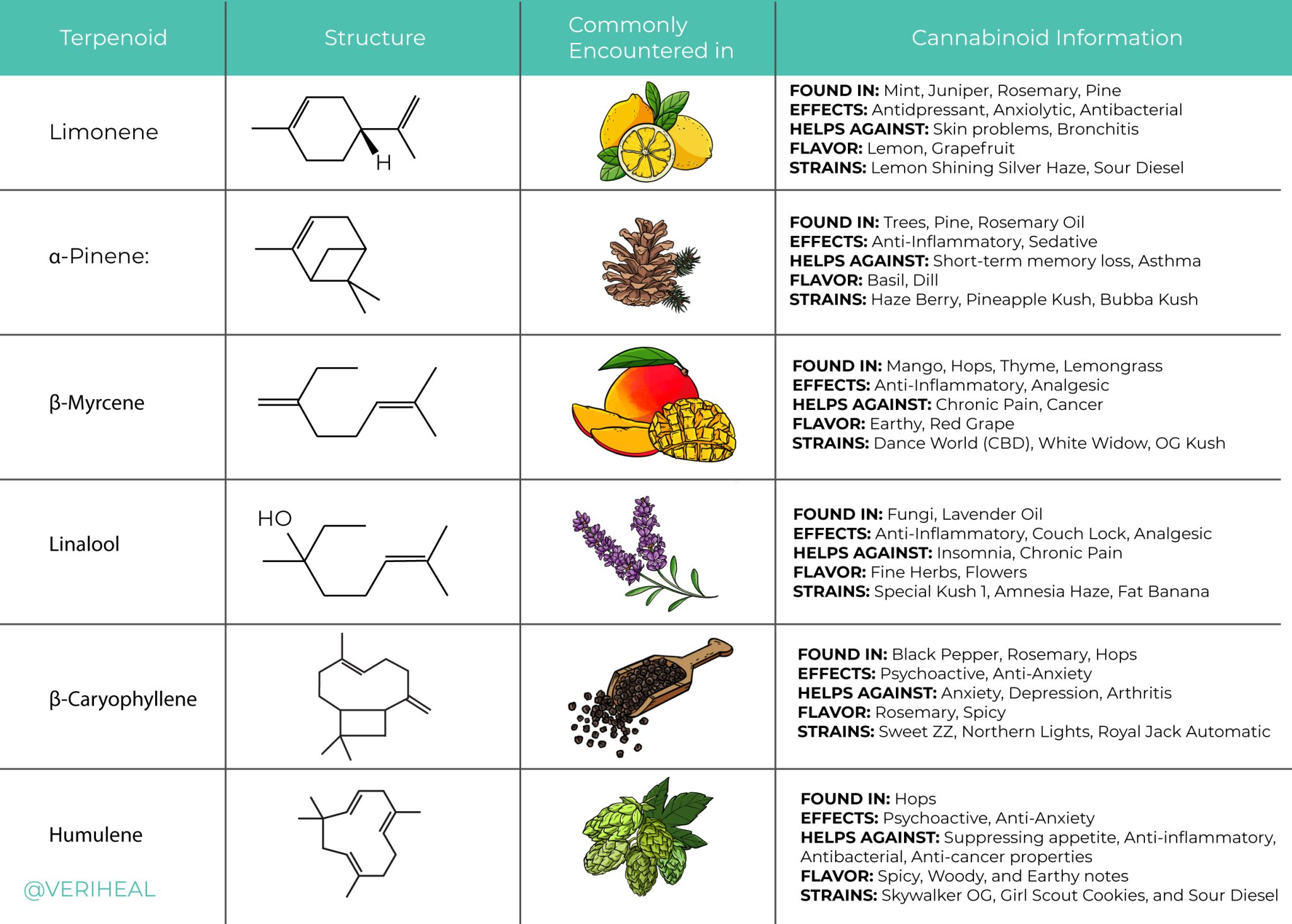
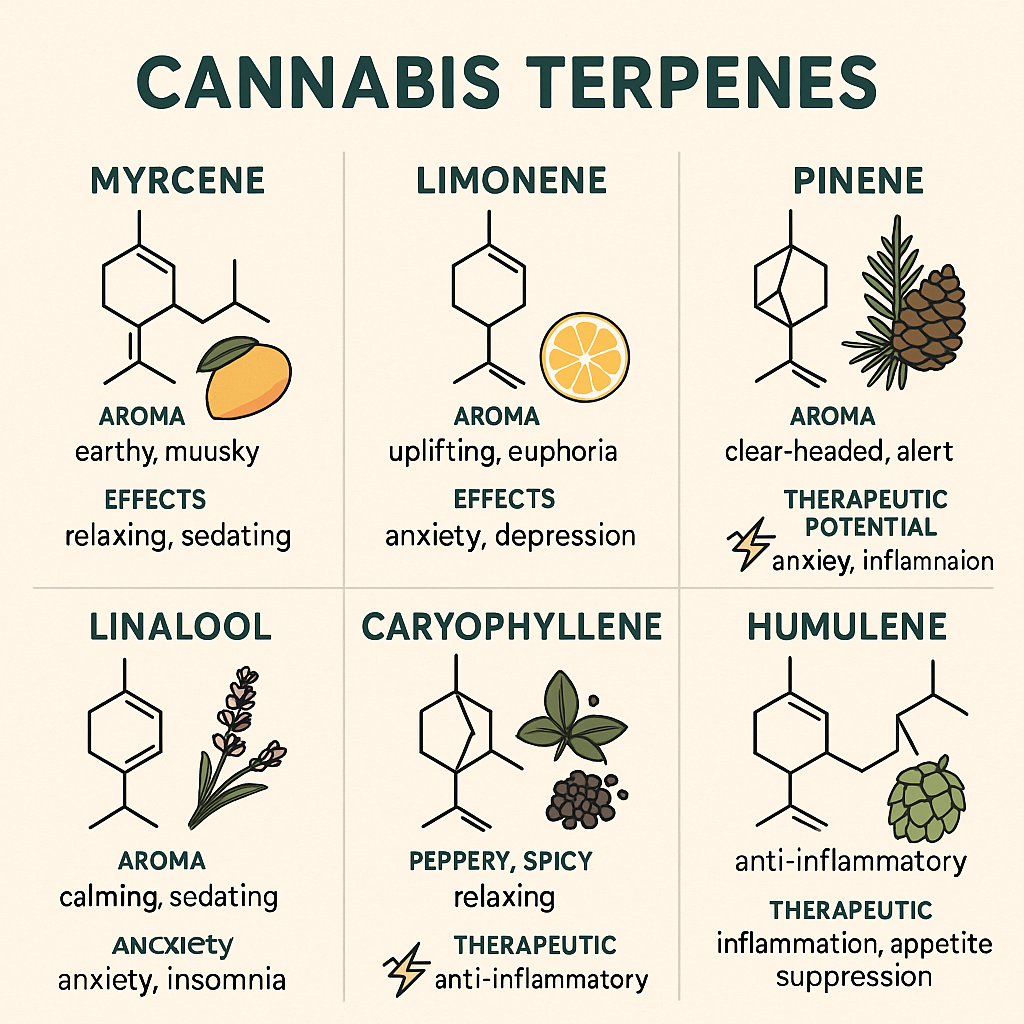
Myrcene is perhaps the most abundant terpene found in various aromatic plants, including hops, lemongrass, and mangoes. Its aroma is often described as earthy, musky, and slightly fruity. In traditional wellness practices, myrcene is frequently associated with a sedative effect, often referred to by enthusiasts as the "couch-lock" effect. It is hypothesized that myrcene can enhance the permeability of the blood-brain barrier, potentially allowing other compounds to exert their effects more efficiently.
2. Limonene
As the name suggests, limonene is found in high concentrations in citrus peels, such as lemon, lime, and orange. Its scent is sharp, clean, and distinctively citrusy. Limonene is widely recognized for its potential mood-elevating properties. Many aromatherapy practitioners utilize limonene-rich oils to help manage symptoms of stress and to create a more alert, energized mental state. Beyond mood, it is frequently studied for its potential antioxidant properties.
3. Pinene
There are two primary isomers of pinene: alpha-pinene and beta-pinene. Both are found in high concentrations in pine needles, rosemary, and basil. Pinene carries a sharp, refreshing scent that is synonymous with forest environments. It is often lauded for its ability to promote focus and mental clarity. Some users report that it may help counteract some of the memory-impairing effects associated with other compounds, making it a popular choice for those seeking to maintain cognitive sharpness while using essential oils.
4. Linalool
Found in lavender, birch bark, and rosewood, linalool is famous for its floral and calming scent. It is arguably the most researched terpene in the context of anxiety reduction. Linalool has been shown in various studies to influence the GABAergic system—a system in the brain responsible for regulating excitability—which explains its long history as a tool for promoting relaxation and sleep hygiene.
5. Caryophyllene
Caryophyllene is unique because it is both a terpene and a dietary cannabinoid. It is found in black pepper, cloves, and cinnamon. Its aroma is spicy, woody, and peppery. Unlike other terpenes, caryophyllene directly interacts with the body's CB2 receptors, which are part of the endocannabinoid system involved in managing inflammation and immune response. Because of this, it is frequently explored for its potential to provide localized physical comfort.
Comparative Summary of Terpene Properties
The following table provides a quick reference for the primary terpenes discussed, their common sources, and their most cited physiological associations.
| Terpene | Primary Aroma | Common Source | Primary Association |
|---|---|---|---|
| Myrcene | Earthy, Musky | Hops, Mango | Relaxation, Sedation |
| Limonene | Citrusy, Zesty | Lemon, Orange | Mood Elevation, Energy |
| Pinene | Pine, Sharp | Pine needles, Basil | Focus, Memory, Clarity |
| Linalool | Floral, Sweet | Lavender, Rose | Anxiety Relief, Calm |
| Caryophyllene | Spicy, Peppery | Black Pepper, Clove | Anti-inflammatory, Comfort |
The "Entourage Effect" and Synergistic Interactions
In modern botanical research, the concept of the "entourage effect" has become a central theme. This hypothesis suggests that terpenes do not work in isolation but rather synergize with other plant compounds to produce an effect that is greater than the sum of their parts.
For instance, when a terpene like limonene is combined with a compound that promotes relaxation, the result may be a balanced state of calm alertness rather than pure sedation. This concept is the foundation of aromatherapy blending, where practitioners create specific mixtures to achieve a desired outcome. Understanding that these compounds work in concert allows for a more nuanced approach to using essential oils or botanical extracts.
Practical Applications and Safety Considerations
When incorporating terpenes into your daily routine, whether through diffusers, topicals, or aromatherapy, there are several practical steps and safety protocols to follow.
- Source Verification: Always purchase terpenes or essential oils from reputable suppliers who provide a Certificate of Analysis (COA). This document ensures that the product is pure and free from heavy metals, pesticides, or synthetic additives.
- Dilution Protocols: Terpenes are highly concentrated. When using them topically, they must be diluted in a carrier oil (such as jojoba or coconut oil) to prevent skin irritation or sensitization. A standard starting point is a 1–2% dilution.
- Inhalation Techniques: When using a diffuser, start with short sessions of 15 to 30 minutes. This allows you to gauge how your body reacts to the aromatic concentration before moving to longer sessions.
- Allergy Testing: Before applying any terpene-rich product to a large area of the body, conduct a patch test on the inner forearm. Observe the area for 24 hours to ensure no redness, itching, or inflammation occurs.
Frequently Asked Questions
Can I ingest terpenes directly? While many terpenes are "Generally Recognized as Safe" (GRAS) by the FDA for use as food additives, they are typically not intended for direct, concentrated ingestion in their oil form. Always follow the manufacturer's guidance and consult a healthcare professional before adding any plant extract to your diet.
Are terpenes the same as essential oils? Terpenes are the chemical components that make up a large portion of essential oils. An essential oil is a complex mixture of many different terpenes and other compounds, whereas a terpene isolate is a single, purified chemical compound.
Do terpenes have any negative side effects? While generally safe, high concentrations can cause headaches, nausea, or dizziness if inhaled in excess. Additionally, individuals with specific plant allergies should exercise caution when using extracts derived from those plants.
How long do the effects of terpenes last? The duration depends on the method of administration. Inhalation typically provides the most immediate, short-lived effects, while topical application may offer a more sustained, localized sensation. Generally, the effects of terpenes are relatively short-lived compared to pharmaceutical agents.
Can terpenes interact with my medications? Yes, some terpenes may inhibit or induce enzymes in the liver that process medications (such as the CYP450 enzyme system). If you are taking prescription medication, consult your doctor to ensure that the use of concentrated essential oils or terpenes will not affect the metabolism of your medication.
Next Actions for the Interested User
To safely and effectively begin using terpenes, your first step should be to identify your goal. If you are looking for focus, start by experimenting with pinene or limonene in a diffuser during your morning work hours. If your goal is relaxation, introduce linalool or myrcene in the evening. Keep a journal of your experiences, noting the scent, the quantity used, and your subsequent mood or physical state. This personalized approach is the best way to determine which terpenes work most effectively for your unique physiology. Always remember to prioritize quality in your sourcing to ensure the safety and efficacy of your botanical journey.