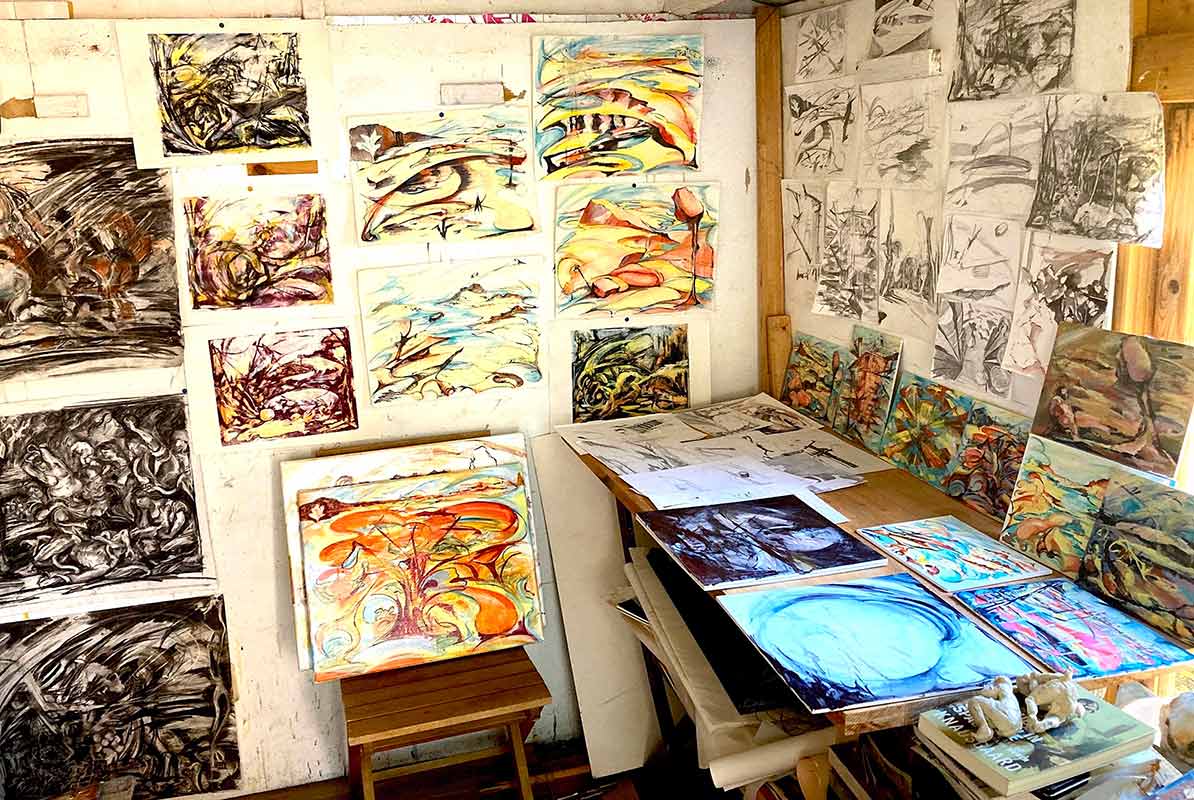
The journey of a contemporary British artist in 2026 is a complex navigation through rigorous academic training, the pursuit of public funding, and the competitive landscape of commercial galleries. It requires balancing creative integrity with entrepreneurial skill, moving from local studio collectives to institutional recognition at major venues like the Tate or international art fairs.
The British art scene has long been defined by its tension between tradition and subversion. From the revolutionary impact of the Young British Artists (YBAs) in the 1990s to the tech-integrated, socially conscious creators of the mid-2020s, the path to success has evolved. While the "starving artist" trope persists in cultural myth, the reality for a modern practitioner in the United Kingdom involves a sophisticated understanding of logistics, digital presence, and global market dynamics.
The Educational Foundation: Pedagogy and Networking
For most, the journey begins within the walls of the UK’s prestigious art institutions. As of 2026, schools such as the Royal College of Art (RCA), Goldsmiths, and the Slade School of Fine Art remain the primary gatekeepers of the industry. These institutions provide more than just technical instruction; they offer a concentrated network of peers, tutors, and visiting curators that form the artist's first professional circle.
The curriculum in these institutions has shifted significantly toward "professional practice." Students are no longer just taught how to paint or sculpt; they are taught how to write artist statements, manage social media portfolios, and understand the nuances of intellectual property law. The "degree show" remains the most critical milestone of this phase, serving as a high-stakes scouting ground for talent spotters from blue-chip galleries.
However, the rising cost of living and tuition in London has led to a decentralization of talent. Many artists now begin their journeys in cities like Glasgow, Leeds, or Margate, where the "Southend-on-Sea" effect has created vibrant, more affordable hubs. These regional beginnings often foster a "DIY" ethos, where artists form collectives to share studio costs and organize independent exhibitions, bypassing traditional gatekeepers early in their careers.
The Emerging Phase: Establishing a Voice and a Presence
Once out of the academic environment, the contemporary British artist enters the "emerging" phase. This period is characterized by the struggle for visibility. In 2026, visibility is dual-track: physical and digital.
Physically, the artist seeks inclusion in "Open Call" exhibitions and residency programs. Organizations like Bloomberg New Contemporaries provide a vital platform for recent graduates, offering a touring exhibition that puts their work in front of national audiences. Residencies, such as those offered by the British School at Rome or the Delfina Foundation, allow artists the time and space to develop their practice away from the financial pressures of their primary studio.
Digitally, the artist's journey is now inseparable from their online persona. Instagram, while still relevant, has been supplemented by more immersive portfolio platforms that utilize augmented reality (AR) to show work in virtual gallery settings. A successful emerging artist uses these tools to build a global following, often attracting international collectors before they have even secured a solo show in the UK. This "direct-to-consumer" model has empowered artists, providing a secondary stream of income through print sales or digital editions, which funds their more ambitious, less commercial projects.
Funding and Sustainability: The Role of Public Support
Sustainability is perhaps the greatest challenge in the contemporary British artist’s journey. Very few artists survive solely on the sale of their work during the first decade of their career. In the UK, the Arts Council England (ACE) plays a pivotal role in bridging the gap between talent and financial viability.
The "National Lottery Project Grants" are a staple of the artist’s journey. These funds support the creation of new work, the staging of exhibitions, and professional development. However, the application process is notoriously rigorous, requiring artists to demonstrate not only artistic excellence but also "public benefit" and "outreach." This has led to a generation of artists who are highly skilled in community engagement, often working with schools, hospitals, or local councils to fund their practice.
Beyond public grants, many artists maintain "portfolio careers." They may work as technician-tutors, freelance designers, or gallery assistants. This logistical reality is a significant part of the journey, as the artist must learn to protect their creative time while navigating the "gig economy." By 2026, many artist-led organizations have also established "Community Interest Companies" (CICs) to formalize their business structures, allowing them to apply for social enterprise funding alongside traditional arts grants.
The Commercial Ladder: From Artist-Led Spaces to Blue-Chip Galleries
The transition from an emerging talent to a commercially viable artist usually involves a progression through different tiers of galleries.
- Artist-Led Spaces: These are often non-profit or co-operative spaces where the primary goal is experimentation rather than sales. They are the "grassroots" of the British art scene.
- Boutique/Commercial Galleries: Located in areas like Peckham, Bethnal Green, or the Baltic Triangle in Liverpool, these galleries take a chance on unproven talent, helping to build an artist's "primary market" (initial sales to collectors).
- Mid-Tier Galleries: These institutions have a presence at international fairs like Frieze London. They provide the artist with more significant marketing power and access to a wider pool of private and institutional collectors.
- Blue-Chip Galleries: The "Mayfair" tier, including names like White Cube, Lisson Gallery, or Victoria Miro. Representation here marks the pinnacle of commercial success, often leading to six-figure price points and global representation.
Navigating this ladder requires a delicate balance. An artist who moves too quickly into the commercial sphere may find their work becoming "productized," losing the critical edge that attracts museum curators. Conversely, staying too long in the non-profit sector can lead to financial exhaustion.
Market Dynamics and the Global Context
The contemporary British artist does not operate in a vacuum. In 2026, the post-Brexit landscape has largely stabilized, but it remains a factor in the artist's journey, particularly regarding the movement of works and residency visas.
London remains one of the three great global art hubs, alongside New York and Hong Kong. For a British artist, having a presence in London is still viewed as a "stamp of approval." However, the journey now frequently involves "satellite" success. An artist might be represented by a gallery in Berlin or Los Angeles before they are picked up by a major London space. This internationalism is essential for risk mitigation; if the UK market faces a downturn, an artist with a global collector base is more likely to remain solvent.
The "Frieze Effect" continues to dominate the annual calendar. Frieze London and Frieze Masters in Regent’s Park are the points where the journey of the artist meets the high-finance world of global collecting. For an artist, being included in a gallery’s booth at Frieze is a major career milestone, often resulting in works being acquired by major foundations or "promised" to museums.
Recognition and Legacy: Prizes and Institutions
The final stages of the journey involve the transition from "successful artist" to "cultural figure." In Britain, this is often marked by the nomination for prestigious awards, most notably the Turner Prize. Despite periodic criticisms, the Turner Prize remains the most potent brand in British art, capable of turning a mid-career artist into a household name overnight.
Institutional acquisition is the ultimate goal for many. Having work purchased for the Tate Collection, the Government Art Collection, or the British Council Collection provides a level of historical permanence that commercial success cannot match. These collections ensure that the artist’s work will be preserved and studied by future generations.
Furthermore, the "Royal Academician" (RA) status remains a prestigious marker of peer-vetted success. Being elected to the Royal Academy of Arts is a signal that an artist has moved into the "Establishment," providing them with a platform for life and a role in shaping the future of British art through the Academy’s school and summer exhibitions.
Comparative Stages of a Contemporary British Artist's Career (2026)
| Career Stage | Typical Venue | Primary Funding Source | Key Objective |
|---|---|---|---|
| Early/Emerging | DIY Spaces, Instagram, Open Calls | Part-time work, ACE Project Grants | Establishing a unique visual language and peer network. |
| Mid-Career | Boutique Commercial Galleries, Residencies | Sales, Public Commissions, Teaching | Building a consistent "primary market" and critical reviews. |
| Established | Mid-to-Large Galleries, International Fairs | Gallery representation, Private sales | International expansion and institutional solo shows. |
| Blue-Chip/Legacy | Mayfair Galleries, Tate, Royal Academy | High-value sales, Estates, Foundations | Securing a place in the art historical canon. |
Frequently Asked Questions
How do contemporary British artists get discovered in 2026?
Most artists are discovered through a combination of their degree shows at major art schools and their digital presence. Curators and gallerists actively scout platforms like Instagram and specialized art-discovery apps. Additionally, "Open Call" exhibitions, such as the Royal Academy Summer Exhibition or the John Moores Painting Prize, remain vital avenues for discovery by the wider public and critics.
What is the average income for an artist in the UK?
Income is highly variable. According to industry reports from 2025-2026, the majority of artists earn less than £20,000 annually specifically from their art practice. Most supplement this through teaching, technician work, or creative freelancing. However, those represented by mid-tier to blue-chip galleries can earn significantly more, with successful mid-career artists often seeing annual turnovers in the high five to six figures.
Does an artist need to be based in London to succeed?
While London remains the commercial and institutional heart of the British art world, it is no longer the only path. Cities like Glasgow, Manchester, and Bristol offer robust art scenes with lower overheads. Many artists live in these "regional hubs" to maintain their practice and travel to London or abroad for exhibitions and fairs.
How has AI impacted the journey of British artists?
By 2026, AI has become a standard tool in many artists' repertoires, used for conceptualizing works, generating textures, or managing logistics. However, the "journey" now involves navigating the ethics of AI. There is a strong counter-movement valuing "the hand of the artist" and physical materiality, leading to a resurgence in traditional crafts like ceramics and oil painting as a reaction to digital saturation.
What role does the Arts Council England play?
Arts Council England (ACE) provides critical financial support through various grant schemes. They are particularly important for supporting non-commercial, experimental, or socially engaged work that might not thrive in the private gallery system. For many artists, an ACE grant is the "seed money" that allows them to produce their first major body of work.
Are there specific tax breaks for artists in the UK?
Artists in the UK can benefit from certain accounting practices, such as "averaging" their income over several years to account for the "feast or famine" nature of art sales. There are also specific VAT rules regarding the import and export of artworks. It is highly recommended that artists consult with an accountant who specializes in the creative industries to navigate these regulations.
Practical Next Actions for Aspiring Artists
For those beginning their journey in 2026, the first step is the rigorous development of a portfolio. This should be followed by active participation in the local art scene—attending openings, joining studio collectives, and volunteering for artist-led spaces.
Documentation is equally critical; high-quality photography of work is the "currency" of the digital art world. Aspiring artists should also familiarize themselves with the funding cycles of Arts Council England and the eligibility criteria for major prizes. Ultimately, the journey is one of persistence; the "overnight successes" seen in the media are almost always the result of years of invisible labor in the studio.