A company with green marketing prioritizes the development and promotion of products or services based on their environmental benefits. In 2026, this transcends simple advertising; it requires a systemic integration of sustainability into the entire value chain—from sourcing and production to transparent communication and end-of-life disposal—to ensure brand credibility and regulatory compliance.
The Evolution of Green Marketing into a Core Business Mandate
By 2026, green marketing has moved far beyond being a niche "feel-good" strategy. It is now a fundamental requirement for market entry and capital acquisition. Driven by rigorous international regulations and a consumer base that demands radical transparency, a company with green marketing must operate with the understanding that every environmental claim is a legal and ethical commitment.
The shift from "sustainable as a choice" to "sustainable as a standard" means that marketing departments can no longer operate in a vacuum. They must work closely with supply chain managers, product designers, and legal compliance teams. In this environment, green marketing is defined as the holistic process of selling products and services based on their environmental benefits, which may include being manufactured in a sustainable fashion, not containing toxic materials or ozone-depleting substances, being produced from recycled materials, or being minimally packaged.
For a business to be recognized legitimately as a "green company," it must align its internal operations with its external messaging. This alignment is what separates market leaders from those currently facing litigation or "cancel culture" due to greenwashing.
The Strategic Framework: The Four Ps of Green Marketing
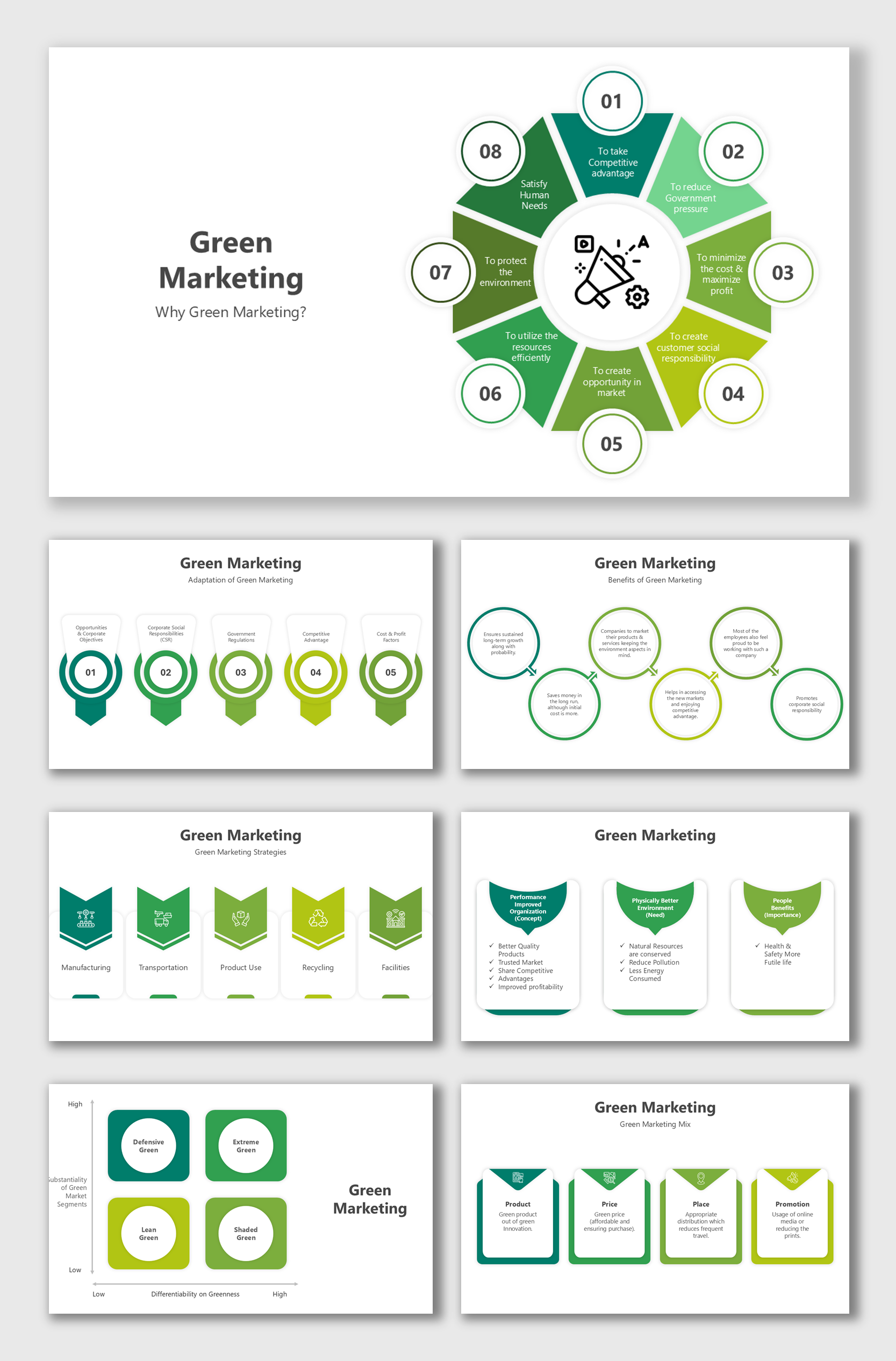
To implement an effective strategy, a company must re-evaluate the traditional marketing mix—Product, Price, Place, and Promotion—through an ecological lens. This framework ensures that sustainability is not just an add-on but a structural component of the brand.
1. Product: Designing for Longevity and Circularity
The product is the foundation of any green marketing claim. In 2026, the focus has shifted toward Circular Economy principles. This means designing products that are durable, repairable, and recyclable. A green marketing company does not just sell a product; it manages a resource.
- Sourcing: Utilizing regenerative raw materials or post-consumer recycled content.
- Life Cycle Assessment (LCA): Quantifying the environmental impact from "cradle to grave." Companies now use LCA data to back up every claim made on packaging.
- Digital Product Passports (DPP): Following EU mandates and global trends, many products now feature a digital identity that allows consumers to scan a code and see the product's entire environmental history, including carbon footprint and repair instructions.
2. Price: Navigating the "Green Premium"
Pricing a sustainable product is a delicate balance. While eco-friendly materials and ethical labor often result in higher production costs (the "green premium"), a company with green marketing must justify this to the consumer.
- Value-Based Pricing: Positioning the product as a long-term investment. For example, a more expensive energy-efficient appliance saves the consumer money over its lifespan.
- Internalizing Externalities: Transparently explaining that the price reflects the true cost of production, including carbon offsets or fair wages, which were historically "hidden costs" passed on to the environment or society.
3. Place: Decarbonizing the Supply Chain
"Place" refers to the distribution channels. A company with green marketing must consider the carbon footprint of its logistics. By 2026, the emphasis is on localized distribution and last-mile electrification.
- Logistics Efficiency: Using AI-driven route optimization to reduce fuel consumption.
- Packaging: Moving toward plastic-free, compostable, or reusable shipping containers.
- Retail Partnerships: Choosing distributors and retailers that share similar ESG (Environmental, Social, and Governance) goals.
4. Promotion: Radical Transparency and Evidence
Promotion is where most green marketing fails or succeeds. In 2026, vague terms like "eco-friendly," "natural," or "green" are no longer sufficient and, in many jurisdictions, are legally prohibited without specific, third-party verification.
- Educational Marketing: Rather than just selling, companies educate consumers on how to use the product more efficiently or how to recycle it properly.
- Third-Party Certifications: Relying on recognized badges such as B Corp, Cradle to Cradle, or the EU Ecolabel to build trust.
Navigating the Legal Landscape and Avoiding Greenwashing
The most significant risk for any company with green marketing in 2026 is greenwashing—the practice of making misleading or unsubstantiated claims about the environmental benefits of a product. Regulatory bodies, such as the Federal Trade Commission (FTC) in the United States and the European Commission, have significantly tightened their guidelines.
The EU Green Claims Directive and FTC Green Guides
By 2026, the EU Green Claims Directive is in full force. It requires companies to substantiate voluntary green claims with a standard methodology. Similarly, the FTC Green Guides have been updated to address modern issues like "carbon neutral" claims and "net-zero" promises.
To avoid litigation, a company must:
- Be Specific: Avoid broad language. Instead of "sustainable," use "made with 80% recycled ocean plastic."
- Provide Comparative Data: If claiming a product is "better" for the environment, the company must state what it is being compared to (e.g., "uses 20% less water than our 2024 model").
- Update Claims Regularly: Environmental impacts change as the power grid de-carbonizes or as supply chains shift. Claims must be reviewed annually.
Essential Certifications for Green Marketing Verification
Third-party validation is the "gold standard" for a company with green marketing. These certifications provide an objective seal of approval that consumers trust more than corporate marketing copy.
| Certification | Focus Area | Primary Market | Key Requirement |
|---|---|---|---|
| B Corp | Social and Environmental Performance | Global | Comprehensive audit of entire business operations and legal commitment to stakeholders. |
| Cradle to Cradle (C2C) | Product Circularity | Global | Safe materials, circular economy design, and renewable energy use in manufacturing. |
| EU Ecolabel | Product Lifecycle Impact | European Union | Low environmental impact throughout the entire product life cycle (raw materials to disposal). |
| LEED | Sustainable Buildings/Facilities | Global | Focuses on energy efficiency, water usage, and indoor air quality of corporate infrastructure. |
| Fair Trade Certified | Ethical Sourcing/Social Impact | Global | Ensures producers are paid a fair price and work in safe, environmentally sustainable conditions. |
| 1% for the Planet | Philanthropic Commitment | Global | Directing 1% of annual sales to environmental causes regardless of profitability. |
Implementing a Life Cycle Assessment (LCA)
In 2026, a company with green marketing is expected to perform a Life Cycle Assessment (LCA) on its primary products. An LCA is a systematic analysis of the environmental impact of a product during its entire life. This data-driven approach is essential for identifying "hotspots" where the company can improve its footprint.
- Goal and Scope Definition: Determining what stages of the product's life will be analyzed (e.g., raw material extraction, manufacturing, distribution, use, and disposal).
- Inventory Analysis: Accounting for all the energy, water, and raw materials used, as well as the emissions and waste produced.
- Impact Assessment: Evaluating how those inputs and outputs affect the environment (e.g., global warming potential, acidification, or water scarcity).
- Interpretation: Using the results to make informed decisions about product design and to create honest marketing messages.
Common Pitfalls for Sustainable Brands
Even well-intentioned companies can falter. Understanding common mistakes is vital for maintaining brand integrity.
- The "Hidden Trade-off": Labeling a product as "green" based on a single environmental attribute (like recycled content) while ignoring more significant issues (like a high-carbon manufacturing process).
- Lack of Proof: Making claims without making the supporting data easily accessible to the public. In 2026, consumers expect a link or QR code to the evidence.
- Irrelevance: Claiming a benefit that is technically true but unimportant. An example is claiming a product is "CFC-free" when CFCs have been legally banned for decades.
- Vagueness: Using terms that are so poorly defined that their meaning is likely to be misunderstood by the consumer.
- False Labels: Creating "in-house" certifications that look like independent third-party seals but are actually internal marketing logos.
Measuring the Success of Green Marketing
The success of a company with green marketing is measured through both financial and environmental KPIs. In 2026, these are often reported together in Integrated Reporting formats.
- Customer Lifetime Value (CLV) for Conscious Consumers: Tracking whether eco-conscious customers remain loyal longer than average customers.
- Brand Sentiment and Trust Scores: Using AI-driven sentiment analysis to gauge how the public perceives the company’s sustainability efforts.
- Carbon Intensity per Unit of Revenue: Measuring how much CO2 is emitted for every dollar of profit earned. A successful green company should see this number decrease over time.
- Reciprocity and Circularity Rate: The percentage of products returned for recycling or refurbishment versus those that end up in landfills.
Frequently Asked Questions
What is the difference between green marketing and sustainable marketing?
Green marketing specifically focuses on the environmental aspects of a product or service. Sustainable marketing is a broader term that encompasses environmental, social, and economic factors (the "Triple Bottom Line"). While a company with green marketing focuses on carbon footprints and plastic waste, a sustainable marketing approach would also emphasize fair wages, community impact, and long-term economic viability.
Can a small business afford to implement green marketing?
Yes. While large-scale certifications like B Corp can be expensive, small businesses can start with "Radical Transparency." By openly sharing where materials are sourced and how the business operates, a small company can build significant trust. Many small businesses also benefit from "localism," which inherently reduces transport emissions and appeals to community-minded consumers.
How does green marketing impact consumer behavior?
By 2026, consumers are highly sophisticated. Green marketing shifts behavior by providing the "nudge" needed to choose a more responsible option. However, if the marketing is found to be deceptive, the backlash is swifter and more damaging than in previous years, often leading to a permanent loss of brand equity among younger demographics (Gen Z and Gen Alpha).
Is carbon offsetting considered a valid green marketing claim?
In 2026, carbon offsetting is viewed with skepticism if it is the only strategy a company uses. To be credible, a company must first demonstrate that it has maximized efforts to reduce its actual emissions. Offsetting should only be used for "residual emissions" that cannot yet be eliminated through technology. Marketing that relies solely on offsets without operational change is frequently flagged as greenwashing.
How should a company handle a mistake in its green marketing?
Honesty is the only viable path. If a company discovers that a supplier has misled them about material origins, the company should proactively issue a statement, correct the marketing materials, and outline the steps being taken to prevent a recurrence. In the age of 2026 transparency, admitting a flaw is often viewed more favorably than a cover-up.
Strategic Recommendation for 2026
For any organization aiming to be a leader as a company with green marketing, the immediate next step is to conduct a Third-Party Environmental Audit. Before launching a new campaign, ensure that every claim is backed by empirical data and aligned with current ISO 14020 series standards for environmental labeling.
Focus on "The Story of the Product"—not just the final result, but the journey it took to get to the consumer. In 2026, the most successful brands are those that treat sustainability not as a marketing department's project, but as a commitment from the CEO down to the shop floor. Building a brand on the truth of its impact is the only way to ensure longevity in a climate-conscious marketplace.