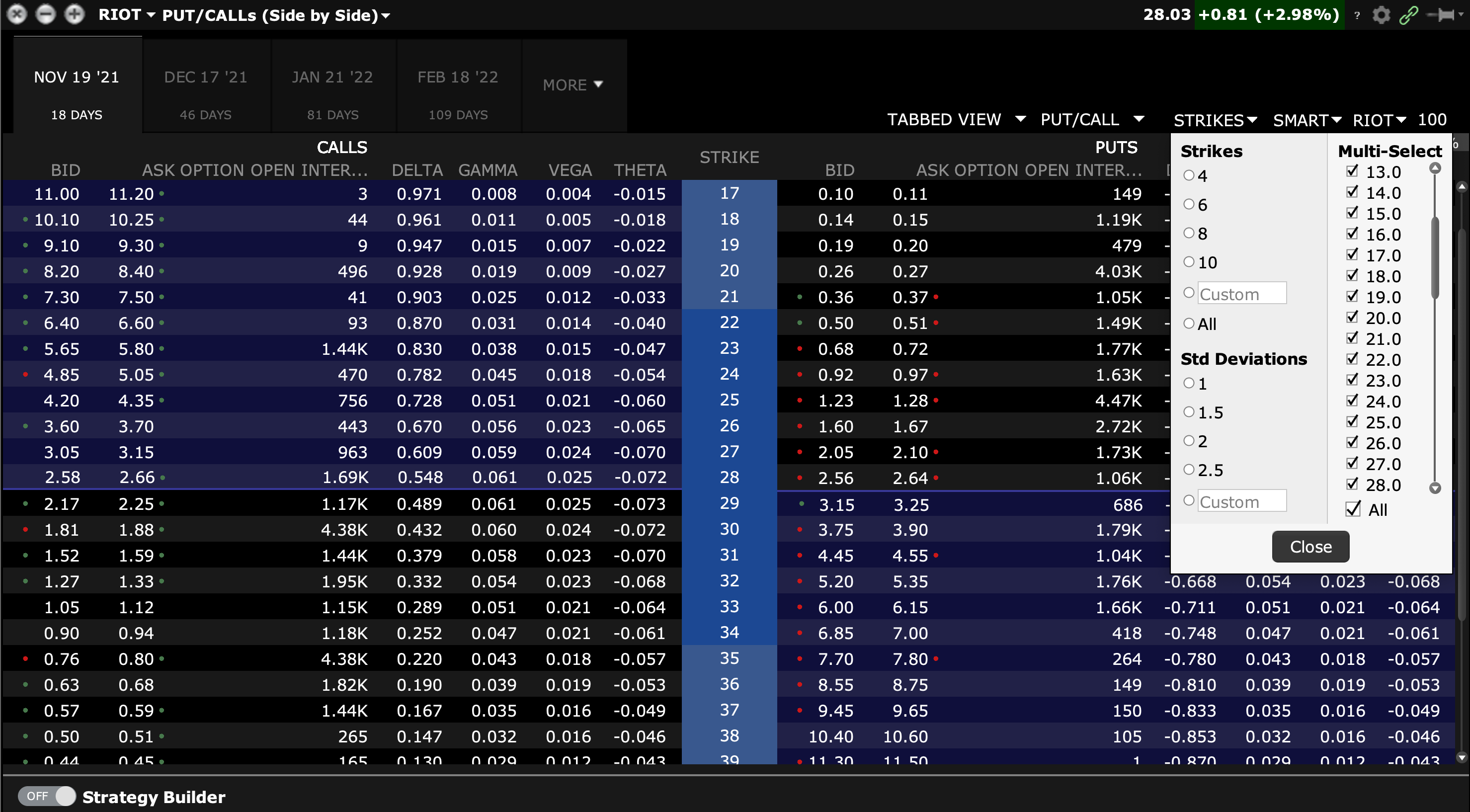
An AMD options chain is a real-time, comprehensive table displaying all available call and put option contracts for Advanced Micro Devices (AMD) stock. It lists expiration dates, strike prices, premiums, and open interest for various derivatives. By analyzing this data, investors can evaluate market sentiment, hedge existing stock positions, or execute speculative strategies based on projected volatility.
Understanding the Structure of an Options Chain
To effectively use an options chain for a highly liquid ticker like AMD, you must first understand the anatomy of the interface provided by your brokerage platform. While layouts vary, almost every professional trading platform organizes these data points into a standardized grid.
The center of the chain usually contains the strike prices—the pre-determined price at which the underlying AMD shares can be bought or sold. Flanking these are the two primary sides of the market: Calls on the left and Puts on the right.
Key Components
- Expiration Dates: Options are time-decaying instruments. The chain is organized by weeks, months, and sometimes years (LEAPS). Selecting the correct expiration is critical to matching your investment horizon with your market thesis.
- Calls: A contract that gives the holder the right to buy 100 shares of AMD at the strike price. Traders typically buy these when they are bullish.
- Puts: A contract that gives the holder the right to sell 100 shares of AMD at the strike price. Traders buy these for downside protection or to profit from a price decline.
- The Bid-Ask Spread: The difference between the highest price a buyer is willing to pay (Bid) and the lowest price a seller is willing to accept (Ask). For a high-volume stock like AMD, these spreads are generally tight, which reduces transaction costs.
Why AMD Specifically? The Impact of Liquidity and Volatility
AMD is a staple in the semiconductor sector, characterized by high trading volume and significant price swings. These features make it a "trader’s favorite."
When you view the AMD options chain, you are observing the collective expectations of the institutional and retail market. Because AMD is often sensitive to macroeconomic news, semiconductor manufacturing cycles, and AI chip demand, the options chain acts as a barometer for market sentiment. High open interest—the number of contracts held by traders that have not yet been closed—at a specific strike price often indicates a "support" or "resistance" level that institutional players are watching closely.
Analyzing the Data: How to Read the Greeks and Volume
Beyond the price of the option (the premium), professional traders look at secondary metrics—often called "The Greeks"—to understand risk and probability.
- Delta: This indicates how much the option price will move for every $1 change in AMD stock. A Delta of 0.50 means the option price should move approximately $0.50 for every $1 movement in the stock.
- Gamma: This measures the rate of change in Delta. It is a vital metric for traders who want to understand how their exposure changes as the stock price approaches their strike price.
- Theta: This represents time decay. Options lose value as they approach expiration. Theta tells you how much value the option is expected to lose per day, which is a major factor for those selling options (writing) for income.
- Implied Volatility (IV): Perhaps the most important metric on the chain, IV represents the market’s forecast of a likely movement in AMD’s stock price. When IV is high, options are generally more expensive because the market expects a large move (often seen leading up to earnings reports).
Practical Steps to Reading an Options Chain
- Select Your Timeframe: Start by filtering the chain for the duration of your thesis. If you are day trading, look at "Weeklies." If you are hedging a long-term position, look at monthly or quarterly expirations.
- Locate the Money: Identify "In-the-Money" (ITM) options, which have intrinsic value, versus "Out-of-the-Money" (OTM) options, which consist entirely of "extrinsic" or time value.
- Evaluate Liquidity: Look at the Open Interest and Volume. High volume suggests that many traders are currently interested in that specific strike and expiration, making it easier to enter and exit the position without incurring high slippage.
- Check the Bid-Ask Spread: Avoid contracts with wide spreads. If the bid is $2.00 and the ask is $3.00, you are paying a significant "tax" just to enter the trade.
Comparison Table: Options Strategy Scenarios for AMD
| Scenario | Strategy | Action | Goal |
|---|---|---|---|
| Bullish (Conservative) | Covered Call | Own 100 shares, Sell Call | Income generation |
| Bullish (Aggressive) | Long Call | Buy Call | Leverage/Capital gains |
| Bearish (Hedge) | Protective Put | Own shares, Buy Put | Downside risk protection |
| Neutral/Volatile | Iron Condor | Sell Put/Call Spread | Profit from lack of movement |
Common Mistakes to Avoid
The most frequent error for beginners is ignoring the "Greeks" and buying options simply because they are "cheap." Cheap options (low premium) are usually cheap for a reason—they are far out-of-the-money and have a very low probability of expiring in-the-money.
Another mistake is failing to account for earnings announcements. AMD stock often experiences a "volatility crush" immediately following an earnings release. If you purchase an option right before earnings, the Implied Volatility will likely collapse once the news is out, causing your option’s value to plummet even if the stock price moves in your favor.
FAQ: Navigating AMD Options
Q: Does buying an option mean I own AMD stock? A: No. An option is a contract that gives you the right to buy or sell the stock. You only own the underlying shares if you exercise the option (which is rare for retail traders) or if you are assigned shares when selling options.
Q: What is the minimum capital required to trade AMD options? A: The capital required depends on the strategy. Buying a single long call might cost a few hundred dollars, while selling "naked" puts requires a margin account and significant collateral to cover the potential purchase of 100 shares.
Q: How do I know which strike price to choose? A: This depends on your risk tolerance. An In-the-Money (ITM) option acts more like the actual stock (higher Delta), while an Out-of-the-Money (OTM) option is cheaper but carries a higher risk of expiring worthless.
Q: Can I trade AMD options outside of regular market hours? A: Most standard options only trade during the primary market session (9:30 AM to 4:00 PM ET). While some brokerages offer limited extended-hours trading, liquidity is generally much lower, and spreads are wider, which increases your risk.
Q: Is trading options considered gambling? A: When approached without a plan, it is highly speculative. However, when used as a systematic tool for hedging or income, it is a mathematical application of risk management. Always treat options as professional instruments rather than lottery tickets.
Next Steps and Professional Guidance
Before executing your first trade, use a "paper trading" account. Most reputable brokerage platforms allow you to trade with virtual money using live market data. This allows you to practice interpreting the AMD options chain without risking real capital.
If you are new to the derivative markets, consider focusing on simpler strategies like "covered calls" rather than buying speculative naked options. Remember that trading options involves significant risk, including the total loss of the premium paid. Consult with a qualified financial advisor to ensure that options trading aligns with your overall investment goals and risk profile.