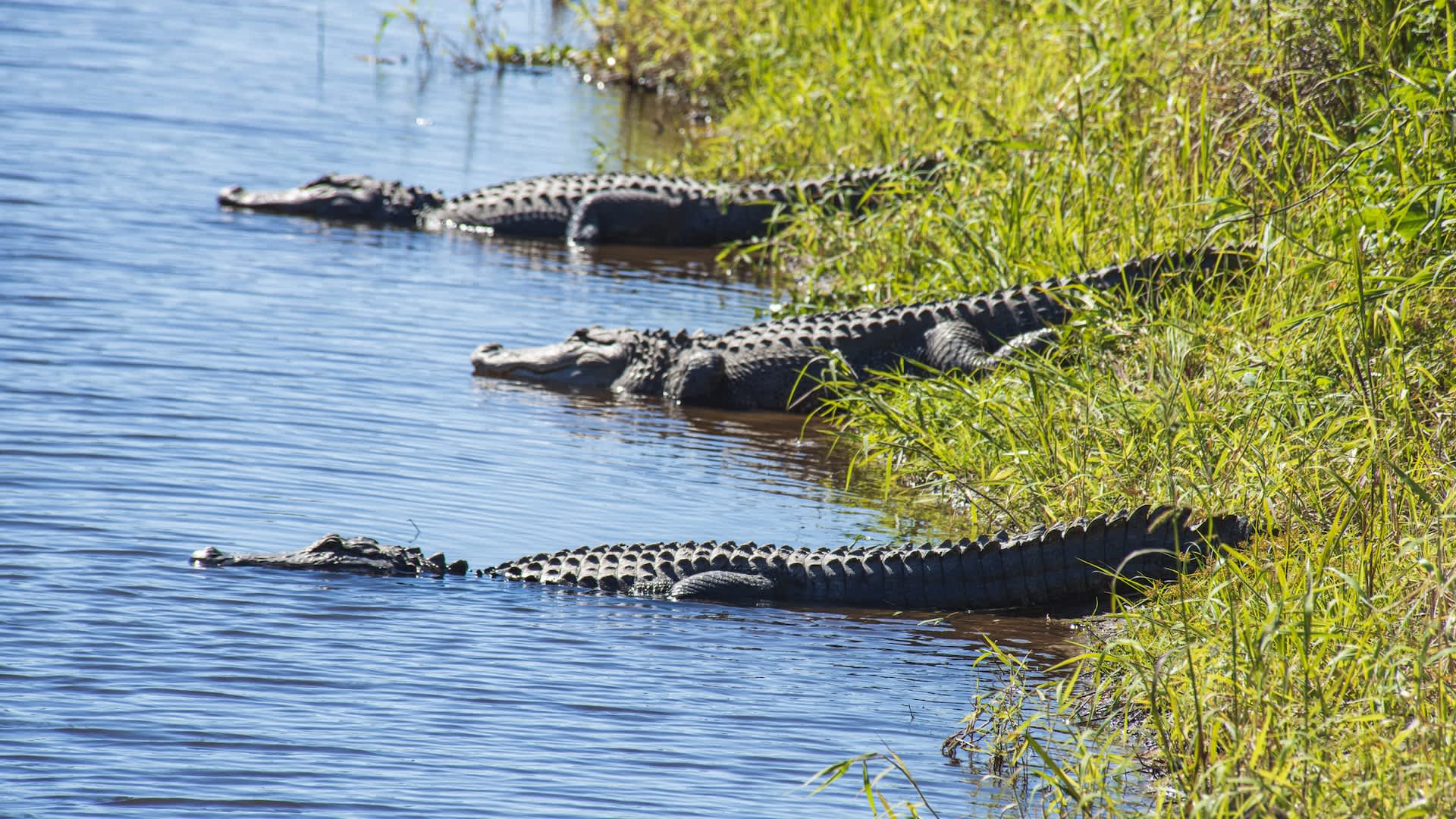
Yes, American alligators are permanent residents of Calaveras Lake in San Antonio, Texas. As a cooling reservoir for local power plants, the lake’s consistently warm water provides an ideal year-round habitat. While sightings are common in the reeds and remote coves, these reptiles are generally shy and avoid human interaction unless provoked or fed.
The Presence of Alligators in Calaveras Lake
Calaveras Lake, located approximately 20 miles southeast of downtown San Antonio, is well-known among anglers for its red drum and catfish. However, it is also a significant habitat for the American Alligator (Alligator mississippiensis). While many visitors are surprised to find these large reptiles so close to a major metropolitan area, they have been part of the local ecosystem for decades.
The population in Calaveras Lake is stable and managed by the Texas Parks and Wildlife Department (TPWD) in conjunction with CPS Energy, which owns the land. Because the lake serves as a cooling reservoir for the Spruce and J.K. Sommers power plants, the water temperatures remain higher than in natural lakes throughout the year. This "thermal enrichment" creates a microclimate where alligators can remain active longer into the autumn and emerge earlier in the spring compared to populations in other parts of Texas.
Why Calaveras Lake is an Ideal Habitat
The lake offers several key features that support a healthy alligator population:
- Thermal Regulation: Alligators are ectothermic, meaning they rely on external heat sources. The warm water discharge from the power plants prevents the lake from reaching the near-freezing temperatures that typically force alligators into deep brumation (a state of dormancy).
- Abundant Food Sources: The lake is stocked heavily with fish, including tilapia, shad, and carp. These provide a high-protein diet for alligators of all sizes.
- Cover and Nesting Grounds: The shoreline of Calaveras Lake is characterized by dense stands of reeds, cattails, and brush. These areas provide the necessary seclusion for nesting and for juveniles to hide from predators, including larger alligators and birds of prey.
Understanding Alligator Behavior in South Central Texas
As we move through 2026, wildlife biologists continue to monitor the interaction between urban expansion and native wildlife. Alligators in Calaveras Lake generally follow a predictable behavioral pattern. Understanding this cycle is essential for any visitor planning to spend time on the water.
Seasonal Activity Cycles
In the spring (typically late March through May), alligators become much more mobile and visible as they enter their mating season. During this time, males may travel longer distances and can be heard "bellowing"—a low-frequency sound used to attract mates and establish territory.
By mid-summer, females are focused on nesting. They build mounds of vegetation near the water's edge. It is crucial for visitors to stay away from these mounds, as mother alligators are highly protective of their eggs. In the fall, activity slows down, and by winter, sightings become rare as the reptiles retreat into dens or deeper water, even with the warmer temperatures provided by the power plant.
The "Nuisance Alligator" Classification
A common question among San Antonio residents is whether an alligator sighting warrants a call to authorities. According to the Texas Parks and Wildlife Department, an alligator is only considered a "nuisance" if it is:
- Approaching humans repeatedly.
- Located in a place where it cannot easily return to its habitat (such as a parking lot or residential backyard).
- Consistently visible in an area where people swim or launch boats, showing no fear of human presence.
If an alligator is simply basking on a bank or swimming in a cove, it is behaving naturally and does not require intervention.
Safety Guidelines for Lake Visitors and Anglers
Safety is the primary concern for the thousands of people who visit Calaveras Lake Park annually. While there have been no recorded fatal alligator attacks at Calaveras Lake, maintaining a respectful distance is the most effective way to ensure this record continues.
Boating and Kayaking
Kayakers and canoers are more vulnerable than those in large motorized boats because of their low profile in the water. If you encounter an alligator while paddling:
- Maintain a distance of at least 30 feet. If the alligator hisses or moves toward you, you are too close.
- Do not corner the animal. Always ensure the alligator has a clear path to retreat into deeper water.
- Avoid paddling through dense reeds. These are primary nesting and resting areas where an alligator might be surprised.
Fishing Safety
Anglers often share the same shoreline areas that alligators use for hunting. To stay safe:
- Do not clean fish at the water’s edge. Tossing fish remains into the water can habituate alligators to associate humans with food. This is the leading cause of alligators becoming "nuisance" animals.
- Retrieve your catch quickly. An alligator may be attracted to the splashing of a hooked fish. If an alligator moves toward your line, cut the line rather than trying to "fight" the animal for the fish.
- Keep pets on a short leash. Small dogs are frequently targeted by alligators because they resemble natural prey like raccoons or nutria. Never allow your pet to swim in Calaveras Lake.
Swimming Precautions
Swimming is only permitted in designated areas at Calaveras Lake. These areas are typically monitored and are less likely to have heavy vegetation. However, always scan the water before entering. Avoid swimming at dusk or dawn, as these are the primary feeding times for alligators.
Legal Regulations and Protections
In Texas, the American Alligator is a protected species. It is subject to strict harvesting regulations under the state's wildlife code.
| Category | Regulation Summary |
|---|---|
| Hunting | Only allowed during specific seasons (typically September) and requires a formal tag and permit. |
| Feeding | Illegal. Feeding an alligator in Texas is a Class C misdemeanor, punishable by fines. |
| Harassment | It is illegal to throw objects at, poke, or otherwise disturb an alligator in its natural habitat. |
| Removal | Only TPWD-contracted "Nuisance Alligator Control Hunters" are authorized to remove and relocate animals. |
Feeding alligators is particularly dangerous because it removes their natural fear of humans. Once an alligator learns that humans provide food, it will begin to approach docks, boats, and shorelines. In almost all cases, an alligator that has been fed must be euthanized because it can no longer safely coexist with people.
Managing the Human-Wildlife Interface in 2026
As San Antonio continues to grow, the pressure on natural spaces like Calaveras Lake increases. The 2026 management guidelines emphasize coexistence. The presence of alligators is actually a sign of a healthy, functioning ecosystem. As apex predators, they help control the populations of rough fish and other small mammals, maintaining a balance that benefits the overall water quality and biodiversity of the reservoir.
The CPS Energy management team and the Thousand Trails (who often manage the park facilities) work to provide signage in high-traffic areas. These signs are not meant to cause alarm but to remind visitors that they are entering a multi-use wildlife habitat.
What to Do During an Encounter
If you find yourself in close proximity to an alligator:
- Back away slowly. Do not run or make sudden, jerky movements.
- Keep your eyes on the animal. Do not turn your back until you are at a safe distance (at least 50-60 feet).
- If it charges: Run in a straight line away from the water. The myth about running in a "zigzag" pattern is inefficient; alligators are fast in short bursts but tire quickly on land. Running straight and fast is the best defense.
- If it bites: Alligators have immense crushing power but a relatively weak "opening" muscle. If attacked, strike the animal's sensitive snout or gouge the eyes to force a release.
Comparison: Calaveras Lake vs. Braunig Lake
Many locals compare Calaveras to its "twin" lake, Victor Braunig Lake. Both are cooling reservoirs and both contain alligators. However, Calaveras is significantly larger (3,624 acres compared to Braunig's 1,350 acres). Because Calaveras has more extensive shoreline and "backwater" areas, the alligator population tends to be more dispersed and slightly larger in number.
Braunig Lake sightings are more frequent near the boat ramps and the dam, whereas Calaveras sightings are often reported in the northern "fingers" of the lake where the water is shallower and the vegetation is thicker.
Common Misconceptions About San Antonio Alligators
Myth 1: The alligators were "put there" by the government to keep people from swimming. This is a common urban legend. Alligators are native to the river basins of Texas. They migrated to the lake naturally through the San Antonio River and its tributaries or were present in the creek beds before the lake was dammed in 1969.
Myth 2: Alligators in Calaveras Lake are "over-sized" due to the power plant. While the warm water allows them to grow year-round (since they don't stop eating in the winter), they are not "mutated" or unnaturally large. A 10-to-12-foot alligator is considered large for this area, which is consistent with the species across the southeastern United States.
Myth 3: They are aggressive toward boats. Alligators are generally terrified of outboard motors. The vibration and noise usually send them underwater long before the boat reaches them. Most "aggression" reported by boaters is actually a startled alligator trying to get to deeper water.
Frequently Asked Questions
Can you swim in Calaveras Lake despite the alligators?
Yes, you can swim in the designated swimming areas. These areas are selected because they have clear shorelines and higher human activity, which naturally deters alligators. However, swimming is always "at your own risk" in any Texas lake containing wildlife.
Who should I call if I see a large alligator near the boat ramp?
If the alligator is not acting aggressively, you do not need to call anyone. If it is blocking access or acting boldly, contact the Calaveras Lake park office or the TPWD regional office in San Antonio. Do not attempt to move the animal yourself.
Do alligators in Calaveras Lake eat the Red Drum?
Yes, they do eat fish, including the prized Red Drum. However, the impact on the fish population is negligible compared to the thousands of pounds of fish harvested by anglers every year. They primarily target slower-moving rough fish like carp and tilapia.
Are the alligators active at night?
Alligators are nocturnal hunters. Their eyes are specially adapted to see in low light, and they are most active between dusk and dawn. If you are camping or night-fishing, be extra vigilant and use a strong flashlight to scan the shoreline; their eyes will reflect a bright orange or red glow.
Is it safe to take a small child to Calaveras Lake?
It is safe as long as the child is closely supervised. Children should not be allowed to play at the very edge of the water in areas with tall grass or murky water. Treat the lake with the same respect you would any wild environment.
Final Recommendations for Visitors
When visiting Calaveras Lake in 2026, the best approach is one of informed coexistence. The alligators are a fascinating part of the Texas landscape and seeing one from a distance can be a highlight of a trip.
To ensure a safe visit, always carry a cell phone to report any unusual wildlife behavior to the park headquarters. If you are fishing, maintain a clean site and dispose of all bait and fish remains in the provided receptacles. By following these simple steps, you can enjoy the premier fishing and recreation that Calaveras Lake offers while respecting the native predators that call it home.