Sir Alec Guinness, the legendary British actor known for his transformative roles in "The Bridge on the River Kwai" and as Obi-Wan Kenobi in "Star Wars," had no biological or legal connection to the Guinness brewing family. Despite sharing the famous surname, his birth was marked by mystery, and the name "Guinness" was bestowed upon him by his mother under circumstances that remain a subject of historical speculation rather than genealogical fact.
For decades, fans of both cinema and the world-famous Irish stout have wondered if the man who brought such gravitas to the screen was a scion of the wealthy brewing dynasty. The confusion is understandable; the name Guinness is synonymous with a specific kind of prestige and British-Irish heritage. However, tracing the roots of Alec Guinness reveals a story not of inherited wealth and industrial power, but of an uncertain identity, a difficult childhood, and a self-made path to greatness. As of 2026, biographical research and public records have solidified the consensus that any link between the actor and the brewers is purely coincidental.
The Mystery of Alec Guinness’s Parentage
To understand the lack of a connection, one must look at the birth of Alec Guinness on April 2, 1914. He was born at 155 Lauderdale Mansions West, Maida Vale, London. On his birth certificate, his name was recorded as Alec Guinness de Cuffe. Crucially, the space for the father's name was left blank. This omission was the catalyst for a lifetime of speculation regarding his true lineage.
His mother, Agnes de Cuffe, was a woman whose life was often described as chaotic. The "de Cuffe" portion of the name was an affectation she had adopted, likely to suggest a higher social standing than she actually possessed. At the time of Alec's birth, she was unmarried, and the social stigma of "illegitimacy" in early 20th-century Britain was severe. This environment of secrecy and social aspiration likely influenced the naming of her son.
The Identity of Andrew Geddes
While the Guinness family was never a realistic candidate for his paternity, Alec himself spent much of his life believing his father was a man named Andrew Geddes. Geddes was a wealthy Scottish banker who provided for Alec’s education at Pembroke Lodge in Southbourne and Roborough School in Eastbourne.
Geddes occasionally visited the young Alec, posing as an "uncle." These visits were infrequent and often awkward, yet the financial support was consistent. The presence of a benefactor from the financial sector—rather than the brewing industry—further distances the actor from the Dublin-based Guinness clan. Alec Guinness’s autobiography, Blessings in Disguise, reflects on these early years with a mixture of curiosity and detachment, noting that he never felt a true sense of belonging to any established family tree.
The Origins of the Guinness Brewing Dynasty
To contrast the actor's humble and mysterious beginnings, it is helpful to examine the established history of the Guinness family. The brewing dynasty began with Arthur Guinness, who started brewing ales in Leixlip, County Kildare, before moving to the famous St. James's Gate Brewery in Dublin in 1759.
The Guinness family became one of the "Ascendancy" families in Ireland—Protestant gentry who held significant political and economic power. By the 19th and 20th ages, they were philanthropists, politicians, and peers of the realm (the Earls of Iveagh). Their family tree is meticulously documented, with branches extending into various aristocratic circles. At no point in the extensive genealogical records of the descendants of Arthur Guinness does an Agnes de Cuffe or an Alec Guinness appear.
Comparing the Two Lineages
The following table highlights the distinct differences between the historical Guinness brewing family and the personal history of Sir Alec Guinness.
| Feature | The Guinness Brewing Family | Sir Alec Guinness |
|---|---|---|
| Origin Point | Dublin, Ireland (1759) | London, England (1914) |
| Primary Figures | Arthur Guinness, Benjamin Guinness, Lord Iveagh | Agnes de Cuffe, Andrew Geddes (suspected) |
| Social Standing | Aristocracy, Industrialists, Peers | Working/Middle Class (self-made) |
| Documented History | Extensive genealogical records since the 1700s | Birth certificate with blank father's name |
| Key Legacy | Guinness Stout, St. James's Gate, Philanthropy | Classical Theatre, Ealing Comedies, Star Wars |
| Religious Background | Traditionally Church of Ireland (Protestant) | Converted to Roman Catholicism (1956) |
Why the Rumor of a Connection Persists
The persistence of the "Guinness connection" rumor can be attributed to several factors. In the mid-20th century, both Alec Guinness and the Guinness brewery were at the height of their global fame. For a public used to the idea of "old money" and hereditary talent, it was easy to assume that a man as refined and talented as Alec Guinness must have come from a family of similar stature.
Furthermore, the name "Guinness" is relatively rare in the English-speaking world outside of the specific context of the brewing family. Unlike common surnames like Smith or Jones, Guinness carries a specific brand identity. When Alec became a household name, the mental leap for many fans was short: Alec Guinness must be one of those Guinnesses.
The Power of a Stage Name vs. a Birth Name
It is important to note that Alec did not choose "Guinness" as a stage name to capitalize on the brewery's fame. It was the name given to him at birth. There is some speculation among biographers that Agnes de Cuffe may have chosen the name because of a brief association with a man named Guinness, or perhaps simply because she liked the sound of it and the prestige it implied. In the world of 1914 London, names were often used as tools for social mobility, and Agnes was known for her imaginative approach to reality.
Alec Guinness’s Professional Rise and Public Image
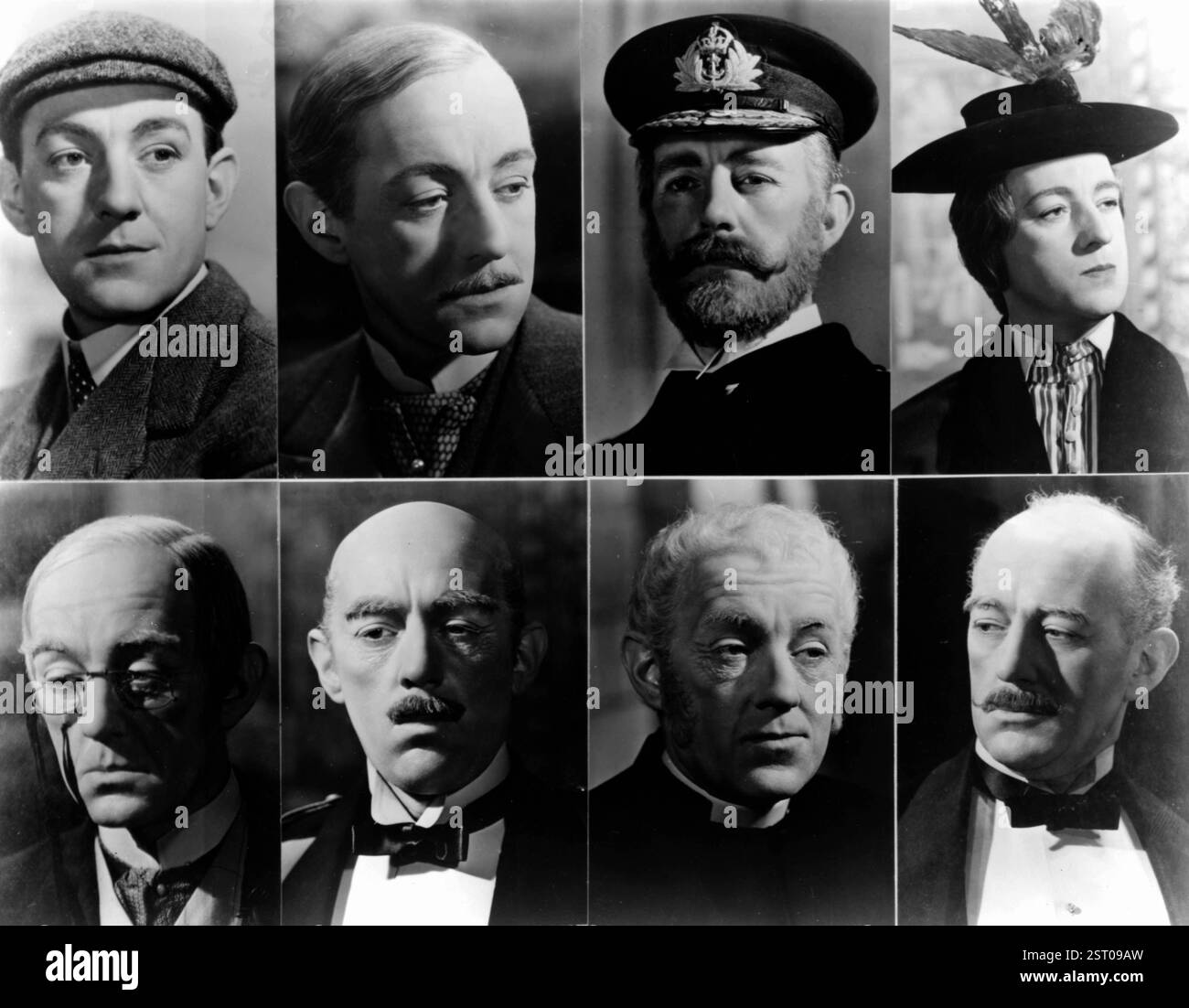
Alec Guinness’s career began in the theater, where he was mentored by the likes of John Gielgud. His ability to vanish into roles—often playing multiple characters in a single film, as he did in the 1949 classic "Kind Hearts and Coronets"—defined his professional life. This "chameleon" quality perhaps mirrored his personal life; a man without a clear paternal identity was uniquely suited to adopting the identities of others.
By the time he achieved international stardom, Guinness was the epitome of the English gentleman. His demeanor was modest, his private life was largely kept out of the tabloids, and he possessed a dry, understated wit. This persona fit perfectly with the image of an aristocrat, further fueling the fire of the brewing family rumors. However, Guinness never claimed the connection himself. In fact, he was often amused by the suggestion, though he remained protective of his privacy and the somewhat painful details of his upbringing.
Impact of the Name on His Career
While he was not related to the brewers, having a famous name certainly did not hurt. The name Guinness was easy to remember and sounded authoritative. However, Alec’s success was entirely meritocratic. He won an Academy Award for Best Actor for his role as Colonel Nicholson in "The Bridge on the River Kwai" (1957) and received an Honorary Oscar in 1980 for his contributions to the art of film. These accolades were the result of his dedication to the craft of acting, not any family influence or "stout" money.
The Search for Truth in the 21st Century
With the advent of digital archives and the widespread availability of genealogical records in the 2020s, the mystery of Alec Guinness's ancestry has been more thoroughly scrutinized than ever before. Bio-historians have scoured the Guinness family archives in Dublin and London, and no link has been found.
Moreover, the actor's own journals and letters, many of which have been analyzed by biographers like Piers Paul Read, indicate a man who was deeply aware of his "outsider" status. Guinness’s conversion to Roman Catholicism in 1956 was a pivotal moment in his life, providing him with a sense of spiritual "family" and belonging that he felt he lacked in his biological lineage.
DNA Testing and Modern Genealogy
While there has been no public DNA comparison between the descendants of Sir Alec Guinness and the descendants of Arthur Guinness, the documentary evidence is considered sufficient by most historians to close the case. The "Guinness" in Alec's name is categorized as a "given surname" by his mother, rather than an inherited one. This distinction is vital for genealogists: it represents a break in the traditional patrilineal line.
Frequently Asked Questions
Was Alec Guinness Irish?
No, Alec Guinness was born in London and was of English descent through his mother, Agnes de Cuffe. While the Guinness brewing family is famously Irish, Alec's upbringing and cultural identity were entirely British. He did, however, have a great affection for Ireland and visited frequently, but this was a personal preference rather than a return to ancestral roots.
Did Alec Guinness inherit any money from the Guinness brewery?
No. Alec Guinness never received any inheritance, trust fund, or financial support from the Guinness family or the brewery. His education was paid for by Andrew Geddes, a Scottish banker who is widely believed to have been his biological father. His later wealth was entirely the result of his successful career in theater and film, including a very lucrative percentage-of-the-gross deal for "Star Wars."
Why did his mother name him Guinness?
The exact reason remains unconfirmed. Some biographers suggest Agnes de Cuffe may have had a short-lived affair with a man named Guinness, while others believe she chose the name because it sounded prestigious and would provide her son with a more "solid" identity than her own surname, de Cuffe, which she had also altered.
Did Alec Guinness ever meet the Guinness brewing family?
There are no official records of Alec Guinness having a formal relationship or meeting with the senior members of the Guinness brewing family in a capacity that suggested kinship. As a high-profile actor, he moved in similar social circles to the British elite, but he was never treated as a member of the Guinness dynasty.
Is there any relation between Alec Guinness and the actress Marita Guinness?
No. Any other actors or public figures with the surname Guinness who are related to the brewing family (such as those from the Iveagh line) have no biological connection to Sir Alec Guinness. The surname remains the only commonality.
Conclusion and Final Assessment
The "connection" between Alec Guinness and the Guinness family is a classic example of a "name-only" association that evolved into a persistent urban myth. The facts of his life, from his birth in Maida Vale to his education funded by Andrew Geddes, point to a man who had to navigate the complexities of an uncertain heritage.
Sir Alec Guinness’s legacy is built on his extraordinary talent and his ability to command the screen, not on the foundations of a brewing empire. For those researching his life or the history of the Guinness family in 2026, the distinction is clear: one represents a pinnacle of cinematic art, and the other a pinnacle of industrial history. They are two separate British-Irish icons that happen to share a single, storied name.