Air Kim, formally known as Chammae-1, is the primary long-range presidential aircraft used by Kim Jong Un, the Supreme Leader of North Korea. It is a highly modified, Soviet-era Ilyushin Il-62M jet. Named after the goshawk—North Korea's national bird—the aircraft serves as a mobile command center and a symbol of national sovereignty during high-profile international summits and domestic inspections.
The Evolution of North Korean Leadership Travel
To understand the significance of Air Kim, one must look at the historical shift in how North Korean leaders have approached travel. For decades, the global image of North Korean leadership movement was defined by the armored train. Kim Il Sung and particularly Kim Jong Il were known for their deep-seated aversion to flying, preferring the security and control of heavily fortified rail cars. Kim Jong Il’s reliance on trains was so absolute that it dictated the logistics of his visits to China and Russia, often requiring weeks of preparation and specialized track clearance.
With the ascension of Kim Jong Un, this paradigm shifted significantly. As of 2026, Air Kim remains the most visible manifestation of Kim Jong Un’s desire to project the image of a modern, international statesman. Unlike his father, Kim Jong Un is a licensed pilot and has frequently been photographed at the controls of various aircraft. This personal interest in aviation catalyzed the modernization of the state’s VIP fleet. The "Air Kim" moniker, while unofficial and largely used by international media and aviation enthusiasts, encapsulates this transition from the secretive, earth-bound travels of the past to the high-profile aerial diplomacy seen in recent years.
The introduction of Chammae-1 into the regular diplomatic rotation was a deliberate move to align North Korea with other global powers. In the world of international relations, a dedicated presidential aircraft—comparable to the United States' Air Force One or Russia's Il-96-300PU—serves as a flying embassy. By utilizing the Il-62M, the North Korean regime asserts its technological capabilities and its status as a nuclear-armed state that commands a presence on the world stage.
Technical Specifications: Inside the Ilyushin Il-62M
The airframe underpinning Air Kim is the Ilyushin Il-62M, a classic Soviet long-range narrow-body jet. First introduced in the late 1960s and refined in the 1970s, the Il-62 was the Soviet Union's first dedicated long-range jetliner, designed to compete with the Douglas DC-8 and the Boeing 707.
The Il-62M is characterized by its distinctive "T-tail" design and four rear-mounted Soloviev D-30KU engines. This configuration was favored in the Soviet era because it kept the wings "clean" for better aerodynamic efficiency and reduced cabin noise, though it presented unique challenges for weight and balance.
Core Performance Data
The following specifications represent the standard Il-62M platform, though Air Kim features several undisclosed modifications:
- Engines: Four Soloviev D-30KU turbofans, each producing approximately 24,250 lbs of thrust.
- Maximum Takeoff Weight (MTOW): 165,000 kg (approx. 363,760 lbs).
- Wingspan: 43.20 meters (141 feet 9 inches).
- Length: 53.12 meters (174 feet 3 inches).
- Service Ceiling: 12,000 meters (approx. 39,400 feet).
- Cruising Speed: 820–870 km/h (approx. 510–540 mph).
In terms of range, a standard Il-62M can travel roughly 10,000 kilometers with a full fuel load but reduced passenger weight. However, for a head-of-state aircraft, the operational range is often shorter due to the weight of specialized communication equipment, defensive suites, and the necessity of maintaining significant fuel reserves for safety. This range limitation became a major point of discussion during the 2018 Singapore Summit, as the distance from Pyongyang to Singapore (roughly 4,700 km) was near the edge of the aircraft's comfortable "fail-safe" range over water.
Luxury and Modifications: A Flying Command Center
While the exterior of Air Kim maintains a relatively austere appearance—white paint with the North Korean flag on the tail and "Democratic People’s Republic of Korea" written in Korean on the fuselage—the interior is a vastly different world. State media photos have provided glimpses into a cabin designed for both high-level governance and personal comfort.
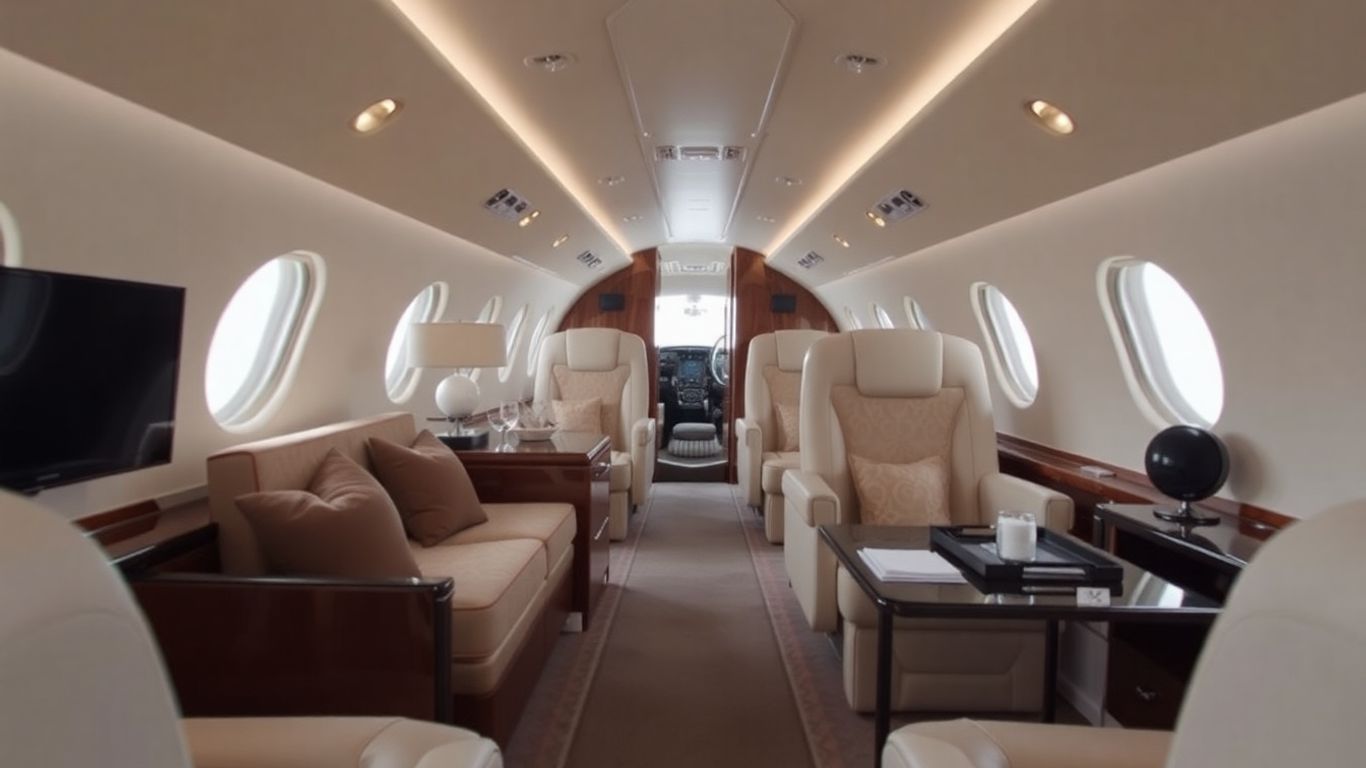
The interior is characterized by a "retro-luxury" aesthetic. It features polished wood paneling, plush white leather armchairs, and high-gloss executive tables. Unlike the high-density seating of its Air Koryo counterparts, Air Kim is configured with a spacious office for the leader, a conference area for senior military and political officials, and a dedicated communications hub.
Communication and Security Features
Modern presidential aircraft are essentially mobile bunkers. While the specific electronic warfare suites on Air Kim are state secrets, analysts from organizations like 38 North have noted several external antennas and fairings that suggest upgraded satellite communication (SATCOM) capabilities. These systems allow the leader to remain in constant contact with the military command in Pyongyang, ensuring that the "nuclear button" is always within reach.
Defensive measures likely include flare and chaff dispensers to counter infrared-guided missiles. Furthermore, the aircraft is almost always escorted by North Korean Air Force MiG-29s when flying within domestic airspace or near sensitive borders. These escorts serve both as protection and as a ceremonial display of military power.
The Chammae-1 Fleet: Primary and Secondary Aircraft
It is a common misconception that there is only one "Air Kim." The North Korean VIP fleet actually consists of at least two Il-62Ms maintained for the leader’s use.
- The Primary Chammae-1: This is the most modern of the pair, featuring the most recent interior refurbishments and communication upgrades. It is the plane used for the majority of Kim Jong Un's publicized flights.
- The Backup/Decoy: A second Il-62M often accompanies the primary aircraft on international trips. This serves two purposes: providing an immediate replacement in the event of a mechanical failure and acting as a decoy to confuse potential adversaries regarding the leader's exact location.
In addition to the Ilyushin jets, the VIP fleet includes several smaller aircraft for shorter domestic hops, such as the Antonov An-148. The An-148 is a much newer regional jet, and Kim Jong Un has been seen piloting this specific model. However, for international diplomacy, the Il-62M remains the preferred choice due to its size, prestige, and range.
International Missions and Operational Challenges
The operational history of Air Kim is a timeline of North Korea’s shifting foreign policy. Its most significant outings occurred between 2018 and 2024, during summits with leaders from China, Russia, and the United States.
The Singapore and Hanoi Summits
The 2018 Singapore Summit presented a unique logistical challenge. Despite the prestige of Chammae-1, the North Korean delegation opted to charter a Boeing 747-400 from Air China for Kim Jong Un’s transport to Singapore. This decision was widely interpreted by aviation experts as a safety precaution. Given the age of the Il-62M airframe and the lack of intermediate landing strips over the South China Sea, the risk of a mechanical failure was deemed too high for the Supreme Leader.
However, Chammae-1 did fly to Singapore carrying Kim’s sister, Kim Yo Jong, and other high-ranking officials. This allowed the regime to maintain face by showing the national aircraft at Changi Airport while ensuring the leader’s safety on a more modern, Western-built jet. By the time of the Hanoi Summit in 2019, Kim Jong Un reverted to using his armored train for the majority of the journey through China, though Air Kim was used for preparatory logistics.
Maintenance and the Impact of Sanctions
Operating a fleet of aging Soviet jets in 2026 is a monumental task, especially under the weight of international sanctions. United Nations Security Council resolutions strictly prohibit the sale of aviation fuel, spare parts, and new aircraft to North Korea. This has forced the regime into a sophisticated game of "aviation cannibalization."
Air Koryo, the national carrier, operates a small fleet of Il-62s, Tu-154s, and Tu-204s. It is widely understood that the best-maintained engines and the newest spare parts are diverted from the commercial fleet to support Air Kim. This prioritization ensures that the presidential aircraft remains in peak condition, but it has led to the gradual degradation of the commercial airline's reliability and safety standards.
Furthermore, North Korean technicians have become experts in reverse-engineering components. While they cannot easily source modern Honeywell or Garmin avionics on the open market, they have integrated third-party hardware sourced through clandestine networks to keep the Il-62M’s navigation systems compliant with international flight standards.
Comparison Table: Head-of-State Aircraft
To put Air Kim’s capabilities into perspective, it is helpful to compare it against the primary aircraft used by other major world powers as of 2026.
| Feature | Chammae-1 (North Korea) | Air Force One / VC-25B (USA) | Il-96-300PU (Russia) |
|---|---|---|---|
| Base Model | Ilyushin Il-62M | Boeing 747-8i | Ilyushin Il-96-300 |
| Year of Entry (Current Var.) | ~1980s (Refurbished 2014) | 2024-2026 (Transitioning) | ~2003 (Regularly Updated) |
| Engines | 4x Soloviev D-30KU | 4x GEnx-2B | 4x Aviadvigatel PS-90A |
| Max Range | ~10,000 km | ~14,300 km (Refuelable) | ~11,500 km |
| Passenger Capacity (VIP) | ~20-40 | ~70-100 | ~50 |
| Length | 53.12 meters | 76.3 meters | 55.3 meters |
| Primary Advantage | Symbolic Sovereignty | Global Reach & Command | Robust Soviet/Russian Design |
Security Protocols and Flight Logistics
When Air Kim prepares for a flight, the logistics are exhaustive. Flight paths are carefully negotiated months in advance with relevant civil aviation authorities, particularly when crossing Chinese or Russian airspace. Because North Korea is technically at war with South Korea, Air Kim never enters the Incheon Flight Information Region (FIR), instead taking circuitous routes to avoid sensitive zones.
On the ground, security is absolute. Wherever Air Kim lands, a team of North Korean security personnel takes over the immediate perimeter of the aircraft. They handle everything from refueling to food preparation to ensure that no foreign agent can compromise the aircraft or the leader’s health. In some instances, North Korean cargo planes (Ilyushin Il-76s) arrive days in advance, carrying the leader's armored limousine and specialized communication equipment to be used at the destination.
Frequently Asked Questions
Is Air Kim safe to fly?
While the Il-62M is an aging platform, Air Kim is the best-maintained aircraft in North Korea. It undergoes rigorous inspections that far exceed the standards of the commercial Air Koryo fleet. However, compared to modern Western jets like the Boeing 787 or Airbus A350, it lacks the redundant safety systems and fuel efficiency of 21st-century aviation. Its safety is largely dependent on the skill of its elite pilots and the cannibalization of parts from other aircraft.
Can Air Kim fly to the United States?
Technically, the Il-62M has the range to reach Alaska or Hawaii from Pyongyang with favorable winds. However, it cannot reach the contiguous United States without refueling. Furthermore, political and security restrictions would likely prevent the aircraft from entering U.S. airspace unless a specific diplomatic waiver was granted.
Who pilots Air Kim?
The aircraft is crewed by an elite unit of the Korean People's Army Air and Anti-Air Force. These pilots are the most experienced in the country, often with thousands of hours of flight time on Soviet-designed airframes. They undergo psychological screening and are considered some of the most loyal members of the military.
Why doesn't Kim Jong Un buy a newer plane?
International sanctions (specifically UN Resolution 2270 and subsequent updates) prohibit the sale of commercial aircraft to North Korea. This prevents the regime from legally purchasing modern Boeing or Airbus jets. While they could potentially acquire newer Russian aircraft like the Sukhoi Superjet or the Irkut MC-21, the Il-62M remains a preferred symbol of the "Golden Age" of North Korean-Soviet relations and provides a larger cabin space than most available regional alternatives.
What is the "Air Kim" livery?
The livery is clean and minimalist. It features a solid white fuselage with a thin blue and red cheatline running the length of the windows. The North Korean national emblem is featured prominently near the front door, and the tail fin displays a large red star inside a blue and white circle, the national insignia of the DPRK.
Practical Recommendation for Analysts and Observers
For those tracking North Korean diplomatic movements or military status, monitoring the activity of Chammae-1 is essential. Changes in the aircraft's maintenance schedule or its presence at Sunan International Airport (Pyongyang) often precede major state announcements or international travels.
If you are a journalist or a security analyst, use flight tracking services cautiously; while Air Kim occasionally operates its transponder in international airspace, it frequently goes "dark" to maintain operational security. Cross-referencing satellite imagery of the VIP terminals in Pyongyang with known diplomatic calendars remains the most reliable method for verifying the aircraft's status.