Allianz Global Corporate & Specialty (AGCS)—which integrates into Allianz Commercial—operates as a premier global carrier providing specialized corporate insurance, including an extensive portfolio of marine insurance solutions. Designed to address the complex, high-stakes risks associated with global trade, logistics, and maritime operations, AGCS marine insurance protects shipowners, cargo operators, terminal managers, and logistics service providers against catastrophic financial losses. Operating across major shipping hubs worldwide, the organization combines deep technical underwriting expertise with dedicated claims handling to support the international maritime sector.
Understanding AGCS and Its Position in Marine Insurance
Allianz Global Corporate & Specialty represents the corporate insurance segment of the broader Allianz Group, a financial services institution with a long history. In recent structural realignments, Allianz integrated AGCS alongside its national commercial insurance operations under the unified market-facing brand Allianz Commercial. Despite this branding evolution, the core legal entities, underwriting capabilities, risk engineering teams, and policy structures that define AGCS marine insurance remain fully intact and operational.
The marine insurance market requires immense financial capacity and localized regulatory compliance due to the borderless nature of maritime commerce. AGCS meets these demands by maintaining a global network spanning more than 200 countries and territories. This footprint allows the company to issue local policies that comply with domestic regulations while coordinating master cover programs for multinational corporations. By leveraging the financial strength of the Allianz Group, AGCS provides the high limits required for modern mega-ships, large-scale terminal operations, and complex multi-modal logistics chains.
Beyond traditional policy issuance, AGCS differentiates itself through specialized risk consulting and engineering services. Marine assets are exposed to continuous physical, meteorological, and geopolitical hazards. The insurer employs master mariners, naval architects, and cargo experts who conduct pre-risk surveys, evaluate loading procedures, and advise insured parties on loss prevention strategies. This proactive approach minimizes disruptions to supply chains and stabilizes loss ratios for commercial clients navigating volatile operating environments.
Core Marine Insurance Lines Offered by AGCS
The marine insurance portfolio managed by AGCS covers a diverse array of exposures, divided primarily into hull and machinery, cargo, liability, and specialized sectors. Each line of business is tailored to specific segments of the maritime and logistics industries, addressing distinct legal liabilities and physical damage risks.
Hull and Machinery (H&M) Insurance
Hull and machinery coverage protects shipowners and operators against physical damage to vessels, as well as specific collision liabilities and general average contributions. AGCS underwrites a broad spectrum of tonnage, including:
- Container Ships: Ultra-large container vessels operating on major trans-oceanic trade routes.
- Bulk Carriers and Tankers: Vessels transporting dry commodities, crude oil, refined products, and liquefied natural gas (LNG).
- Specialized Workboats: Tugs, barges, dredges, and offshore support vessels operating in coastal and deep-water environments.
Underwriters evaluate vessel age, classification society records, flag state performance, management track record, and trading areas when determining policy terms and premiums. The coverage frequently incorporates Institute Time Clauses or equivalent market-standard wordings, customized to address modern navigational technology and propulsion systems.
Cargo and Logistics Insurance
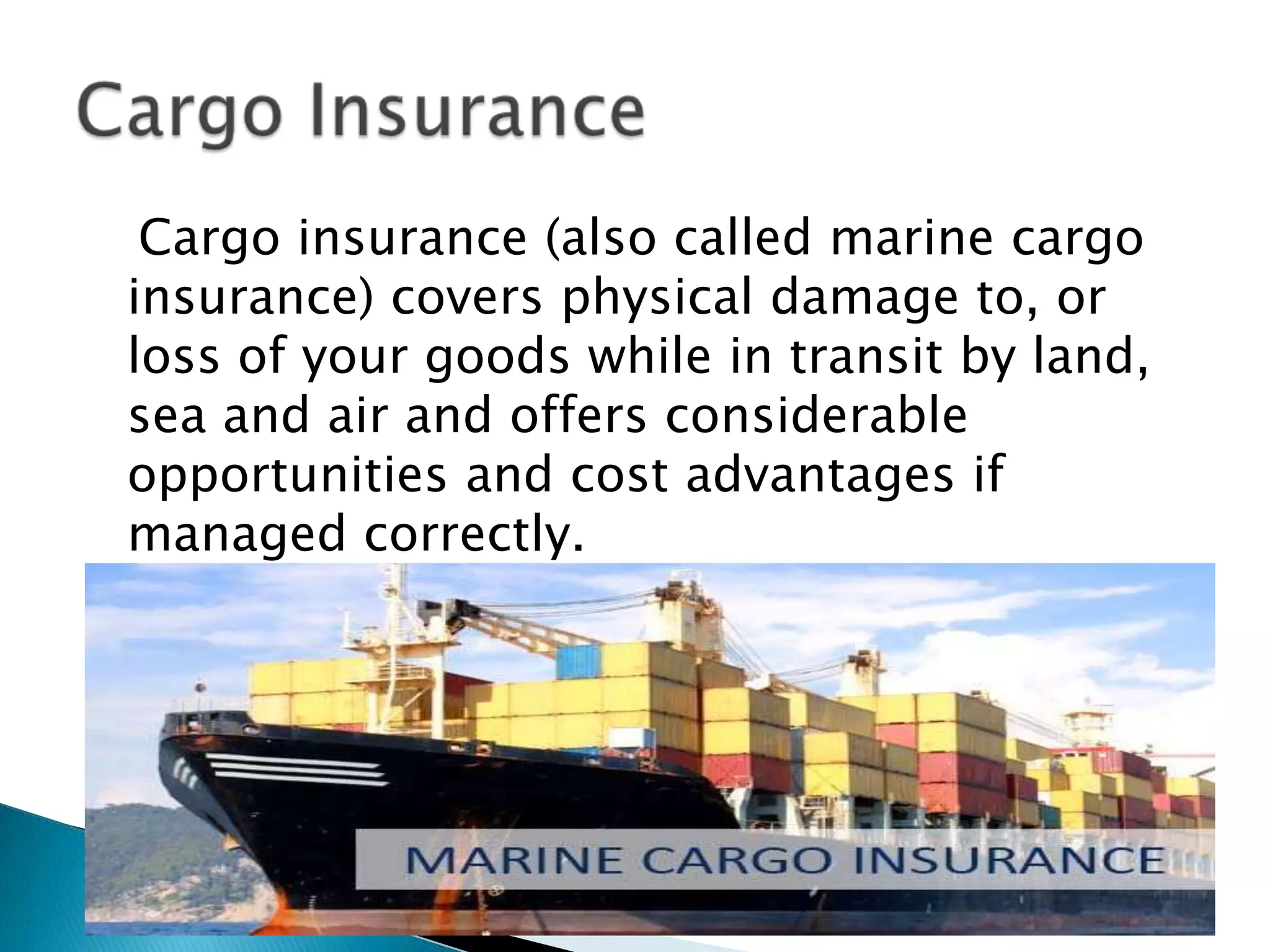
Cargo insurance provides financial protection for goods in transit against physical loss or damage while being transported via ocean, air, rail, road, or inland waterways. AGCS delivers annual transit policies for major manufacturers and retailers, as well as specialized project cargo insurance for heavy industrial equipment.
- Stock Throughput (STP): Comprehensive programs combining transit and static storage risks into a single policy, streamlining administration for complex supply chains.
- Project Cargo: Customized placements for the transport of high-value components destined for infrastructure projects, energy plants, and manufacturing facilities.
- Logistics Operators Liability: Protection for freight forwarders, warehouse operators, and third-party logistics (3PL) providers against legal liabilities arising from lost or damaged customer goods.
Protection and Indemnity (P&I) and Marine Liabilities
While mutual P&I clubs traditionally provide the primary layer of shipowner liability protection, AGCS participates heavily in the marine liability market through co-insurance, fixed-premium P&I for smaller vessels, and excess liability layers. Liabilities covered include crew injury or illness, cargo claims, wreck removal expenses, pollution liabilities, and collision damages exceeding primary limits. Marine liability underwriting requires a rigorous understanding of international maritime conventions, such as the Hague-Visby Rules, the Hamburg Rules, and various International Maritime Organization (IMO) treaties governing environmental safety and oil pollution.
| Marine Insurance Segment | Primary Target Audience | Key Risk Exposures Covered | Typical Policy Structure |
|---|---|---|---|
| Hull & Machinery | Shipowners, vessel operators, leasing companies | Physical damage, collision, salvage, general average | Annual time policies, Institute Time Clauses |
| Cargo & Logistics | Manufacturers, traders, freight forwarders, 3PLs | Transit damage, theft, spoilage, warehouse loss | Open cargo policies, stock throughput, project cargo |
| Marine Liabilities | Port authorities, terminal operators, shipowners | Third-party injury, pollution, wreck removal, legal defense | Excess liability, fixed-premium P&I, terminal operators liability |
| Inland Marine | Barge operators, domestic shippers, contractors | River transport hazards, bridge strikes, builder's risk | Specialized inland transit and builder's risk forms |
Risk Consulting and Engineering in Marine Operations
A defining characteristic of the AGCS marine insurance proposition is its integration of risk consulting. Modern maritime commerce faces escalating challenges, including climate-induced weather extremes, heightened cybersecurity threats to port infrastructure, and geopolitical tensions affecting key shipping lanes like the Suez and Panama Canals or the Strait of Hormuz.
AGCS risk consultants assist clients in identifying vulnerabilities before they manifest as losses. Key focus areas include:
- Navigational Risk Assessments: Evaluating crew training standards, bridge resource management, and passage planning protocols.
- Cargo Securing and Stowage: Reviewing adherence to the Cargo Securing Manual (CSM) and the International Maritime Solid Bulk Cargoes (IMSBC) Code to prevent container loss at sea or cargo shifting.
- Terminal and Port Security: Inspecting fire suppression systems, crane maintenance records, and security protocols at container yards and bulk terminals.
- Green Transition Support: Assessing emerging risks associated with alternative marine fuels—such as ammonia, methanol, hydrogen, and battery-electric propulsion—helping operators navigate safety standards for decarbonization.
Claims Handling and Global Network Capabilities
The true test of any marine insurance provider lies in its claims management infrastructure. Maritime incidents frequently occur in remote international waters or foreign jurisdictions, demanding rapid response times, local legal expertise, and immediate financial coordination.
AGCS maintains a global network of dedicated marine claims handlers, supported by an established panel of independent marine surveyors, average adjusters, maritime lawyers, and salvage experts. When a casualty occurs—whether it involves groundings, engine failures, container stack collapses, or cargo contamination—the claims team executes a structured response protocol:
- Immediate Notification and Triage: Clients access 24/7 reporting channels to initiate emergency response actions.
- Survey Appointment: Local marine surveyors are deployed immediately to inspect physical damage, determine causes, and quantify losses.
- General Average and Salvage Management: For major maritime casualties involving general average declarations, AGCS specialists coordinate with average adjusters to secure guarantees and manage security bonds, enabling cargo release to rightful owners.
- Litigation and Recovery: Legal experts manage third-party liability claims, pursuing subrogation recoveries against negligent parties or defending insureds against unjustified demands.
Comparison With Alternative Marine Insurance Markets
Commercial entities seeking marine insurance can choose between traditional mutual P&I clubs (for shipowners' liabilities), Lloyd’s of London syndicates, and large shareholder-owned global insurers like AGCS. Understanding the operational differences helps risk managers select the optimal structure for their specific portfolios.
- Financial Structure: Unlike mutual P&I clubs—where shipowners act as members and share each other's liabilities through calls—AGCS operates as a stock company offering fixed-premium certainties, insulating clients from retrospective calls.
- Multi-Line Integration: AGCS excels in programs that require seamless blending of marine cargo, property, casualty, and cyber coverage into a unified master insurance program, reducing coverage gaps across corporate supply chains.
- Capacity and Security: Backed by high financial strength ratings from major rating agencies, AGCS provides the balance sheet security required by major financial institutions financing multi-million-dollar vessel acquisitions and large logistics infrastructure projects.
Frequently Asked Questions
What types of vessels are eligible for AGCS Hull and Machinery insurance?
AGCS underwrites a wide variety of commercial tonnage, including container ships, oil and chemical tankers, bulk carriers, gas carriers (LNG/LPG), and specialized workboats. Each risk is evaluated individually based on vessel specifications, operational history, and safety management systems.
Does AGCS provide coverage for cargo transported by multiple modes of transport?
Yes. AGCS offers multi-modal cargo and stock throughput policies that cover goods seamlessly throughout entire supply chains, including ocean voyages, air freight, rail transport, trucking, and temporary storage at distribution centers or warehouses.
How does AGCS handle general average situations?
When a master declares general average—such as during a vessel fire or grounding—AGCS marine claims specialists coordinate closely with appointed average adjusters. They issue necessary guarantees and assist insured parties in securing cargo release with minimal operational delay.
Are risk engineering services included with AGCS marine policies?
Yes. Clients insured through AGCS gain access to specialized marine risk consultants and engineers who conduct loss prevention surveys, evaluate operational procedures, and provide guidance on safety improvements and regulatory compliance.
How do I initiate a marine insurance claim with AGCS?
Policyholders can report claims through designated broker channels or directly via the 24/7 claims notification portals provided by Allianz Commercial. Immediate reporting ensures prompt deployment of local surveyors and emergency response teams.
Conclusion and Next Actions
AGCS marine insurance provides robust, globally integrated protection for businesses navigating the complexities of international trade and maritime logistics. By combining high financial capacity, specialized underwriting, proactive risk engineering, and responsive claims handling, the organization supports the operational continuity of shipowners, cargo owners, and logistics providers worldwide. Risk managers and maritime operators seeking to secure coverage should collaborate with qualified insurance brokers to conduct comprehensive exposure analyses, review policy wordings, and structure tailored marine insurance programs aligned with their specific operational footprints.