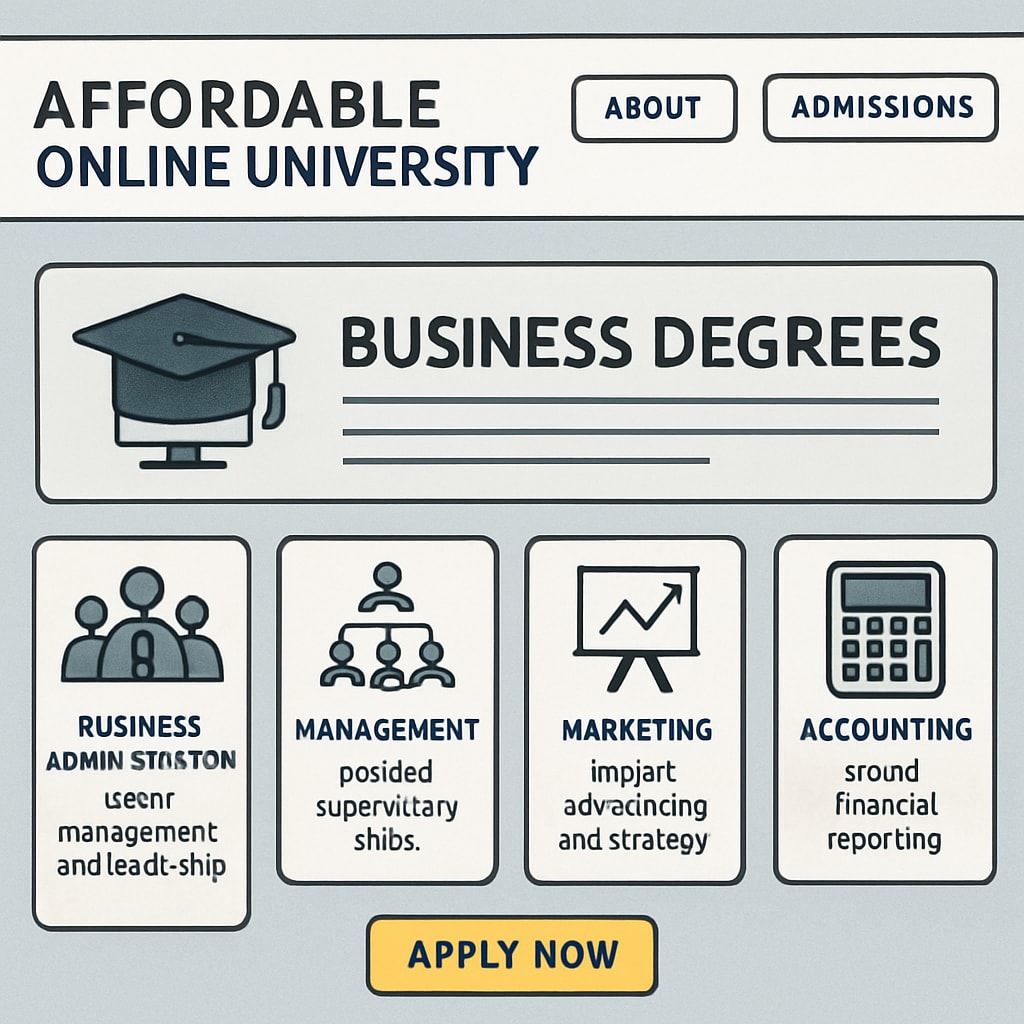
Affordable online university options provide flexible, cost-effective pathways to higher education by leveraging asynchronous learning, lower institutional overhead, and credit-transfer programs. Prospective students can minimize long-term debt by prioritizing accredited, non-profit, or state-affiliated institutions that offer competency-based models, flat-rate tuition structures, and partnerships with employers.
Understanding the Landscape of Online Higher Education
As of 2026, the digital higher education sector has matured beyond its infancy, evolving into a sophisticated ecosystem where physical presence is no longer a prerequisite for academic excellence or industry recognition. The primary driver for students seeking affordable online university options is the intersection of tuition costs, flexibility for working professionals, and the legitimacy of the degree conferred.
True affordability in the current academic year extends beyond the sticker price. It encompasses the total cost of attendance, including textbooks—which are increasingly replaced by Open Educational Resources (OER)—and the time-to-degree duration. Because online education allows for self-paced learning, students who can complete requirements faster than traditional semester-based timelines often see the greatest financial benefits.
The Role of Accreditation and Verification
Before evaluating tuition rates, you must verify the accreditation of any institution. In the United States, regional accreditation remains the gold standard, ensuring that credits earned are transferable and the degree is recognized by employers and graduate programs. Avoid institutions that operate solely on national accreditation if your long-term goals include transferring credits to a traditional university.
To verify the legitimacy of a program:
- Access the U.S. Department of Education’s Database of Postsecondary Institutions and Programs.
- Cross-reference the university with the Council for Higher Education Accreditation (CHEA) directory.
- Review the university’s status regarding state authorization; each state has its own regulatory framework for online providers.
Strategic Pathways to Cost Reduction
Reducing the financial burden of an online degree requires a multi-faceted approach. High-tuition private institutions often have significant endowment funds that allow for robust financial aid, while public state universities provide lower base tuition for residents.
1. Competency-Based Education (CBE)
CBE programs are arguably the most effective tool for lowering costs. In this model, you pay for a fixed period (usually six months) during which you can complete as many courses as your proficiency allows. If you enter the program with significant industry experience or prior college credits, you can often finish a degree in half the time of a traditional student, effectively cutting your total tuition in half.
2. Prior Learning Assessment (PLA)
Many universities offer credit for life experience. By documenting professional certifications, military training, or documented self-study, students can challenge exams or build portfolios that earn credit toward their degree. This reduces the number of classes you must pay for, directly decreasing the total invoice.
3. Employer Tuition Reimbursement
Many modern corporations view degree completion as a retention tool. Before selecting a university, check if your employer has a pre-existing partnership with an online institution or a tuition reimbursement policy that covers a set amount per year.
Evaluating Institutional Models
When choosing between different types of institutions, consider the following comparison of typical cost and operational structures.
| Institution Type | Cost Structure | Best For |
|---|---|---|
| Public State Universities | Low (in-state) to Moderate (out-of-state) | Students seeking traditional degree prestige. |
| Non-Profit Private | Moderate to High (varied aid) | Those needing small, faculty-led cohorts. |
| Competency-Based Online | Flat-rate per term (low total cost) | Self-starters and working professionals. |
| For-Profit Online | High to Very High | Niche technical or vocational certifications. |
Prerequisites and Application Requirements
The application process for online universities in 2026 has become increasingly streamlined, though it remains rigorous in its verification. Most institutions require:
- Transcripts: Official records from all previously attended high schools or colleges.
- Proficiency Evidence: Many programs now waive SAT/ACT requirements in favor of professional experience summaries or basic placement tests.
- Technology Requirements: While most programs are browser-based, you must ensure you have access to a reliable, high-speed internet connection and a machine that meets the specific software requirements of your chosen discipline (e.g., specialized design or engineering software).
Common Mistakes to Avoid
- Ignoring Hidden Fees: Some universities advertise a low tuition rate but charge significant technology fees, proctoring fees, or per-credit surcharges that inflate the total. Always request a full "cost of attendance" breakdown before enrolling.
- Underestimating Time Commitments: Even in self-paced programs, the rigor of a degree remains. Overloading your schedule leads to burnout and potential failure, which necessitates retaking courses—the most expensive mistake a student can make.
- Overlooking Transfer Credit Policies: Ensure that your chosen institution accepts the maximum number of transfer credits allowed under your state's articulation agreements.
Frequently Asked Questions
Are online degrees viewed the same as traditional degrees by employers? In 2026, the distinction is increasingly negligible. Most accredited online universities do not include "online" on the physical diploma. Employers generally focus on the accreditation of the institution rather than the delivery method.
How do I pay for an online degree if I cannot afford it upfront? Utilize the Free Application for Federal Student Aid (FAFSA). Even for online programs, federal grants, work-study, and low-interest student loans are often available. Additionally, look for institutional scholarships that cater specifically to distance learners.
Can I transfer credits from a community college to an online university? Yes, but you must ensure the courses you take at the community college have a direct equivalent at the university you intend to finish your degree with. Use online course-equivalency search tools provided by most state university systems to plan your path.
What if I need to take a break from my studies? Most online programs operate on a term-by-term basis. If you need a break, you can usually take a "leave of absence" without losing your progress. Confirm the university’s policy on "stop-out" periods before enrolling.
Final Recommendations
To embark on your search for affordable online education, begin by listing the five most critical variables: your current budget, your career goals, the amount of transfer credit you already possess, the time you can dedicate weekly, and the regional accreditation status of the school.
Do not rely on third-party aggregators or "top list" websites, which are often influenced by affiliate marketing. Instead, use official state education websites to build your own shortlist. Once you have identified three potential institutions, contact their admissions departments directly to request a transcript evaluation. This simple step often reveals thousands of dollars in hidden savings through previously earned credits, providing you with a clear, low-cost roadmap to your degree.