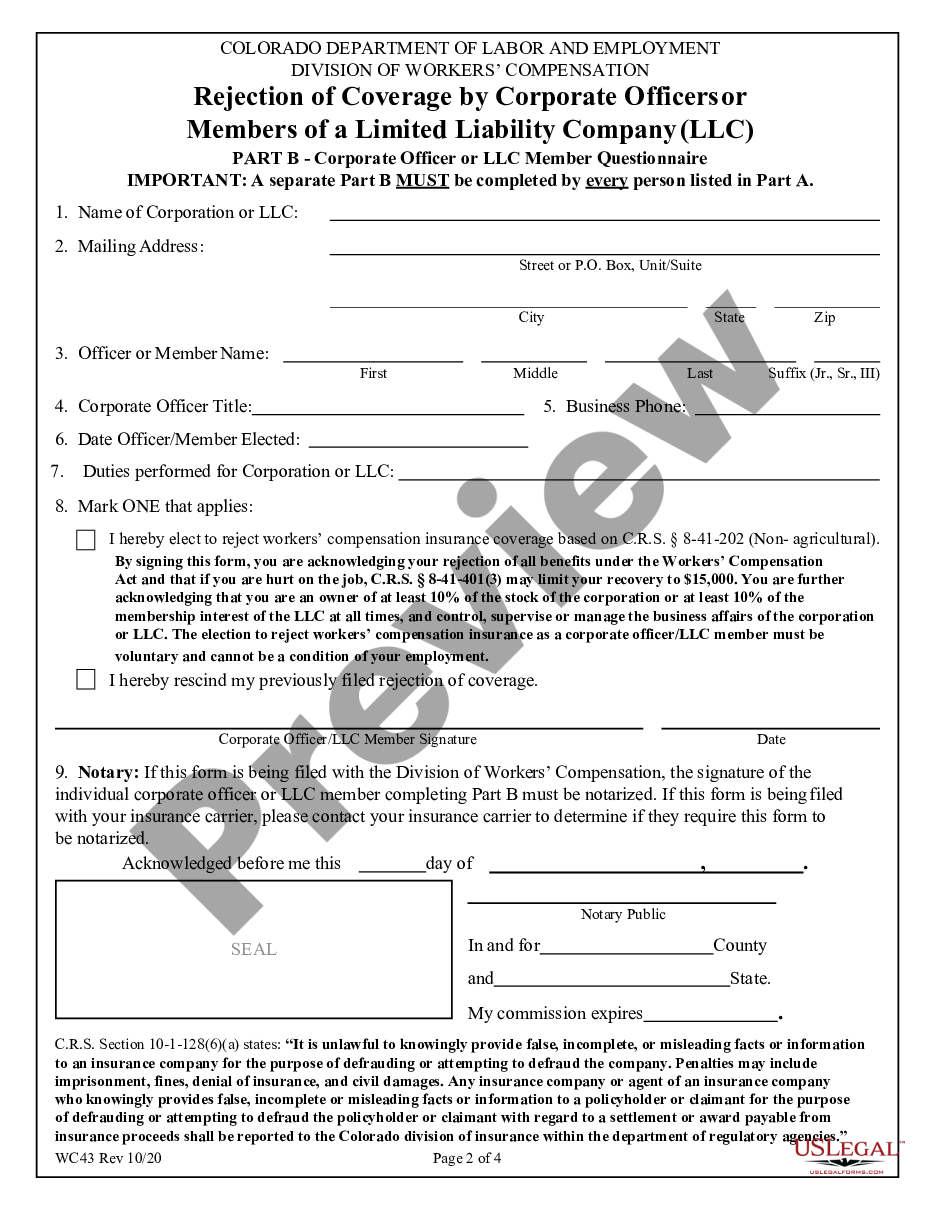
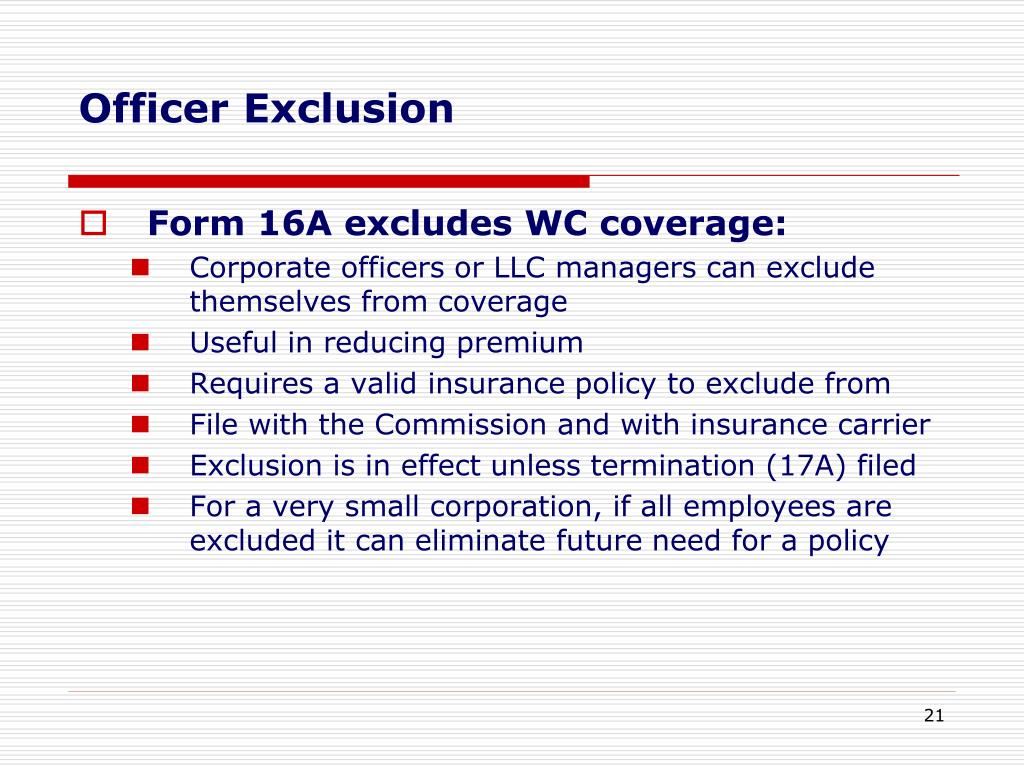
An affidavit of exclusion from workers’ compensation is a legal document used by business owners, corporate officers, or partners to formally waive their right to workers' compensation benefits. By filing this sworn statement, eligible individuals exempt themselves from their state’s mandatory insurance coverage requirements, effectively reducing premium costs while assuming all personal financial risk for work-related injuries.
Workers' compensation is designed to be a "no-fault" system that provides medical benefits and wage replacement to employees injured on the job. In exchange for these benefits, employees generally forfeit their right to sue their employer for negligence. However, most states recognize that business owners—such as sole proprietors, partners, and certain corporate officers—may wish to opt out of this system to save on overhead. This is where the affidavit of exclusion becomes a critical administrative tool.
As of 2026, the regulatory landscape for these exclusions has become more digitized and standardized, yet the legal implications of signing such a document remain profound. This guide explores the requirements, the filing process, and the significant risks involved in choosing to be excluded from coverage.
The Legal Framework of Workers' Comp Exclusions
The requirement for workers' compensation insurance is governed primarily at the state level. While most businesses with one or more employees are required by law to carry a policy, the "owners" of that business are often treated differently. The affidavit of exclusion serves as the official mechanism to notify both the state and the insurance carrier that a specific individual is not to be considered an "employee" for the purposes of coverage.
Statutory vs. Voluntary Coverage
In many jurisdictions, business owners are automatically excluded from coverage unless they specifically "elect" to be included. In other states, the opposite is true: owners are automatically included unless they file a formal Notice of Election to be Exempt or an affidavit of exclusion.
The affidavit is a "sworn statement," meaning it carries the weight of law. Falsifying information on an affidavit of exclusion—such as claiming ownership status for an individual who is actually a common-law employee—can result in significant penalties, including fines for insurance fraud and stop-work orders.
The Role of the Secretary of State and Department of Labor
In 2026, the filing process is typically split between two entities. The Secretary of State (SOS) often handles the registration of the business entity itself, ensuring that the person seeking exclusion is a recorded officer or member. The Department of Labor (DOL) or a specific Workers' Compensation Board manages the actual exemption database. Many states now utilize a unified registry where contractors and clients can verify an individual's exemption status in real-time.
Eligibility: Who Can File an Affidavit of Exclusion?
Not everyone within a business can sign an affidavit of exclusion. The option is strictly reserved for those who hold a significant ownership stake or a high-level executive position. As of 2026, eligibility criteria typically fall into the following categories:
1. Sole Proprietors and Independent Contractors
In most states, a sole proprietor (someone who owns an unincorporated business by themselves) is not required to carry workers' compensation for themselves. They are viewed as the "employer," and you cannot be your own employee. However, they may still need an affidavit to prove to hiring clients that they are legally exempt.
2. Corporate Officers
Individuals holding titles such as President, Vice President, Secretary, or Treasurer in a corporation are often eligible for exclusion. Some states limit the number of officers who can be exempt (e.g., no more than three officers per corporation) to prevent companies from misclassifying their entire workforce as "officers" to avoid premiums.
3. LLC Members and Managers
Members of a Limited Liability Company (LLC) are generally treated similarly to corporate officers or partners. Eligibility often hinges on the percentage of ownership. For example, a state might require that a member own at least 10% or 20% of the LLC to qualify for an exclusion.
4. Partners in a Partnership
In a general or limited partnership, the partners are usually eligible to exclude themselves from coverage via an affidavit. This recognizes their status as co-owners who share in the profits and losses of the firm, rather than traditional employees.
The Impact of the Construction Industry
The rules regarding affidavits of exclusion are significantly more stringent in the construction industry. Because construction is classified as a high-risk sector, state regulators keep a close watch on exemptions to prevent "premium fraud."
In states like Florida or Tennessee, construction owners must meet specific criteria that do not apply to other industries. This might include:
- A minimum ownership percentage (often 10% or more).
- A required filing fee for the exemption certificate.
- A limit on the number of exempt individuals per business (often capped at three).
- Strict requirements that the individual must be listed on the records of the Secretary of State.
Step-by-Step Process for Filing an Affidavit of Exclusion
Filing an affidavit is no longer just a matter of signing a piece of paper and filing it in a drawer. In 2026, it involves a formal state-monitored process.
Step 1: Verify Entity Standing
Before applying for an exclusion, the business entity must be in "Good Standing" with the Secretary of State. If the business has failed to file annual reports or pay franchise taxes, the state will likely reject the affidavit of exclusion.
Step 2: Obtain the State-Specific Form
Each state has its own version of the affidavit. You cannot use a generic template found online. You must use the form provided by the state’s workers' compensation regulatory body. Common form names include:
- Notice of Election to be Exempt (Florida)
- Workers’ Compensation Exemption Registry Application (Tennessee)
- Form WC-10 (Various jurisdictions)
Step 3: Notarization and Sworn Testimony
Since the document is an "affidavit," it must typically be signed in the presence of a Notary Public. The signer is swearing under penalty of perjury that they meet the ownership and eligibility requirements. This step is crucial because it creates a legal trail if the exemption is later found to be fraudulent.
Step 4: Submission and Fee Payment
Many states now require electronic submission through a secure portal. While some states provide exemptions for free, many require a processing fee (ranging from $50 to $100 as of 2026). In the construction industry, these exemptions usually expire every two years and must be proactively renewed.
Step 5: Proof of Exemption
Once the state processes the affidavit, they will issue a Certificate of Election to be Exempt. This is the document that contractors and insurance auditors will ask to see. Simply filing the affidavit is not enough; you must possess the active certificate.
Comparison: Exclusion vs. Inclusion
Choosing to exclude yourself from coverage is a financial trade-off. Below is a comparison of how these two paths differ for a business owner.
| Feature | Affidavit of Exclusion (Exempt) | Inclusion in Policy (Covered) |
|---|---|---|
| Premium Cost | $0 for the excluded individual. | Premium is based on the owner’s salary/draw. |
| Medical Coverage | None. Personal health insurance must be used. | 100% coverage for work-related medical bills. |
| Wage Replacement | No disability benefits provided by the policy. | Partial wage replacement (usually 66.6%) if unable to work. |
| Audit Requirement | Must provide the certificate to the auditor. | Payroll must be reported for the owner. |
| Contractual Access | Some GCs may refuse to hire exempt owners. | Generally accepted by all clients and GCs. |
| Legal Status | Considered an owner, not an employee. | Considered an employee for the duration of the policy. |
The Risks: What Happens When You Are Excluded?
The primary reason owners sign an affidavit of exclusion is to save money on insurance premiums. However, the "savings" can quickly disappear if an injury occurs.
1. The Personal Health Insurance Gap
Many business owners believe their personal health insurance will cover them if they get hurt on the job. This is a dangerous misconception. Most private health insurance policies contain exclusionary language for work-related injuries. If an insurance carrier discovers that a broken leg occurred while the owner was on a commercial job site, they may deny the claim, leaving the owner with 100% of the medical costs.
2. Loss of Income
If a sole proprietor is severely injured and cannot work for six months, an affidavit of exclusion ensures they receive zero dollars in disability benefits from the workers' comp system. Without a separate private disability policy, the business may fail due to the owner's inability to generate revenue or pay personal bills.
3. General Liability Conflicts
An affidavit of exclusion only applies to workers' compensation. It does not protect the owner from third-party lawsuits. Furthermore, a business's General Liability (GL) policy specifically excludes coverage for injuries to "employees." If an excluded owner is injured and tries to claim against their own GL policy, they will almost certainly be denied.
4. Client and Contractor Demands
In 2026, many General Contractors (GCs) have adopted a "no-exemption" policy. Because GCs can be held "statutorily liable" for injuries to uninsured sub-contractors, they often require every person on a job site to be covered by a workers' comp policy, regardless of state law. In these cases, an affidavit of exclusion is useless; the owner must buy coverage to get the contract.
Common Mistakes and Pitfalls
Misunderstanding the Scope
An affidavit of exclusion only covers the individual who signs it. It does not exempt the business from the requirement to provide workers' compensation for other employees. If a business owner files an exclusion but has two helpers or assistants, those employees must still be covered by a valid workers' comp policy.
Failure to Renew
In many jurisdictions, an exemption certificate is not permanent. In the construction sector, these often expire every two years. If an owner fails to renew their affidavit, they are legally considered "uninsured." During a year-end insurance audit, the carrier will see the expired certificate and charge the business owner a "back premium" for the entire year, which can result in a bill for thousands of dollars.
Over-Reporting Owners
Attempting to exclude too many people can trigger a Department of Labor audit. If a small plumbing company suddenly claims it has eight "Vice Presidents" who are all exempt, regulators will investigate whether these individuals are actually laborers being misclassified to avoid taxes and insurance.
Expert Guidance for 2026 Compliance
As we move through 2026, the integration of data between state licensing boards and workers' compensation databases has made it nearly impossible to operate with an invalid or fraudulent exclusion. Business owners should take the following actions to ensure they are protected:
- Consult an Insurance Broker: Before signing an affidavit, ask for a quote on what it would cost to actually include yourself in the policy. For non-construction owners, the cost is often surprisingly low.
- Verify Health Insurance Coverage: Call your health insurance provider and ask specifically: "Am I covered if I am injured while performing work for my own business?" Get the answer in writing.
- Maintain a Digital Folder: Keep a PDF of your active Certificate of Election to be Exempt on your phone or in a cloud drive. You will need to produce it frequently for clients and auditors.
- Review Contract Language: Before signing a sub-contract, check the "Insurance Requirements" section. If it says "All personnel must be covered by Workers' Compensation," your affidavit of exclusion will not be accepted.
Frequently Asked Questions
Does an affidavit of exclusion mean I don't need any insurance?
No. An affidavit of exclusion only applies to workers' compensation for the specific individual named. The business still likely needs General Liability insurance, and if the business has any employees (even part-time), it still needs a workers' compensation policy to cover them.
Can I cancel my exclusion if I change my mind?
Yes. You can revoke an exclusion at any time by filing the appropriate "Revocation of Election to be Exempt" form with the state and notifying your insurance carrier. Coverage will typically begin as soon as the carrier adds you to the policy and you pay the pro-rated premium.
Is an affidavit of exclusion the same as a waiver of subrogation?
No. These are two different legal concepts. An affidavit of exclusion removes an individual from coverage entirely. A Waiver of Subrogation is a policy endorsement where the insurance company agrees not to sue a third party (like a general contractor) to recover costs paid out for a claim.
Why does my General Contractor refuse to accept my state-approved exemption?
While the state may allow you to be exempt, a General Contractor is a private entity and can set higher standards for their job sites. Many GCs refuse exemptions because their own insurance carriers charge them higher premiums if "exempt" sub-contractors are present, due to the increased risk of lawsuits or "statutory employee" claims.
Do I need to notarize my affidavit of exclusion in 2026?
In most states, yes. Even with the move to digital portals, the "sworn statement" aspect of the affidavit requires a notary's seal or a validated digital signature that meets state-specific electronic notary (e-notary) standards.
Practical Recommendation
If you are a business owner considering an affidavit of exclusion from workers' compensation, perform a "worst-case scenario" audit. Calculate your monthly personal expenses and compare them to the premium savings of the exclusion. If the premium savings is $1,000 a year, but a workplace injury could result in $50,000 in medical bills and $0 in income, the exclusion is likely a poor financial decision. Use the affidavit only if you have a robust private disability and health insurance plan that explicitly covers occupational hazards.