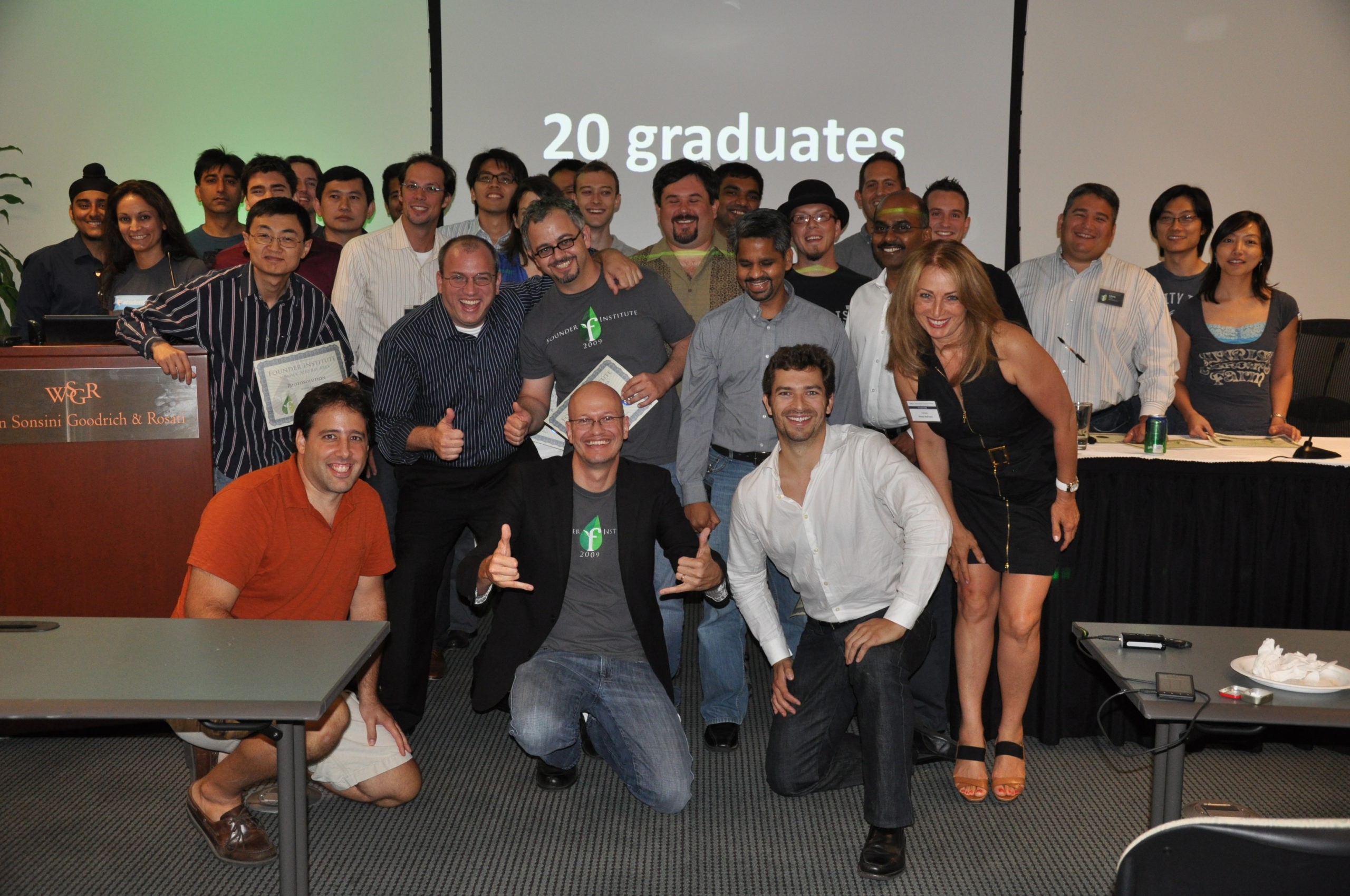
Adeo Ressi is an Italian-American serial entrepreneur and investor best known as the co-founder and former CEO of The Founder Institute, the world’s largest pre-seed startup accelerator. Launched in 2009 alongside Jonathan Greechan, the program helped revolutionize early-stage entrepreneurship by using psychometric testing to identify promising founders and expanding access to startup creation globally.
Early Career and Background of Adeo Ressi
Before establishing himself as a foundational figure in modern startup incubation, Adeo Ressi developed a reputation as a prolific tech founder and an outspoken advocate for entrepreneur rights. Raised in New York City, Ressi attended the University of Pennsylvania, where he studied Environmental Studies. During his college years, his entrepreneurial instincts surfaced through student media publications, laying the groundwork for a career defined by building decentralized networks and digital platforms.
Ressi’s career accelerated during the dot-com boom of the late 1990s. Over two decades, he founded, scaled, and exited several venture-backed companies across media, software, and interactive technology.
Key Ventures Prior to The Founder Institute
- Total New York (1994): One of the earliest localized digital news publications, Total New York provided regional reporting and cultural content. The company was acquired by America Online (AOL) in 1997 and rebranded as Digital City New York.
- Method Five (1995): Founded shortly after Total New York, Method Five grew into a prominent web development agency during the early internet expansion. Ressi scaled the firm to hundreds of employees before selling it to Xient for approximately $88 million at the peak of the dot-com boom.
- GameTrust (2002): Recognizing the growth potential of online gaming, Ressi launched GameTrust to provide infrastructure and administrative tools for casual online games. The company raised funding from major venture capital firms before being acquired by Playtech in 2007.
These early experiences exposed Ressi to the systemic friction, geographical biases, and power imbalances inherent in early-stage venture financing.
The Funded: Shifting Power to Entrepreneurs
In 2007, Ressi launched The Funded, an anonymous online community where startup founders rated, reviewed, and discussed venture capital firms and angel investors. Created out of frustration with predatory term sheets and lack of transparency in fund management, The Funded operated as a private forum where entrepreneurs shared real experiences regarding valuation expectations, term sheet clauses, and investor behavior.
The Funded quickly grew into a powerful resource with tens of thousands of registered founders. It effectively altered the power dynamic between institutional investors and founders by introducing public accountability to venture fundraising. The insights gathered from running The Funded revealed a broader structural gap: while capital was available for mature startups, early-stage aspiring founders lacked structured guidance, accountability, and equity-aligned support systems. This realization directly inspired the creation of The Founder Institute.
Launching The Founder Institute: Philosophy and Global Expansion
In 2009, operating out of a garage in Palo Alto, California, Adeo Ressi and Jonathan Greechan launched The Founder Institute (FI). The goal was ambitious: to systematize company formation and create a repeatable, global engine for entrepreneurship.
Unlike traditional accelerators such as Y Combinator or Techstars—which typically focused on existing teams with early prototypes or traction—The Founder Institute targeted individuals at the "pre-seed" stage. FI accepted solo founders, part-time entrepreneurs transitioning out of corporate careers, and individuals who had little more than an idea and a strong aptitude for execution.
The Founder Institute Model:
- Predictive Admissions (Entrepreneur DNA Test)
- Evaluates fluid intelligence, openness, and agreeableness.
- Structured Curriculum & Execution
- 14-to-18 week structured program focusing on validation.
- Equity Collective (Shared Success Model)
- Pools company equity among founders, mentors, and directors.
- Global Network Integration
- Connects local ecosystems with global venture markets.
The Core Mission: Supporting Idea-Stage Entrepreneurs
The Founder Institute was designed to operate as an intensive, 14-to-18-week structured curriculum that allowed participants to validate business models, launch products, and build advisory networks without sacrificing their financial stability. By structuring evening sessions and weekly execution assignments, FI enabled founders to test their business viability before quitting their primary employment.
Under Ressi’s leadership, FI established local chapters across six continents, expanding beyond conventional tech hubs like Silicon Valley, New York, and London into emerging markets throughout Latin America, Africa, South Asia, and Eastern Europe. Today, the network spans over 200 cities across more than 100 countries, having launched over 7,000 technology companies.
The Science of Selection: The Entrepreneur DNA Test
One of Ressi’s most distinct contributions to startup incubation was the development of the Entrepreneur DNA Test (originally known as the Predictive Admissions Assessment). Frustrated by the subjectivity of traditional investor interviews, Ressi collaborated with social scientists and psychometric evaluation experts to design a data-driven admissions process.
The assessment measures specific personality traits and cognitive capabilities that correlate with long-term entrepreneurial success, including:
- Fluid Intelligence: The capacity to solve novel problems, identify patterns, and process complex information under uncertainty.
- High Openness: Intellectual curiosity, adaptability, and a willingness to explore non-traditional business strategies.
- Moderate Agreeableness: The ability to accept feedback without sacrificing strategic independence or backing down during critical negotiations.
- Emotional Stability: Resilience in high-stress environments and the capacity to handle failure, pivot rapidly, and sustain motivation.
By evaluating psychological traits rather than existing business plans, academic credentials, or personal wealth, The Founder Institute democratized access to acceleration, frequently accepting non-traditional founders who might have been overlooked by conventional venture firms.
The Shared Equity Collective Model
To align the financial interests of mentors, local directors, and participating founders, Ressi introduced the Equity Collective (or Liquidity Pool).
In traditional mentorship models, advisors receive individual equity grants or upfront cash compensation, which can create misaligned incentives. The Founder Institute replaced this with a shared pool system:
- Participating companies contribute a small percentage of equity (typically 4%) into a local cohort pool.
- Upon a liquidity event (such as an acquisition or IPO), financial returns from the pool are distributed across the cohort’s participants.
- Distribution breakdown: A significant portion is returned directly to the founders of that cohort, while the remainder is divided among the local mentors, chapter directors, and the core Founder Institute organization.
This structure encourages peer-to-peer collaboration and ensures that experienced mentors remain committed to helping every company in the cohort succeed, rather than focusing only on high-profile breakout stars.
How The Founder Institute Compares to Traditional Accelerators
The pre-seed and seed landscape includes various models for supporting early-stage companies. Understanding how The Founder Institute compares to standard incubators and accelerators helps illustrate Ressi’s structural innovations.
| Feature | The Founder Institute (FI) | Traditional Accelerators (e.g., Y Combinator) | Venture Studios / Incubators |
|---|---|---|---|
| Primary Target Stage | Idea stage, pre-product, pre-team | Prototype stage, early traction, co-founding teams | Concept generation, internal ideation |
| Admissions Basis | Psychometric evaluation (Entrepreneur DNA) | Traction, pitch deck, team background | Internal thesis, specialized domain expertise |
| Employment Status | Allows part-time participation during validation | Requires full-time commitment from all founders | Varies; often hires internal operators |
| Capital Provided | No direct upfront cash investment | Direct equity investment (e.g., $125k–$500k) | Pre-seed funding in exchange for higher equity |
| Equity Structure | 4% pooled equity contribution | 7%–10%+ direct equity stake | 20%–50%+ equity stake |
| Geographic Footprint | Decentally distributed in 200+ cities globaly | Centralized cohorts (in-person or hybrid) | Localized corporate or studio offices |
| Mentor Alignment | Shared Equity Collective for all cohort mentors | Advisory networks, non-equity mentorship | Internal team, salaried venture builders |
Beyond The Founder Institute: VC Lab and Climate Entrepreneurship
After serving as CEO of The Founder Institute for over a decade, Adeo Ressi stepped back from day-to-day operations to address another key challenge in early-stage business development: the concentration of venture capital control.
Democratizing Venture Capital with VC Lab
In 2020, Ressi co-founded VC Lab, an accelerator designed for new fund managers establishing early-stage venture capital firms. Just as FI aimed to scale company formation, VC Lab seeks to scale fund formation by streamlining legal processes, lowering operational overhead, and promoting ethical investment practices.
VC Lab focuses on training "general partners" (GPs) who prioritize impact-driven investing, environmental sustainability, and regional ecosystem growth. The program aims to launch thousands of specialized, micro-VC funds worldwide, increasing access to capital for early-stage startups outside traditional financial centers.
Focus on Impact and Sustainability
Throughout his recent career, Ressi has focused increasingly on climate technology and mission-driven business models. He has championed initiatives like the Mensarius Oath, an ethical code of conduct for venture capitalists designed to prevent predatory investment behaviors, encourage diversity, and prioritize long-term global sustainability over short-term financial returns.
Ressi's efforts emphasize that future economic value creation depends on building businesses that address pressing global challenges—including climate change, economic inequality, and resource scarcity.
Critical Takeaways for Founders Considering The Founder Institute
For entrepreneurs evaluating whether to apply to The Founder Institute or adopt Ressi’s business principles, several practical operational factors should be considered:
1. Program Expectations and Workload
The Founder Institute is structured around rigorous execution tasks rather than passive lectures. Participants are expected to complete customer discovery calls, build minimum viable products (MVPs), refine financial models, and pitch to active investors every week. The high drop-out rate—often exceeding 50% per cohort—reflects its intense focus on accountability and operational speed.
2. Evaluating the Shared Equity Trade-Off
Founders must weigh the 4% Equity Collective requirement against their long-term capitalization strategy:
- Pros: Access to a global mentor network, peer support, local chapter infrastructure, and shared upside in cohort successes.
- Cons: Dilution at the idea stage, which requires careful record-keeping on the cap table as the business raises subsequent institutional rounds.
3. Readiness for Capital Raising
FI focuses heavily on preparing founders for initial funding rounds using standardized legal frameworks, such as Simple Agreements for Future Equity (SAFEs) or convertible notes. Aspiring applicants should ensure their target markets are large enough to support venture-scale growth if they intend to leverage FI's global investor network.
Frequently Asked Questions
Who is Adeo Ressi?
Adeo Ressi is an Italian-American entrepreneur, investor, and startup ecosystem builder. He co-founded The Founder Institute in 2009, launched the investor review platform The Funded in 2007, and later co-founded VC Lab to help launch venture capital funds globally.
What is The Founder Institute?
The Founder Institute is a global pre-seed startup accelerator headquartered in Palo Alto, California. It helps early-stage entrepreneurs validate business concepts, build core products, establish founding teams, and secure initial funding through a structured curriculum and mentor network.
How does the Entrepreneur DNA Test work?
The Entrepreneur DNA Test is a psychometric evaluation designed by The Founder Institute to predict entrepreneurial success. It assesses cognitive capacity, fluid intelligence, emotional stability, openness, and problem-solving skills to evaluate candidates independent of their resume or pitch deck.
Does The Founder Institute invest cash in startups?
Unlike traditional seed accelerators, The Founder Institute does not typically provide direct capital investments upon admission. Instead, it provides equity-aligned incubation, advisory networks, and access to an international investor base to help startups raise pre-seed and seed funding.
What is the Equity Collective pool used by FI?
The Equity Collective is a shared success model where participating companies contribute a small percentage of equity (typically 4%) into a combined cohort pool. When any company in that cohort experiences a liquidity event, the returns are distributed among the founders, mentors, chapter directors, and the accelerator.
What is VC Lab, and how does it relate to Adeo Ressi?
VC Lab is an accelerator program co-founded by Adeo Ressi in 2020 to train new venture capital fund managers. It helps emerging managers launch venture funds focused on ethical investing, climate technology, and early-stage capital deployment worldwide.
Strategic Next Actions for Early-Stage Founders
If you are evaluating early-stage incubation models or seeking to leverage the frameworks established by Adeo Ressi and The Founder Institute, consider these next steps:
- Take the Assessment: Evaluate your entrepreneurial strengths by reviewing psychometric principles or taking the official Founder Institute Entrepreneur DNA Test to gauge your suitability for pre-seed acceleration.
- Validate Before Quitting: Use FI's core methodology—conduct customer discovery interviews, build low-cost MVPs, and test demand before leaving your primary job or spending significant capital.
- Review Cap Table Implications: If applying to accelerators, consult an experienced startup attorney to evaluate equity-pooling arrangements and ensure your cap table remains clean for future institutional investment rounds.
- Engage Local Ecosystems: Connect with local FI chapter events, venture hubs, or pitch sessions in your region to build relationships with prospective co-founders, mentors, and advisors.