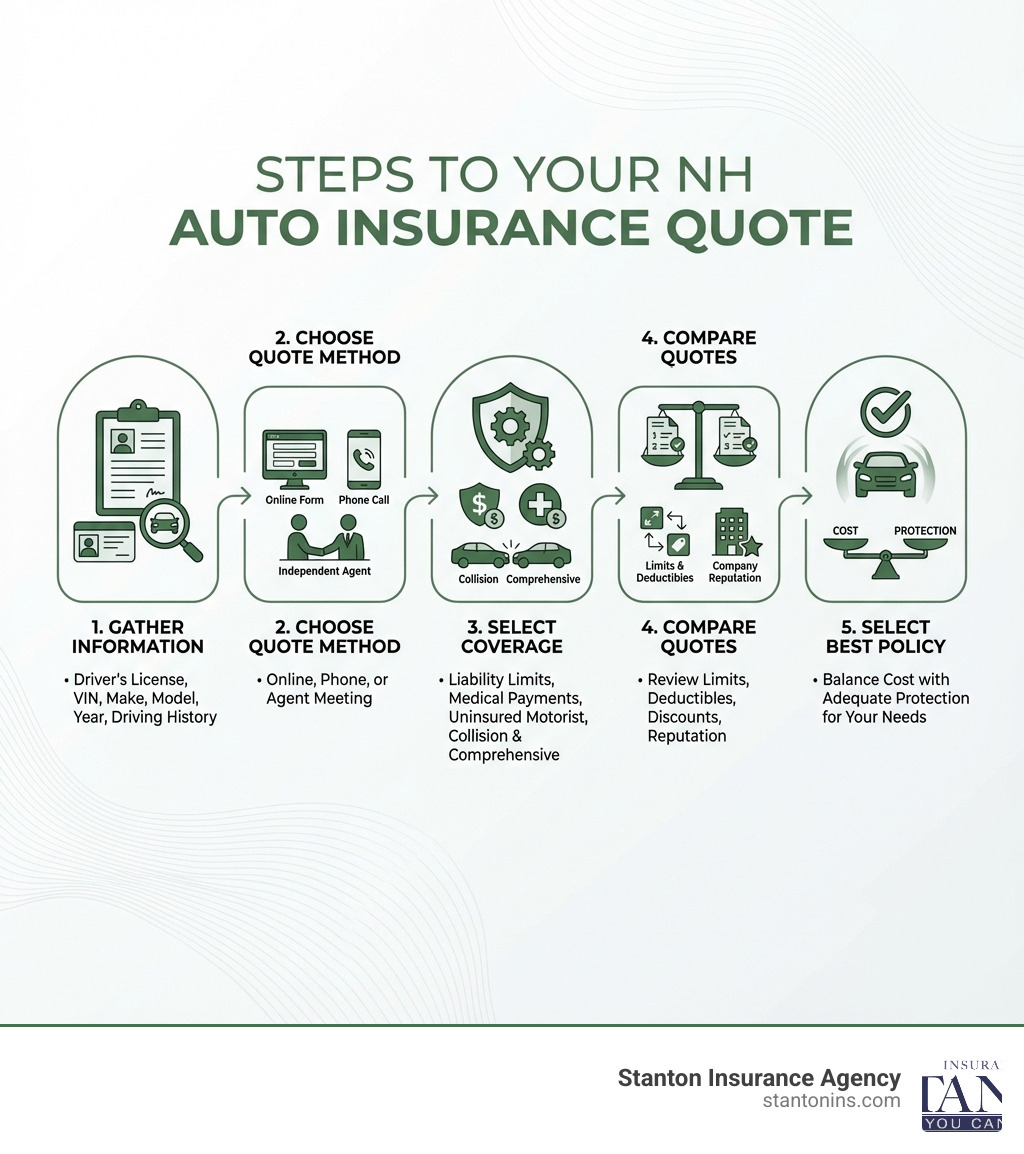
Obtaining accurate auto insurance quotes requires providing precise data regarding your driving history, vehicle specifications, and coverage requirements. By verifying your information against official records—such as your driving abstract and vehicle identification number (VIN)—you eliminate discrepancies that lead to inflated premiums or coverage gaps. Accuracy ensures the quoted price reflects your actual risk profile before you bind a policy.
The Foundation of an Accurate Quote
The insurance underwriting process relies on data points that quantify risk. When you request a quote, insurers use algorithms to process these variables against their internal actuarial tables. If the information you submit is inaccurate, the insurer will typically adjust your premium upward once they perform a mandatory post-binding audit.
To achieve an accurate quote, you must move beyond estimates. Insurers evaluate "predictive risk," which includes your claims history, credit-based insurance scores (where permitted by state law), and the specific safety features of your vehicle. Accuracy starts with gathering the necessary documentation before you ever input information into a comparison tool or speak with an agent.
Essential Data Points for Quote Precision
To ensure that the price you see is the price you pay, you must prepare the following documentation:
- Driver Information: You need your full legal name, date of birth, and driver’s license number. Providing the license number allows the insurance company to pull your Motor Vehicle Report (MVR), which confirms past traffic violations, accidents, and license suspensions.
- Vehicle Identification Number (VIN): Entering a VIN is significantly more accurate than manually selecting a vehicle make and model. The VIN provides the exact trim level, safety equipment, engine size, and anti-theft devices installed on your specific car.
- Comprehensive Driving History: Be transparent about incidents within the last three to five years. Omitting a minor fender-bender or a speeding ticket will almost certainly be caught by the insurer’s database checks, leading to a "re-rating" of your policy shortly after it begins.
- Current Coverage Declarations Page: If you are currently insured, pull up your existing declarations page. This document lists your current liability limits, deductibles, and optional coverages. This serves as the benchmark against which new quotes are compared, ensuring you aren't comparing "apples to oranges."
Understanding How Insurers Verify Your Data
Insurance companies do not rely solely on the information you provide. They utilize sophisticated reporting databases to verify your history. Understanding these sources helps you anticipate where inaccuracies might occur:
- CLUE Report (Comprehensive Loss Underwriting Exchange): This database tracks your historical claims. If you believe your report contains an error regarding a past claim, you have the right to request a copy and dispute inaccuracies through the reporting agency.
- MVR (Motor Vehicle Record): This is your official state record of driving history. If a ticket was recently dropped or a court-ordered defensive driving course was completed, ensure your MVR reflects these updates before requesting quotes.
- Insurance Scores: Many states allow insurers to use your credit history to generate an insurance-specific score. Check your credit reports annually for errors, as an incorrect report can lead to higher-than-necessary quotes.
Comparison Table: Estimations vs. Verified Quotes
The following table outlines common sources of inaccuracy and how to mitigate them during the quoting process.
| Data Point | Risk of Inaccuracy | Impact on Premium | Mitigation Strategy |
|---|---|---|---|
| Annual Mileage | High (Guessing) | Underestimation leads to rate hikes later | Log your odometer reading over one month to calculate an annual total. |
| VIN Usage | Moderate (Trim errors) | Incorrect safety features affect discounts | Always use the 17-character VIN; never rely on drop-down menus. |
| Claims History | High (Forgetfulness) | Policy cancellation or mid-term adjustment | Order your own CLUE report to confirm exactly what the insurer will see. |
| Coverage Limits | Moderate (Assumption) | Inadequate protection or overpayment | Match your current declarations page exactly for the initial baseline quote. |
The Role of Coverage Limits and Deductibles
An "accurate" quote is not just about the price; it is about the value of the coverage provided. When you request a quote, the tool may default to state-minimum liability limits. These limits are rarely sufficient to protect your personal assets in the event of a significant accident.
Adjusting your limits during the quoting process is the most effective way to see how coverage changes impact your bottom line. Increase your liability limits to exceed your total net worth, and test the difference between a $500 and a $1,000 deductible. By manipulating these variables in an accurate quoting environment, you can find the balance between an affordable premium and robust financial protection.
Steps to Troubleshoot Inaccurate Quotes
If you find that your quotes are consistently higher than expected, or if they fluctuate wildly between providers, perform the following troubleshooting steps:
- Check for "Data Ghosting": Sometimes, old addresses or previous vehicles remain linked to your identity in insurer databases. Ensure that your current information is properly updated in your credit profile and state DMV records.
- Review Household Data: Insurance quotes are often linked to all licensed drivers in a household. If a family member with a poor driving record is automatically included in your quote, it will inflate the price. Check if the insurer is including household members who are otherwise insured elsewhere.
- Confirm Discounts: Many quotes omit potential discounts like "multi-policy," "telematics tracking," or "paid-in-full" options. Ensure you have explicitly selected or noted these at the start of the process.
Legal and Financial Considerations
It is vital to remember that an insurance quote is an offer to bind a contract. Deliberately misrepresenting information—such as claiming a vehicle is garaged in a different zip code to obtain a lower rate—is considered insurance fraud. This can lead to the denial of future claims, the cancellation of your policy, and being blacklisted from future coverage.
Furthermore, recognize that premiums are subject to regional filing requirements. An insurer cannot arbitrarily change your rate; they must adhere to state-approved rate filings with the local Department of Insurance. If you feel a premium increase is unjustified, you can visit your state’s insurance commissioner website to view approved rate structures.
Frequently Asked Questions
Why did my premium increase immediately after I purchased the policy? This is typically due to the "underwriting discovery" phase. After you buy the policy, the insurer runs comprehensive reports on your driving history and claims data. If these reports reveal information you did not disclose during the initial quote (such as an undisclosed ticket), they are legally permitted to adjust your premium to match your true risk profile.
Does requesting multiple quotes hurt my credit score? No. When you request an auto insurance quote, it results in a "soft inquiry" on your credit report. Unlike a "hard inquiry" associated with applying for a loan or a credit card, a soft inquiry does not impact your credit score, allowing you to compare quotes freely.
How often should I re-evaluate my auto insurance quotes? You should re-evaluate your quotes annually or whenever a major life event occurs, such as a move, a change in marital status, or the addition of a new driver to your household. Market conditions and insurer risk appetites change frequently, meaning a carrier that was expensive last year might be competitive today.
Are online quote tools as accurate as talking to an agent? Both rely on the same internal database checks. The difference lies in the expertise of the user. An independent agent can help you identify discounts or coverage gaps that an automated online form might miss. If your insurance needs are complex, an agent may provide a more accurate and comprehensive assessment.
What should I do if a quote shows the wrong vehicle information? Never accept a quote with incorrect vehicle details. If the automated system pulls the wrong data based on your VIN, contact the insurer's support team immediately. They can manually override the vehicle description in their system to ensure the quote reflects your actual car's specifications.
Final Recommendation
To secure the most accurate auto insurance quote in 2026, begin by gathering your physical "declarations page" from your current provider and an official copy of your driving record. Use your 17-character VIN rather than manual selection tools to ensure the premium reflects your vehicle's safety technology. Once you receive quotes, compare them based on identical liability limits and deductible structures. If you encounter a discrepancy, contact the insurer directly to verify that they have accessed the correct MVR and CLUE reports. By verifying these details upfront, you ensure your quoted premium remains stable once the policy enters the underwriting phase.