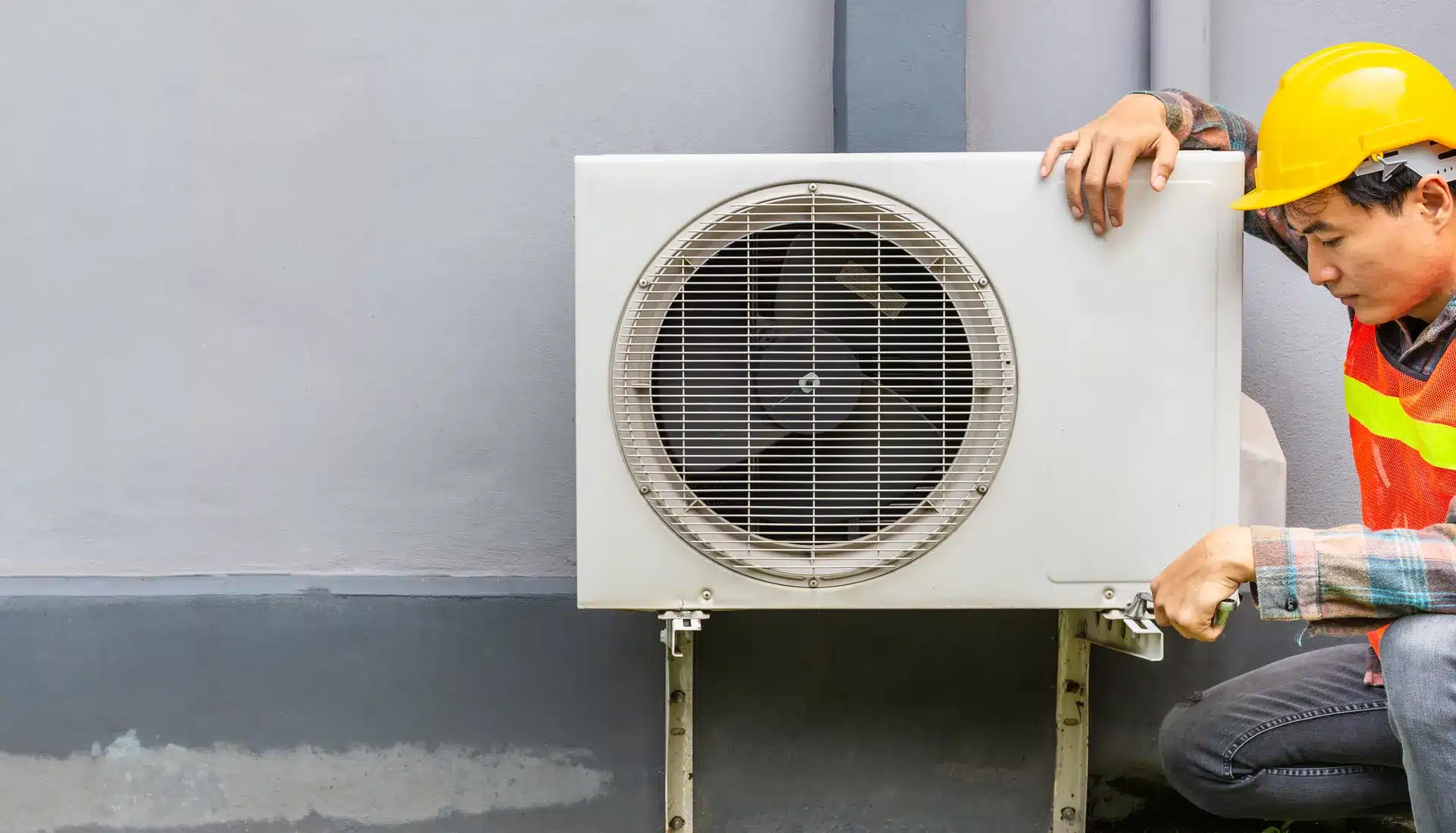
In 2026, the average cost for an AC condenser repair typically ranges from $150 to $700 for minor components like capacitors or fan motors. However, if the condenser coil itself requires replacement, costs jump significantly to between $1,200 and $2,800, depending on the unit's tonnage and the type of refrigerant used.
The air conditioning condenser is the heart of your home's outdoor HVAC unit. Its primary job is to release the heat collected from inside your home into the outside air. Because this component is exposed to the elements year-round—from scorching summer heat to winter debris—it is prone to various mechanical and electrical failures. By 2026, the landscape of HVAC repair has shifted due to the complete transition to newer, low-GWP (Global Warming Potential) refrigerants, which has influenced both part availability and labor specialization requirements.
Understanding the AC Condenser and Its Role
To understand why repairs can be costly, it is essential to distinguish between the "condensing unit" and the "condenser coil." The condensing unit is the entire metal box sitting outside your home. It houses the compressor, the condenser fan, the electrical contactors, and the condenser coil. When a technician refers to an "AC condenser repair," they may be talking about any one of these sub-components or the coil itself.
The condenser coil is a series of tubes—usually copper or aluminum—surrounded by thin cooling fins. Refrigerant enters this coil as a high-pressure, high-temperature gas. As the fan pulls outdoor air across the fins, the heat is transferred from the refrigerant to the air, causing the refrigerant to "condense" back into a liquid. If the coil is clogged with dirt, damaged by hail, or corroded by salt air, this heat exchange fails, forcing your entire system to work harder and increasing the risk of a total compressor blowout.
Breakdown of AC Condenser Repair Costs by Component
Repair costs are dictated by the complexity of the part and the labor required to install it. In 2026, labor rates for licensed HVAC technicians generally range from $100 to $250 per hour, with most repairs requiring a minimum service call fee of $90 to $150.
1. Capacitor Replacement
The capacitor is the most frequently replaced part in an outdoor unit. It acts like a temporary battery that provides the initial "jolt" of energy needed to start the fan motor and compressor.
- Estimated Cost: $150 – $350
- Why it fails: High summer temperatures and electrical surges can cause capacitors to bulge or leak. Replacing one is a quick job, but the part itself must be matched precisely to the motor’s requirements.
2. Condenser Fan Motor
If the fan isn't spinning, the heat has nowhere to go. A failing motor might buzz, spin slowly, or seize up entirely.
- Estimated Cost: $350 – $750
- Why it fails: Bearing wear, electrical shorts, or physical obstructions (like a fallen branch) can burn out the motor. Costs vary based on whether you need a standard single-speed motor or a high-efficiency variable-speed motor.
3. Contactors and Relays
The contactor is an electromechanical switch that tells the condenser to turn on when your thermostat calls for cooling.
- Estimated Cost: $150 – $400
- Why it fails: "Pitting" or carbon buildup on the electrical leads can prevent the switch from closing. Ants and other insects are also notorious for crawling into contactors and causing shorts.
4. Condenser Coil Replacement
This is the most "involved" repair short of replacing the entire unit. Because the coil holds the system's refrigerant, replacing it requires the technician to recover the existing gas, braze in the new coil, and recharge the system.
- Estimated Cost: $1,200 – $2,800
- Why it fails: Refrigerant leaks are the primary culprit. These are often caused by "formicary corrosion"—a type of microscopic tunneling in the metal caused by exposure to household chemicals or environmental pollutants.
Comparison of Common AC Condenser Repair Expenses
| Repair Type | Estimated Parts Cost | Estimated Labor Cost | Total Average Cost |
|---|---|---|---|
| Start/Run Capacitor | $30 – $80 | $120 – $200 | $150 – $280 |
| Contactor Replacement | $40 – $100 | $120 – $200 | $160 – $300 |
| Condenser Fan Motor | $150 – $400 | $200 – $350 | $350 – $750 |
| Circuit Board Repair | $200 – $500 | $150 – $300 | $350 – $800 |
| Condenser Coil (Parts Only) | $600 – $1,500 | $600 – $1,300 | $1,200 – $2,800 |
| Full Condensing Unit | $1,500 – $3,500 | $800 – $1,500 | $2,300 – $5,000 |
Key Factors Influencing Cost in 2026
Several external factors have stabilized or increased repair prices as we move through 2026. Understanding these can help you negotiate or better understand your technician's quote.
Refrigerant Type and the AIM Act Transition
By 2026, the HVAC industry has largely moved away from R-410A in new installations, favoring A2L refrigerants like R-32 or R-454B. If you have an older system (installed before 2023) that uses R-410A, repair costs involving the condenser coil will be significantly higher. This is because the supply of R-410A has been curtailed by EPA regulations, driving up the "per pound" price of the gas. A standard condenser coil replacement might require 5 to 10 pounds of refrigerant; in 2026, the cost of the gas alone can often exceed the cost of the metal coil.
Unit Tonnage and Efficiency Ratings (SEER2)
The size of your AC unit is measured in tons (its cooling capacity). A 5-ton unit requires a much larger condenser coil and a more powerful fan motor than a 2-ton unit. Furthermore, higher SEER2 (Seasonal Energy Efficiency Ratio) units use more complex, multi-stage components. While these save money on monthly utility bills, their replacement parts—particularly variable-speed fan motors—are substantially more expensive than those found in base-model units.
Warranty Coverage
Always verify your warranty status before approving a repair. Most major manufacturers (Carrier, Trane, Lennox, Rheem) offer a 5-to-10-year parts warranty if the unit was registered after installation. In 2026, many homeowners find that while the $1,200 condenser coil is "free" under warranty, they still must pay $800 to $1,300 for labor and refrigerant, as these are rarely covered by manufacturer warranties.
Accessibility and Location
If your outdoor unit is located on a steep rooftop, in a narrow crawlspace, or in a high-density urban area where parking and equipment transport are difficult, expect labor costs to increase by 20% to 50%. Technicians charge for the time it takes to safely access the equipment and move heavy tools and recovery tanks to the site.
Repair vs. Replace: Making the Financial Decision
When faced with a repair bill exceeding $1,000, many homeowners wonder if it is better to replace the entire outdoor unit or the whole system.
- The 50% Rule: If the cost of the repair is 50% or more of the cost of a new unit, replacement is generally the wiser investment.
- The Age Factor: AC units typically last 12 to 15 years. If your unit is over 10 years old and requires a new condenser coil or compressor, the likelihood of another major component failing soon is high.
- The Refrigerant Factor: If your unit uses the now-phased-out R-22 or the becoming-expensive R-410A, 2026 is an excellent time to upgrade to a modern A2L system. This ensures your system remains serviceable for the next decade without facing skyrocketing chemical costs.
For more information on refrigerant standards and phase-outs, you can refer to the EPA’s guidelines on the AIM Act.
Signs Your AC Condenser Needs Professional Attention
Early detection of a failing condenser can prevent a minor electrical fix from turning into a major mechanical failure.
- Reduced Cooling Capacity: If the air coming from your vents is lukewarm, the condenser might not be effectively removing heat from the refrigerant.
- Loud or Unusual Noises: Grinding, screeching, or clattering sounds often indicate a failing fan motor or a compressor under extreme stress.
- Frequent Tripping of the Circuit Breaker: This is a major red flag. It usually indicates that the compressor or fan motor is "shorting to ground" or drawing too much amperage, which is a fire hazard.
- Leaking Fluids: While condensation (water) near the unit is normal, oily residue on the condenser fins or baseboard usually indicates a refrigerant leak.
- The "Short Cycle": If the outdoor unit turns on and off every few minutes without cooling the house, the system may be tripping its high-pressure switch due to a clogged condenser coil.
Maintenance Tips to Avoid Costly Repairs
The best way to manage AC condenser repair costs is to prevent the need for them in the first place.
- Keep it Clean: Gently spray your outdoor unit with a garden hose (not a pressure washer) once a month during the summer. This removes dust, pollen, and grass clippings that insulate the coils and cause overheating.
- Maintain Clearance: Ensure there is at least 24 inches of clear space around the unit. Overgrown shrubs or stacked firewood restrict airflow, forcing the condenser fan to work harder and shorten its lifespan.
- Annual Professional Inspection: A technician can check the "capacitance" of your capacitor and the "amp draw" of your motor. Replacing a $150 capacitor during a scheduled visit can prevent it from failing on a 100-degree Sunday when emergency service rates apply.
- Level the Unit: Soil shifts over time. If the condenser unit leans, it can cause the oil in the compressor to settle unevenly, leading to premature mechanical failure.
Frequently Asked Questions
Is it worth replacing just the AC condenser coil?
In 2026, it is rarely cost-effective to replace just the coil if the unit is more than 8 years old. The labor and refrigerant costs are so high that they often approach the price of a brand-new condensing unit, which would come with a fresh 10-year warranty. However, if the unit is still under its original 10-year parts warranty, replacing the coil might be the more affordable short-term fix.
Why is R-410A refrigerant so expensive to replace now?
Under the AIM Act, the United States has mandated a phasedown of HFC refrigerants like R-410A because of their high global warming potential. By 2026, production levels have dropped significantly, leading to a supply-demand imbalance. This makes any repair requiring a full system recharge much more expensive than it was just a few years ago.
Can I replace an AC condenser fan motor myself?
While the part is available online, DIY replacement is not recommended for most homeowners. HVAC units carry high-voltage electricity, and capacitors can hold a lethal charge even after the power is turned off. Furthermore, installing the wrong motor or wiring it incorrectly can lead to a fire or destroy the expensive control board inside the unit.
How long does a typical AC condenser repair take?
Minor electrical repairs like capacitors or contactors usually take 30 to 60 minutes once the technician arrives. Replacing a fan motor takes about 1 to 2 hours. A full condenser coil replacement is a major project that typically requires 4 to 6 hours of labor.
Does a home warranty cover AC condenser repairs?
Most standard home warranties cover the repair or replacement of HVAC components, including the condenser. However, they often have "caps" on refrigerant costs or may refuse to pay for the "modifications" required to install a modern unit in an older home. Always read the fine print regarding "limit of liability" for HVAC systems.
Final Recommendation
If you are facing an AC condenser repair in 2026, start by checking your unit's manufacture date and warranty status. For minor electrical issues under $500, a repair is almost always the right choice. However, if you are quoted more than $1,500 for a coil replacement on an older R-410A system, we strongly recommend requesting a quote for a full system replacement. Modern A2L-based systems offer superior efficiency and will be much easier (and cheaper) to maintain over the next decade as older refrigerants continue to be phased out.