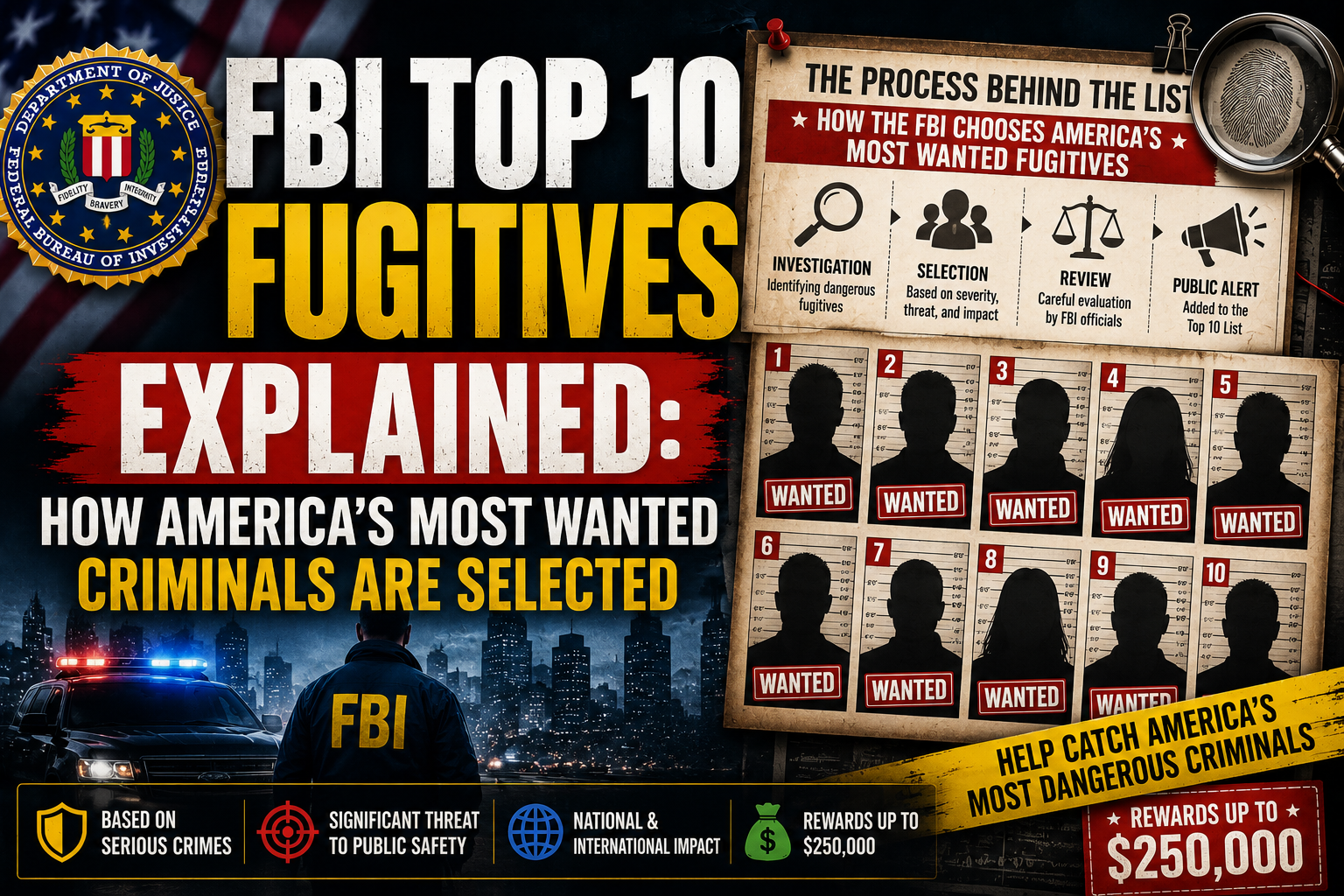
The Federal Bureau of Investigation’s Ten Most Wanted Fugitives list has evolved from a regional public awareness tool into a technologically advanced, globally coordinated mechanism for apprehending transnational criminals, white-collar fraudsters, and cyber threat actors. Examining how this roster has transformed reveals a systemic adaptation to modern globalization, the shift from physical to digital crimes, and the changing methodologies of international law enforcement cooperation.
Historical Foundations and Evolution of the Ten Most Wanted List
Established in March 1950, the FBI's Ten Most Wanted Fugitives list was conceived as a public relations and operational experiment. The initiative began after a reporter asked bureau officials for the names and descriptions of the toughest guys the bureau would like to capture. The resulting publicity campaign proved remarkably successful, leading to public tips that captured several high-profile criminals within weeks of publication. For decades, the criteria for inclusion remained relatively stable. A candidate had to have a long record of criminal activity and pose a serious menace to society, or the bureau needed to believe that the publicity resulting from placement on the list would be instrumental in apprehension.
In the early decades, the list heavily featured bank robbers, violent gang members, and domestic fugitives who operated within clear geographic boundaries. Law enforcement agencies relied heavily on physical posters displayed in post offices, bank lobbies, and local police stations. Citizens reviewed mugshots and physical descriptions, matching them against individuals seen in their local communities. While this analog model worked effectively for localized and domestic offenders, the late twentieth and early twenty-first centuries introduced structural changes to crime. As criminal enterprises expanded across international borders and migrated into digital spaces, the traditional framework of the list required fundamental modernization.
Shift 1: The Transition from Local and Domestic Crime to Transnational Threats
The first major shift shaping the modern FBI Top Ten Fugitive list is the decisive pivot from purely domestic criminals to transnational actors. Modern criminal organizations no longer respect national borders, utilizing sophisticated logistical networks, international safe havens, and foreign jurisdictions that lack robust extradition treaties with the United States. Consequently, the fugitives featured on the list increasingly include individuals accused of transnational organized crime, large-scale drug trafficking, international money laundering, and terrorism.
This globalization of the list has fundamentally changed how the FBI operates. Capturing a fugitive who resides in a country with strained diplomatic ties to the United States requires extensive coordination through international bodies like INTERPOL, foreign intelligence agencies, and specialized federal task forces. The bureau must rely on diplomatic pressure, bilateral law enforcement agreements, and cooperative foreign partners to locate and extradite individuals who believe they are beyond the reach of American justice. This shift highlights a broader reality in modern law enforcement: domestic security is inextricably linked to international cooperation.
Shift 2: The Rise of Cybercrime and State-Sponsored Digital Threats
Perhaps the most technologically disruptive shift in the history of the list is the inclusion of sophisticated cyber criminals and state-sponsored hackers. In the early decades of the twenty-first century, the list was dominated by physical violence and traditional property crimes. Today, a significant percentage of Wanted poster profiles feature individuals indicted for state-sponsored cyberespionage, ransomware distribution, intellectual property theft, and massive financial fraud originating from cyberspace.
Operating from foreign jurisdictions that often shield them from extradition, these cyber actors represent a distinct challenge for federal investigators. They can cause billions of dollars in economic damage and compromise critical infrastructure without ever setting foot in the United States. Placing these individuals on the Top Ten list serves multiple purposes:
- It imposes travel restrictions and public accountability on individuals who might otherwise operate with impunity in their home countries.
- It encourages international allies to execute provisional arrests if the fugitives travel abroad.
- It raises public awareness about the sophisticated nature of modern cyber threats and the specific nation-state actors behind them.
| Fugitive Category Era | Primary Crimes Featured | Main Investigation Method | Principal Public Engagement |
|---|---|---|---|
| Mid-20th Century | Bank robbery, murder, domestic fugitives | Informants, physical surveillance | Post offices, printed posters, newspapers |
| Late 20th Century | Organized crime, drug cartels, domestic terrorism | Wiretaps, federal-state task forces | Television broadcasts, news programs |
| 21st Century | Cyberattacks, transnational fraud, international cartels | Digital forensics, global intelligence sharing | Social media, multilingual digital campaigns, targeted web alerts |
Shift 3: Digital Transformation, Social Media, and Global Public Engagement
The methods used to distribute information about the FBI's most wanted individuals have undergone a complete revolution. Traditional physical posters placed in municipal buildings have been largely superseded by digital distribution channels, including social media platforms, digital billboards, and targeted online advertising. This digital transformation allows the bureau to push fugitive profiles directly to millions of international users in real time, bypassing the geographical limitations of print media.
Furthermore, the FBI has expanded its linguistic reach. Recognizing that transnational and cyber fugitives often reside in non-English-speaking regions, the bureau frequently translates press releases, digital posters, and reward announcements into multiple languages. This multilingual approach ensures that communities in foreign jurisdictions can understand the charges and recognize the suspects. Social media analytics also allow federal agencies to measure engagement, track the geographic spread of information, and analyze digital tips submitted by global citizens.
Shift 4: The Evolution of Financial Rewards and Private Sector Partnerships
Financial incentives have always played a role in encouraging tipsters to come forward, but the scale and structure of rewards associated with the Top Ten list have evolved significantly. Historically, rewards were funded strictly through federal appropriations and rarely exceeded modest amounts. Today, rewards for key fugitives often reach millions of dollars, frequently bolstered by specialized legislative programs such as the United States Department of State’s Rewards for Justice program.
This financial escalation reflects the immense economic and security damage caused by modern fugitives. In addition to government funding, the bureau increasingly collaborates with private sector entities, financial institutions, and cryptocurrency analysis firms. When tracking cybercriminals or sophisticated financial fraudsters, private cybersecurity companies often provide critical technical intelligence that complements federal investigations. This public-private synergy accelerates the identification of digital wallet addresses, corporate shell structures, and financial pipelines used by fugitives to launder illicit proceeds.
Shift 5: Evolving Legal Frameworks and Extradition Complexities
The final major shift involves the complex legal and geopolitical landscape surrounding the apprehension and extradition of modern fugitives. Securing a spot on the Top Ten list often signals that traditional diplomatic channels have hit a roadblock. When a fugitive finds refuge in a nation that refuses to extradite its citizens or has hostile diplomatic relations with the United States, law enforcement agencies must employ alternative legal strategies.
These strategies include pursuing indictments that trigger INTERPOL Red Notices, working with foreign prosecutors to initiate local prosecutions within the host country, and applying targeted financial sanctions through the Department of the Treasury. These legal mechanisms ensure that even if a fugitive cannot be physically extradited to stand trial in an American courtroom, their mobility, access to international banking, and ability to enjoy ill-gotten gains are severely restricted.
Frequently Asked Questions
What are the official criteria for making the FBI Top Ten Fugitive list?
A candidate must have a lengthy record of criminal activity and pose a serious menace to society, or the FBI must believe that the publicity resulting from placement on the list will be instrumental in the fugitive's apprehension. The Criminal Investigative Division evaluates candidates before final approval by senior bureau leadership.
Does everyone on the list have a financial reward attached?
Most individuals featured on the list carry a reward for information leading to their apprehension, but the amounts vary widely based on the severity of the crimes, statutory limits, and supplemental funding from partner agencies or specialized government programs like Rewards for Justice.
How many fugitives have been captured since the list was created?
Since its inception in 1950, the FBI has added hundreds of fugitives to the list, with the vast majority having been captured or located, often aided by public tips generated through media coverage.
What happens when a fugitive is captured or removed from the list?
When a fugitive is apprehended, surrenders, dies, or has their underlying charges dismissed, the FBI officially removes them from the active list and announces a replacement candidate selected from a pool of violent criminals, cyber threats, or transnational targets.
Can citizens outside the United States submit tips to the FBI?
Yes. The FBI maintains international legal attaché offices at U.S. embassies worldwide, and global citizens can submit secure, anonymous tips online through the official FBI tips portal or via local law enforcement agencies cooperating with international partners.
Practical Next Actions and Verification
For researchers, journalists, and citizens interested in tracking developments related to federal law enforcement initiatives, relying on verified primary sources is essential. The most accurate, up-to-date information regarding active profiles, official reward amounts, and verified press releases can be accessed directly through the FBI Wanted Section. When reviewing cases, always verify that status updates originate from official government domains to avoid misinformation and unverified rumors common on third-party forums.