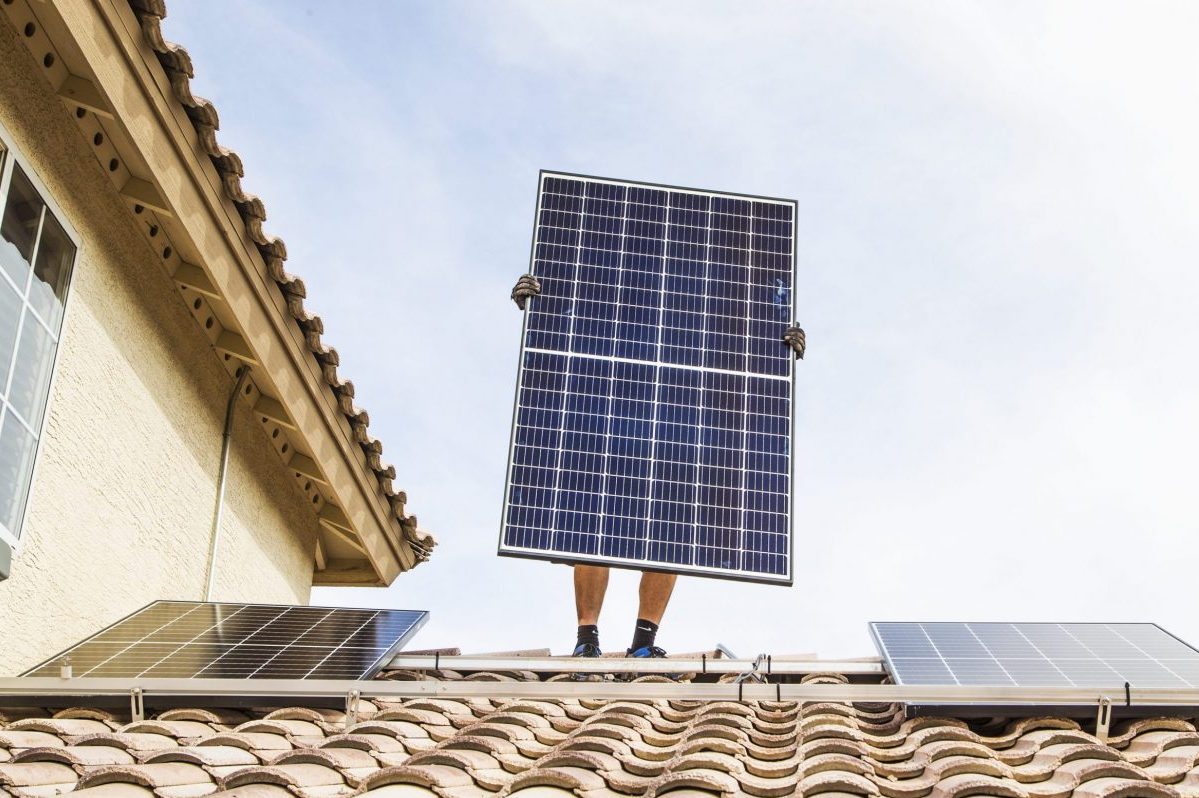
Choosing the right photovoltaic system for residential installation requires balancing power output, spatial efficiency, budgetary constraints, and local environmental conditions. Navigating these options ensures long-term energy independence, optimal return on investment, and reliable household power generation.
When homeowners embark on the journey of transitioning to residential solar energy, they quickly encounter a vast market filled with diverse technologies, manufacturer warranties, and varied efficiency ratings. Selecting the five best solar panel choices for home use requires a rigorous evaluation of cell technology, temperature coefficients, physical durability, and real-world performance metrics. Understanding these factors helps property owners cut through marketing claims and invest in photovoltaic (PV) modules that deliver sustained electrical yield over decades of exposure to the elements.
Understanding Residential Solar Technology Fundamentals
Before analyzing specific models, it is essential to understand the underlying technologies that govern modern solar panels. Residential solar modules generally rely on crystalline silicon, split into monocrystalline and polycrystalline variations, though monocrystalline has become the industry standard due to superior efficiency.
Monocrystalline panels are crafted from a single, continuous silicon crystal structure. This uniform atomic lattice allows electrons to move more freely, translating to higher conversion efficiencies—often ranging from 21% to 24% in contemporary premium panels. They also perform better in low-light conditions and possess a sleeker, uniform black appearance that blends well with most architectural styles.
Polycrystalline panels, conversely, are melted from multiple silicon fragments. While they are traditionally cheaper to manufacture, their lower efficiency ratings (usually between 15% and 18%) mean homeowners need more roof space to generate an equivalent amount of electricity. Consequently, major manufacturers have largely shifted their production focus to monocrystalline cells, utilizing advanced configurations like Half-Cut, Passivated Emitter and Rear Cell (PERC), and Interdigitated Back Contact (IBC) architectures to maximize energy harvest.
Key Evaluation Criteria for Home Solar Panels
Evaluating solar panels involves looking past raw wattage to examine metrics that dictate long-term value and reliability. Homeowners should assess the following parameters when comparing products:
- Efficiency Rating: The percentage of sunlight striking the panel that is successfully converted into usable electricity. Higher efficiency means more power generation per square foot.
- Temperature Coefficient: A measure of how much a panel’s performance degrades as its temperature rises above the Standard Test Conditions (STC) of 25°C (77°F). A lower percentage drop per degree Celsius indicates better performance on hot summer days.
- Product and Performance Warranties: Most reputable manufacturers offer a 25-year performance warranty guaranteeing a specific output floor (often 85% to 92% of original capacity at year 25). Comprehensive product warranties protect against mechanical failure and manufacturing defects for 12 to 25 years.
- Degradation Rate: The annual percentage loss in energy production. High-end panels degrade by less than 0.3% to 0.5% per year, ensuring robust longevity.
1. SunPower Maxeon Series (Maxeon 3 / Maxeon 6)
SunPower, through its spin-off Maxeon Solar Technologies, consistently occupies the pinnacle of residential solar engineering. The Maxeon series utilizes a unique design featuring a solid copper foundation baked onto the back of the silicon cell, rendering the panel virtually immune to the cracking and corrosion that plague traditional modules.
Performance and Specifications
Maxeon panels achieve some of the highest efficiency ratings in the residential sector, often exceeding 22.8%. Their proprietary IBC architecture removes metal grid lines from the front of the cell, maximizing light absorption and aesthetic appeal. Furthermore, Maxeon panels boast an exceptionally low annual degradation rate, typically losing less than 0.2% of their generation capacity per year.
Warranties and Value Proposition
SunPower offers an industry-leading 40-year combined product, power, and service warranty—though standard terms on newer iterations frequently sit at 25 years with elite tier coverage. While the upfront investment for SunPower hardware is higher than the market average, their superior lifetime energy yield and low failure rates make them the premier choice for homeowners with limited roof space who require maximum generation capacity.
2. REC Alpha Pure Series
Headquartered in Norway with manufacturing facilities in Singapore, REC Group has earned global acclaim for its heterojunction technology (HJT) panels. The REC Alpha Pure series merges the benefits of traditional crystalline silicon cells with thin-film silicon layers, creating a hybrid cell structure that captures significantly more solar spectrum energy.
Performance and Specifications
The Alpha Pure series features gapless cell layouts, eliminating wasted space between cells and improving overall aesthetic integration. With efficiency ratings reaching up to 22.3% and a temperature coefficient as low as -0.26%/°C, these panels maintain superior performance during scorching summer afternoon heatwaves. The split-cell design also ensures that partial shading across one half of the panel does not incapacitate the entire module.
Warranties and Value Proposition
When installed by a REC Certified Solar Professional, homeowners qualify for the REC ProTrust Warranty, which covers product, performance, and labor for 25 years. The Alpha Pure series represents an exceptional middle-to-high-tier option for residential buyers seeking cutting-edge thermal performance without paying absolute top-dollar for Maxeon hardware.
3. Qcells Q.PEAK DUO BLK ML-G10+ Series
Hanwha Qcells is one of the most recognizable and widely deployed residential solar brands in North America and Europe. The Q.PEAK DUO BLK ML-G10+ series relies on Qcells' proprietary Q.ANTUM DUO Z technology, combining half-cell architecture with wire interconnections that reduce electrical resistance losses.
Performance and Specifications
These panels achieve efficiency ratings up to 21.4%. While slightly lower than SunPower or REC flagship models, the Q.PEAK DUO series compensates with exceptional mechanical durability, withstanding heavy snow loads (up to 5,400 Pascals) and high wind pressures (up to 4,000 Pascals). Their all-black aesthetic makes them a favorite for homeowners prioritizing curb appeal.
Warranties and Value Proposition
Qcells provides a 25-year product warranty and a linear performance warranty guaranteeing at least 86% of nominal power output at year 25. The brand strikes an ideal balance between tier-one manufacturing reliability and cost-effectiveness, making it a staple recommendation among residential solar installers.
4. Panasonic EverVolt Series
Panasonic is a historic electronics titan that has maintained a commanding presence in the renewable energy sector. The EverVolt series—specifically the EverVolt 2.0 iterations—utilizes heterojunction cell technology with intrinsic thin-layer passivation to minimize electron recombination losses.
Performance and Specifications
EverVolt panels offer efficiency ratings up to 22.2% and maintain an impressively low temperature coefficient of -0.26%/°C. This makes them exceptionally productive in hot climates where standard silicon panels suffer noticeable voltage drops. The dual-glass construction also provides enhanced protection against micro-cracking caused by hail and severe weather events.
Warranties and Value Proposition
Panasonic backs the EverVolt series with its Triple 25-year warranty, covering product, performance, and labor (when installed by a Panasonic Authorized Installer). This comprehensive labor inclusion provides valuable peace of mind, ensuring that homeowners are protected from out-of-pocket expenses should a hardware replacement become necessary.
5. Silfab Prime / Elite Series
Silfab Solar is a North American manufacturer with production facilities in Washington State and Ontario, Canada. By focusing heavily on domestic manufacturing, Silfab has captured a substantial share of the residential market for homeowners prioritizing regional supply chains and compliance with local content incentives.
Performance and Specifications
The Silfab Elite and Prime series utilize advanced back-contact and half-cell technologies, pushing efficiency ratings up to 21.4% and 22.6% respectively. Their engineering focuses heavily on rigorous quality control, minimizing cell-level micro-defects during the automated manufacturing process.
Warranties and Value Proposition
Silfab offers a 25-year product warranty and a 30-year linear power warranty on select models. For homeowners seeking high-efficiency modules built within North America—often qualifying for specialized federal clean energy manufacturing bonuses or localized grants—Silfab provides an exceptionally dependable option.
| Manufacturer & Model | Cell Technology | Typical Efficiency | Temp. Coefficient | Standard Warranty |
|---|---|---|---|---|
| SunPower Maxeon 6 | Monocrystalline (IBC) | Up to 22.8% | -0.27% / °C | 25 Years (Product & Power) |
| REC Alpha Pure | Heterojunction (HJT) | Up to 22.3% | -0.26% / °C | 25 Years (Full ProTrust) |
| Qcells Q.PEAK DUO BLK | Monocrystalline PERC | Up to 21.4% | -0.34% / °C | 25 Years (Product & Power) |
| Panasonic EverVolt | Heterojunction (HJT) | Up to 22.2% | -0.26% / °C | 25 Years (Product, Power, Labor) |
| Silfab Elite | Monocrystalline | Up to 22.6% | -0.30% / °C | 25 Years (Product) / 30 Years (Power) |
Financial Considerations and Incentives
Purchasing residential solar panels is a capital expenditure that functions as an investment in energy infrastructure. Beyond upfront hardware costs, homeowners must account for inverter selection, racking hardware, permitting fees, and labor.
In many jurisdictions, financial incentives significantly offset these costs. For instance, the federal residential clean energy credit in the United States allows homeowners to deduct a substantial percentage of the total installation cost from their federal taxes. Additionally, net metering policies—where local utility companies credit homeowners for excess electricity exported back to the grid—directly influence the financial payback period, which typically ranges from 7 to 11 years depending on local electricity rates.
Balancing Aesthetics, Space, and Climate
Every residential roof presents unique constraints. Homeowners should weigh environmental and structural variables carefully before finalizing equipment selection:
- Shading and Roof Orientation: If trees or architectural features cast shadows during peak sunlight hours, pairing high-efficiency half-cut panels with microinverters (such as those from Enphase) or DC optimizers (such as SolarEdge) ensures that shaded modules do not bottleneck the entire array.
- Climate Extremes: In snowy regions, structural load ratings and frame thickness are paramount. In desert climates, prioritizing a low temperature coefficient prevents catastrophic energy loss during summer afternoons.
- Neighborhood Associations (HOAs): All-black panels with dark backsheets (like the Qcells or Silfab Elite lines) offer superior visual uniformity, satisfying strict architectural covenants that prohibit glaring silver grid lines.
Frequently Asked Questions
How many solar panels are typically required to power an average home?
The number of panels required depends on average household energy consumption, geographic location, and panel wattage. An average residential home consuming roughly 10,000 kilowatt-hours (kWh) annually typically requires between 20 and 25 panels rated at 400 watts each, assuming standard peak sun hours for the region.
Do solar panels still generate electricity on cloudy or rainy days?
Yes, solar panels continue to generate electricity during overcast weather, though production drops to roughly 10% to 25% of their rated capacity depending on cloud density. Photovoltaic cells respond to ambient daylight rather than direct heat, meaning they remain functional across seasonal weather variations.
What is the difference between monocrystalline and polycrystalline panels?
Monocrystalline panels are cut from a single continuous silicon crystal, offering higher efficiency, sleeker aesthetics, and better low-light performance. Polycrystalline panels are made from multiple melted silicon fragments, resulting in lower efficiency, a speckled blue hue, and a more budget-friendly price point.
Do I need to purchase a solar battery storage system along with my panels?
A battery storage system is not strictly mandatory unless the local utility lacks net metering policies or frequent grid outages threaten home stability. Grid-tied systems without batteries automatically shut down during blackouts for safety reasons, whereas paired batteries provide seamless backup power.
How long do residential solar panels last before needing replacement?
Modern solar panels are engineered for exceptional durability, with a typical operational lifespan of 25 to 35 years or more. Even after 25 years, high-tier panels continue generating electricity, though output gradually declines below original rated capacity according to the manufacturer's linear warranty curve.
Next Actions for Prospective Solar Homeowners
Transitioning to residential solar energy begins with a comprehensive energy audit of past utility bills to establish baseline kilowatt-hour consumption. Homeowners should subsequently obtain multiple quotes from certified local contractors who can perform detailed shade analyses and structural roof assessments. Verifying installer certifications with manufacturers like REC, Panasonic, or SunPower ensures eligibility for extended labor warranties, safeguarding the long-term integrity of the installation.