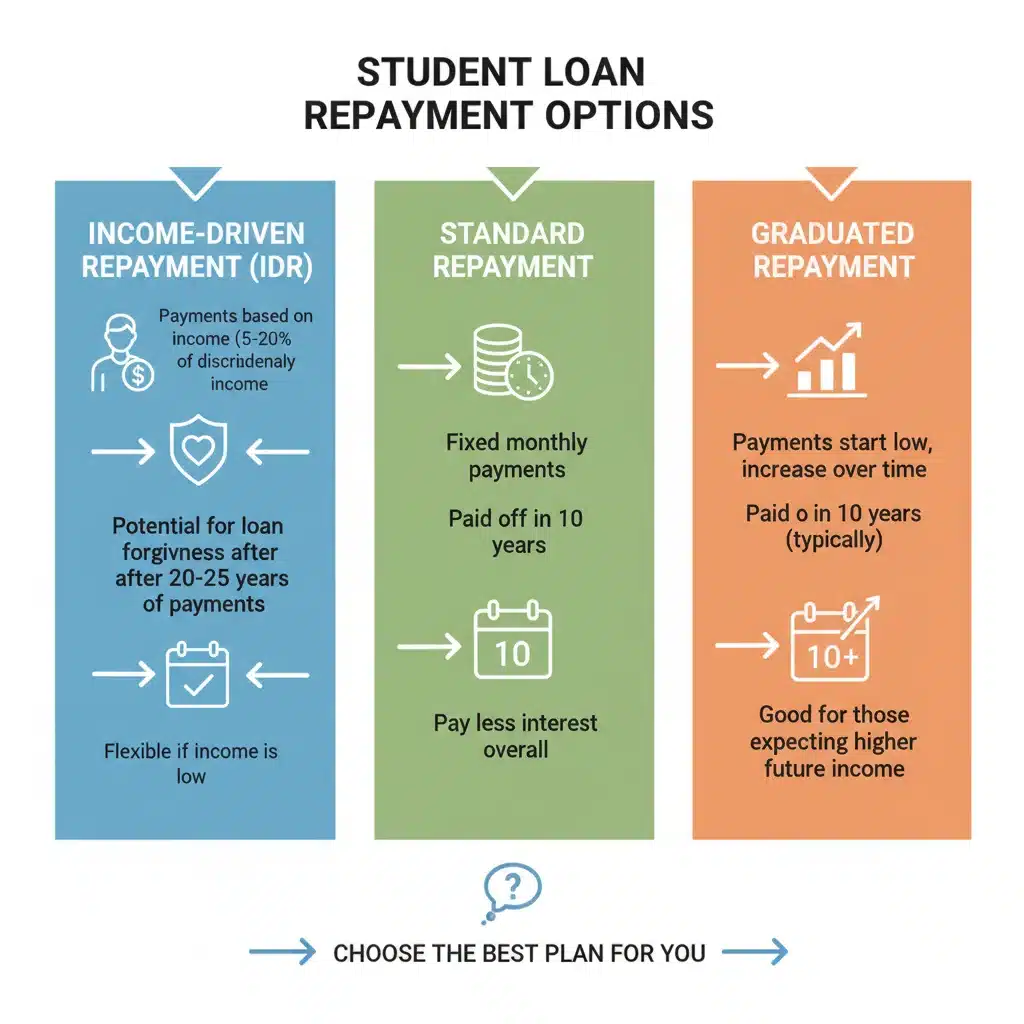
In 2026, tax forgiveness options for students encompass two primary areas: tax exclusions on forgiven student loan debt and IRS tax debt relief programs for unpaid back taxes. While Public Service Loan Forgiveness remains tax-free, temporary federal tax exemptions on Income-Driven Repayment discharges have expired, making insolvency provisions, Offer in Compromise, and tax credits critical tools for managing student tax liabilities.
Disclaimer: Tax laws are subject to change and vary by jurisdiction. This article provides educational information based on federal tax statutes and IRS guidelines. Consult a qualified Certified Public Accountant (CPA) or tax attorney for advice regarding your specific tax situation.
Understanding Student Loan Forgiveness Taxability in 2026
The tax treatment of canceled student loan debt changed significantly entering 2026. For several years, tax relief measures shielded borrowers from paying federal income tax on forgiven loan balances. Navigating the current system requires understanding which forgiveness programs remain tax-exempt and which could trigger a federal or state tax bill.
| Program / Discharge Type | Federal Income Tax Status in 2026 |
|---|---|
| Public Service Loan Forgiveness | Tax-Free (Permanent Exclusion) |
| Teacher Loan Forgiveness | Tax-Free (Permanent Exclusion) |
| Total & Permanent Disability (TPD) | Tax-Free (IRC § 108(f)(5)) |
| Closed School / False Cert. | Tax-Free (Statutory Relief) |
| Income-Driven Repayment (IDR) | Taxable (Unless Excluded by Form 982) |
| Private Student Loan Cancellation | Taxable (Unless Excluded by Form 982) |
The Post-2025 Landscape: Sunset of Temporary Tax Exclusions
Under Section 9675 of the American Rescue Plan Act (ARPA) of 2021, Congress temporarily amended Section 108(f)(5) of the Internal Revenue Code (IRC). This provision made all student loan forgiveness—including balances canceled under standard Income-Driven Repayment (IDR) plans and private debt discharges—completely exempt from federal income tax for discharges occurring between January 1, 2021, and December 31, 2025.
As of January 1, 2026, that temporary exclusion has expired. Unless Congress passes extending legislation, student loan debt forgiven under standard IDR timelines (such as 20-year or 25-year cancellation cycles) is once again classified as gross income by the Internal Revenue Service (IRS).
When a lender or the U.S. Department of Education cancels $600 or more of taxable student debt, they issue Form 1099-C (Cancellation of Debt) to both the borrower and the IRS. The amount reported in Box 2 of Form 1099-C must generally be reported as ordinary income on Form 1040, potentially pushing the taxpayer into a higher tax bracket and creating a substantial tax bill.
Permanently Tax-Exempt Student Loan Discharges
Not all student loan forgiveness is taxable in 2026. The Internal Revenue Code contains permanent provisions that protect specific categories of public service and institutional discharges from federal taxation:
- Public Service Loan Forgiveness (PSLF): Governed by IRC Section 108(f)(1), debt forgiven after 120 qualifying monthly payments while working for a qualifying non-profit or government employer is completely tax-free at the federal level.
- Teacher Loan Forgiveness: Up to $17,500 in direct or FFEL Subsidized and Unsubsidized loans forgiven for teaching full-time for five consecutive years in a low-income school remains non-taxable.
- Total and Permanent Disability (TPD) Discharge: Debt canceled due to a borrower becoming totally and permanently disabled remains exempt from federal gross income under permanent updates established in the Tax Cuts and Jobs Act (TCJA) and codified under IRC § 108(f)(5).
- Closed School and False Certification Discharges: Discharges granted because an educational institution closed while the student was enrolled, or falsely certified the student's eligibility, are generally treated as tax-free administrative corrections or non-taxable adjustments.
IRS Relief Options for Students Facing Unpaid Back Taxes
Beyond student loan forgiveness, many undergraduate and graduate students encounter tax debt due to unreported 1099 income (such as gig work), improper filing of education credits, or self-employment earnings. The IRS provides several structural debt relief mechanisms—collectively referred to as Fresh Start options—to help taxpayers resolve tax liabilities they cannot pay in full.
Offer in Compromise (OIC)
An Offer in Compromise (OIC) is a formal agreement between a taxpayer and the IRS that settles a tax liability for less than the full amount owed. For low-income students or recent graduates with limited assets and low earnings, an OIC represents a primary path to federal tax debt forgiveness.
The IRS evaluates OIC applications based on three distinct grounds:
- Doubt as to Collectibility: The taxpayer demonstrates that their assets and future income are insufficient to pay the full tax debt before the Collection Statute Expiration Date (CSED).
- Doubt as to Liability: There is a legitimate legal or factual dispute regarding whether the tax assessed is correct.
- Effective Tax Administration: The tax assessment is correct, and the IRS could collect it, but doing so would cause severe economic hardship or present exceptional circumstances.
To apply, taxpayers submit IRS Form 656 along with Form 433-A (OIC) for individuals. The IRS calculates your Reasonable Collection Potential (RCP) using standard living expense allowances. If your RCP is lower than your total tax debt, the IRS may accept your offer. Full-time students with limited income often present ideal criteria for Doubt as to Collectibility offers, provided they are current with all tax filing obligations.
Currently Not Collectible (CNC) Status
If a student owes back taxes but lacks the disposable income to make any payments without sacrificing basic living costs, they can request Currently Not Collectible (CNC) status.
When the IRS places an account in CNC status:
- Active collection actions—such as bank levies, wage garnishments, and federal tax liens—are temporarily halted.
- The IRS stops demanding monthly payments.
- Penalties and interest continue to accrue on the unpaid balance.
To qualify for CNC status, the taxpayer must provide financial documentation (usually via Form 433-F) showing that their necessary monthly expenses (housing, utilities, food, transportation, medical costs) equal or exceed their monthly gross income. While CNC status does not forgive the tax debt outright, it defers collection. If the taxpayer’s income remains low until the 10-year CSED expires, the IRS can no longer legally collect the tax debt, effectively resulting in complete forgiveness.
Installment Agreements and Penalty Abatement
Students who cannot settle via an OIC or obtain CNC status can structure manageable repayment terms or reduce penalties:
- Partial Payment Installment Agreement (PPIA): Allows taxpayers to make low monthly payments based on actual disposable income rather than the amount needed to pay the full debt within the statutory 10 years. If the statute of limitations expires before the balance is paid, the remaining debt is effectively written off.
- First-Time Penalty Abatement (FTA): Taxpayers who failed to file or pay on time for the first time can request administrative waiver of Failure to File or Failure to Pay penalties under IRS Internal Revenue Manual (IRM) guidelines. The taxpayer must have a clean filing record for the prior three tax years.
The IRS Insolvency Exclusion: Avoiding Tax on Canceled Debt
With the expiration of the ARPA tax shield, students receiving Form 1099-C for canceled debt (whether from private loan discharge or IDR programs) must look to established tax rules to avoid large tax bills. The primary statutory mechanism to prevent canceled debt from triggering taxable income is the Insolvency Exception under IRC Section 108(a)(1)(B).
- Step 1: Calculate Total Liabilities Immediately Before Discharge
- [Credit Cards + Student Loans + Auto Loans + Mortgages + Medical Debt]
- Step 2: Calculate Fair Market Value (FMV) of All Assets Immediately Before Discharge
- [Bank Accounts + Vehicles + Investments + Household Goods + Real Estate]
- Step 3: Compare Liabilities to Assets
- Are Liabilities Greater Than Assets?
- YES: TAX EXCLUSION APPLIES — Exclude canceled debt up to total insolvency amount using IRS Form 982.
- NO: CANCELED DEBT IS TAXABLE — Report full amount from Form 1099-C as ordinary income.
- Are Liabilities Greater Than Assets?
How Insolvency Works Under IRC Section 108
A taxpayer is considered insolvent when their total liabilities exceed the total fair market value (FMV) of all their assets immediately before the debt cancellation occurs.
Canceled debt is excluded from gross income to the extent of the insolvency. For example, if a borrower has $45,000 in forgiven student loans, but their total debts exceed their total assets by $30,000 right before the forgiveness took place, $30,000 of the canceled debt is excluded from taxable income. The remaining $15,000 would be treated as taxable income.
Filing IRS Form 982
To claim the insolvency exclusion, taxpayers must complete IRS Form 982 (Reduction of Tax Attributes Due to Discharge of Indebtedness) and attach it to their Form 1040 federal income tax return.
Key steps for executing Form 982 correctly include:
- Complete the Insolvency Worksheet: Prepare a comprehensive balance sheet of all assets and liabilities calculated as of the day immediately prior to the debt cancellation date listed on Form 1099-C.
- Include All Assets: Assets include bank account balances, retirement accounts, clothing, electronics, vehicles, real estate, and financial investments.
- Include All Liabilities: Liabilities include all outstanding debts—mortgages, auto loans, credit card balances, unpaid medical bills, tax debt, and the full balance of the student loan prior to its discharge.
- Attach Form 982: Check Box 1b on Part I of Form 982 ("Discharge of indebtedness to the extent insolvent (not in a title 11 case)") and specify the excluded amount on line 2.
State-Level Tax Implications on Student Forgiveness
Federal tax law is only one side of the equation. State tax codes handle forgiven debt differently depending on whether state legislation automatically conforms to the Internal Revenue Code (rolling conformity) or adopts static federal code dates (static conformity).
Even when a student loan discharge is tax-free at the federal level, specific states may tax the canceled amount as state gross income:
- Non-Conforming States: Historically, states such as California, Indiana, Mississippi, North Carolina, and Wisconsin have imposed state income tax on certain student loan discharges or resisted federal non-taxability rules for specific IDR plans.
- State-Specific Insolvency Rules: Most states that impose income taxes recognize insolvency exceptions similar to IRS Form 982, but filing requirements, documentation standards, and threshold tests differ by state department of revenue.
Taxpayers facing student loan discharge must check the state income tax guidelines issued by their state's Department of Revenue for the 2026 tax year to determine if separate state tax reporting is required.
Comparison of Student Debt Relief & Tax Forgiveness Options
The following matrix compares common tax relief mechanisms and student debt discharge options available in 2026:
| Relief / Discharging Option | Type of Program | 2026 Federal Tax Status | Key Eligibility Requirement | Primary IRS Form / Action |
|---|---|---|---|---|
| Public Service Loan Forgiveness (PSLF) | Federal Debt Relief | Tax-Free | 120 qualifying payments under non-profit/gov employment | Employment Certification Form |
| Income-Driven Repayment (IDR) Cancellation | Federal Debt Relief | Taxable (unless insolvent) | 20 or 25 years of qualifying monthly payments | Form 1099-C / Form 982 |
| Total & Permanent Disability (TPD) | Federal Debt Relief | Tax-Free | VA determination or physician certification of disability | SSA/VA/Physician Documentation |
| Offer in Compromise (OIC) | IRS Tax Debt Relief | Resolves Back Tax Debt | RCP lower than total tax debt; no unfiled returns | Form 656 & Form 433-A (OIC) |
| Currently Not Collectible (CNC) | IRS Tax Debt Relief | Pauses Tax Collection | Total monthly allowable living expenses exceed income | Form 433-F |
| Insolvency Exclusion (IRC § 108) | IRS Tax Code Relief | Reduces/Eliminates Tax Bill | Liabilities exceed fair market value of assets prior to discharge | Form 982 & Insolvency Worksheet |
| First-Time Penalty Abatement | IRS Tax Debt Relief | Removes IRS Penalties | Clean filing history for preceding 3 tax years | Written request / Phone call to IRS |
Tax Credits and Deductions That Lower Student Tax Liability
While resolving forgiveness rules or tax liabilities, students can offset their overall tax burden using education tax credits and deductions. These tools reduce taxable income dollar-for-dollar or lower the final tax bill directly.
American Opportunity Tax Credit (AOTC) vs. Lifetime Learning Credit (LLC)
The IRS offers two main education tax credits under IRC Sections 25A. Taxpayers can claim both credits on the same tax return for different students, but cannot claim both credits for the same student in the same tax year.
| Feature | AOTC (IRC § 25A(i)) | LLC (IRC § 25A(c)) |
|---|---|---|
| Max Credit Amount | Up to $2,500 per student | Up to $2,000 per return |
| Refundability | Up to 40% ($1,000) | Non-refundable |
| Eligible Years | First 4 years of college | Unlimited years |
| Enrollment Requirement | At least half-time | At least 1 course |
| Degree Requirement | Seeking degree/credential | No degree required |
| MAGI Phaseout (Single) | $80,000 - $90,000 | $80,000 - $90,000 |
| MAGI Phaseout (Joint) | $160,000 - $180,000 | $160,000 - $180,000 |
To claim either credit, eligible educational institutions issue Form 1098-T (Tuition Statement) to the student by January 31. The student or parent reports these amounts on IRS Form 8863.
Above-the-Line Student Loan Interest Deduction
Under IRC Section 221, taxpayers paying interest on qualified higher education loans can deduct up to $2,500 of interest paid during the tax year.
Key provisions of this deduction:
- Above-the-Line Benefit: You can claim this deduction even if you do not itemize deductions on Schedule A. It directly lowers your Adjusted Gross Income (AGI).
- Form 1098-E: Lenders send Form 1098-E (Student Loan Interest Statement) if you paid $600 or more in interest during the year.
- Income Limits: The deduction phases out based on Modified Adjusted Gross Income (MAGI). Single filers and married couples filing jointly whose MAGI exceeds established IRS thresholds cannot take the full deduction. Married individuals filing separately are ineligible.
Step-by-Step Action Plan for Students Facing Tax Liabilities
If you anticipate receiving loan forgiveness in 2026 or currently owe back taxes to the IRS, follow these practical steps to protect your finances:
- STEP 1: Document Debt Cancellation
- Get Form 1099-C from your loan servicer or creditor. Verify Box 2 (amount) & Box 1 (date).
- STEP 2: Determine Tax-Exempt Status
- Check if canceled debt falls under PSLF, TPD, or statutory exclusions. If yes, no Form 1040 income.
- STEP 3: Conduct Insolvency Calculation
- If discharge is taxable (IDR/Private), complete an insolvency balance sheet prior to discharge date.
- STEP 4: Complete IRS Form 982
- If insolvent, file Form 982 with your 1040 return to reduce or eliminate taxable income from debt.
- STEP 5: Address Remaining IRS Tax Debt
- If tax is owed, apply for Offer in Compromise, Currently Not Collectible, or an Installment Agreement.
Step 1: Obtain Form 1099-C and Verify Data
If a loan was canceled, verify that the dollar amount in Box 2 of Form 1099-C accurately reflects the principal and interest written off. Check Box 1 for the exact date of cancellation, as your financial status on the day before this date governs any insolvency claim.
Step 2: Establish the Statutory Character of the Discharged Debt
Identify whether your forgiveness mechanism falls under a permanently tax-free statute (such as PSLF under IRC § 108(f)(1)) or a taxable program (such as an IDR 20-year discharge). If tax-free, retain your discharge approval letter from the Department of Education for tax audit protection.
Step 3: Run an Insolvency Calculation Before Filing
If your loan discharge is taxable, compile statements for every debt and asset you owned on the day preceding the discharge. Include market values for personal belongings, vehicle blue-book values, and retirement balances alongside all consumer debts.
Step 4: Submit Form 982 with Federal Tax Return
File Form 982 directly with your federal return. Ensure line 2 reflects the smaller of the canceled debt amount or the total insolvency amount. Keep all documentation for a minimum of three years from the filing date.
Step 5: Resolve Unpaid Tax Balances Through IRS Fresh Start Options
If you still owe federal taxes after applying credits and exemptions, do not ignore IRS collection notices. Submit Form 656 for an Offer in Compromise if your income and asset base are minimal, or request Currently Not Collectible (CNC) status via Form 433-F to halt active IRS enforcement.
Frequently Asked Questions
Will I receive a tax bill if my student loans are forgiven in 2026?
It depends on the specific program under which your loans were forgiven. If your loans are discharged through Public Service Loan Forgiveness (PSLF), Total and Permanent Disability (TPD), or Teacher Loan Forgiveness, the forgiven amount is tax-free under federal law. However, if your debt is canceled under standard Income-Driven Repayment (IDR) plans or private settlement, the temporary federal tax exclusion has expired, meaning the forgiven amount may be treated as taxable income unless you qualify for the IRS Insolvency Exception.
How does IRS Form 982 eliminate taxes on student loan forgiveness?
IRS Form 982 allows taxpayers to exclude canceled debt from taxable income if they were insolvent immediately before the cancellation occurred. Insolvency means your total financial liabilities (debts) exceeded the total fair market value of your assets. By completing Form 982 and attaching an insolvency worksheet, you exclude the canceled debt up to the exact dollar amount of your insolvency.
Can a full-time student qualify for an IRS Offer in Compromise?
Yes. Full-time students who owe back taxes for gig work, unreported income, or miscalculated tax filings can qualify for an Offer in Compromise (OIC) based on "Doubt as to Collectibility." Because the IRS calculates your Reasonable Collection Potential (RCP) using current income and asset balances, students with minimal income and few liquid assets often present valid cases for settling tax liabilities for a reduced amount.
What happens if I receive a Form 1099-C for student debt but cannot afford to pay the tax bill?
If you receive a Form 1099-C and cannot afford the resulting tax, first evaluate if you qualify for the insolvency exclusion using IRS Form 982. If you still owe tax after applying Form 982, you can apply for IRS debt relief options such as Currently Not Collectible (CNC) status—which pauses collection actions due to financial hardship—or establish a Partial Payment Installment Agreement (PPIA) to pay small amounts based on your disposable monthly income.
Is student loan interest still tax-deductible in 2026?
Yes. Taxpayers can deduct up to $2,500 of interest paid on qualified student loans under IRC Section 221. This is an above-the-line deduction, meaning you can claim it on Schedule 1 of Form 1040 without needing to itemize deductions. The deduction phases out for higher-income filers based on Modified Adjusted Gross Income (MAGI) guidelines set by the IRS.
Practical Recommendation: Next Steps for Taxpayers
To manage potential tax liabilities related to student loan forgiveness or back taxes in 2026:
- Request Official Documentation: Ensure you have received official paperwork for any loan forgiveness (such as a discharge approval letter from your loan servicer) and Form 1099-C if applicable.
- Audit Your Assets and Liabilities: If facing a taxable discharge, build an accurate balance sheet for the day before your loan was canceled to verify if you meet IRS insolvency criteria.
- Utilize Tax Software or Professional Guidance: When filing Form 982, Form 656 (Offer in Compromise), or claiming education credits on Form 8863, consider working with a licensed Enrolled Agent (EA), CPA, or tax professional specializing in IRS representation.
- Stay Current on Filings: The IRS will not process debt relief applications—including Offers in Compromise or Installment Agreements—unless all required prior-year federal tax returns have been filed.