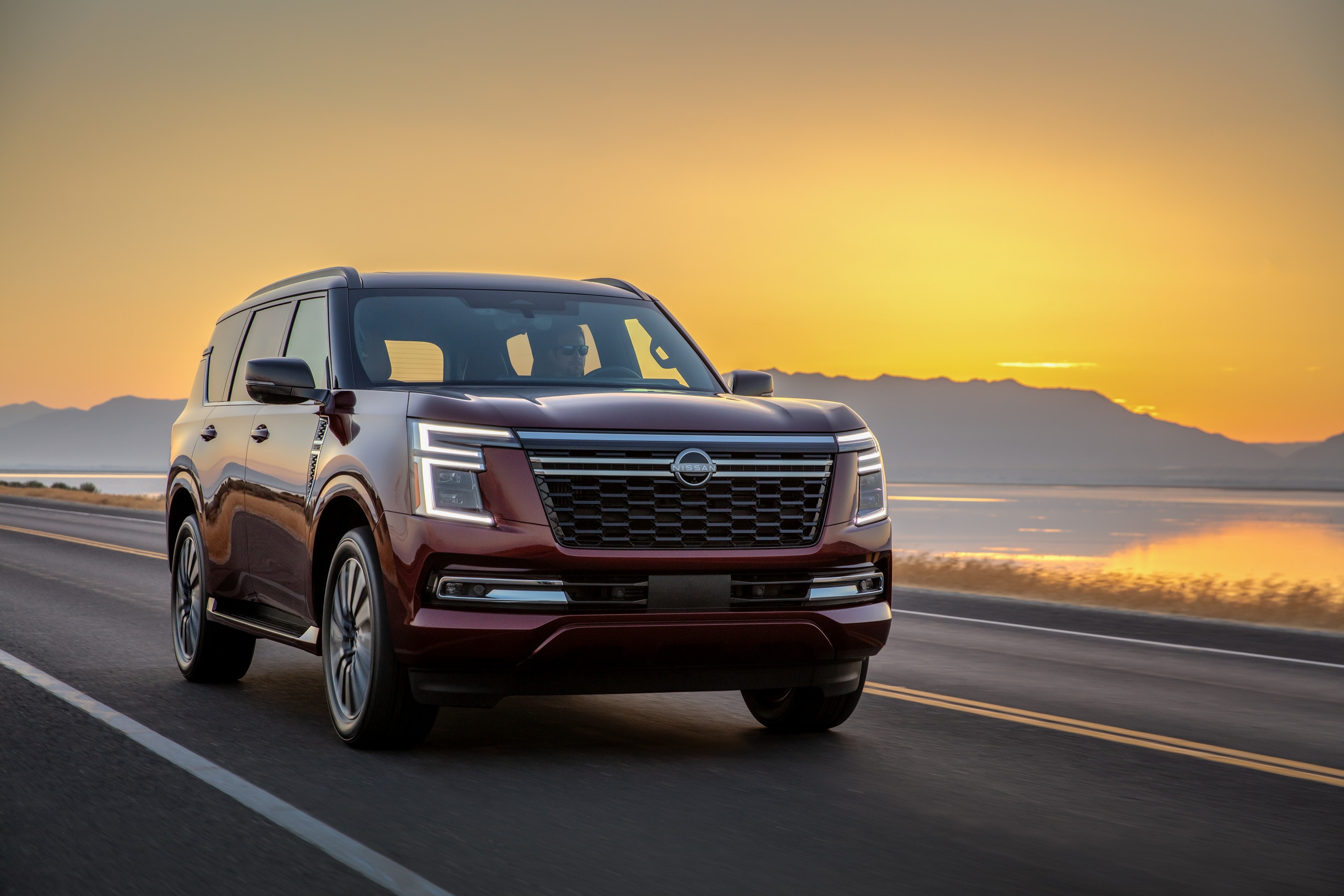
The 2025 V6 SUV landscape represents a critical juncture for automotive engineering, balancing traditional internal combustion reliability against an industry-wide transition toward electrification and forced-induction four-cylinder platforms. While downsizing remains the dominant trend, the naturally aspirated or twin-turbocharged V6 continues to serve as the benchmark for towing capacity, highway stability, and long-term powertrain durability in the mid-size and full-size segments.
The Evolution of the Six-Cylinder Architecture
The V6 configuration—specifically the 60-degree and 90-degree V-angle designs—has long been the gold standard for SUV packaging. Unlike inline-four engines, which often require complex balancing shafts to manage secondary vibrations, the inherent primary balance of a V6 engine allows for smoother operation under high-load conditions.
In the 2025 model year, manufacturers faced a difficult choice: abandon the V6 for hybridized four-cylinder units to meet tightening fleet-wide fuel economy standards or evolve the V6 with sophisticated thermal management and mild-hybrid assistance. The latter category represents the "premium-performance" tier of the 2025 landscape. This group is defined by SUVs that prioritize sustained power delivery, particularly when the vehicle is at its Gross Vehicle Weight Rating (GVWR) limit.
Why Displacement Still Matters
While manufacturers have achieved remarkable horsepower figures from 2.0-liter turbo engines, these units often suffer from high specific output, which can lead to increased thermal stress over prolonged towing intervals. The 2025 V6 SUV landscape is defined by engines that offer a broader torque curve, allowing the vehicle to remain in lower RPM ranges during highway cruising or heavy acceleration. This reduces the frequency of downshifting and lowers the operational temperature of the cooling system, providing a distinct mechanical advantage for users who prioritize longevity.
Market Segmentation: Power vs. Efficiency
The landscape is bifurcated into two distinct categories: performance-oriented V6 models and utility-oriented V6 models. Understanding the distinction between these is vital for prospective buyers or fleet managers who need to align vehicle capabilities with specific operational requirements.
Performance and Luxury Utility
This segment focuses on twin-turbocharged V6 platforms. These engines utilize forced induction not necessarily to maximize fuel economy, but to replicate the torque characteristics of older, naturally aspirated V8 engines. By utilizing smaller, high-efficiency turbines, these vehicles provide near-instantaneous boost, creating a driving experience characterized by effortless acceleration.
Traditional Utility and Reliability
Conversely, the "workhorse" segment of the 2025 landscape continues to favor naturally aspirated 3.5L to 3.8L V6 engines. These engines lack the complex plumbing and intercooling requirements of turbochargers, which often results in lower long-term maintenance costs and simplified engine bay access. For rural environments or regions with limited access to high-octane fuel, these naturally aspirated engines remain the superior choice for consistent, predictable performance.
Comparative Analysis of Leading 2025 V6 Platforms
The following table summarizes the technical characteristics of prominent V6 configurations found within the 2025 model year. These figures represent factory specifications for base or standard trims.
| Vehicle Model | Engine Type | Aspiration | Primary Advantage | Typical Towing Capacity |
|---|---|---|---|---|
| Honda Pilot | 3.5L V6 | Naturally Aspirated | Long-term reliability | 5,000 lbs |
| Toyota Highlander | 2.4L Turbo (I4 replacement)* | N/A | Economy | 5,000 lbs |
| Ford Explorer | 3.0L V6 | Twin-Turbo | High torque | 5,600 lbs |
| Jeep Grand Cherokee | 3.6L V6 | Naturally Aspirated | Off-road balance | 6,200 lbs |
| Mazda CX-90 | 3.3L I6 (Inline 6)** | Turbocharged | Smoothness | 5,000 lbs |
*Note: Many manufacturers, including Toyota, have replaced V6 units with high-output I4 turbos. The "2025 V6 landscape" specifically refers to those maintaining the six-cylinder form factor. **Note: While technically an Inline-6, this engine competes directly in the V6 space for power and architecture preference.
Technical Considerations for Buyers
When evaluating a 2025 V6 SUV, the focus should extend beyond the brochure horsepower. The integration of modern transmission technology is equally important. In 2025, the proliferation of 9-speed and 10-speed automatic transmissions has fundamentally changed how these engines function.
Transmission Matching
The efficiency of a V6 is largely dictated by its pairing with the transmission. A modern 10-speed gearbox allows the engine to stay in its "sweet spot"—the narrow RPM range where torque is peak and fuel consumption is optimized—more effectively than the 5-speed or 6-speed transmissions of the past. When test-driving or analyzing specs, look for "close-ratio" gearing, which minimizes the RPM drop between shifts.
Hybridization and Mild-Hybrid Systems
Several 2025 models now incorporate 48-volt mild-hybrid systems. Unlike full hybrids that can drive the vehicle on electricity alone, these systems use a small motor-generator to smooth out the transition between the engine start-stop cycles and provide a "torque fill" during acceleration. This technology effectively bridges the gap between the high fuel consumption of legacy V6 engines and the power-to-weight demands of modern SUVs.
Maintenance and Long-Term Ownership
The primary concern for owners of 2025 V6 SUVs is the complexity of the cooling and timing systems. Most V6 engines in this category utilize chain-driven dual overhead cams (DOHC).
- Fluid Intervals: Due to the tighter tolerances in modern 2025 engines, strict adherence to synthetic oil change intervals is non-negotiable. The thin-viscosity oils (e.g., 0W-20) are engineered to reduce internal friction; using heavier oils can lead to premature wear of variable valve timing (VVT) solenoids.
- Cooling System Health: Turbocharged V6 variants produce significantly higher under-hood temperatures. It is imperative to monitor coolant condition, as acidic coolant can cause accelerated degradation of plastic cooling components and seals.
- Sensor Longevity: As engines become more integrated with electronic control units (ECU), mass airflow (MAF) sensors and oxygen sensors become points of potential failure. Periodic cleaning and inspection, typically every 30,000 miles, can prevent "check engine" light events that often stem from minor sensor inaccuracies.
Identifying Your Best Fit
Selecting the correct SUV from the 2025 landscape requires an honest assessment of your typical use case. If your vehicle spends 90% of its life in an urban environment with minimal towing, a large-displacement V6 may be an unnecessary expense in terms of fuel and registration taxes. However, if your requirements involve frequent mountain driving, heavy trailer towing, or high-mileage road trips, the V6 remains a superior choice to the I4 turbo.
The Problem of "Power Density"
The primary mistake buyers make in 2025 is assuming that peak horsepower is equivalent to utility. A 300hp turbocharged four-cylinder may feel faster in a drag race than a 280hp naturally aspirated V6, but the V6 will generally exhibit less "power fade" during sustained climbing or high-speed mountain passes. If you reside in an area with significant elevation changes, prioritize displacement and naturally aspirated designs, as they are less reliant on atmospheric pressure sensors that can sometimes "pull" power in thin air.
Frequently Asked Questions
Are V6 engines being phased out of the SUV segment? Yes, the industry is transitioning toward turbocharged four-cylinder and hybrid platforms for entry-level and mid-size SUVs. However, for 2025, the V6 remains the preferred powertrain for luxury and mid-to-high-tier utility models where towing and refinement are primary marketing pillars.
Is a V6 SUV more expensive to maintain than a four-cylinder model? Generally, yes. V6 engines typically require more oil during services, and their physical footprint often makes spark plug replacement and secondary component repair more labor-intensive. Turbocharged V6 models also add the complexity of forced-induction cooling systems, which can increase long-term service costs compared to naturally aspirated counterparts.
What is the best V6 SUV for towing in 2025? The "best" model depends on your specific towing capacity requirement. Vehicles utilizing longitudinal mounting, such as the Jeep Grand Cherokee or certain Ford Explorer configurations, generally provide better stability for towing due to the inherent geometry of the chassis and the torque output of the V6 engines typically found in these platforms.
Do 2025 V6 SUVs offer better fuel economy than previous years? Yes, but the improvement is marginal. The gains in 2025 are primarily due to transmission efficiency and aerodynamic improvements in the vehicle bodies, rather than radical changes in the V6 engine combustion cycles. Many models feature "cylinder deactivation" technology, which allows the engine to run on fewer cylinders during coasting or light-load cruising.
Conclusion: Making the Final Decision
When selecting a vehicle from the 2025 V6 SUV landscape, treat the engine choice as a decision about your long-term mechanical philosophy. If you value simplicity, long-term durability, and predictable performance, prioritize a naturally aspirated V6. If you require the highest possible power-to-weight ratio and are willing to accept the increased complexity and specialized maintenance requirements of forced induction, a twin-turbocharged V6 will offer a superior driving experience.
Before finalizing any purchase, ensure you have reviewed the specific manufacturer’s maintenance schedule for the 2025 model year, as some manufacturers have introduced "sealed-for-life" transmission and differential fluids that may require professional evaluation during the vehicle's mid-life cycle.