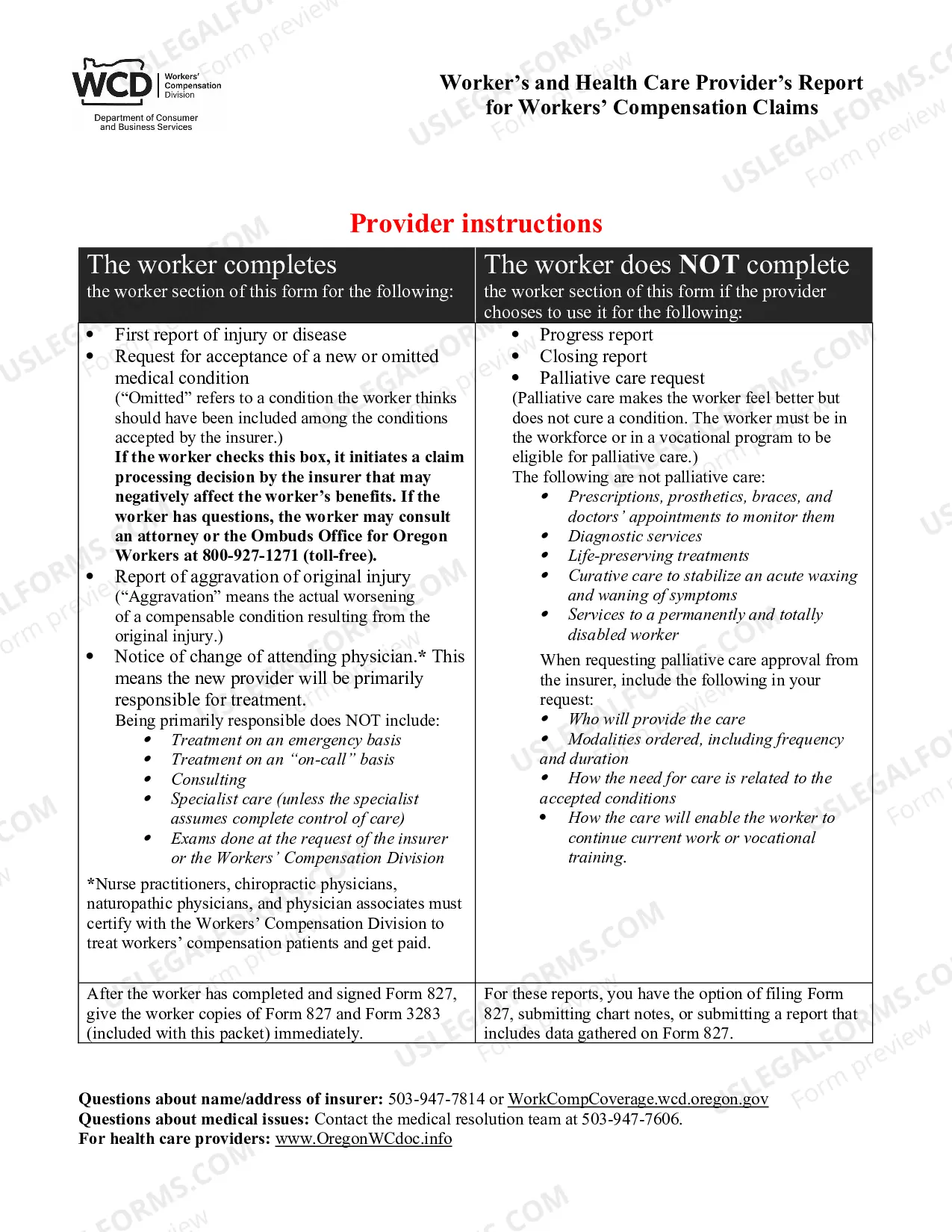
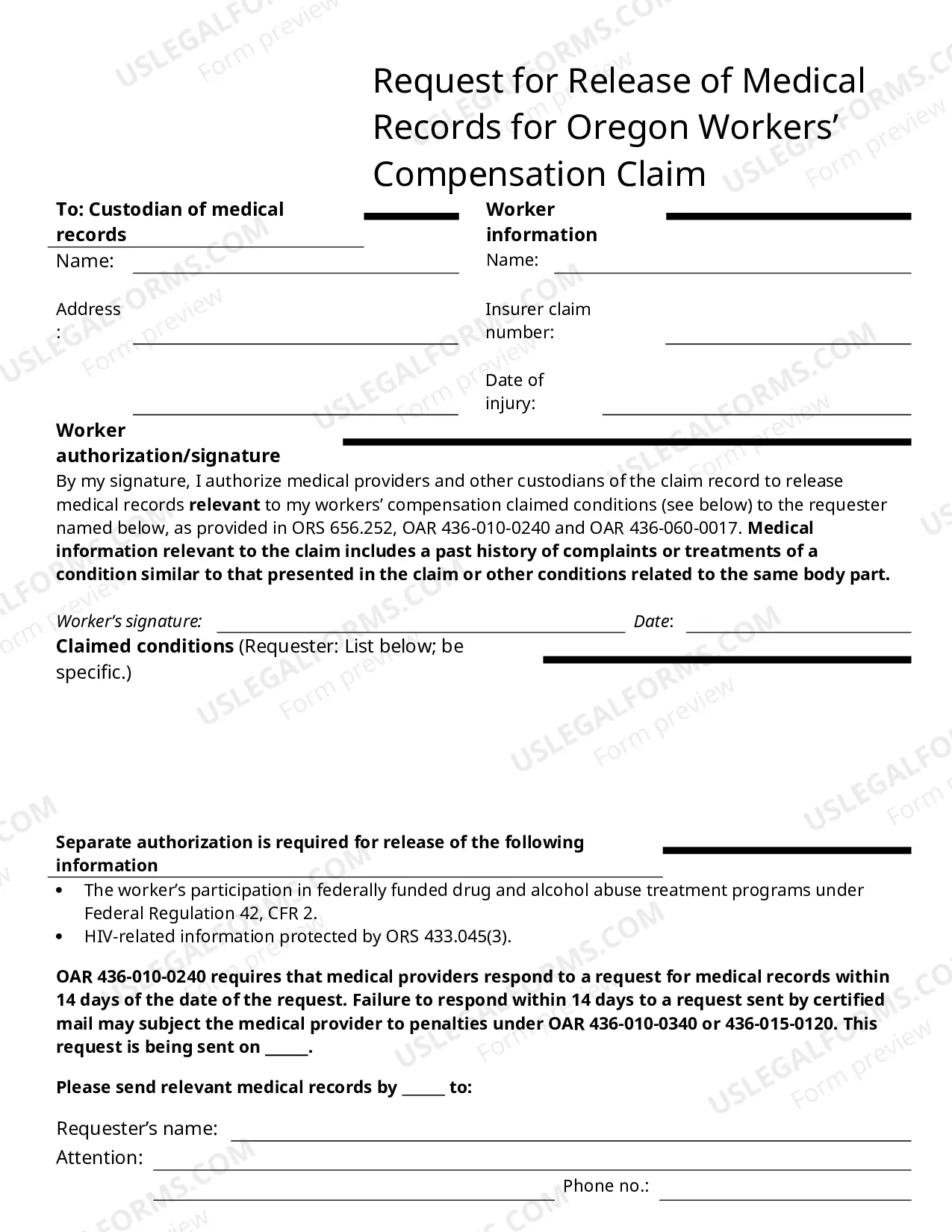
In 2018, Oregon workers' compensation insurers did not operate under a single, government-mandated "standard markup." Instead, Oregon utilized a loss cost system where insurers applied individual, state-filed Loss Cost Multipliers (LCMs)—typically ranging from 1.15 to 1.45 (a 15% to 45% markup)—on top of the National Council on Compensation Insurance (NCCI) pure premium base rates approved by the Department of Consumer and Business Services (DCBS).
When including the state-administered premium assessment of 6.8% and statutory assessments like the Workers' Benefit Fund (WBF) assessment of 2.8 cents per hour, overall employer costs reflected a combination of pure loss costs, individual insurer expense loadings, and mandated public assessments. Understanding how these components interacted in 2018 remains essential for retrospective payroll audits, contract disputes, public works force-account reconciliations, and historical claims benchmarking.
The Regulatory Framework: How Oregon Rates Were Structured in 2018
Oregon's workers' compensation system is nationally recognized for its regulatory stability and objective pricing models. To understand what constituted an insurer's "markup" in 2018, one must examine the division of responsibilities between advisory organizations, private carriers, and state regulators.
Total Billed Premium = (NCCI Pure Premium × Insurer LCM × Experience Modifier) ± Schedule Credits/Debits + State Assessments
Oregon operates as a loss cost state. The state does not set flat retail premiums for all insurance carriers. Instead, the rating mechanism separates the money needed to pay claims (pure premium) from the money needed to operate an insurance company (the markup or expense loading).
The Role of NCCI and the DCBS 2018 Rate Order
The National Council on Compensation Insurance (NCCI) acts as the licensed rating bureau for Oregon. Each year, NCCI analyzes historical indemnity (wage replacement) and medical loss data across hundreds of industrial classification codes. It then submits an advisory pure premium rate filing to the Oregon Department of Consumer and Business Services (DCBS).
For the policy year beginning January 1, 2018, DCBS approved an average pure premium decrease of 14.0%. This reduction marked one of the largest single-year drops in Oregon history, driven by sustained declines in workplace injury frequencies and system reforms.
The pure premium covers only two factors:
- Anticipated claims costs (medical treatments, disability benefits, and death benefits).
- Loss Adjustment Expenses (LAE) (direct legal and administrative costs required to settle claims).
Pure premium does not include carrier profits, commissions, general administrative overhead, or state taxes. Those operational costs constitute the insurer's markup.
Deconstructing the Insurer "Markup": The Loss Cost Multiplier (LCM)
When contractors, accountants, or public bodies refer to the standard insurance markup, they are almost always referring to the Loss Cost Multiplier (LCM).
The LCM represents the percentage factor an insurer applies to the NCCI pure premium loss cost to establish its final filed base rate (often called the manual rate) for any given class code.
Standard Components of an Insurer's Expense Load
Under Oregon Revised Statutes (ORS) Chapter 737, each insurer must file its rating system, including its LCM, with the DCBS Division of Financial Regulation. In 2018, carrier LCM filings reflected several distinct operational costs:
- Production Costs / Agent Commissions (7%–12%): Payments made to independent insurance agents and brokers for placing and servicing policies.
- General Company Expenses (5%–8%): Home office administrative costs, executive compensation, underwriting technology, rent, and operational overhead.
- Taxes, Licenses, and Fees (2%–4%): State premium taxes, municipal franchise fees, and statutory regulatory filings.
- Loss Control and Safety Engineering (1%–3%): Field audits, safety training, on-site hazard inspections, and risk management resources provided to policyholders.
- Underwriting Profit and Contingencies (–2% to +5%): The planned return on equity for the capital committed to writing the insurance risk. In many competitive commercial lines, carriers file modest or near-zero underwriting profit margins because they anticipate generating investment returns on premium reserves prior to claim payout.
Typical 2018 LCM Ranges in Oregon
In 2018, LCMs filed by admitted insurers in Oregon clustered heavily around specific industry segments:
| Insurer Tier / Market Segment | Typical 2018 LCM Range | Effective Operational Markup | Common Use Case |
|---|---|---|---|
| Preferred / Standard Carriers | 1.12 – 1.25 | 12% to 25% | Low-hazard risks, large payrolls, spotless loss runs |
| Middle Market Admitted Carriers | 1.26 – 1.38 | 26% to 38% | Manufacturing, specialty trade contractors, wholesale |
| Specialty / Higher Hazard Admitted | 1.39 – 1.55 | 39% to 55% | Logging, heavy demolition, roofing, high-turnover sectors |
| Assigned Risk Plan (NCCI Pool) | 1.40+ (fixed by rule) | Standard assigned surcharge | Distressed risks unable to secure voluntary coverage |
Note: Data reflects typical multi-tier voluntary market filings in Oregon for calendar year 2018 as recorded by the DCBS Division of Financial Regulation.
To calculate the manual rate from an approved NCCI loss cost:
$$\text{Manual Rate} = \text{NCCI Loss Cost} \times \text{Insurer LCM}$$
For example, if an NCCI pure premium loss cost for classification code 5403 (Carpentry) in 2018 was $4.50 per $100 of payroll, an insurer with an approved 2018 LCM of 1.30 established a manual rate of:
$$$4.50 \times 1.30 = $5.85 \text{ per } $100 \text{ of payroll}$$
In this transaction, the $1.35 differential represents the insurer's markup over pure claims losses.
Mandatory State Assessments in 2018
In addition to pure premium and insurer expense loadings, Oregon employers were subject to statutory state assessments. These assessments are not part of an insurer's commercial profit or internal expense structure; rather, carriers are required by law to collect them from employers and remit them to the state.
Any comprehensive evaluation of 2018 workers' compensation markup or total payroll burden must incorporate these mandatory fees.
1. DCBS Workers' Compensation Premium Assessment
Under ORS 656.612, the Director of DCBS establishes an annual premium assessment rate to fund the administration of the Oregon Workers' Compensation Act, the Oregon Occupational Safety and Health Division (Oregon OSHA), and the Workers' Compensation Board.
- 2018 DCBS Assessment Rate: 6.8% of standard premium.
- Collection Method: Insurers bill this as a direct percentage added to the policy's standard earned premium after the application of experience modifications.
2. Workers' Benefit Fund (WBF) Assessment
The Workers' Benefit Fund supports programs that assist injured workers and their beneficiaries, including the Retroactive Program, the Reemployment Assistance Program, and benefits for handicapped workers.
- 2018 WBF Assessment Rate: 2.8 cents per hour worked (or partial hour worked) by each covered employee.
- Cost Split: By statute, employers and employees split this cost equally:
- Employer share: 1.4 cents per hour.
- Employee deduction: 1.4 cents per hour (withheld from net pay).
- Billing Treatment: Unlike the DCBS assessment, the WBF is an hourly rate, not a percentage markup on premium. However, in certified payroll and public contract billing audits, contractors frequently convert this into an equivalent percentage markup over hourly wages.
Contractual and Labor Burden Markups: Construction and Public Works
Confusion surrounding the phrase "standard workers' compensation markup" often arises in commercial construction, project disputes, and public works force-account agreements. When a general contractor or owner negotiates extra work or time-and-materials (T&M) change orders, they must calculate a reimbursement rate for labor burden.
ODOT and Public Works Specifications
Under the standard specifications published by public agencies—such as the Oregon Department of Transportation (ODOT) in its Standard Specifications for Highway Construction (Section 00197.20, "Force Account Work"):
- Reimbursement by Actual Audited Rate: Public bodies do not generally permit contractors to claim an arbitrary or inflated markup for workers' compensation. Instead, the contractor must demonstrate its actual effective rate, certified by insurance policy declaration pages and final payroll audits.
- Formula for Insurance Burden: The allowable markup for workers' comp on labor billing is determined by dividing the total net annual workers' compensation premium paid for that trade classification by the gross payroll for that trade, factoring in experience modifications and actual paid assessments.
- Caps on Miscellaneous Surcharges: While standard specifications permit a fixed overhead and profit markup (e.g., 15% to 20% on direct labor costs), that administrative fee cannot be double-counted on insurance burden. The insurance reimbursement is restricted to verified out-of-pocket statutory coverage costs.
Temporary Staffing and PEO Billing Markups
In the professional employer organization (PEO) and temporary staffing industries operating in Oregon in 2018, firms used "markup multipliers" on direct wages to quote client billing rates.
A staffing firm billing a client in 2018 typically applied a total gross markup ranging from 35% to 65% above the worker's base hourly rate. The workers' compensation component inside that staffing markup varied drastically by classification code:
- Clerical/Office (Code 8810): Workers' comp represented approximately 0.3% to 0.7% of direct payroll.
- Light Industrial / Assembly: Workers' comp represented 3.0% to 5.5% of direct payroll.
- Roofing / Structural Steel: Workers' comp could represent 15.0% to 30.0% of direct payroll.
When a staffing provider claimed a "standard workers' comp markup" of, for example, 8% across all trades, it was using an aggregate blended portfolio rate rather than an individual statutory rate.
Factors That Altered an Employer's Actual 2018 Markup
Even if two Oregon employers had identical payrolls and operated under the same NCCI classification codes in 2018, their final workers' comp markup differed substantially. Several policy-level adjustments directly affected the effective multiplier applied to their baseline costs.
Experience Rating Modification (E-Mod)
The Experience Rating Modification Factor (EROD / E-Mod), administered by NCCI, measures an employer's three-year historical claims performance against the average business in the same classification.
- Credit Mod (e.g., 0.82): An employer with fewer and less severe claims received an 18% discount on standard premium. This effectively neutralized a significant portion of the insurer's standard LCM markup.
- Debit Mod (e.g., 1.28): An employer with higher-than-average claims history paid a 28% surcharge. When multiplied against the insurer's manual rate, this compounded the initial expense loading.
Subject Premium = Payroll × Manual RateStandard Premium = Subject Premium × Experience Modifier
Schedule Rating Credits and Debits
Oregon administrative rules allow insurers to apply Schedule Rating Credits or Debits (typically up to +/- 25% or 30%, subject to individual carrier filings). Insurers use schedule rating to reward or penalize policyholders based on risk characteristics that are not yet reflected in their E-Mod:
- Quality of on-site safety equipment and premises housekeeping.
- Mandatory drug and alcohol testing policies.
- Cooperation with formal return-to-work and light-duty programs.
- Machine guarding and ongoing hazard mitigation protocols.
In 2018's competitive commercial market, aggressive carriers frequently deployed schedule credits of 10% to 20% for desirable accounts. This practice significantly compressed the insurer's net realized markup over the pure loss cost.
Premium Discount Thresholds
For businesses generating substantial standard premium, insurers applied a statutory Premium Discount table to reflect economies of scale in policy issuance and administration:
- First $5,000 in standard premium: 0.0% discount.
- Next $95,000: Variable discount (typically 8% to 10%).
- Next $400,000: Variable discount (typically 12% to 14%).
- Over $500,000: Higher tier discount (up to 15% to 17%).
Because larger policies cost an insurer proportionately less to underwrite, audit, and service, premium discounts systematically reduced the effective expense markup on large accounts.
2018 Benchmark Calculation: Putting the Numbers Together
To see how pure premium, insurer markup, modifications, and state assessments combined on an actual 2018 Oregon policy, consider an example involving a commercial electrical contractor (Class Code 5190).
Baseline Profile
- Classification Code: 5190 (Electrical Wiring – within buildings)
- 2018 Approved NCCI Pure Premium Loss Cost: $2.15 per $100 payroll
- Insurer 2018 Approved Loss Cost Multiplier (LCM): 1.28 (28% insurer markup)
- Employer Payroll: $1,000,000
- Employee Total Hours Worked: 40,000 hours
- Experience Modifier (E-Mod): 0.90 (10% credit)
- Schedule Rating Credit: 5%
- 2018 DCBS Assessment: 6.8%
- 2018 WBF Assessment (Employer Portion): $0.014 per hour
Step-by-Step Premium Computation
Calculate Manual Rate: $$\text{Manual Rate} = $2.15 \times 1.28 = $2.752 \text{ per } $100 \text{ payroll}$$
Calculate Subject (Base) Premium: $$\text{Subject Premium} = \left(\frac{$1,000,000}{$100}\right) \times $2.752 = $27,520.00$$
Apply Experience Modifier (0.90): $$\text{Modified Premium} = $27,520.00 \times 0.90 = $24,768.00$$
Apply Schedule Credit (5% reduction): $$\text{Credit} = $24,768.00 \times 0.05 = $1,238.40$$ $$\text{Standard Premium} = $24,768.00 - $1,238.40 = $23,529.60$$
Apply Premium Discount (Assume standard carrier table: ~6.5% on this volume): $$\text{Discount} = $1,529.42$$ $$\text{Net Earned Premium} = $23,529.60 - $1,529.42 = $22,000.18$$
Add 2018 DCBS Assessment (6.8% on standard premium): $$\text{DCBS Assessment} = $23,529.60 \times 0.068 = $1,600.01$$
Add Employer Share of WBF Assessment: $$\text{WBF Assessment} = 40,000 \text{ hours} \times $0.014 = $560.00$$
Total Cost to Employer: $$\text{Total Policy Obligation} = $22,000.18 + $1,600.01 + $560.00 = $24,160.19$$
In this real-world scenario, while the carrier's initial filing represented an operational markup of 28% over pure loss costs, the employer's favorable risk profile, carrier credits, and state assessments produced an effective net insurance burden of 2.42% of gross payroll.
Verifying and Auditing Historical 2018 Insurance Markups
For forensic accountants, construction managers, and auditors evaluating 2018 records, determining whether a claimed workers' compensation markup was accurate requires structured verification.
- Obtain Form 3500 & Policy Dec Sheets
- Confirm Filed Carrier LCM via DCBS
- Verify Hours Worked & Payroll Ledgers
- Check Final Post-Audit Adjustment Invoices
Required Source Documents
Do not rely on summary billing invoices or estimates. Obtain the following historical records:
- Final Policy Audit Statement: Generated by the insurer 30 to 90 days after the end of the 2018 policy term. This statement contains the actual audited gross payroll, reclassified payroll codes, final experience modifiers, and earned premium adjustments.
- Policy Declarations Page: Identifies the specific underwriting company, policy form, effective dates, and filed LCM tier.
- Form 132 (Oregon Quarterly Tax and Assessment Report): Reconciles gross state unemployment and workers' benefit fund hourly calculations reported to the Oregon Employment Department.
- DCBS Division of Financial Regulation Historical Filings: Verifies whether the carrier’s filed LCM applied to the specific policy inception date in 2018.
Common Errors in 2018 Markup Reconciliations
Audits of 2018 payroll burdens often reveal discrepancies in four areas:
- Misapplication of the DCBS Assessment Base: Contractors or billing entities occasionally calculated the 6.8% assessment against gross manual premium rather than standard premium, or inappropriately added it prior to applying experience modification discounts.
- Double-Dipping WBF Hourly Assessments: Billing the entire 2.8-cent WBF hourly rate to a project or client without deducting the 1.4-cent mandatory employee payroll contribution.
- Unfiled Multipliers in Force Account Work: Contractors billing public entities using national or standard rate book multipliers (e.g., flat 30% markups) when their actual Oregon-approved policy documents reflected an LCM of 1.18.
- Inappropriate Class Code Creep: Applying high-risk field construction multipliers to shop, warehouse, or clerical personnel whose actual loss costs were a fraction of field classifications.
Frequently Asked Questions
Did Oregon mandate a flat standard workers' comp markup percentage in 2018?
No. Oregon does not set a single retail markup. The State through DCBS approves the pure premium loss costs developed by NCCI, but each licensed insurer files its own Loss Cost Multiplier (typically 1.15 to 1.45 in 2018) to reflect its own overhead, profit margin, and administrative operational expenses.
What was the approved Oregon pure premium rate adjustment for 2018?
DCBS approved an average pure premium decrease of 14.0% across all industry sectors, effective January 1, 2018. This advisory loss cost decrease followed a multi-year trend of falling injury rates and improved medical claim management across the state.
How did the 2018 DCBS assessment affect the insurer's markup?
The DCBS assessment was 6.8% of standard premium in 2018. It is not an insurer markup or revenue source; it is a regulatory pass-through assessment collected by the carrier on behalf of the state to fund workplace safety enforcement (Oregon OSHA) and the administration of the workers' compensation system.
How much was the Oregon Workers' Benefit Fund (WBF) assessment in 2018?
The WBF rate for 2018 was 2.8 cents per hour (or partial hour) worked by covered employees. By law, the employer and employee each paid exactly half: 1.4 cents per hour paid by the employer and 1.4 cents per hour withheld from the worker's earnings.
Where can I verify a carrier's historical 2018 filed Loss Cost Multiplier?
Historical carrier rate filings and approved LCMs can be reviewed through the Oregon Department of Consumer and Business Services, Division of Financial Regulation. Filings are publicly accessible via the National Association of Insurance Commissioners (NAIC) System for Electronic Rates & Forms Filing (SERFF) or by contacting DCBS public records.
Practical Action and Recommendations
When resolving historical disputes, closing out commercial contracts, or conducting retrospective payroll audits involving 2018 Oregon workers' compensation rates:
- Request the Final Insurance Audit Statement: Never base reconciliations on estimated policy declarations or proposal quotes. The final audit document is the only legally binding record of the exact rates, applied LCMs, schedule modifications, and actual gross payrolls applied.
- Cross-Check the Carrier's Legal Entity: Large insurance groups (e.g., SAIF Corporation, Travelers, Liberty Mutual) maintain multiple underwriting entities in Oregon, each with its own filed LCM. Verify that the LCM used in the billing calculation corresponds to the exact underwriting entity listed on the policy declaration.
- Verify WBF Employee Deductions: Ensure that labor burden calculations separate the employer's statutory 1.4-cent per hour contribution from the employee's matching payroll deduction. Billing clients or project owners for the full 2.8 cents per hour constitutes improper double recovery.
- Consult the DCBS Division of Financial Regulation: If you suspect an unfiled or non-compliant insurance multiplier was used in a commercial or public transaction, request the insurer's approved 2018 rate filing directly from the state regulator to verify authorized expense loads.
Disclaimer: This guide provides historical insurance, administrative, and regulatory information regarding the 2018 Oregon workers' compensation environment. It does not constitute legal, tax, or professional underwriting advice. For specific contract disputes or legal interpretations of Oregon Revised Statutes, consult a qualified attorney or licensed risk management professional.