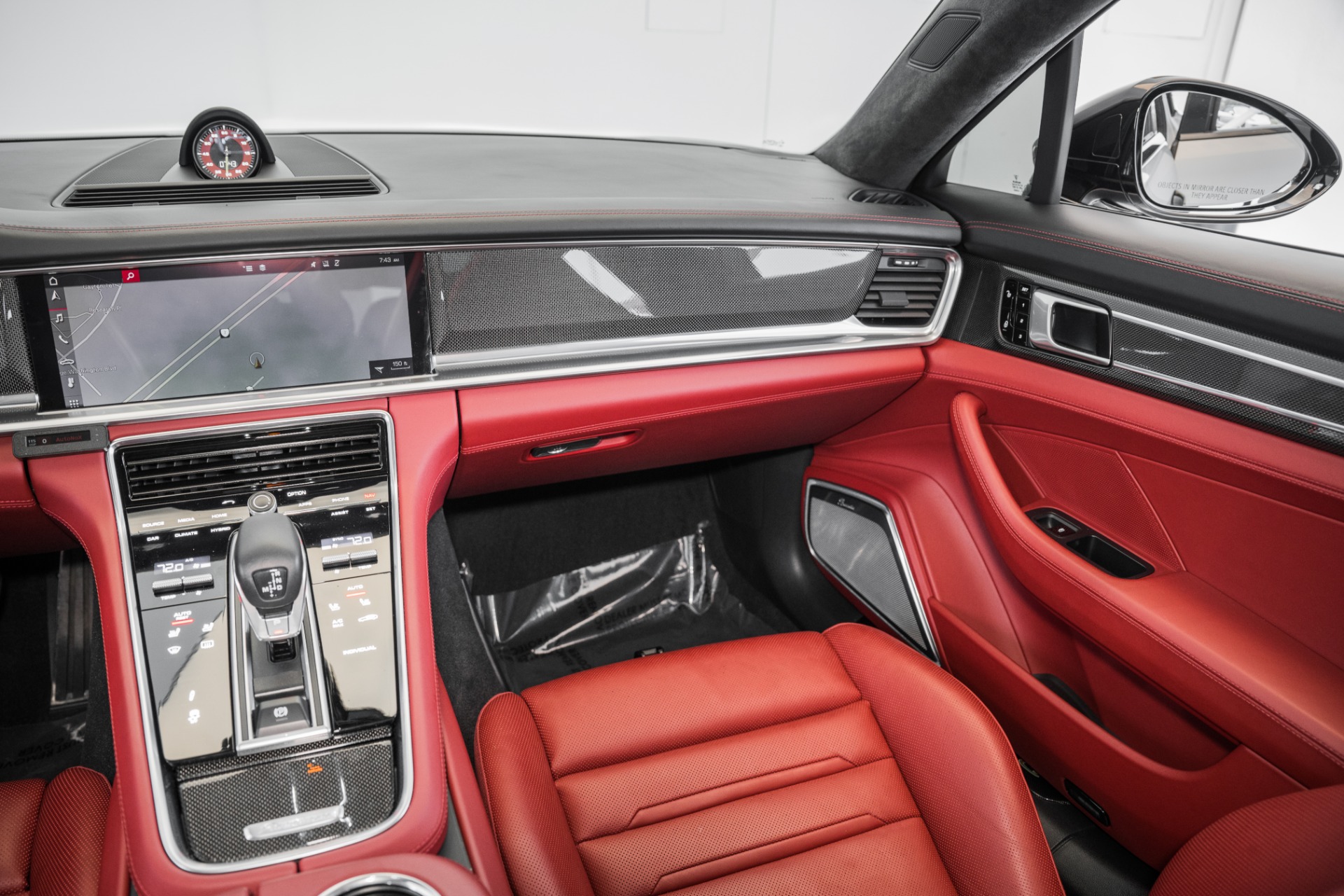
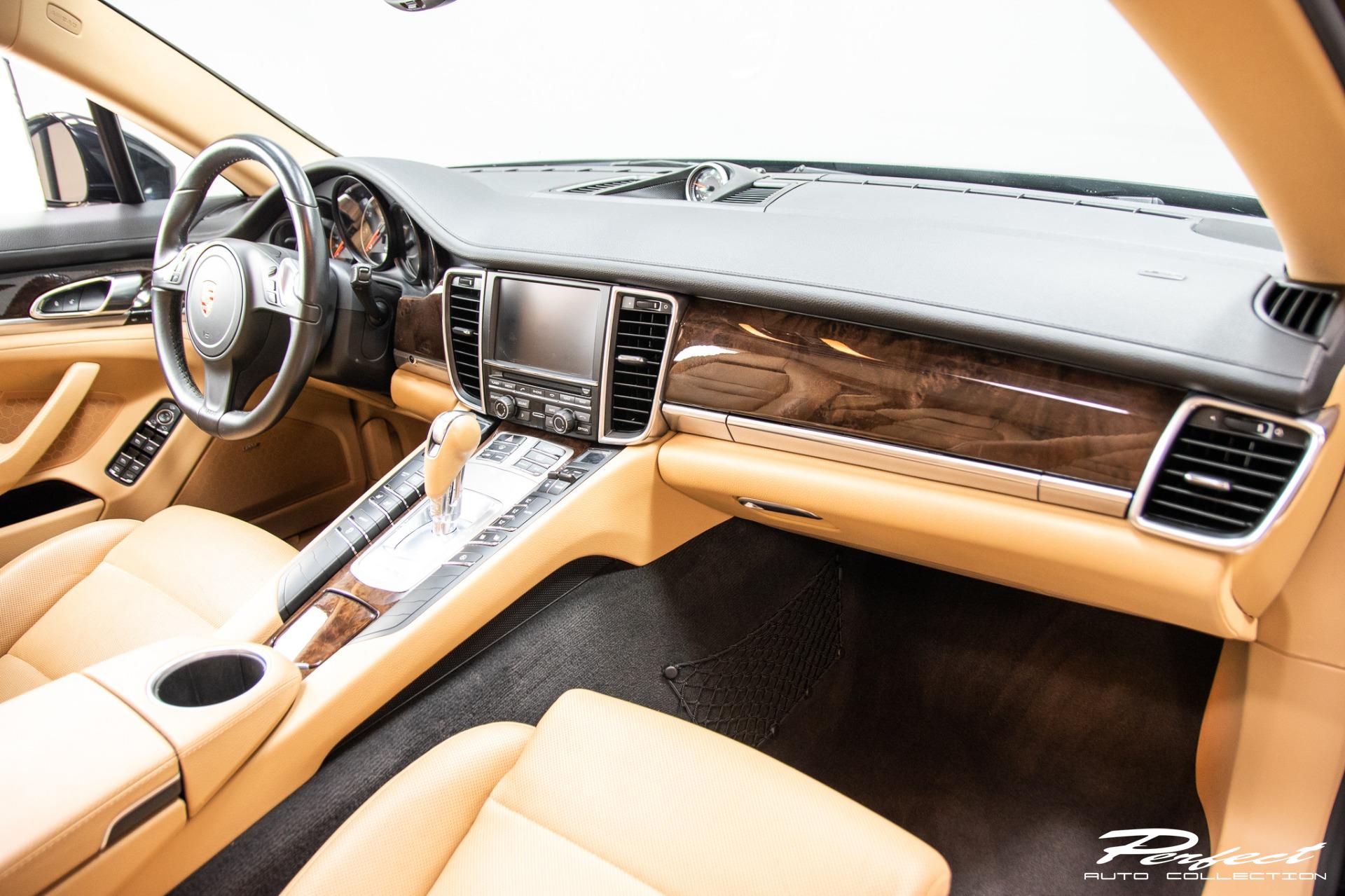
The 2015 Porsche Panamera interior is defined by its driver-centric "cockpit" philosophy, characterized by a rising center console inspired by the Carrera GT and a "one button, one function" layout. It features premium materials like semi-aniline leather and genuine carbon fiber, offering a strictly four-passenger configuration with exceptional rear-seat support.
Refined during the 970.2 facelift era, the 2015 Porsche Panamera interior remains a benchmark for how a luxury grand tourer can balance high-performance ergonomics with executive-level comfort. In 2026, this cabin remains a sought-after environment for enthusiasts who prefer tactile, physical controls over the pervasive touchscreen interfaces found in modern vehicles. Whether you are considering a base model, a GTS, or the long-wheelbase Executive trim, the Panamera’s cabin was engineered to provide a bespoke experience that bridges the gap between a sports car and a limousine.
The Design Philosophy: The Ascending Center Console
The most striking element of the 2015 Porsche Panamera interior is the massive, sloping center console that runs from the dashboard down between the front seats and continues into the rear compartment. At a time when competitors like Mercedes-Benz and BMW were moving toward centralized rotary controllers (like COMAND or iDrive), Porsche doubled down on a physical interface.
The "One Button, One Function" Approach
Porsche’s engineers designed the Panamera to minimize menu-diving. The console is populated with dozens of individual buttons for climate control, suspension settings, exhaust baffles, and seat heating. While critics sometimes labeled the layout "busy," owners frequently praise its intuitiveness once the muscle memory is established. You do not need to look at a screen to stiffen the dampers or activate the Sport Plus mode; the physical feedback of the buttons allows for adjustments while keeping eyes on the road.
Driver-Centric Ergonomics
The seating position in the 2015 Panamera is remarkably low for a sedan, mimicking the 911. The steering wheel—often the SportDesign version with alloy paddles—is perfectly vertical, and the gear selector sits high on the console, close to the wheel for quick manual shifts. This layout ensures that despite the car's significant exterior dimensions, the driver feels "in" the car rather than "on" it.
Materials and Craftsmanship
Porsche offered an almost overwhelming array of customization options for the 2015 Panamera. In the secondary market of 2026, the value of a specific vehicle is often dictated by the boxes checked on the original build sheet.
Leather and Upholstery Options
Standard models typically featured partial leather, but many 2015 units were ordered with "Full Leather" interiors. This upgrade extends the hide to the top of the dashboard, the door cards, and the entire center console.
- Standard Leather: Durable and textured, suitable for daily commuting.
- Natural Leather: A higher-grade, semi-aniline hide that is softer to the touch and develops a unique patina over time.
- Alcantara: Commonly found in the GTS trim, this synthetic suede provides excellent grip for spirited driving and is used on the seat centers, roof lining, and steering wheel.
Decorative Trim and Accents
The trim strips across the dashboard and doors serve as the cabin's primary aesthetic accents. In 2015, owners could choose from:
- High-Gloss Black: The standard finish, though prone to visible fingerprints and micro-scratching.
- Carbon Fiber: Often paired with the Turbo and GTS trims to emphasize the car’s racing DNA.
- Yachting Mahogany: A rare, high-end wood finish with maple inlays that gives the interior a maritime luxury feel.
- Brushed Aluminum: A cool, industrial look that resists wear better than wood or gloss plastics.
Seating and Spatial Dimensions
Unlike traditional luxury sedans that feature a rear bench capable of seating three, the 2015 Porsche Panamera is a dedicated four-seater. This decision was intentional, allowing Porsche to provide rear passengers with the same lateral support and comfort as those in the front.
Front Seat Configurations
Porsche offered three primary seat types for 2015:
- 8-Way Comfort Seats: Standard on base and S models, providing basic power adjustments.
- 14-Way Power Seats: Includes lumbar support and memory functions; these are the most common "luxury" choice.
- 18-Way Adaptive Sport Seats: Featuring aggressive side bolsters that can be electronically adjusted to "hug" the occupant. These are highly desirable for their support during cornering but can be difficult for larger individuals to exit comfortably.
The Rear Passenger Experience
The rear of the Panamera is surprisingly spacious, thanks to the scalloped front seatbacks. Because of the central console, rear passengers have their own dedicated climate controls and storage bins. In the Executive models, the wheelbase is stretched by 5.9 inches, providing limousine-grade legroom. These long-wheelbase versions often include power-adjustable rear seats, folding tables, and sunblinds, making the 2015 Panamera a legitimate alternative to an S-Class for chauffeured use.
Infotainment and Technology: PCM 3.1
By 2026 standards, the factory infotainment system—known as Porsche Communication Management (PCM) 3.1—is a legacy system, yet it remains functional and relatively straightforward.
Central Touchscreen and Instrument Cluster
The 7-inch high-resolution touchscreen handles navigation, audio, and vehicle settings. While it lacks the haptic feedback and ultra-fast processing of modern systems, the UI is clean and professional. A signature Porsche element is the five-dial instrument cluster. In the 2015 Panamera, the fourth dial from the left is a high-resolution 4.8-inch TFT color display. This screen can mirror navigation maps, display trip computer data, or show tire pressure levels, allowing the driver to see critical information without looking at the central dashboard.
Audio Excellence: Bose vs. Burmester
- Bose Surround Sound System: The most common upgrade, featuring 14 speakers and 585 watts. It provides a punchy, bass-heavy experience that satisfies most users.
- Burmester High-End Surround Sound System: A masterpiece of automotive audio. With 16 speakers and over 1,000 watts, it uses ribbon tweeters and specialized crossovers to deliver audiophile-grade clarity. Finding a 2015 Panamera with the Burmester system is a significant "win" for second-hand buyers.
Connectivity and Modern Retrofitting
The 2015 model year did not natively support Apple CarPlay or Android Auto. However, because the PCM 3.1 head unit uses a modular internal design, many owners in 2026 have installed aftermarket "CarPlay boards" that allow modern smartphone integration while retaining the factory screen and buttons.
Practicality and Cargo Capacity
One of the Panamera’s greatest strengths is its liftback (hatchback) design. Unlike a traditional sedan with a narrow trunk opening, the Panamera’s entire rear glass lifts, providing a wide aperture for loading luggage.
| Feature | Specification (Approx.) |
|---|---|
| Cargo Volume (Rear Seats Up) | 15.7 cubic feet (11.8 in S E-Hybrid) |
| Cargo Volume (Rear Seats Folded) | 44.6 cubic feet (40.7 in S E-Hybrid) |
| Seating Capacity | 4 Adults |
| Standard Infotainment | 7-inch PCM 3.1 Touchscreen |
| Climate Control | Dual-zone (Optional 4-zone) |
The rear seats fold down almost flat, allowing for the transport of larger items like golf clubs or even a bicycle with the front wheel removed. Note that the S E-Hybrid model sacrifices some cargo depth to accommodate the high-voltage battery under the trunk floor.
Common Interior Issues and Maintenance in 2026
As these vehicles exceed a decade of service, certain wear patterns have become documented among the Porsche community. When inspecting a 2015 Porsche Panamera interior, pay close attention to the following:
- Sticky or Peeling Buttons: The soft-touch coating on the climate control toggles and window switches can degrade over time, especially in humid climates. Replacement button kits are available and are a common "refresh" project.
- Cupholder Fragility: The "hidden" cupholder mechanism in the dashboard (on the passenger side) is notoriously delicate. Ensure it cycles smoothly without sticking.
- Leather Bolster Wear: The aggressive bolsters on the 18-way Sport Seats are prone to scuffing from entry and exit. Regular conditioning is required to prevent the leather from cracking.
- PCM Rebooting: If the infotainment system frequently restarts, it may indicate a failing internal hard drive. In 2026, many specialists offer Solid State Drive (SSD) upgrades to fix this permanently.
- Headliner Sag: While less common than in older 911s, the Alcantara or fabric headliners can begin to sag if the vehicle has been stored in high-heat environments.
Comparison with Contemporaries
In 2015, the Panamera competed with the Mercedes-Benz S-Class (W222), the BMW 7 Series (F01/G11), and the Audi A8 (D4).
- VS. Mercedes S-Class: The Mercedes offers a softer, more isolated "lounge" feel with more advanced ambient lighting. The Panamera feels more "mechanical" and focused.
- VS. BMW 7 Series: The BMW offers more tech gadgetry (for its era) but lacks the bespoke, hand-assembled feel of the Porsche’s leather-bound surfaces.
- VS. Audi A8: The Audi interior is a masterclass in minimalism, but the Panamera provides a more dramatic and "special" sense of occasion every time you sit behind the wheel.
Frequently Asked Questions
Can I fit five people in a 2015 Porsche Panamera?
No. The 2015 Panamera was designed strictly as a four-seater. A continuous center console runs the length of the cabin, separating the two rear seats. If you require a five-seat Porsche from this era, the Cayenne is the appropriate alternative.
Is the interior quiet at highway speeds?
Yes, the 2015 Panamera features extensive sound deadening and thick glass. Models equipped with the optional "Thermally and Noise Insulated Glass" are exceptionally quiet, though the GTS trim is tuned to let more of the engine’s V8 growl into the cabin during acceleration.
How do I know if a Panamera has the "Full Leather" interior?
The easiest way to tell is by looking at the dashboard. If there is visible stitching along the top of the dash and the glovebox door, it is a full leather interior. If the dashboard is a uniform, molded plastic/vinyl surface, it is the standard interior.
Does the 2015 model have a backup camera?
Most 2015 Panameras were equipped with ParkAssist (front and rear sensors) and a rearview camera, though it was technically an option on some base trims. The camera feed is displayed on the PCM screen and includes dynamic guiding lines.
What is the Sport Chrono clock on the dashboard?
The analog clock sitting atop the center of the dashboard is part of the Sport Chrono Package. Beyond its aesthetic appeal, it serves as a performance stopwatch and indicates that the vehicle is equipped with Sport Plus driving modes and Launch Control.
Final Recommendation: What to Look For
If you are hunting for a 2015 Porsche Panamera in today's market, the interior condition is often a better indicator of vehicle care than the odometer reading. Seek out models with the 14-way or 18-way seats and, if possible, the Full Leather package. These options significantly elevate the cabin from "premium" to "luxury."
For those who prioritize modern connectivity, plan for a small additional investment to retrofit a CarPlay/Android Auto module into the existing PCM 3.1 system. This allows you to enjoy the timeless, tactile cockpit of the 970.2 generation while benefiting from 2026's navigation and media standards. Avoid cars with heavily scratched center console plastics or "sticky" buttons, as these can be tedious and expensive to replace individually.