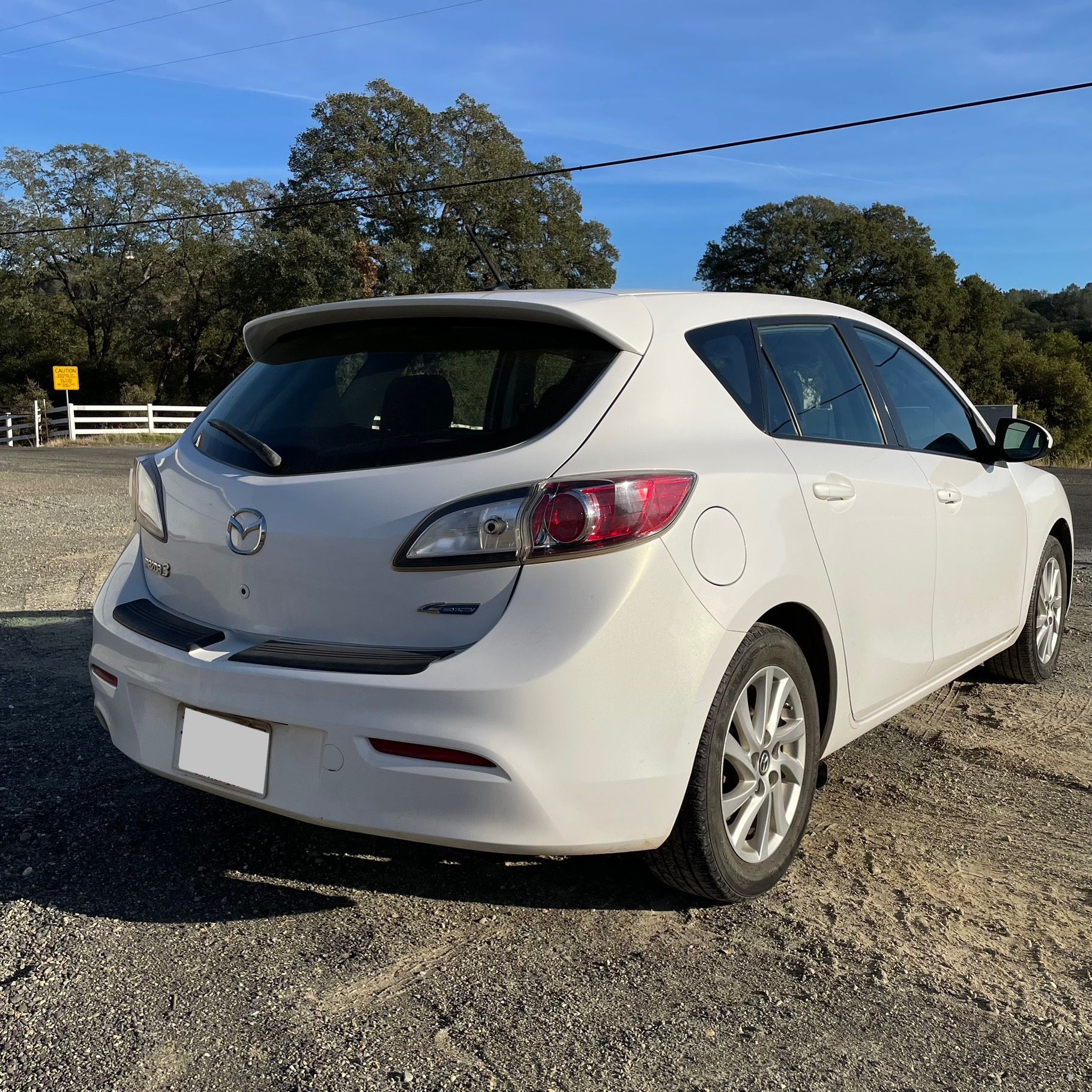
The 2013 Mazda 3 hatchback is widely regarded as one of the most reliable used compact cars available, particularly those equipped with the SkyActiv-G engine. As the final year of the second generation (BL), it benefits from years of refinement, offering a rare combination of mechanical simplicity, fuel efficiency, and "Zoom-Zoom" driving dynamics.
Understanding the 2013 Mazda 3 Hatchback's Place in History
To assess the reliability of the 2013 Mazda 3 hatchback in 2026, one must first understand its unique position in Mazda’s timeline. The 2013 model year represented the "swan song" of the second-generation Mazda 3. Historically, the final year of a vehicle's production cycle is the most reliable because the manufacturer has had years to identify and rectify "teething" issues present in earlier versions.
In 2013, Mazda was also in the middle of a massive technological transition. They had just introduced the SkyActiv-G powertrain technology in late 2012. Consequently, the 2013 model year is a "hybrid" year in terms of options: you could find the older, proven MZR engines or the then-new, high-efficiency SkyActiv units. In 2026, with these vehicles now over a decade old, the distinction between these powertrains is the most critical factor in determining long-term dependability and maintenance costs.
Engine Reliability: SkyActiv vs. MZR
The 2013 Mazda 3 hatchback offered two distinct engine families. Understanding which one is under the hood is vital for predicting reliability.
The 2.0L SkyActiv-G (PE-VPS)
This engine was the flagship of the 2013 "i" trims (i Sport, i Touring, i Grand Touring). It was designed from the ground up for maximum thermal efficiency.
- Reliability Profile: Extremely high. By 2026, many of these engines have surpassed 200,000 miles with only routine maintenance.
- Key Features: It utilizes a high-pressure direct injection system and a unique 4-2-1 exhaust manifold (though the 2013 Mazda 3 used a slightly modified version to fit the older chassis).
- Maintenance Note: Because it is direct-injected, carbon buildup on the intake valves is a theoretical concern. However, Mazda’s implementation has proven much more resilient to this than contemporary engines from Volkswagen or BMW. Regular oil changes with high-quality synthetic oil are mandatory to protect the high-pressure fuel pump and timing chain.
The 2.0L and 2.5L MZR (LF-VE and L5-VE)
These engines powered the older base models and the "s" trims (s Touring, s Grand Touring).
- Reliability Profile: Robust but thirsty. These are "old school" port-injected engines. They are mechanically simpler than the SkyActiv units and have very few "catastrophic" failure points.
- Key Features: The 2.5L MZR provides significantly more torque but at a heavy cost to fuel economy.
- Maintenance Note: These engines are known for being incredibly "bulletproof" if the cooling system is maintained. Their primary weakness is the passenger-side motor mount, which is fluid-filled and prone to leaking/collapsing after 80,000 miles.
Transmission Longevity: The Shift to 6-Speeds
The 2013 model year also saw a split in transmission offerings.
The SkyActiv-Drive 6-Speed Automatic
This transmission was paired exclusively with the SkyActiv engine. It was revolutionary for its time, combining the best attributes of a traditional torque-converter automatic, a dual-clutch transmission, and a CVT.
- Reliability: In 2026, this transmission has proven to be one of the most reliable units produced in the 2010s. It provides crisp shifts and rarely suffers from the "hunting" or "slipping" common in older 4-speed or 5-speed units.
- Service Life: While Mazda initially claimed the fluid was "lifetime," transmission experts recommend a drain and fill every 60,000 to 75,000 miles to ensure the solenoid valves remain clean.
The 5-Speed Automatic (FS5A-EL)
Found on the non-SkyActiv 2.0L models, this is a much older design.
- Common Issue: The Transmission Control Module (TCM) is a known failure point. The TCM is mounted directly on top of the transmission case, where it is subjected to significant heat and vibration. Over time, the internal solder joints can crack, leading to "limp mode," harsh shifting, or a complete loss of communication with the transmission.
- Solution: In 2026, many owners opt to relocate the TCM to the battery tray or firewall to extend its life, or they purchase refurbished units that have been reinforced with better soldering.
Common Mechanical and Electrical Weak Points
While the 2013 Mazda 3 is overall a stellar performer, no vehicle is without flaws. When inspecting a 13-year-old hatchback, pay specific attention to these documented issues:
1. The "Sticky Dashboard" Phenomenon
Many Mazda 3s from this era were manufactured with a dashboard material that can degrade under intense UV exposure and heat. The surface becomes shiny, tacky to the touch, and can cause a dangerous reflection on the windshield.
- Status in 2026: Mazda issued an extended warranty for this (Program SSP93), but that coverage has likely expired for almost all vehicles by 2026. If the car you are looking at hasn't had the dashboard replaced, look for signs of melting or use a custom-fit dash cover.
2. Rear Suspension "Clunking"
The second-generation Mazda 3 uses a multi-link rear suspension that provides excellent handling. However, the rear sway bar bushings and end links are known to wear out prematurely.
- Diagnosis: If you hear a "clunk" or "rattle" when going over small bumps at low speeds, it is almost certainly the sway bar components. These are inexpensive and relatively easy to replace.
3. Front Strut Mounts and Bearings
The front suspension can develop a "groaning" or "creaking" sound during low-speed turns. This is usually caused by the upper strut bearings drying out or the rubber mounts cracking. By 2026, most 2013 models will be on their second set of struts; if they haven't been replaced, expect to do so soon.
4. Engine Mount Failures
As mentioned previously, the passenger-side engine mount is a weak link. When it fails, you will notice significant vibration in the cabin while idling at a red light or when the engine is under load. Replacing this mount with an OEM or high-quality aftermarket part (like those from RocAuto or specialized Mazda tuners) restores the car's refinement immediately.
2013 Mazda 3 Reliability and Specification Comparison
The following table breaks down the key differences in reliability and performance across the primary hatchback configurations available in 2013.
| Feature | 2.0L i-Stop (SkyActiv) | 2.0L MZR (Base) | 2.5L s-Trim (MZR) |
|---|---|---|---|
| Engine Code | PE-VPS | LF-VE | L5-VE |
| Transmission | 6-Speed Auto / 6-Speed Manual | 5-Speed Auto / 5-Speed Manual | 5-Speed Auto / 6-Speed Manual |
| Reliability Rating | Excellent (5/5) | Very Good (4/5) | Good (4/5) |
| Primary Weakness | Carbon buildup (rare) | TCM Failure / Fuel Economy | Motor Mounts / Heavy Fuel Use |
| Timing Drive | Chain (No replacement needed) | Chain (No replacement needed) | Chain (No replacement needed) |
| Avg. MPG (Combined) | 32-33 MPG | 27-28 MPG | 22-24 MPG |
| Common 2026 Mileage | 140k - 190k miles | 150k - 210k miles | 130k - 180k miles |
Body, Chassis, and the "Rust Factor"
Historically, Mazda's greatest reliability hurdle was not mechanical, but structural—specifically, premature rust. The first-generation Mazda 3 (2004–2009) was notorious for "fender rot."
By 2013, Mazda had significantly improved its galvanization processes and paint quality. However, the 2013 Mazda 3 is not "rust-proof." In regions where road salt is used heavily, it is vital to inspect:
- Rear Wheel Arches: Feel the inner lip of the rear fender. Bubbling paint here indicates internal corrosion that is difficult to stop.
- Rear Subframe: While the body may look clean, the rear subframe can accumulate salt and corrode from the inside out.
- Side Skirts: Plastic cladding can trap moisture against the metal rocker panels.
In 2026, a 2013 Mazda 3 from a southern or dry climate is a much safer bet than one from the "Salt Belt." If purchasing a northern car, ensure it has received regular underbody washes or oil-based rust-proofing treatments (like Krown or Fluid Film).
Maintenance Requirements for a 13-Year-Old Mazda 3
To keep a 2013 Mazda 3 reliable through the late 2020s, owners must adhere to a strict maintenance schedule that goes beyond the basic oil change.
- Spark Plugs: For SkyActiv engines, use only high-quality Iridium plugs (typically NGK or Denso). The high compression ratio makes the engine sensitive to spark quality.
- Coolant Exchange: Mazda's "FL22" long-life coolant is rated for 10 years or 120,000 miles. By 2026, every 2013 Mazda 3 should have had its coolant flushed at least once. Failure to do so can lead to heater core clogs or water pump failure.
- Drive Belts: The SkyActiv engine uses a serpentine belt that drives the alternator and water pump. If this belt snaps, the engine will overheat almost instantly. Inspect for cracking every 30,000 miles.
- Brake Service: The rear calipers on the Mazda 3 are known to "seize" if the slide pins are not lubricated regularly. This is especially true in humid or salty environments.
Frequently Asked Questions (FAQ)
Is the 2013 Mazda 3 hatchback expensive to repair?
No, the 2013 Mazda 3 is relatively inexpensive to maintain compared to European hatchbacks or even some newer turbocharged domestic cars. Because this model was extremely popular, there is a massive secondary market for parts. Both OEM and high-quality aftermarket components (such as Bosch or Akebono) are readily available at competitive prices. Labor is also straightforward, as the engine bay is not overly cramped.
Does the 2013 Mazda 3 have a timing belt or chain?
All engines in the 2013 Mazda 3 (2.0L MZR, 2.5L MZR, and 2.0L SkyActiv) use a timing chain, not a belt. Under normal operating conditions, the timing chain is designed to last the life of the engine. There is no scheduled replacement interval. However, this is dependent on regular oil changes; dirty oil can cause the chain tensioner to fail or the chain itself to stretch over hundreds of thousands of miles.
Which is better: the SkyActiv or the 2.5L engine?
For most buyers in 2026, the SkyActiv-G 2.0L is the better choice. It offers significantly better fuel economy (often 10 MPG higher in real-world driving) and has proven to be slightly more reliable regarding its transmission pairing. The 2.5L engine is better if you prioritize torque and a slightly more "sporty" feel, but it comes with a higher cost of ownership due to fuel consumption and the older 5-speed automatic transmission's potential TCM issues.
Are there any safety recalls I should know about?
The 2013 Mazda 3 has had a few notable recalls, including one for the tailgate stay dampers (hatchback struts) which could corrode and fail, causing the hatch to fall unexpectedly. Another involved the windshield wiper motor. Before purchasing, verify that these recalls have been performed by checking the VIN on the NHTSA website.
How many miles can a 2013 Mazda 3 last?
With proper maintenance, a 2013 Mazda 3 can easily reach 250,000 to 300,000 miles. The engines and transmissions are highly durable. The "end of life" for these cars usually comes from either a major collision or significant rust rather than a catastrophic mechanical failure.
Final Recommendation
The 2013 Mazda 3 hatchback remains a "gold standard" for used car reliability in 2026. If you are looking for the most dependable version, seek out an "i Touring" or "i Grand Touring" model with the SkyActiv-G engine. These trims provide the best balance of modern fuel efficiency and long-term mechanical durability.
Before finalizing a purchase, perform a cold start to listen for timing chain rattle, check the passenger-side motor mount for leaks, and verify that the automatic transmission shifts smoothly between 2nd and 3rd gears. If these components are healthy and the body is free of significant rust, the 2013 Mazda 3 is an excellent investment that will likely provide several more years of trouble-free service.