The IRS uses 1099 forms to track various types of income received outside of a traditional W-2 employment relationship. These "information returns" ensure that taxpayers accurately report non-wage earnings, such as freelance income, investment gains, or government benefits, allowing the government to cross-reference payments made by businesses with individual tax returns.
Understanding the specific 1099 forms you may receive or be required to issue is critical for maintaining tax compliance. As of 2026, the Internal Revenue Service (IRS) has streamlined several electronic filing processes, but the core function of these forms remains the same: transparency between the payer, the payee, and the federal government. Failure to report income documented on a 1099 can trigger audits, penalties, and interest charges.
The Significance of 1099 Forms in the Modern Economy
In the fiscal year 2026, the gig economy and diversified investment portfolios have made 1099 forms more prevalent than ever. Unlike a W-2, where an employer withholds income tax, Social Security, and Medicare taxes throughout the year, 1099 income is generally paid "gross." This means the recipient is responsible for calculating and paying their own taxes, including self-employment tax where applicable.
For businesses, issuing these forms is a statutory requirement. If your company paid an individual or a non-incorporated entity a certain amount—typically $600 or more—for services or other specific payments, you must file a copy with the IRS and provide a copy to the recipient.
1. Form 1099-NEC: Nonemployee Compensation
Form 1099-NEC is perhaps the most common form for freelancers, independent contractors, and gig workers. Reintroduced in recent years to separate nonemployee compensation from the 1099-MISC, it is used specifically for payments made to someone who is not your employee for services performed in the course of your trade or business.
Reporting Thresholds and Requirements
You must issue a 1099-NEC if you paid a person at least $600 for services. This includes fees, commissions, prizes, and awards for services performed. It also applies to payments made to attorneys, even if the attorney is incorporated.
Why It Matters
For the recipient, the income on this form is usually subject to self-employment tax. For the payer, failing to file by the January 31 deadline can result in significant per-form penalties. In 2026, the IRS continues to mandate electronic filing for businesses that file 10 or more information returns in aggregate, making digital record-keeping essential.
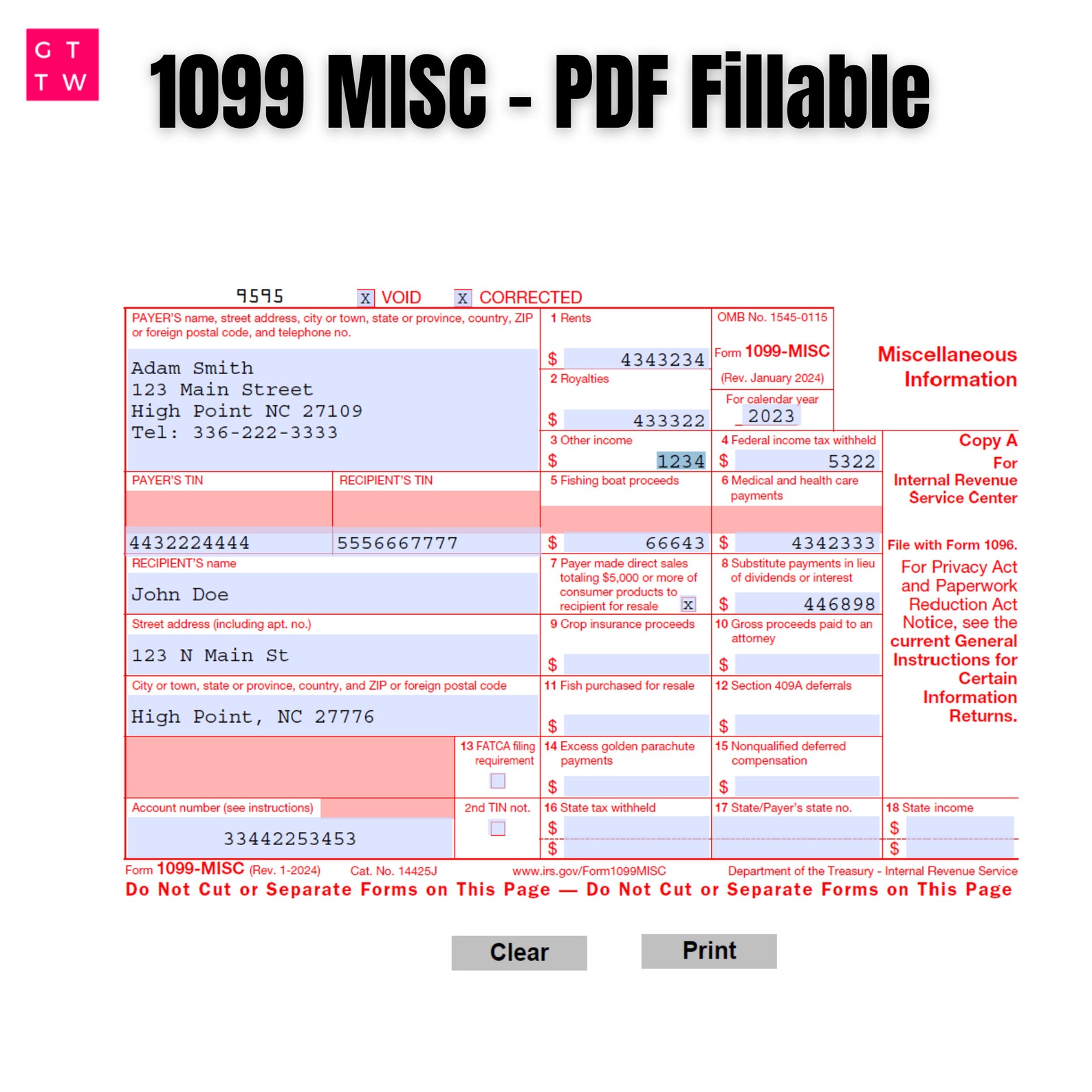
2. Form 1099-MISC: Miscellaneous Information
While 1099-NEC handles services, Form 1099-MISC remains the catch-all for other types of payments. Before 2020, this form was used for independent contractors, but its scope is now more specific.
Common Uses
- Rent: If you pay a landlord for office space (and they are not a corporation), you must report payments of $600 or more.
- Royalties: Payments of $10 or more for the use of intellectual property, such as books or patents.
- Prizes and Awards: Non-service awards, such as winning a sweepstakes or a door prize at a corporate event.
- Legal Settlements: Payments to beneficiaries or claimants that are not for physical injury or sickness.
Strategic Considerations
Distinguishing between "services" (NEC) and "rents/prizes" (MISC) is a frequent point of confusion. If you hire a consultant to fix a roof, it is 1099-NEC. If you simply pay rent to the building owner, it is 1099-MISC.
3. Form 1099-K: Payment Card and Third Party Network Transactions
Form 1099-K has undergone significant scrutiny and threshold changes leading into 2026. This form is issued by "Payment Settlement Entities," such as credit card processors (Visa, Mastercard) and third-party settlement organizations (PayPal, Venmo, Etsy, eBay).
The Evolving Threshold
Historically, the threshold for 1099-K was high ($20,000 and 200 transactions). However, following legislative adjustments and phase-in periods, the reporting requirements for 2026 are much more stringent. If you sell goods or services and receive payments through these platforms, you will likely receive a 1099-K once you cross the IRS-mandated minimum, which has moved closer to the $600 standard used for other forms.
Personal vs. Business
A critical distinction for 1099-K is that it should only report business transactions. Personal gifts or reimbursements between friends (e.g., splitting a dinner bill) are not taxable and should not be reported on this form.
4. Form 1099-INT: Interest Income
If you have a savings account, certificate of deposit (CD), or brokerage account that earns interest, you will likely receive Form 1099-INT.
Key Details
Financial institutions must issue this form if they pay you $10 or more in interest during the calendar year. This includes interest on bank deposits, corporate bonds, and even interest paid by the IRS on delayed tax refunds.
Tax Treatment
Most interest is taxed as "ordinary income," meaning it is taxed at your standard marginal tax rate. Some interest, such as that from municipal bonds, may be federally tax-exempt but still must be reported on the 1099-INT to provide the IRS with a full picture of your financial activity.
5. Form 1099-DIV: Dividends and Distributions
Investors who own stocks or mutual funds receive Form 1099-DIV. This form reports the income generated by those assets, even if you chose to automatically reinvest the dividends into more shares.
Categories of Dividends
- Ordinary Dividends: Taxed at standard income rates.
- Qualified Dividends: Taxed at the lower capital gains rates, provided you held the stock for a specific period (usually 60 days).
- Nondividend Distributions: Often representing a return of capital, which reduces your cost basis in the investment rather than being taxed immediately.
Accurate reporting on Form 1099-DIV is essential for ensuring you don't overpay by missing the "qualified" status of your dividends.
6. Form 1099-B: Proceeds from Broker and Barter Exchange Transactions
When you sell stocks, bonds, or derivatives, the transaction is recorded on Form 1099-B. This form provides the sale price and, in most cases, the "cost basis" (what you originally paid for the asset).
Cost Basis Reporting
Since the mid-2010s, brokers have been required to report the adjusted cost basis to the IRS. This makes it much harder for taxpayers to miscalculate capital gains. However, you must still review the 1099-B to ensure the "holding period" (short-term vs. long-term) is correctly identified, as this significantly impacts the tax rate applied to your profit.
Bartering
Though rare, the 1099-B is also used to report the fair market value of goods or services exchanged through a formal barter exchange.
7. Form 1099-R: Distributions From Pensions, Annuities, Retirement, etc.
Form 1099-R is issued when you take money out of a retirement account, such as a 401(k), IRA, or pension plan.
Understanding the Codes
The most important part of the 1099-R is "Box 7," which contains a code indicating the type of distribution. For example:
- Code 7: Normal distribution (usually age 59½ or older).
- Code 1: Early distribution (may be subject to a 10% penalty).
- Code G: Direct rollover to another retirement account (usually non-taxable).
Taking a distribution before the age of 59½ without a qualifying exception often results in the IRS flagging the return if the 1099-R code indicates an early withdrawal.
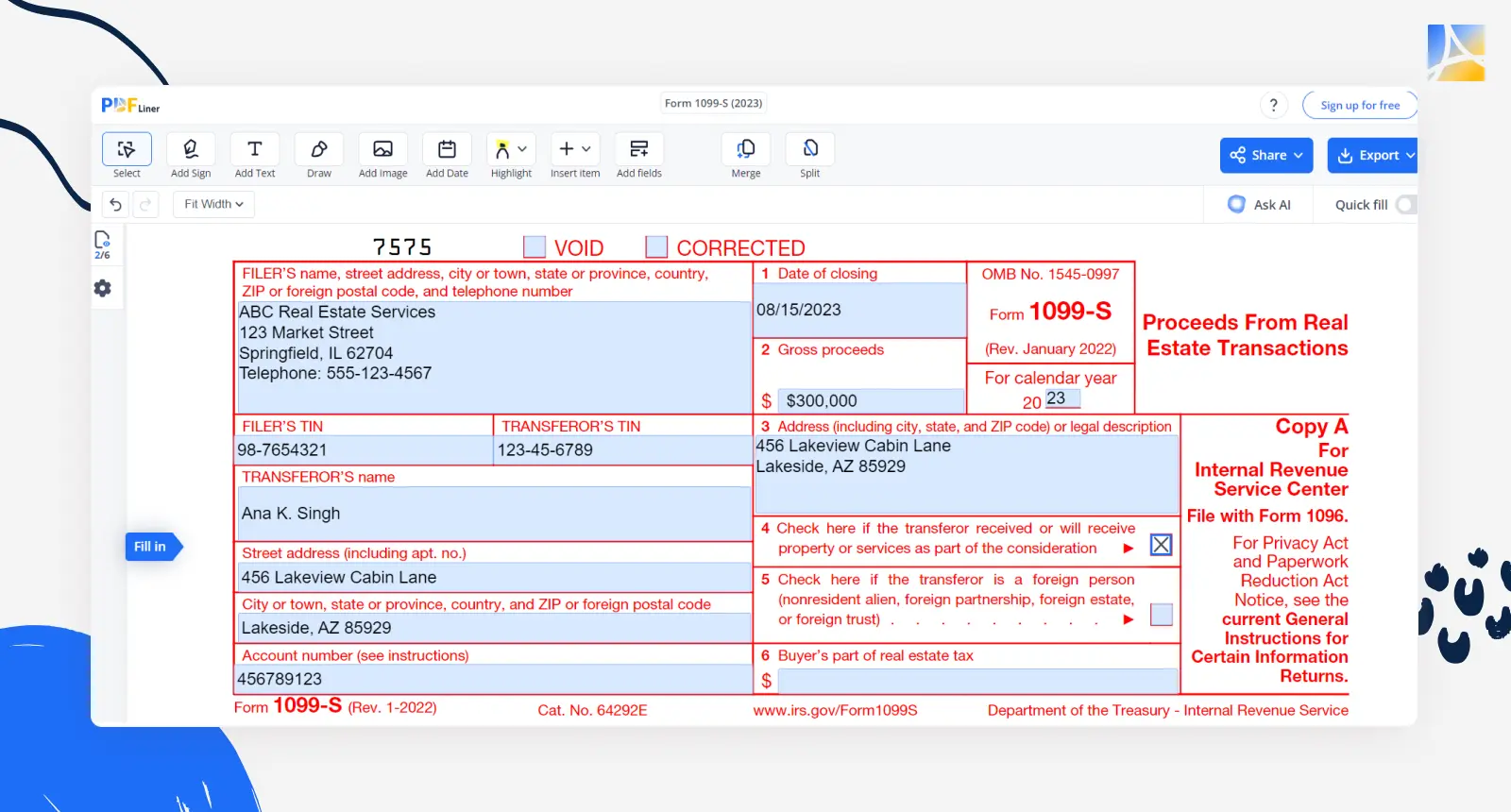
8. Form 1099-S: Proceeds from Real Estate Transactions
If you sold or exchanged real estate in 2025, you would receive Form 1099-S in 2026. This form reports the gross proceeds from the sale of land, commercial buildings, or residential properties.
The Primary Residence Exclusion
Many homeowners do not owe taxes on the sale of their primary residence due to the Section 121 exclusion ($250,000 for individuals, $500,000 for married couples). However, even if you qualify for the exclusion, you may still receive the 1099-S if the gross proceeds exceed the exclusion limits or if you did not provide the closing agent with a "Certification of No Information Reporting."
9. Form 1099-G: Certain Government Payments
Form 1099-G is issued by local, state, or federal governments. The most frequent reason for receiving this form is the receipt of unemployment compensation.
Other Reported Items
- State or Local Tax Refunds: If you itemized deductions in the previous year and received a refund from the state, that refund may be taxable at the federal level.
- Agricultural Payments: Subsidies or taxable grants provided to farmers.
- Market Gain: Certain gains on Commodity Credit Corporation loans.
Unemployment benefits are fully taxable at the federal level, and ignoring a 1099-G is one of the most common reasons for an IRS automated underreporter notice.
10. Form 1099-C: Cancellation of Debt
If a creditor settles or cancels a debt for less than the full amount owed, the forgiven portion may be considered taxable income. Form 1099-C is used to report this canceled debt of $600 or more.
Why Debt is Income
The IRS views forgiven debt as an economic gain; you received money (or the benefit of it) and no longer have the obligation to pay it back. There are exceptions, however, such as debt canceled in bankruptcy or if the taxpayer was "insolvent" immediately before the debt was canceled. These exceptions require filing Form 982 along with your tax return.
11. Form 1099-SA: Distributions From an HSA, Archer MSA, or Medicare Advantage MSA
Health Savings Accounts (HSAs) offer tax-advantaged ways to pay for medical expenses. If you use funds from your HSA to pay for a doctor’s visit or prescription, the bank managing your HSA will issue Form 1099-SA.
Qualified vs. Non-Qualified Expenses
If you used the funds for qualified medical expenses, the distribution is tax-free. However, if you used HSA funds for non-medical expenses, the amount is taxable, and a 20% penalty may apply if you are under age 65. The 1099-SA reports the total distribution; the taxpayer must then use Form 8889 to prove how much of that distribution was used for valid medical costs.
1099 Comparison Table for 2026
| Form Type | Primary Purpose | Reporting Threshold | Common Deadline (to Recipient) |
|---|---|---|---|
| 1099-NEC | Nonemployee/Contractor services | $600 | January 31 |
| 1099-MISC | Rent, prizes, legal settlements | $600 | January 31 |
| 1099-K | Credit card/Payment app sales | Variable (check IRS updates) | January 31 |
| 1099-INT | Interest from bank/savings | $10 | January 31 |
| 1099-DIV | Investment dividends | $10 | January 31 |
| 1099-B | Stock or asset sales | Any transaction | February 15 |
| 1099-R | Retirement account distributions | $10 | January 31 |
| 1099-S | Real estate sale proceeds | $600 | February 15 |
| 1099-G | Unemployment / State refunds | $10 | January 31 |
| 1099-C | Canceled/Forgiven debt | $600 | January 31 |
| 1099-SA | HSA/MSA distributions | Any amount | January 31 |
Filing Deadlines and Requirements in 2026
For the 2025 tax year, being filed in 2026, most 1099 forms must be provided to recipients by January 31, 2026. This early deadline is intended to give taxpayers enough time to gather their documents before the April filing deadline.
Electronic Filing Mandate
The IRS has significantly expanded the requirement for businesses to file returns electronically. As of 2026, any business filing 10 or more information returns (including W-2s and all types of 1099s combined) must submit them through the IRS IRIS (Information Returns Intake System) or the FIRE system. Paper filing is becoming increasingly rare and is generally discouraged due to longer processing times and higher error rates.
Backup Withholding
If a recipient fails to provide a valid Taxpayer Identification Number (TIN) or Social Security Number (SSN), the payer may be required to perform "backup withholding." In 2026, this rate remains 24%. The payer deducts this amount from the payment and sends it directly to the IRS, ensuring the government receives tax on the income even if the recipient doesn't report it.
Common Mistakes and How to Correct Them
Errors on 1099 forms are common, ranging from misspelled names to incorrect dollar amounts. Because the IRS receives a copy of every 1099, a mismatch between what you report on your return and what the form shows will likely trigger an automated notice (CP2000).
- Wrong Amount: If you receive a 1099 with an incorrect total, contact the payer immediately. They must issue a "Corrected" 1099 by checking the "Corrected" box at the top of the form.
- Payment Not Received: Occasionally, a 1099-NEC is issued for a payment that was never actually received or was refunded. You must resolve this with the issuer so they can void the form with the IRS.
- Missing Forms: If you know you earned income but haven't received a form by mid-February, reach out to the payer. Even if you never receive the physical form, you are still legally required to report the income.
- TIN Mismatches: Ensure your legal name on the 1099 matches exactly with your Social Security card. Discrepancies here can lead to the IRS freezing payments or requiring backup withholding.
FAQs About 1099 Forms
What happens if I don't report 1099 income?
The IRS receives a duplicate copy of every 1099 form issued. Their automated systems cross-reference these forms with your personal tax return. If there is a discrepancy, the IRS will send a notice (usually a CP2000) requesting payment for the tax on the unreported income, plus interest and potential accuracy-related penalties.
Why did I get a 1099-K for selling personal items?
If you sell used personal items (like old clothes or furniture) for less than you paid for them, you do not owe taxes on that "gain" because there is no profit. However, if the payment processor sends a 1099-K because you exceeded the reporting threshold, you must still address it on your tax return. You typically report the income and then an offsetting adjustment so you aren't taxed on the sale of personal items at a loss.
Can I be both a W-2 employee and a 1099 contractor?
Yes. It is common to have a full-time job (W-2) and perform freelance work or have a side business (1099) in the evenings or weekends. You will report your W-2 income on your tax return and your 1099 income on Schedule C.
Is there a minimum income amount before I have to report it?
While businesses generally don't have to issue a 1099-NEC or 1099-MISC for payments under $600, the recipient is legally required to report all income regardless of the amount. If you earned $200 from a client, you might not get a 1099, but that $200 is still taxable income.
Do 1099 forms include state tax information?
Many 1099 forms have boxes for state income tax withheld and state identification numbers. However, most 1099 payments do not have state taxes withheld unless you specifically requested it. You should still check your state's specific filing requirements, as many states participate in the Combined Federal/State Filing (CFSF) Program, where the IRS shares 1099 data directly with state tax agencies.
Practical Next Steps for Taxpayers
As you prepare for the 2026 tax season, the most effective strategy is proactive documentation. Keep a dedicated folder (digital or physical) for every 1099 that arrives in January and February. For business owners, ensure you have a Form W-9 on file for every contractor you pay; this document provides you with the name, address, and TIN needed to issue 1099s accurately and avoid IRS penalties.
If you are an independent contractor, consider using accounting software to track your income throughout the year. This allows you to verify the accuracy of the 1099-NEC and 1099-K forms you receive and ensures you are making adequate estimated tax payments to avoid underpayment penalties at year-end.