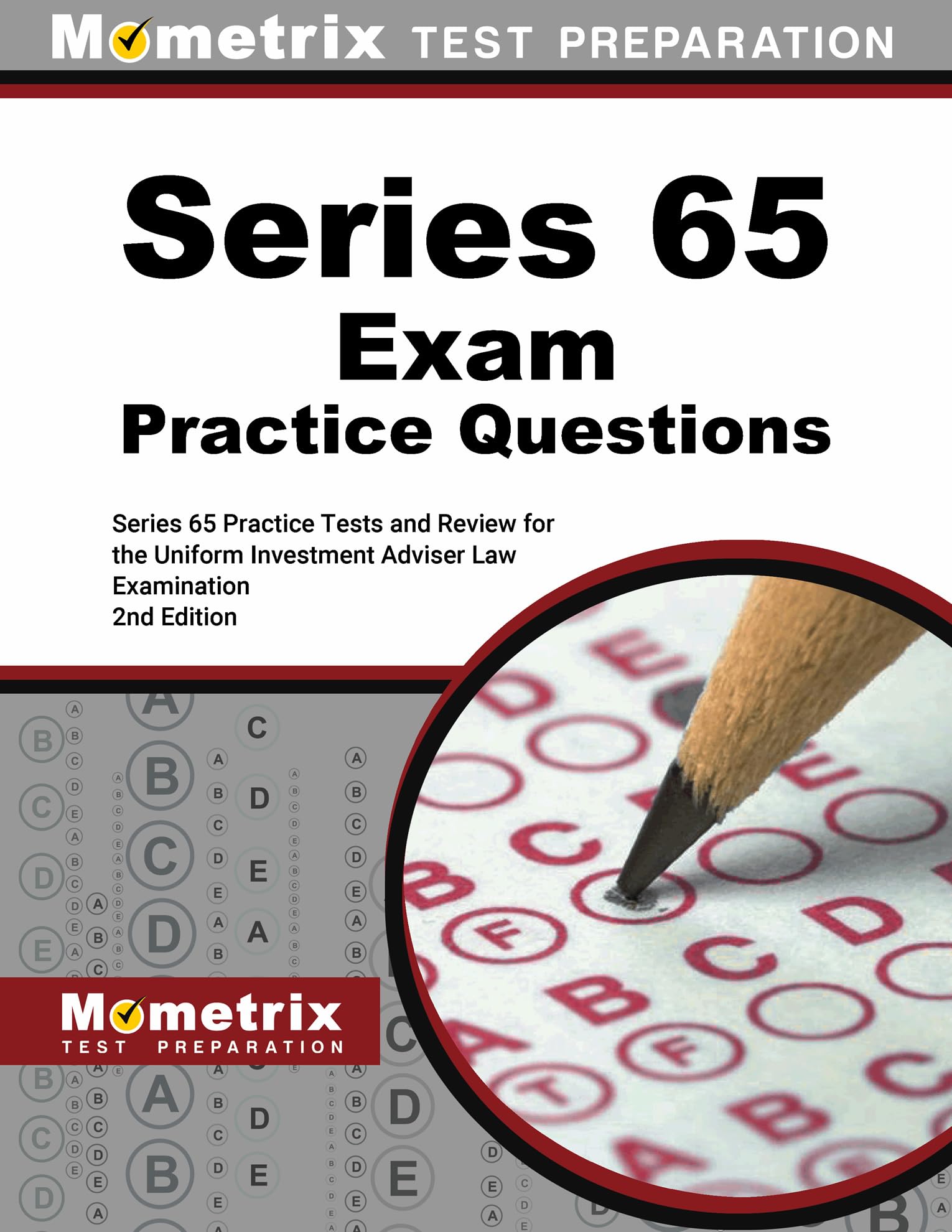
The Series 65 exam, officially known as the Uniform Investment Adviser Law Examination, is a comprehensive regulatory test administered by the Financial Industry Regulatory Authority (FINRA) on behalf of the North American Securities Administrators Association (NASAA). Passing this assessment is a mandatory step for individuals who want to work as fee-only investment advisor representatives (IARs), provide professional financial planning services, or register as an investment adviser in various U.S. states. Designed to evaluate a candidate’s knowledge of federal and state securities regulations, ethics, economics, and portfolio management, the test requires thorough preparation, strategic study habits, and a solid understanding of complex financial concepts.
Understanding the Series 65 Exam Structure and Logistics
Before diving into study materials, candidates must understand the mechanics of the test itself. The Series 65 exam is not sponsored by a broker-dealer firm in the traditional manner of the Series 7. Instead, it is typically taken by independent professionals, career changers, or wealth managers who want to operate independently or join Registered Investment Advisor (RIA) firms.
The exam consists of 130 multiple-choice questions, of which 120 are scored. The remaining 10 questions are experimental items scattered throughout the test to evaluate their viability for future exams; candidates will not know which questions are scored and which are unscored, meaning every question must be answered with equal care. Test-takers are given 180 minutes (3 hours) to complete the assessment. To pass, a candidate must correctly answer at least 92 out of the 120 scored questions, translating to a minimum passing score of approximately 76.9%.
Registration for the Series 65 exam requires submitting Form U10 electronically via FINRA’s Central Registration Depository (CRD) system or through an employing firm via Form U4. Unlike other securities exams, the Series 65 does not require a sponsoring member firm for initial enrollment, allowing self-sponsoring candidates to take the test proactively. Once enrolled, candidates have 120 days to schedule and take the exam at an authorized Prometric testing center.
| Feature | Specification |
|---|---|
| Exam Name | Uniform Investment Adviser Law Examination (Series 65) |
| Sponsoring Organization | North American Securities Administrators Association (NASAA) |
| Administered By | Financial Industry Regulatory Authority (FINRA) / Prometric |
| Question Count | 130 questions (120 scored, 10 unscored) |
| Time Limit | 180 minutes (3 hours) |
| Passing Score | 92 out of 120 scored questions (~76.9%) |
| Prerequisite Sponsorship | None required (can be self-sponsored via Form U10) |
| Enrollment Window | 120 days from registration to test completion |
Breakdown of the Series 65 Content Outline
The NASAA Series 65 exam content outline is divided into four major functional areas, each covering specific aspects of investment advisory practice, legal frameworks, and financial theory. Candidates must allocate their study time proportionally across these domains to ensure mastery of both regulatory compliance and investment vehicles.
1. Economic Factors and Business Information (15% / 18 Questions)
This section assesses a candidate’s understanding of macroeconomic principles, microeconomic concepts, and financial reporting analysis. Test-takers must be comfortable interpreting basic financial statements, including balance sheets, income statements, and cash flow statements.
- Key Economic Indicators: Gross Domestic Product (GDP), Consumer Price Index (CPI), unemployment rates, and leading/lagging indicators.
- Monetary and Fiscal Policy: The role of the Federal Reserve, open market operations, discount rates, reserve requirements, tax policies, and government spending.
- Corporate Finance: Working capital, price-to-earnings (P/E) ratios, dividend discount models, and discounted cash flow (DCF) analysis.
2. Investment Vehicle Characteristics (25% / 30 Questions)
Advisors must understand the mechanics, risks, and returns of various financial instruments to construct suitable portfolios for clients. This domain covers everything from traditional equities to complex derivatives and alternative investments.
- Equity Securities: Common stock, preferred stock, warrants, and American Depositary Receipts (ADRs).
- Debt Securities: U.S. Treasury bonds, municipal bonds, corporate bonds, zero-coupon bonds, and yield calculations (yield-to-maturity, current yield).
- Pooled Investment Vehicles: Open-end mutual funds, closed-end funds, Exchange-Traded Funds (ETFs), unit investment trusts (UITs), and real estate investment trusts (REITs).
- Derivatives and Alternatives: Options contracts (puts and calls), futures, commodities, hedge funds, and structured products.
3. Client Investment Recommendations and Strategies (30% / 36 Questions)
This domain tests the advisor's ability to gather client information, analyze risk tolerance, develop financial plans, and implement appropriate asset allocation strategies. It bridges the gap between raw financial products and real-world client advisory practices.
- Client Profile Analysis: Evaluating financial goals, time horizons, liquidity needs, tax status, and emotional risk tolerance.
- Portfolio Management Strategies: Modern Portfolio Theory (MPT), Capital Asset Pricing Model (CAPM), strategic versus tactical asset allocation, active versus passive management, and rebalancing techniques.
- Tax Considerations: Capital gains tax, ordinary income tax, tax-advantaged accounts (IRAs, Roth IRAs, 529 plans), and estate/gift taxation.
- Specialized Topics: Retirement planning, education funding vehicles, ERISA guidelines for retirement plans, and insurance products used in financial planning (variable life, annuities).
4. Laws, Regulations, and Guidelines (30% / 36 Questions)
As the heaviest compliance-weighted section, this domain covers federal acts and the Uniform Securities Act (USA) governing investment advisors, broker-dealers, agents, and securities offerings. Advisors are tested on their ethical and legal duties.
- The Uniform Securities Act (USA): State-level registration requirements for Investment Advisers (IAs) and Investment Adviser Representatives (IARs), exemptions, and state administrator powers.
- Federal Securities Acts: The Investment Advisers Act of 1940, the Securities Act of 1933, the Securities Exchange Act of 1934, and the Investment Company Act of 1940.
- Ethical Practices and Fiduciary Duty: The concept of fiduciary responsibility, handling client funds, custody rules, proxy voting, privacy regulations (Regulation S-P), and disclosures (Form ADV Parts 1 and 2).
- Unethical Business Practices: Insider trading, misrepresentation, churning, unauthorized trading, and conflicts of interest.
Eligibility, Fees, and Registration Procedures
Unlike the Series 7 or Series 6 exams, which require sponsorship from a FINRA-member broker-dealer, the Series 65 has minimal entry barriers. Anyone can register to take the exam without being associated with a financial firm.
To register independently, candidates must create an account through FINRA's Gateway system and submit Form U10 along with the current enrollment fee. As of current regulatory schedules, the standard enrollment fee for the Series 65 exam is $187, payable directly to FINRA. Additional fees may be assessed by Prometric for testing center administration or rescheduling.
Once the enrollment window opens, candidates must schedule their appointment through the Prometric website. Testing centers are located globally, but popular testing dates can fill up quickly, particularly during peak career-transition seasons. Candidates should verify their identification requirements, as Prometric enforces strict biometric and physical ID policies upon arrival at the test site.
Effective Study Strategies and Preparation Resources
Because the Series 65 covers a vast amount of legal terminology alongside complex mathematical formulas, candidates should allocate between 50 and 100 hours of study time over a 6- to 8-week period, depending on their background in finance or law.
- Invest in Comprehensive Study Materials: Reliable vendor packages from providers such as Kaplan, Knopman Marks, Pass Perfect, or STC typically include textbooks, video lectures, and extensive test-bank questions.
- Master the Legal Definitions: Do not skip the regulatory chapters. A significant portion of the exam tests state and federal statutes, definitions of "investment advisor," and the precise rules regarding custody and advertising.
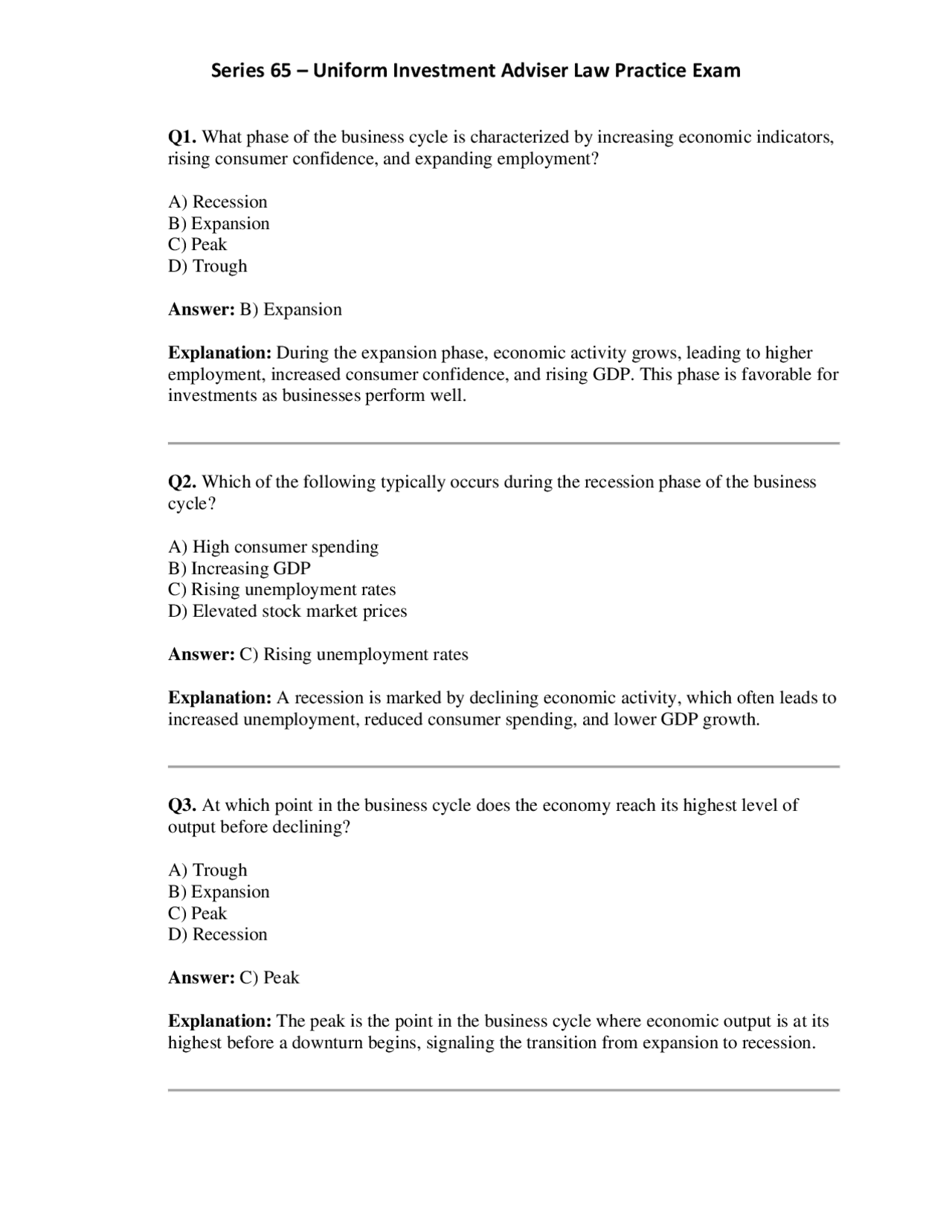
- Practice Active Recall with Q-Banks: Simply reading textbooks is insufficient. Candidates should complete hundreds of practice questions and review the detailed rationales for both correct and incorrect answers.
- Understand the Math, Don't Just Memorize: Be prepared to calculate current yield, yield-to-maturity, P/E ratios, net present value, and alpha/beta coefficients without a financial calculator (Prometric provides an on-screen basic calculator, and physical basic calculators are permitted at the discretion of the test center).
Maintaining Your Credential After Passing
Passing the Series 65 exam is a major milestone, but it does not grant an individual a standalone license to practice everywhere automatically. Most U.S. states require registration through the Investment Adviser Registration Depository (IARD) system either as an individual IAR associated with an RIA firm or as a sole proprietor establishing an advisory practice.
Furthermore, while the Series 65 exam itself does not have a formal continuing education (CE) requirement mandated directly by NASAA for all state-registered advisors in the same way FINRA requires for Series 7 holders (though many states and individual firm compliance programs enforce strict annual ethics and product training requirements), advisors must maintain clean regulatory records, file annual amendments to Form ADV, and adhere strictly to fiduciary standards under the Investment Advisers Act of 1940 and state securities boards.
Frequently Asked Questions
Can I take the Series 65 exam without being sponsored by a firm?
Yes. Unlike the Series 7 exam, the Series 65 does not require employer sponsorship. Individuals can self-sponsor by submitting Form U10 and paying the examination fee through the FINRA Gateway system, making it ideal for career changers and independent entrepreneurs.
How difficult is the Series 65 exam compared to the Series 7?
While the Series 7 covers a broader array of brokerage products and trading strategies, the Series 65 is widely considered challenging due to its heavy emphasis on complex state and federal securities laws, ethical standards, and detailed economic principles. Many candidates report that the legal definitions require careful, nuanced reading.
What happens if I fail the Series 65 exam on my first attempt?
If a candidate fails the Series 65, FINRA mandates a 30-day waiting period before taking the exam a second time. If a candidate fails three consecutive times, a 180-day waiting period is enforced. There is no lifetime limit on the number of attempts, but a new fee must be paid for each registration.
Are there any prerequisites or educational requirements to register?
There are no formal educational prerequisites, degree requirements, or prior licenses needed to sit for the Series 65 exam. Anyone of legal age can register, study, and take the assessment.
How long is a passing Series 65 score valid?
If an individual passes the Series 65 but does not register with a state or federal regulatory body as an investment advisor representative within two years, the examination results typically lapse, requiring the candidate to retake the exam unless an extension or waiver is granted by the relevant regulatory authority.
Next Actions for Prospective Advisors
To begin your journey toward becoming a registered investment advisor representative, start by visiting the FINRA website to set up your account credentials. Review the official NASAA Series 65 content outline to map out your study schedule, select a reputable preparatory textbook and question bank, and establish a consistent daily study routine. Once you feel confident in your mastery of both regulatory compliance and portfolio management, submit your Form U10, schedule your Prometric testing appointment, and take the first step toward a rewarding career in professional wealth management.