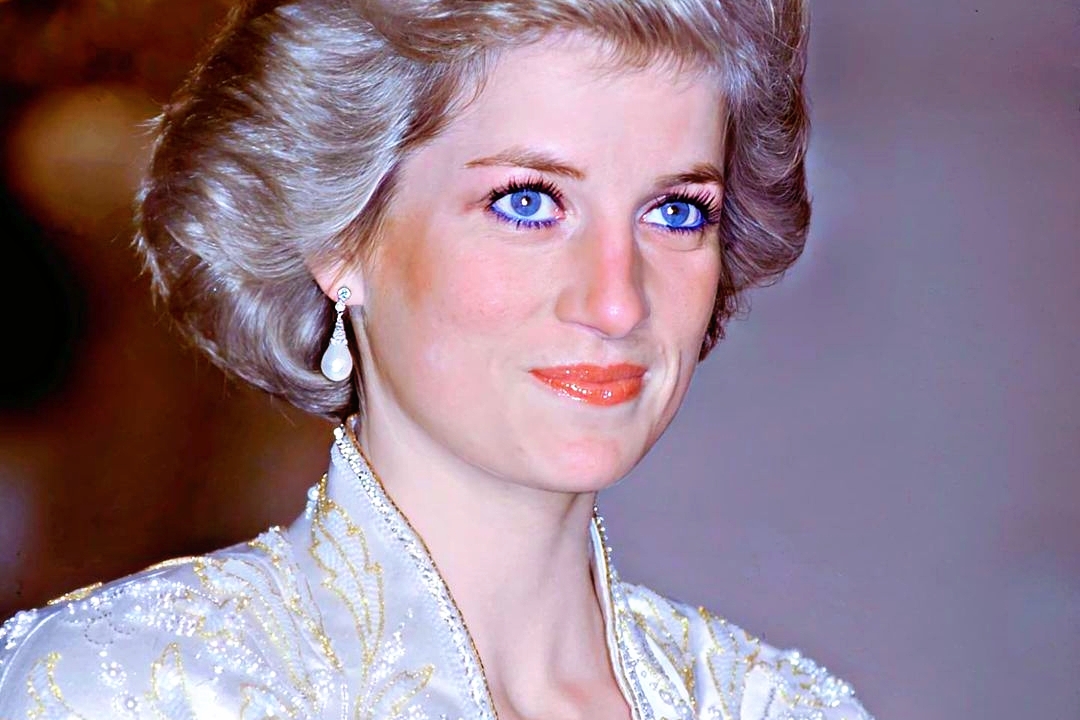
Princess Diana remains one of the most recognizable, influential, and universally scrutinized public figures of the 20th century. Her journey from a quiet aristocratic upbringing to the global stage as the Princess of Wales, followed by her evolution as an independent humanitarian and cultural icon, reshaped the modern British monarchy and left a permanent footprint on global philanthropy and celebrity culture.
Early Life and Royal Background
Diana Frances Spencer was born on July 1, 1961, at Park House on the Sandringham estate in Norfolk, England. She was the fourth of five children of Edward Spencer, Viscount Alvingham (later the 8th Earl Spencer), and Frances Ruth Burke Roche (later Frances Shand Kydd). Diana’s lineage was deeply rooted in British aristocracy and royal history; both of her maternal grandmothers had served as ladies-in-waiting to Queen Elizabeth The Queen Mother.
Her childhood, however, was marked by emotional turbulence. Her parents experienced a bitter and highly publicized divorce in 1969, a custody battle that deeply affected Diana and her siblings. She grew up between Park House and later Althorp, the Spencer family seat in Northamptonshire. Her formal education began at Silfield School in Norfolk, followed by Riddlesworth Hall School and West Heath Girls' School in Kent. While Diana was not academically inclined—failing her O-levels—she excelled in sports, particularly swimming and diving, and nurtured a strong passion for music and dance.
Before entering public royal life, Diana moved to London, where she lived with flatmates and worked various jobs, including as a nanny, a cleaning assistant, and a kindergarten assistant at the Young England Kindergarten in Pimlico. Her unassuming lifestyle and modest ambitions abruptly ended when her romance with Charles, Prince of Wales, captured the relentless attention of the British tabloid press.
The Royal Marriage, Trials, and Separation
The courtship between Prince Charles and Lady Diana Spencer moved swiftly. Following a brief engagement announced in February 1981, they were married on July 29, 1981, at St Paul's Cathedral. The ceremony was broadcast globally, watched by an estimated television audience of 750 million people, and heralded as a fairy-tale union that would revitalize the House of Windsor.
The Realities of Royal Life
Beneath the public pageantry, the marriage faced immense strain almost from the outset. The couple experienced a significant age gap of nearly 13 years, diverging interests, and deep-seated personal incompatibilities. Diana later recounted feeling overwhelmed by the rigid protocols of the royal family, intense media scrutiny, and persistent feelings of isolation.
Despite these private pressures, Diana fulfilled her official duties with immense grace and charisma, quickly becoming an international superstar. She gave birth to two sons: Prince William on June 21, 1982, and Prince Harry on September 15, 1984. She sought to raise her children with as much normalcy as possible, taking them on public transport, visiting amusement parks, and exposing them to the realities of everyday life outside palace walls.
Separation and Divorce
By the late 1980s, the marital difficulties of the Prince and Princess of Wales became an open secret, heavily documented by the media. In December 1992, Prime Minister John Major announced in the House of Commons that the couple had agreed to a formal separation.
The ensuing years saw explosive media revelations, including tell-all books and candid television interviews, most notably Diana’s 1995 BBC Panorama interview with Martin Bashir, where she famously remarked that "there were three of us in this marriage," alluding to Charles’s long-term relationship with Camilla Parker Bowles. The divorce was finalized on August 28, 1996. Upon losing the style of Her Royal Highness, Diana retained the title of Diana, Princess of Wales, and remained a central figure in British public life.
| Milestone Year | Event in Princess Diana’s Life | Historical Context |
|---|---|---|
| 1961 | Born on July 1 at Park House, Norfolk | Member of the Spencer aristocratic family |
| 1981 | Marries Prince Charles at St Paul's Cathedral | Global media event watched by millions |
| 1982/1984 | Birth of Prince William (1982) and Prince Harry (1984) | Focused heavily on hands-on motherhood |
| 1992 | Formal separation from Prince Charles announced | Prime Minister John Major makes parliamentary statement |
| 1996 | Divorce finalized on August 28 | Retained title Diana, Princess of Wales |
| 1997 | Tragic death in Paris on August 31 | Global mourning and outpouring of public grief |
Humanitarian Work and Global Advocacy
As Diana stepped away from formal royal duties, she redefined what it meant to be a public figure by channeling her immense fame into high-profile humanitarian causes. She recognized the unique power of her platform and used it to bring international attention to marginalized, stigmatized, and overlooked populations.
Breaking the Stigma of HIV/AIDS
In the late 1980s and early 1990s, the global HIV/AIDS epidemic was fueled by widespread fear, misinformation, and severe social stigma. Patients suffering from the disease were frequently ostracized and feared. In April 1987, Princess Diana opened the UK's first dedicated HIV/AIDS unit at Middlesex Hospital and shook the hand of a patient suffering from the virus without wearing gloves.
The photograph of that moment flashed across newspapers worldwide, challenging prevailing myths that HIV could be transmitted through casual touch. Her actions humanized patients and catalyzed a global shift in public attitudes toward compassion and medical understanding.
The Campaign Against Landmines
One of Diana’s final and most enduring humanitarian campaigns was her passionate advocacy against anti-personnel landmines. In January 1997, she traveled to Angola with the HALO Trust, walking through an active minefield wearing protective body armor and a visor to highlight the devastating injuries inflicted on civilians, particularly children, long after conflicts had ended.
Her advocacy continued in Bosnia later that year. Her high-profile involvement contributed directly to the signing of the Ottawa Treaty in December 1997, an international agreement prohibiting the use, stockpiling, production, and transfer of anti-personnel mines, though she did not live to see the treaty enacted.
Cultural Icon and Fashion Influence
Beyond her charity work, Princess Diana emerged as one of the most photographed women in history, establishing a distinct global aesthetic that continues to influence contemporary fashion and culture.
Initially introduced to the public as the "Shy Di," wearing ruffled collars and conservative pastel skirts, her style evolved rapidly into a sophisticated, confident expression of modern luxury. Working closely with top fashion houses such as Catherine Walker, Versace, and Dior, she mastered the art of diplomatic dressing—using her clothing to honor host countries during international tours while maintaining a chic, minimalist silhouette.
Her post-divorce wardrobe, featuring sleek evening gowns, tailored blazers, and casual athletic wear, cemented her status as a timeless style icon. The term "Revenge Dress"—worn on the night Prince Charles publicly admitted to his infidelity—remains a powerful testament to how she utilized fashion as a tool of personal agency and empowerment.
Tragic Death and Global Mourning
On August 31, 1997, Princess Diana died following a high-speed car crash in the Pont de l'Alma tunnel in Paris. She was traveling with her companion Dodi Fayed and driver Henri Paul while being pursued by paparazzi photographers. The crash also resulted in the death of Dodi Fayed and Henri Paul; her bodyguard, Trevor Rees-Jones, was the sole survivor.
The news of her death triggered an unprecedented wave of public grief, particularly in the United Kingdom. Millions of mourners traveled to London, leaving mountains of flowers, cards, and personal tributes outside Kensington Palace and Buckingham Palace.
Her ceremonial funeral took place on September 6, 1997, at Westminster Abbey, watched by an estimated 2.5 billion television viewers worldwide. Elton John performed a special rendition of "Candle in the Wind," rewritten for the occasion. Her death prompted intense debate regarding press ethics, the behavior of the paparazzi, and the emotional aloofness of the British royal family during national crises, prompting a profound cultural reckoning.
Lasting Legacy and Modern Relevance
Decades after her passing, the legacy of Princess Diana endures across multiple dimensions of modern society.
Impact on the British Monarchy
Diana’s modern approach to parenting and emotional openness permanently altered the operational ethos of the British royal family. Her sons, Prince William and Prince Harry, have frequently cited her influence on their own approaches to public service, mental health advocacy, and child-rearing. Both princes have dedicated substantial portions of their public platforms to continuing her humanitarian work, particularly regarding mental health initiatives and landmine clearance.
Modern Philanthropy
The blueprint Diana established—combining celebrity status with direct, hands-on advocacy—paved the way for modern celebrity activism. She demonstrated that public figures could transcend ribbon-cutting ceremonies to become active agents of policy change and social awareness.
Frequently Asked Questions
What were Princess Diana’s main charitable causes?
Princess Diana focused extensively on health and social welfare initiatives. Her most prominent causes included fighting the stigma surrounding HIV/AIDS, campaigning internationally against anti-personnel landmines, supporting homeless shelters such as Centrepoint, and championing pediatric hospitals and cancer research organizations.
Why did Princess Diana and Prince Charles divorce?
The marriage suffered from profound personal incompatibilities, a significant age gap, intense media scrutiny, and outside pressures. Both parties acknowledged infidelities during the marriage, leading to a formal separation in 1992 and a finalized divorce in August 1996.
How did Princess Diana change public perception of HIV/AIDS?
At a time of widespread fear and misinformation regarding how HIV was transmitted, Diana publicly shook hands with an AIDS patient without wearing gloves in 1987. This simple act of physical contact challenged public stigma and humanized individuals suffering from the virus on a global scale.
What is the Ottawa Treaty, and what was Diana's involvement?
The Ottawa Treaty is an international convention banning the use, stockpiling, production, and transfer of anti-personnel landmines. Diana’s high-profile walk through a cleared minefield in Angola with the HALO Trust in 1997 brought global attention to the issue, significantly accelerating international political momentum toward the treaty's adoption.
How are Prince William and Prince Harry carrying on her legacy?
Both princes actively support many of the causes their mother championed, including mental health awareness initiatives (such as Heads Together), homelessness charities, and international conservation and humanitarian efforts, ensuring her philanthropic footprint persists for new generations.
Practical Recommendations for Further Exploration
To gain a comprehensive understanding of Princess Diana’s historical significance, researchers, historians, and enthusiasts should consult primary source documentation, verified biographical literature, and institutional archives:
- Examine official archives from organizations she patronized, such as the HALO Trust and Centrepoint, to understand her tangible policy impact.
- Review historical broadcasts and documentaries that feature her direct commentary, notably the 1995 BBC Panorama interview and authorized biographies.
- Visit Kensington Palace exhibitions when historical garments and personal artifacts are displayed to study her cultural and fashion evolution firsthand.