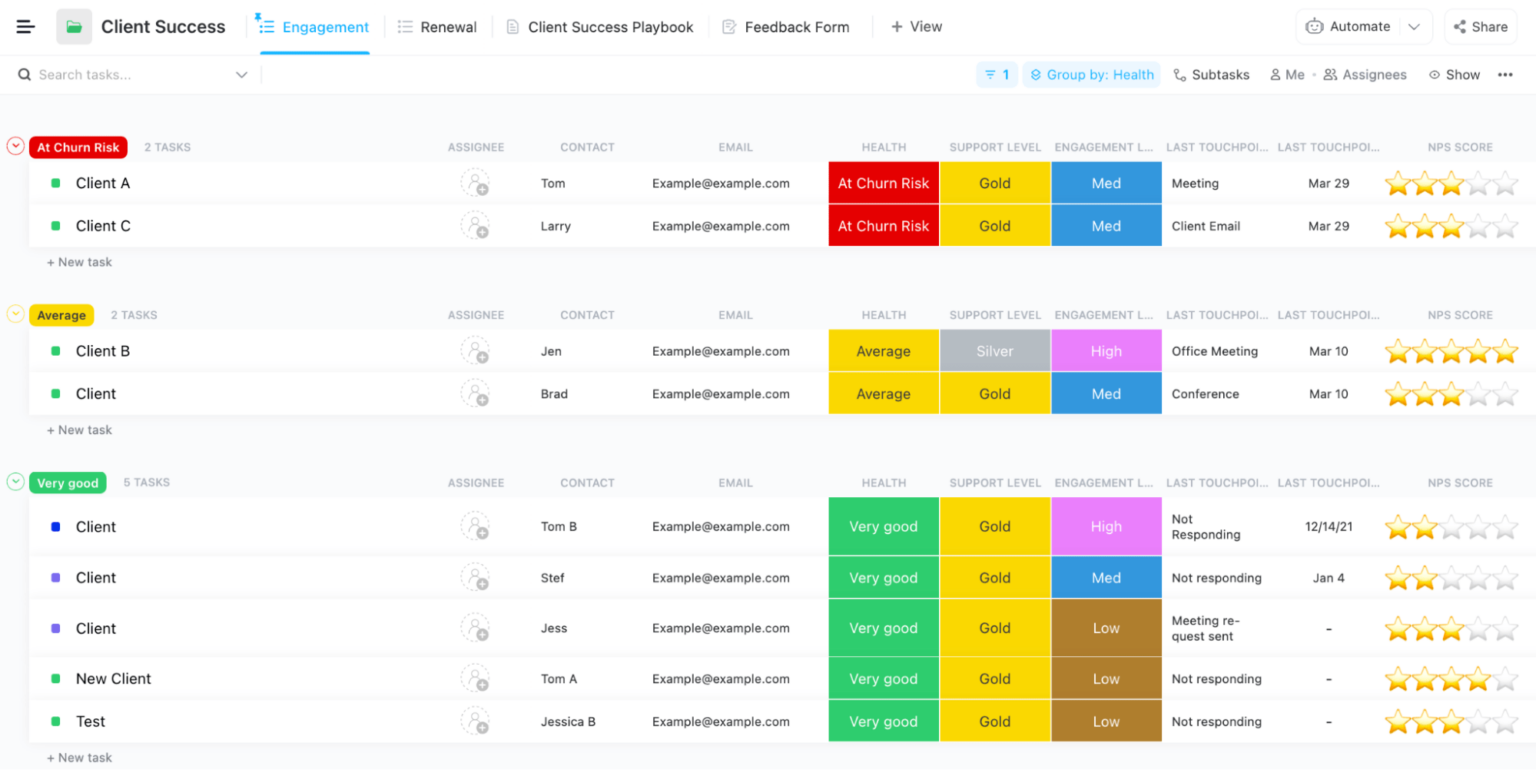
Marketing CRM software serves as the central nervous system for modern revenue teams, bridging the gap between raw lead generation and long-term customer lifecycle management. By consolidating contact data, interaction history, and marketing campaign performance into a single platform, these systems allow organizations to automate personalized communication, segment audiences with precision, and measure the direct return on investment for every marketing dollar spent.
Selecting the right marketing CRM requires balancing core contact management features with specialized marketing automation capabilities. Because "Marketing CRM" is a broad term, it is helpful to distinguish between general-purpose CRM platforms that have bolted on marketing features and dedicated marketing automation platforms (MAPs) that include CRM data synchronization. For the purpose of this analysis, we focus on integrated platforms that provide a cohesive experience for both sales lead management and digital marketing execution.
The Operational Pillars of Marketing CRM Platforms
To understand which software suits your business, you must first evaluate how these tools handle the four primary pillars of marketing operations: lead lifecycle management, multi-channel orchestration, data integration, and analytical reporting.
1. Lead Lifecycle Management
A CRM is fundamentally a database of relationships. A marketing-focused CRM goes further by tracking the "Lead Lifecycle"—the journey from an anonymous website visitor to a qualified lead, and eventually to a loyal customer. Effective software allows you to automate lead scoring based on user behaviors, such as email opens, whitepaper downloads, or pricing page visits. This ensures your sales team receives only those leads that meet your pre-defined qualification criteria.
2. Multi-Channel Orchestration
Modern marketing rarely relies on a single channel. A robust platform provides a unified interface to create and manage campaigns across email, social media, paid advertising, and SMS. The critical requirement here is the ability to maintain a single "source of truth." When a customer clicks an email link and visits your website, the CRM should reflect that interaction instantly, ensuring that subsequent marketing messages are relevant to the user’s most recent behavior.
3. Data Integration and Synchronization
The value of a CRM diminishes if it exists in a silo. As of 2026, the best-in-class software features pre-built, robust integrations with your existing tech stack, including web analytics tools, e-commerce platforms, and customer support ticketing systems. If your CRM cannot talk to your website’s checkout flow or your helpdesk, you lose visibility into the customer’s actual experience, which in turn hinders your ability to create effective marketing segments.
4. Analytical Reporting
Marketing ROI is no longer just about open rates and click-through rates. Modern marketing CRMs are expected to provide "closed-loop" reporting. This means the software should be able to attribute a specific sale back to the original marketing touchpoint, whether that was a search engine ad, an organic blog post, or a LinkedIn referral. Without this level of detail, marketing teams remain disconnected from the revenue impact of their initiatives.
Key Considerations for Business Selection
Choosing a platform involves weighing trade-offs between ease of use, technical scalability, and cost. Small teams often benefit from "all-in-one" platforms that prioritize speed to deployment, while enterprise organizations typically require high-end, modular systems that can be customized to complex, multi-departmental workflows.
Evaluating Complexity vs. Capability
One of the most common mistakes when purchasing marketing CRM software is over-buying. Organizations frequently invest in high-end, complex enterprise suites that require dedicated administrators, only to use 10% of the available features. Before settling on a product, map out your must-have processes:
- Automation depth: Do you need simple "if-this-then-that" emails, or complex, multi-path journeys based on real-time behavior?
- Contact volume: Pricing is often tied to the number of records. Ensure your growth projections for the next 24 months align with the vendor's pricing tiers.
- Support availability: Are you capable of configuring the system in-house, or do you need a tool with an extensive ecosystem of certified consultants and agencies?
Pricing Models and Total Cost of Ownership
In 2026, most CRM vendors have shifted toward subscription-based SaaS models. However, the "sticker price" is rarely the final cost. When calculating the budget, consider these hidden variables:
- Implementation fees: Setup can range from zero to tens of thousands of dollars for complex migrations.
- Onboarding costs: Staff training is mandatory for successful adoption.
- API and integration costs: Some vendors charge extra for high-volume API calls or specialized integrations.
- Data storage limits: Scaling your contact list may trigger unexpected overage charges in mid-tier plans.
Comparison of Leading Marketing CRM Solutions
The following table summarizes the market position of several prominent CRM tools based on their primary architectural strengths.
| Platform | Primary Strength | Best For | Typical Pricing Model |
|---|---|---|---|
| Salesforce | Enterprise Customization | Large, complex enterprises | Modular/Tiered + Implementation |
| HubSpot | Usability/Integration | SMEs and high-growth mid-market | Per-user/Record volume |
| Zoho CRM | Value for Money | Small businesses and startups | Flat monthly subscription |
| ActiveCampaign | Advanced Automation | E-commerce and B2B automation | Tiered based on contact count |
| Pipedrive | Visual Pipeline Focus | Small, sales-centric teams | Per-user subscription |
Note: Pricing and features are subject to vendor changes and individual contract negotiation. Always request a personalized demo based on your specific industry requirements.
Addressing Common Implementation Pitfalls
Even the best software will fail if it is deployed without a strategic framework. The following errors are frequently cited as the primary causes of CRM implementation failure.
Poor Data Hygiene
A CRM is only as good as the data inside it. Migrating thousands of messy, duplicate, or outdated contacts from spreadsheets into a new CRM will not improve your marketing; it will only accelerate the distribution of poor-quality communications. Perform a data audit and "cleanse" your lists before the migration phase. Identify and merge duplicates, delete invalid emails, and ensure your custom fields are standardized.
Low Internal Adoption
If your sales and marketing teams do not see value in the platform, they will find ways to bypass it—returning to Excel or private notes. Adoption requires clear documentation and training that focuses on how the tool saves the user time rather than how it tracks their activity. Encourage adoption by demonstrating how the CRM automatically fills out prospect info or handles follow-up reminders.
Lack of Defined Processes
Do not attempt to automate a process you do not have. Many teams fall into the trap of using CRM automation to speed up broken workflows. Define your lead qualification, hand-off, and feedback processes manually first. Once these workflows are functional and repeatable, then use the software to automate them.
Frequently Asked Questions
1. How does a marketing CRM differ from a standard CRM?
A standard CRM focuses on sales pipelines, deal stages, and account management. A marketing CRM adds layers of functionality specifically for engagement, such as website tracking, mass email distribution, landing page builders, and lead scoring. While the two often overlap, the distinction lies in the primary goal: managing relationships versus driving and tracking engagement.
2. Can I use a free CRM if I am a small business?
Many providers offer "freemium" versions of their CRM software. These are excellent for basic contact management but often lock away critical marketing features like advanced automation, deep reporting, and multi-channel integration. If your goal is to scale your marketing, expect to move to a paid tier early in your growth cycle.
3. What is the standard time required to migrate to a new CRM?
For a small team with clean data, a migration can take two to four weeks. For an enterprise with legacy systems, custom integrations, and complex data migration requirements, the process can take six months or longer. Always allocate time for a "parallel run" where your old system and new system operate concurrently for a short period to verify data integrity.
4. Is it necessary to have a dedicated CRM administrator?
For smaller teams, a power user—often a marketing operations lead—can manage the CRM. However, once you reach an enterprise scale, the complexity of custom objects, API integrations, and security permissions usually necessitates a dedicated administrator or a retained consultant to ensure the system remains optimized.
5. What is "closed-loop reporting" and why is it essential?
Closed-loop reporting provides the data to prove which marketing campaigns actually result in revenue. Without it, you are guessing which ads work. With it, you can accurately calculate the Customer Acquisition Cost (CAC) and Lifetime Value (LTV) for every channel, allowing for data-driven budget allocation.
Next Steps for Your Business
To choose the right marketing CRM, begin by documenting your current marketing bottlenecks. If your primary issue is a lack of lead follow-up, prioritize systems with strong automation capabilities. If your issue is a lack of visibility into campaign performance, prioritize systems with robust, out-of-the-box reporting dashboards. Schedule demos with three providers, specifically asking them to show how they would handle your most difficult current workflow. The vendor that best understands your specific operational pain points is likely the best partner for your organization.