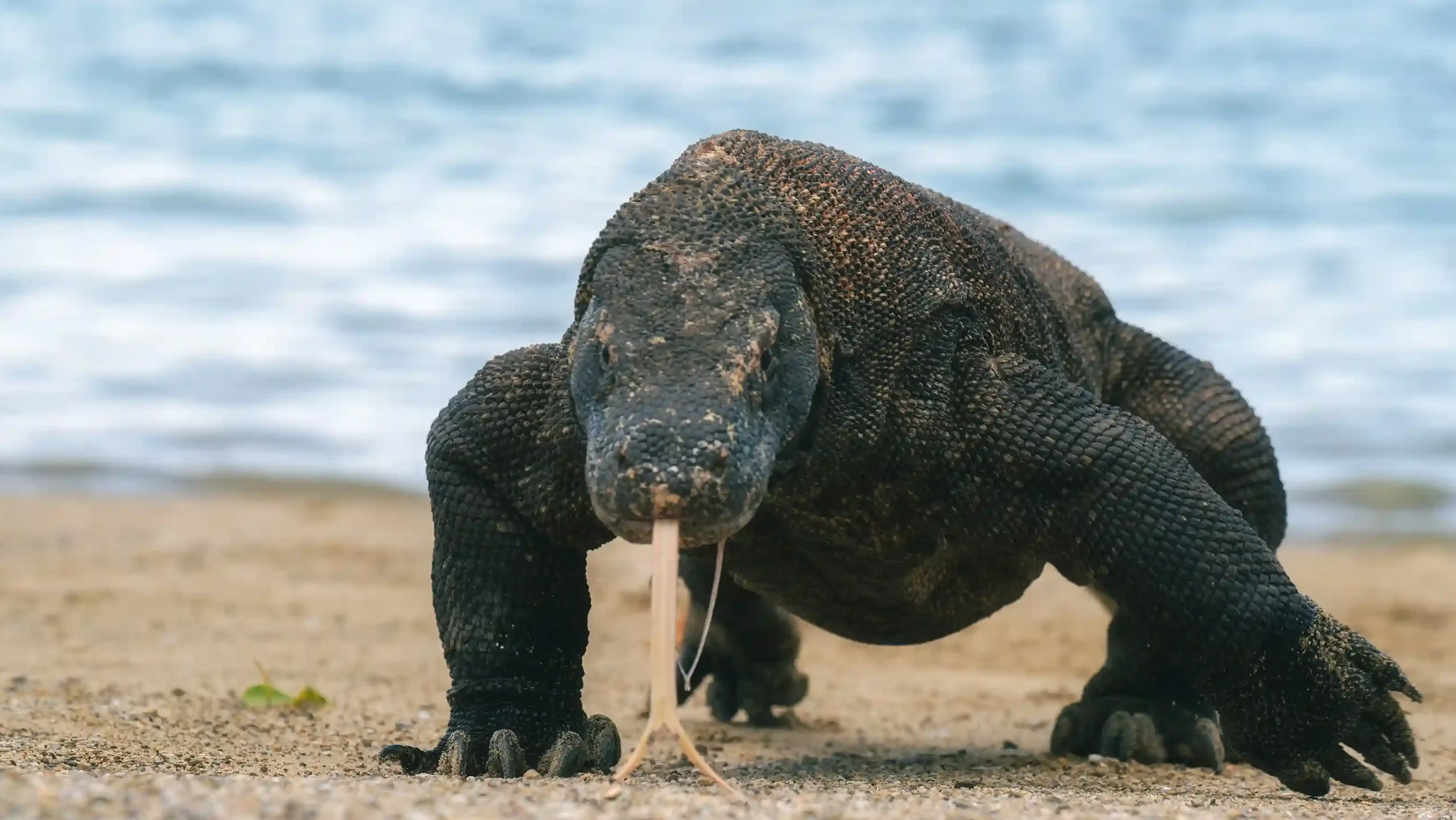
Komodo dragons are not immune to snake venom. While these apex predators possess a robust physiology and a specialized immune system that allows them to survive the septic environment of their own mouths and prey, they do not have a physiological mechanism to neutralize snake toxins. If bitten by a highly venomous snake, a Komodo dragon would likely suffer from envenomation effects similar to other large reptiles.
Understanding the Physiology of the Komodo Dragon
To understand why the question of venom immunity arises, it is essential to first define what a Komodo dragon (Varanus komodoensis) is and how it functions as a predator. Native to a few Indonesian islands, they are the largest living species of lizard. Their reputation as "venomous" predators—supported by research in the early 21st century identifying venom glands in their lower jaws—often leads to public confusion regarding their interaction with other venomous creatures.
The Komodo dragon’s primary survival mechanism is not biological immunity, but rather its immense size, thick osteoderm-reinforced skin, and an incredibly fast-acting immune system. Their blood serum has been studied for its potential antimicrobial properties, specifically the presence of cationic antimicrobial peptides (CAMPs). These peptides are highly effective against a broad spectrum of bacteria, which is a critical evolutionary advantage given that their mouths are teeming with potentially lethal pathogens. However, this is distinct from the complex biochemistry required to neutralize snake neurotoxins or hemotoxins.
The Myth of Reptilian Cross-Immunity
There is a common misconception that because some reptiles (like certain species of mongoose or specialized snake-eating snakes) exhibit resistance to venom, all predatory reptiles must share this trait. This is biologically inaccurate. Immunity or high levels of resistance to snake venom is a highly specific evolutionary adaptation. It usually occurs in animals that have a direct, long-term evolutionary history of predator-prey conflict with venomous snakes.
For an animal to be immune to snake venom, it typically requires specific molecular adaptations. These often involve mutations in the nicotinic acetylcholine receptors (nAchR) that prevent venom neurotoxins from binding to the receptors in the muscles or nervous system. The Komodo dragon has not evolved such specific defensive barriers against elapid (cobra, krait) or viperid toxins because their natural habitat and dietary niche do not place them in frequent, life-threatening combat with the venomous snakes found in their region.
Ecological Context and Predator Interactions
The Komodo dragon occupies a specific ecological niche in the Lesser Sunda Islands. Their diet consists primarily of deer, pigs, water buffalo, and carrion. While they are opportunistic hunters, they do not specialize in preying upon venomous snakes. When a predator does not have an evolutionary requirement to consume or compete with venomous prey, the high metabolic and genetic cost of developing venom immunity is not prioritized by natural selection.
In the wild, a Komodo dragon is far more likely to encounter a venomous snake as a territorial dispute or a chance interaction rather than as a food source. If a snake were to bite a dragon, the dragon’s thick, scaly skin—which acts like a suit of armor—might deflect the fangs entirely. If the fangs were to penetrate, the outcome would depend on the volume of venom injected relative to the body mass of the dragon. As a massive animal, a Komodo dragon might survive a dose of venom that would be lethal to a smaller mammal, but this is a function of body mass (the "dilution effect") rather than true biological immunity.
Comparative Biology: Immunity vs. Resistance
It is important to distinguish between "immunity" and "tolerance."
- Immunity: The presence of antibodies or molecular blockers that neutralize the toxin before it causes physiological harm.
- Tolerance (or Resistance): The ability to survive the effects of a toxin due to body size, metabolic rate, or efficient clearance of toxins from the bloodstream.
If a Komodo dragon survives a snake bite, it is most likely through sheer scale. An adult Komodo dragon can weigh over 70 kilograms. Most venomous snakes in their range, such as the spectacled cobra or certain pit vipers, possess venom optimized for smaller prey. The dose of venom delivered by a snake is generally finite; when injected into a massive, heavily scaled lizard, that dose may not reach the concentration required to cause systemic collapse or death.
Factors Influencing Envenomation Survival
| Factor | Impact on Survival |
|---|---|
| Body Mass | Higher mass requires a higher dose of venom per kg to be lethal. |
| Dermal Armor | Heavy, thick scales and osteoderms can prevent successful envenomation. |
| Metabolic Rate | Ectothermic (cold-blooded) metabolism slows down the circulation of toxins. |
| Specific Antivenom | Komodo dragons possess no native internal antivenom production. |
| Pathogen Defense | CAMPs help prevent infection from bacteria but not from snake venom toxins. |
Why the Confusion Persists: Venomous vs. Immune
The confusion surrounding this topic is largely due to the 2009 landmark study that confirmed Komodo dragons possess complex venom glands. Before this, it was widely believed that dragons killed their prey through the bacteria found in their saliva. When the scientific community confirmed that Komodo dragons are indeed venomous, the public imagination conflated "being venomous" with "being immune to venom."
However, producing venom and being immune to it are two different physiological pathways. A rattlesnake, which produces venom, is not necessarily immune to the venom of a cobra. Similarly, a Komodo dragon’s venom is a mixture of proteins designed to induce shock and inhibit blood clotting in prey; it is not a "universal solvent" that neutralizes other venoms.
The Role of Ectothermy in Venom Kinetics
Because Komodo dragons are ectotherms, their physiological processes are slower than those of endothermic (warm-blooded) mammals. If a dragon were bitten, the process of the venom moving through the lymphatic and circulatory systems would be significantly slower than it would be in a dog or a human. This slow circulation could theoretically give the dragon’s body more time to manage the stress of the toxin, but it does not equate to the molecular neutralization that true immunity provides.
Furthermore, the Komodo dragon’s immune system is highly specialized for recovery. Researchers have noted that these lizards can heal from massive, septic wounds that would kill other animals. This regenerative capacity is often mistaken for general systemic immunity, when in reality, it is a highly evolved response to the specific hazards of their environment—namely, fighting with other dragons and dealing with rotting meat.
Risks and Reality in the Field
In the year 2026, research into the Komodo dragon’s biology remains a field of interest for pharmaceutical applications, specifically regarding their antimicrobial peptides. However, there is no evidence suggesting they have developed a resistance to neurotoxic or necrotic snake venoms.
For those interested in the safety of these animals or their conservation, it is important to understand that they are not "invincible" biological tanks. They are highly susceptible to environmental changes, habitat loss, and pathogens. If a venomous snake were to successfully envenomate a smaller or juvenile Komodo dragon, the result would almost certainly be fatal, as the juvenile would not have the body mass to withstand the toxic load.
Frequently Asked Questions
Do Komodo dragons kill snakes?
Komodo dragons are opportunistic carnivores. If they encounter a snake and see it as an easy, manageable meal, they may consume it. However, they are not specialized snake hunters like the king cobra or the mongoose, and they do not seek out venomous snakes as a primary food source.
What happens if a cobra bites a Komodo dragon?
If a cobra delivers a full bite to a Komodo dragon, the outcome is uncertain. While the dragon's thick skin and large body mass provide significant protection, if the fangs reach the bloodstream, the neurotoxins would act on the lizard's nervous system. Given the dragon's cold-blooded physiology, the death process might be prolonged, but there is no physiological evidence that they would survive a lethal dose of elapid neurotoxins.
Are Komodo dragons resistant to their own venom?
Yes, they possess natural resistance to the specific chemical components of their own venom, as is common in many venomous species. This prevents them from suffering ill effects during physical altercations with their own kind, where biting is a common territorial behavior.
Why do people think they are immune to everything?
This perception stems from their status as "living dinosaurs" and their reputation for surviving in bacteria-heavy environments. Because they can survive such harsh conditions, it is an easy leap to assume they are immune to all biological threats, including snake venom.
Can their blood be used to create antivenom?
There is significant scientific interest in the blood serum of Komodo dragons, specifically for its antimicrobial properties. However, this research focuses on bacterial infections, not the creation of antivenom for snake bites. The mechanisms for neutralizing snake venom are entirely different from the antimicrobial mechanisms found in the dragon’s blood.
Final Assessment
The Komodo dragon is a marvel of evolution, possessing specialized adaptations that allow it to dominate its island habitat. Its ability to manage high levels of oral bacteria and recover from severe physical trauma is remarkable. However, the claim that they are immune to snake venom is a biological myth. They remain vulnerable to the complex toxins produced by snakes, and their survival against such bites relies on physical barriers like scale thickness and body mass rather than biochemical immunity. When observing these animals, it is best to view them as highly specialized predators whose resilience is impressive, yet bounded by the same biological limitations as other large reptiles.