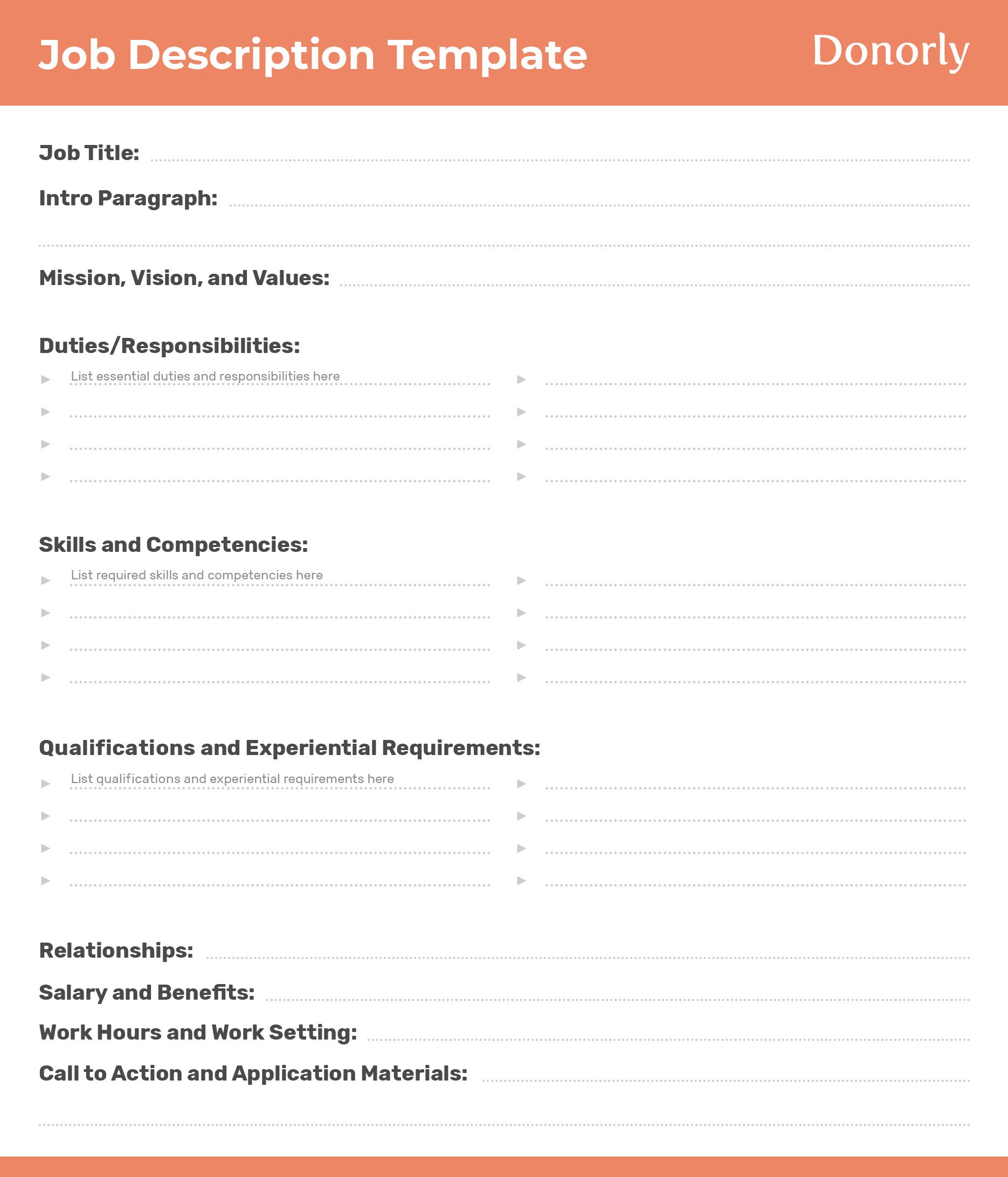
A job description describes the essential functions, required qualifications, reporting relationships, and organizational environment associated with a specific professional role. It serves as a foundational document for recruitment, performance management, and legal compliance, bridging the gap between an employer’s operational needs and a candidate’s professional capabilities.
The Foundational Purpose of a Job Description
At its core, a job description is a structural blueprint for a position. It is not merely a list of tasks but a multifaceted document that defines the boundaries and expectations of a role within an organization. For the employer, it acts as a primary tool for defining headcount requirements and departmental resource allocation. For the applicant, it serves as the initial source of truth regarding the daily reality, long-term expectations, and necessary credentials for the job.
The document typically functions as a formal contract of intent. By detailing the responsibilities, an organization creates a reference point against which employee performance can be objectively measured. Without a well-articulated job description, organizations often face "scope creep," where an employee’s duties expand indefinitely without corresponding adjustments in compensation or titles, or conversely, "role ambiguity," where team members are unsure of their accountability.
Core Components of a Standard Job Description
While formats vary across industries, a professional job description consistently includes several core sections that provide a complete picture of the role.
1. Job Identification and Summary
This section establishes the administrative details: the formal job title, the department, the immediate supervisor, and the FLSA (Fair Labor Standards Act) status in the United States, which determines eligibility for overtime pay. The summary, usually a three-to-five-sentence paragraph, provides a high-level overview of why the position exists and how it contributes to the company's broader mission.
2. Essential Duties and Responsibilities
This is the heart of the document. It lists the primary activities the employee will perform. To remain effective and legally defensible, these duties must be categorized by the percentage of time spent on them. Effective descriptions use action verbs—such as "develop," "manage," "analyze," or "coordinate"—to provide clarity. This section also serves as the primary filter during the hiring process, as candidates assess whether their professional experience aligns with these specific operational demands.
3. Qualifications and Requirements
This section distinguishes between "must-have" (hard) requirements and "preferred" (soft) qualifications.
- Hard Skills: These are non-negotiable requirements, such as specific certifications, years of experience in a relevant field, or proficiency in required software stacks.
- Soft Skills: These describe the behavioral characteristics necessary for success, such as communication styles, emotional intelligence, or problem-solving approaches.
4. Physical and Environmental Demands
Often overlooked but legally significant, this section describes the physical reality of the work. If a role requires lifting heavy equipment, working in extreme temperatures, or sitting at a desk for extended periods, it must be documented here. This is crucial for compliance with the Americans with Disabilities Act (ADA), as it informs reasonable accommodation discussions.
The Role of Job Descriptions in Recruitment and Selection
In the 2026 talent landscape, the job description acts as the primary marketing asset for an employer. With high competition for specialized talent, a description that is vague or overly clinical fails to attract high-quality candidates.
Modern job descriptions must balance technical accuracy with organizational culture. Candidates are increasingly prioritizing "value-alignment," meaning they look for sections that describe the team dynamic, the company’s approach to remote or hybrid work policies, and the professional development opportunities available. When a job description describes the "why" behind the "what," it creates a compelling narrative that attracts candidates who are intrinsically motivated by the company's mission.
Furthermore, these documents are vital for candidate screening. Recruiters use them to create "scorecards" for interviews. By mapping the interview questions directly to the competencies listed in the job description, the organization ensures a standardized, unbiased evaluation process that reduces the risk of hiring errors.
Legal and Compliance Implications
The job description is often the first piece of evidence requested during labor disputes, discrimination lawsuits, or wage-and-hour audits. If an employee claims they were terminated unfairly, the job description serves as the baseline for evaluating whether they were meeting the performance standards of their specific role.
From a compliance perspective, the document must be kept current. A job description written in 2020 may be entirely obsolete by 2026 due to the integration of AI-driven workflows, changes in industry regulations, or pivots in company strategy. Organizations should perform an annual audit of their job descriptions to ensure they reflect the actual, current requirements of the role. Failure to do so can lead to legal exposure, particularly when defining what constitutes an "essential function" under employment law.
Comparison of Internal and External Job Descriptions
Organizations often maintain two versions of a job description: one for internal use (the Job Analysis) and one for external recruitment (the Job Posting).
| Feature | Internal Job Description (Job Analysis) | External Job Posting |
|---|---|---|
| Primary Goal | Administrative, legal, and operational clarity | Talent attraction and candidate conversion |
| Detail Level | High; includes specific workflows and tools | Moderate; focuses on impact and growth |
| Target Audience | Current employees, HR, and legal counsel | Potential applicants and recruiters |
| Tone | Formal, technical, and objective | Inviting, persuasive, and brand-aligned |
| Flexibility | Rigid; based on actual business needs | Dynamic; subject to marketing trends |
Common Pitfalls in Drafting Job Descriptions
Even with clear intent, many organizations struggle with common errors that undermine the effectiveness of the document.
- Overloading the Role: Listing an exhaustive, unrealistic set of responsibilities can deter top-tier candidates who realize the role is actually two full-time positions combined into one.
- Gendered Language: Studies consistently show that using overly masculine or aggressive language in descriptions can inadvertently discourage women and other underrepresented groups from applying. Using inclusive, neutral terminology is essential for building a diverse pipeline.
- Static Maintenance: Treating a job description as a "set it and forget it" document ensures that it will eventually be disconnected from the actual work being performed.
- Vague Requirements: Phrases like "must be a rockstar" or "fast-paced environment" are subjective and often confusing. Successful descriptions define what "success" looks like with concrete metrics or goals.
Troubleshooting: When the Description Does Not Match the Work
If an employee or manager finds that the actual work performed bears little resemblance to the job description, the organization faces a "role drift" situation. This often happens following rapid company growth or the implementation of new technology.
- Conduct a Role Audit: Have the employee keep a time-log of their tasks for two weeks to identify what they are actually doing compared to what is documented.
- Evaluate Business Need: Determine if the new tasks are temporary (a "special project") or permanent (an evolution of the role).
- Formalize the Change: If the changes are permanent, update the job description. This is the correct time to review compensation, as expanded duties may warrant a salary adjustment or a title change.
- Communication: Hold a formal meeting between the employee and manager to review the updated document, ensuring both parties have a shared understanding of the new expectations.
Frequently Asked Questions
Does a job description legally bind an employer to a specific salary? No. A job description typically lists responsibilities and requirements. While it may include a salary range, the exact compensation is usually determined by an offer letter or employment contract, which takes precedence over the general job description.
How often should a job description be updated? Best practices suggest a full review at least once a year, or immediately following any significant change in the department’s structure, the adoption of new technology, or a shift in the organization’s strategic objectives.
What is the difference between a job description and a job specification? A job description focuses on the tasks, duties, and responsibilities of the position. A job specification focuses on the human requirements—the skills, education, experience, and personality traits needed to perform the job successfully. Most modern organizations combine these into one comprehensive document.
Can a job description be used as a performance review tool? Yes. In fact, it is the most objective starting point for a performance review. By measuring the employee's output against the defined responsibilities, managers can provide constructive, evidence-based feedback that minimizes personal bias.
Next Steps for Implementation
To maximize the effectiveness of your job descriptions, start by auditing your current repository. Identify positions that have remained unchanged for more than two years and interview the current job holders to gather insights on how their daily duties have evolved. Use this feedback to draft updated, role-specific descriptions that prioritize clarity, inclusivity, and accuracy. By treating these documents as living assets rather than static paperwork, you ensure they remain valuable tools for both organizational growth and individual career success.