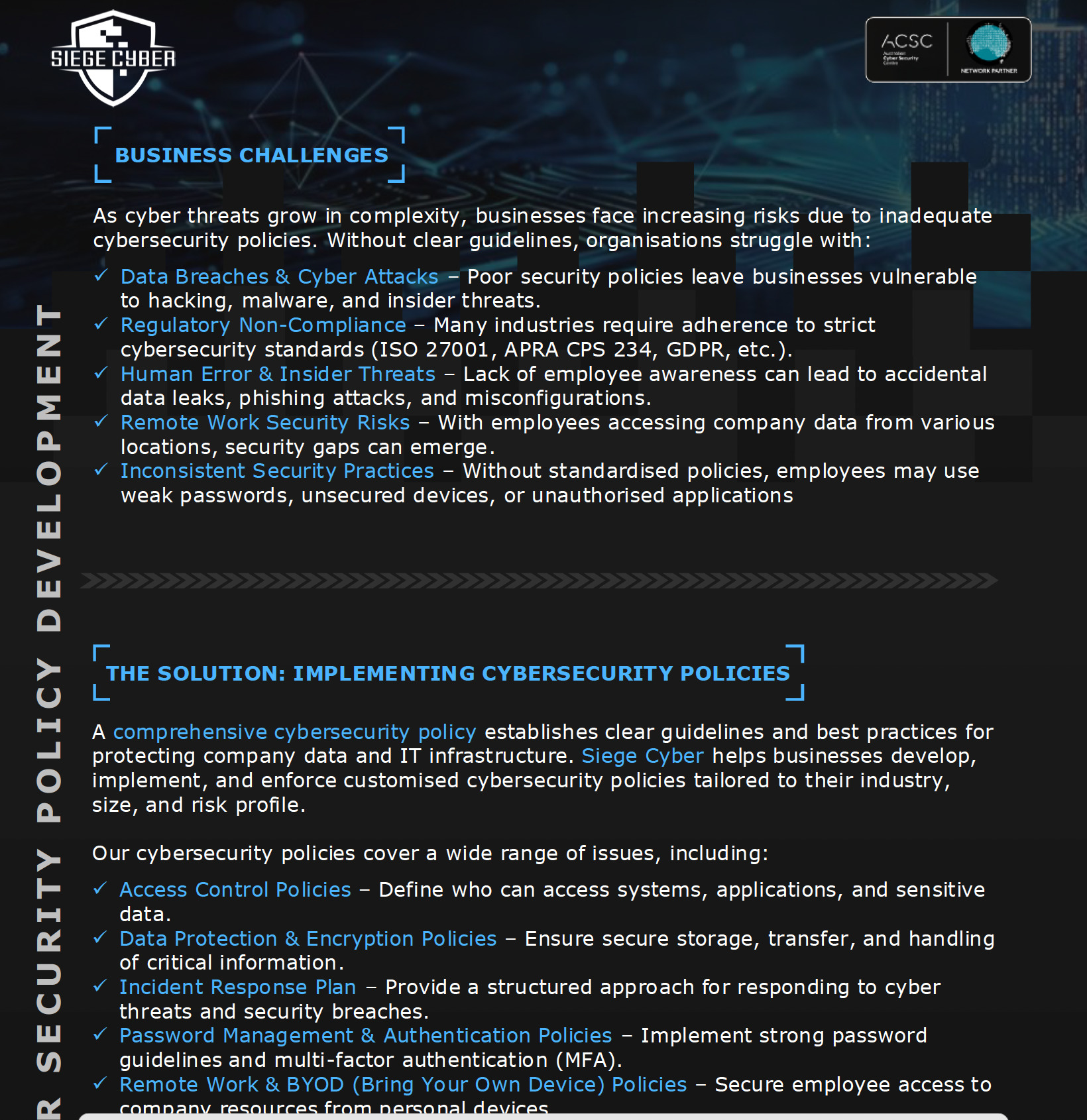
A cyber security policy is a formal set of rules, guidelines, and procedures designed to protect an organization's digital assets, technology infrastructure, and user data. It establishes a behavioral roadmap for employees and contractors while outlining the technical controls required to mitigate risks, ensure regulatory compliance, and respond to security incidents effectively.
In 2026, the digital landscape has become more complex than ever. With the proliferation of generative AI threats, sophisticated supply chain attacks, and the permanence of hybrid work models, a "set it and forget it" approach to security is no longer viable. A cyber security policy serves as the "constitution" of an organization’s digital defense, providing the legal and operational framework necessary to survive in an era of constant connectivity.
Defining the Scope and Purpose of a Cyber Security Policy
At its core, a cyber security policy is not a single document but often a hierarchy of policies that define how an organization manages risk. It bridges the gap between high-level business goals and low-level technical configurations. Without a clearly defined policy, security becomes reactive and inconsistent, leaving gaps that attackers can easily exploit.
The primary purpose of these policies is threefold:
- Risk Mitigation: By identifying sensitive assets and defining how they should be protected, the policy reduces the likelihood of a successful breach.
- Compliance and Legal Protection: Organizations are subject to various laws—such as the GDPR, CCPA, or industry-specific standards like HIPAA and PCI DSS. A well-documented policy is often a prerequisite for compliance audits and provides a legal "safe harbor" by demonstrating due diligence.
- Cultural Alignment: It sets clear expectations for employee behavior. When every staff member understands their role in protecting data, the "human firewall" becomes significantly stronger.
Core Components of an Effective Cyber Security Policy
To be effective in 2026, a policy must go beyond generic advice. It needs to address specific domains of technology and behavior. A comprehensive framework generally includes the following pillars.
1. Acceptable Use Policy (AUP)
The AUP is perhaps the most visible part of a cyber security policy for the average employee. It dictates how company-provided equipment and internet access should be used. It explicitly forbids illegal activities, harassment, and the unauthorized installation of "shadow IT" software. In the current year, AUPs also strictly govern how employees interact with corporate data via public AI models to prevent intellectual property leaks.
2. Access Control and Identity Management
This section defines who can access what and under what conditions. In 2026, the standard has shifted entirely toward Zero Trust Architecture. This means the policy must mandate Multi-Factor Authentication (MFA) for all systems, phishing-resistant hardware keys for privileged accounts, and the principle of "Least Privilege"—ensuring users only have access to the data necessary for their specific job functions.
3. Data Classification and Privacy
Not all data is created equal. A robust policy categorizes data into tiers, such as Public, Internal, Confidential, and Restricted. Each tier has its own set of handling instructions. For instance, Restricted data may require end-to-end encryption both at rest and in transit, and it might be barred from being stored on portable devices or cloud drives that haven't been vetted by the security team.
4. Incident Response and Reporting
Despite the best defenses, incidents happen. This component outlines the steps to be taken when a breach is suspected. It identifies the Incident Response Team (IRT), defines the "hotline" for reporting suspicious activity, and sets timelines for notifying regulatory bodies and affected customers, ensuring the organization meets its legal obligations under modern data breach notification laws.
Why a Documented Policy is Essential for Business Continuity
The absence of a formal policy creates a vacuum where employees make their own decisions about security. These decisions are rarely optimal. For example, without a policy on password complexity or the use of password managers, employees will naturally default to the path of least resistance—reusing weak passwords across multiple platforms.
Furthermore, cyber insurance providers in 2026 now mandate the existence of specific, audited security policies as a condition for coverage. If an organization suffers a ransomware attack but cannot prove it was following a documented patch management or backup policy, the insurer may legally deny the claim. This makes the policy a critical financial document, not just a technical one.
The Process of Developing a Cyber Security Policy
Creating a policy is a strategic exercise that requires input from IT, legal, HR, and executive leadership. It is not a task that should be delegated solely to the IT department, as it involves significant organizational change and legal liability.
Phase 1: Risk Assessment
Before writing a single word, the organization must understand its threat profile. What are the "crown jewels"? Is it customer credit card data, proprietary software code, or patient health records? A thorough risk assessment identifies the most likely threats (e.g., social engineering, hardware failure, insider threats) and the potential impact of those threats.
Phase 2: Drafting and Alignment
Once risks are identified, the drafting process begins. The language must be clear, enforceable, and realistic. If a policy is too restrictive, employees will find ways to bypass it to do their jobs. Alignment with international frameworks like the NIST Cybersecurity Framework (CSF) or ISO/IEC 27001 is highly recommended to ensure global interoperability and standard compliance.
Phase 3: Review and Approval
The policy must be vetted by legal counsel to ensure it doesn't violate labor laws or privacy rights. Once finalized, it requires a formal sign-off from the CEO or Board of Directors. This "top-down" endorsement is crucial; if leadership doesn't take the policy seriously, the rest of the organization won't either.
Phase 4: Implementation and Training
A policy is useless if it sits in a digital drawer. Implementation involves configuring technical controls (like firewalls and automated session timeouts) to match the policy's requirements. Simultaneously, security awareness training must be conducted to explain the "why" behind the rules.
| Policy Type | Primary Focus | Key Stakeholders | 2026 Priority Level |
|---|---|---|---|
| Acceptable Use (AUP) | Employee behavior and hardware usage. | All Employees, HR | High (AI Usage Focus) |
| Incident Response (IRP) | Action plan for breaches and outages. | IT Security, Legal, PR | Critical |
| Remote Work / BYOD | Security for off-site devices and networks. | Remote Workers, IT | High (Hybrid Work) |
| Data Retention | How long data is kept and how it's deleted. | Legal, Compliance, IT | Medium (Privacy Laws) |
| Vendor Risk Management | Third-party security requirements. | Procurement, Security | Very High (Supply Chain) |
Managing the Policy Lifecycle in 2026
The rapid pace of technological change means that a cyber security policy can become obsolete in as little as 12 months. In 2026, organizations are moving toward "living documents."
Annual Reviews and Updates
The policy must be reviewed annually or whenever a significant change occurs in the business, such as a merger, the adoption of a new cloud provider, or the discovery of a major new class of vulnerability. For instance, the rise of quantum computing threats has led many forward-thinking organizations to include "cryptographic agility" clauses in their 2026 policy updates.
Continuous Enforcement
Automation plays a massive role in policy enforcement. Modern Mobile Device Management (MDM) and Cloud Access Security Broker (CASB) tools can automatically block devices that don't meet policy requirements (e.g., those with disabled encryption or outdated operating systems). This moves the policy from a passive document to an active, programmatic shield.
Common Pitfalls to Avoid
Many organizations fail in their policy efforts by falling into a few common traps:
- Using Generic Templates: While templates provide a starting point, they must be customized. A policy for a retail chain looks very different from a policy for a high-frequency trading firm.
- Lack of Enforcement: If there are no consequences for violating the policy, it will eventually be ignored. Disciplinary actions for willful negligence should be clearly stated and consistently applied.
- Technical Jargon: If the average employee can't understand the policy, they can't follow it. Use plain language for behavioral sections and keep the deep technical specifications in separate "Standard Operating Procedure" (SOP) documents.
- Neglecting the Supply Chain: In 2026, many breaches originate with third-party vendors. A policy that doesn't define security requirements for partners and contractors is incomplete.
Practical Expert Guidance: Starting Your Policy
If you are tasked with creating or updating a policy today, start by identifying your most critical regulatory requirement. If you handle European data, start with the GDPR's security principles. If you are a US government contractor, the NIST SP 800-171 guidelines are your roadmap.
Next, focus on the "Human Element." Conduct a survey to see how employees currently handle data. This often reveals "shadow IT" or risky habits that your policy needs to address specifically. By involving employees in the process, you gain their "buy-in," making the eventual rollout much smoother.
Frequently Asked Questions
What is the difference between a cyber security policy and a strategy?
A cyber security strategy is a high-level vision of how an organization intends to protect itself over the next 3-5 years, focusing on investments and goals. A cyber security policy is a set of specific, enforceable rules and procedures used to achieve that strategy on a day-to-day basis.
Does a small business need a full cyber security policy?
Yes. Small businesses are often targets precisely because they lack formal security. While the document can be shorter and less complex than that of a global enterprise, even a one-person business should have a documented policy regarding backups, password management, and device encryption.
Who is responsible for enforcing the cyber security policy?
While the Chief Information Security Officer (CISO) or IT Manager typically oversees enforcement, the ultimate responsibility lies with every individual in the organization. HR often handles the disciplinary aspects of policy violations, while executive leadership is responsible for providing the resources needed to follow the policy.
How often should we update our BYOD (Bring Your Own Device) policy?
BYOD policies should be reviewed at least once a year or whenever a major mobile OS update (like a new version of iOS or Android) changes the security landscape. In 2026, these updates often include new biometric or privacy controls that the policy should address.
Can we be held legally liable for not having a cyber security policy?
In many jurisdictions and industries, yes. Failure to have a documented policy can be seen as "gross negligence." If a data breach occurs and it is discovered that no formal security guidelines existed, the organization may face significantly higher fines from regulators and increased liability in civil lawsuits.
Final Recommendation: Integrating Policy into Culture
A cyber security policy is most effective when it is woven into the fabric of the organization rather than being treated as a hurdle to overcome. For 2026 and beyond, shift your focus toward continuous education. Instead of a once-a-year training session, provide "micro-learnings" that reinforce policy points throughout the year. When employees understand that the policy exists to protect their own jobs and the company's reputation—not just to restrict their freedom—compliance becomes a natural part of the workday.